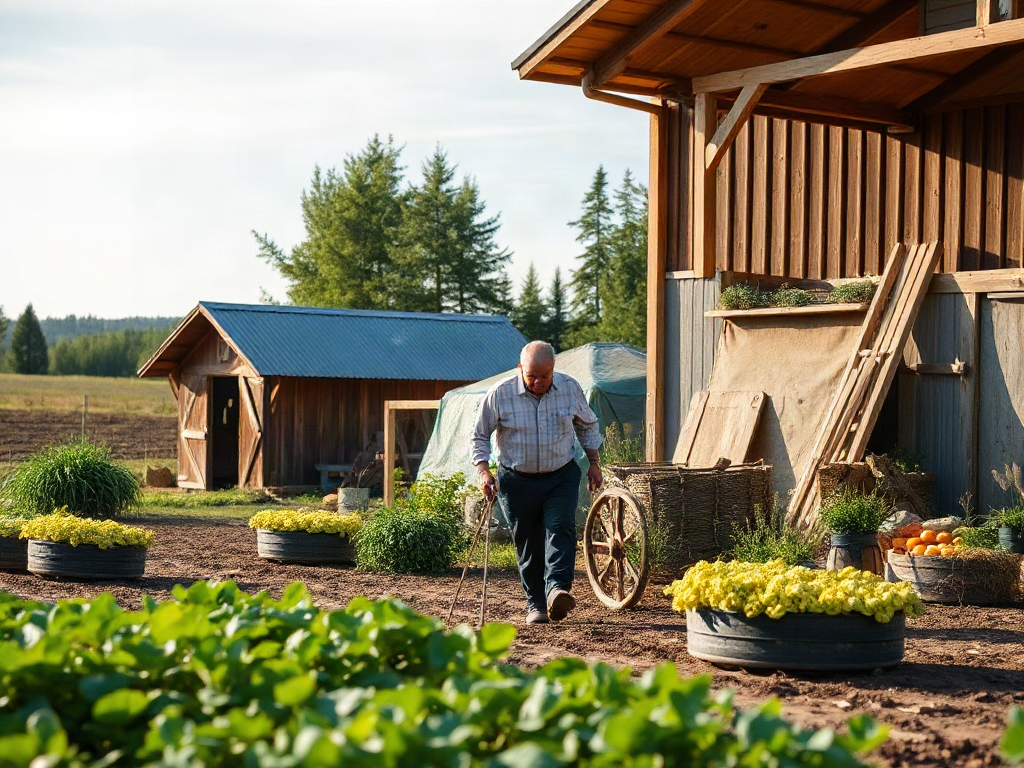
For beginners, homesteading is usually the better fit when the goal is household self-reliance, while farming is the clearer choice when land must produce dependable sales income. The decision should reflect available acreage, local market access, startup capital, daily labor, and whether crops or livestock are intended for personal use or paying customers. A small garden, laying flock, and home food preservation can form a homestead without becoming a commercial farm. Beginners pursuing farming should test one marketable product, calculate production costs, and confirm buyers before investing heavily in machinery, buildings, or breeding stock.
The Practical Difference Between a Homestead and a Farm
A homestead is organized primarily around the needs of the household, whereas a farm is operated to sell agricultural products with enough consistency to support a business objective. Both may include gardens, orchards, poultry, livestock, workshops, or food-preservation spaces. The distinction comes from purpose and operating pressure rather than acreage alone.
On a homestead, a family might grow tomatoes, potatoes, beans, and herbs; keep six laying hens; preserve surplus produce; and heat partly with firewood. Success can mean lower grocery spending, better control over food production, or greater resilience during supply disruptions. The household can reduce a crop that performs poorly, skip a season, or change its plans without disappointing customers.
A farm faces a different standard. If those same vegetables are grown for a weekly market stall or community-supported agriculture subscription, planting dates, harvest volume, grading, packaging, and delivery become commercial obligations. Customer demand affects what is planted, while reliable output matters more than producing a little of everything. Even a small urban flower operation or microgreen business may function more like a farm than a large rural property used mainly to feed its residents.
The difference also affects decision-making. Homesteaders can favor diversity because several small food sources spread household risk. Commercial growers often narrow their production so labor, equipment, and sales become more efficient. A beginner farm offering vegetables, eggs, pork, honey, flowers, and bread at once may create six separate production systems before any one of them works reliably.
Hybrid properties are common. A household may keep a personal garden while selling eggs or cut flowers on a modest scale. That arrangement should still separate household activities from the enterprise. Track the feed, seed, packaging, mileage, and sales associated with the commercial product rather than assuming the entire property is profitable.
A common mistake is calling any rural lifestyle a farm and then buying farm-scale equipment without farm-scale revenue. The reverse mistake is treating regular public sales like a casual homestead activity. Anyone selling food, plants, or animal products should check applicable zoning, tax, labeling, processing, and animal-care requirements with local authorities. Names do not determine those obligations; activities and location do.
Land, Labor, and Infrastructure Requirements
Useful land matters more than the number printed in a property listing. Soil depth, drainage, sunlight, water access, slope, road access, fencing, and local rules determine what a parcel can support. A sunny quarter-acre with dependable water may produce more vegetables than several shaded or poorly drained acres. Pasture acreage is equally misleading when forage quality, seasonal growth, and winter feeding are ignored.
Homesteading can begin where a person already lives. Container crops, a compact kitchen garden, composting, pantry storage, and permitted poultry are possible without purchasing a large tract. This gradual approach exposes practical limits cheaply. A household that struggles to weed and harvest eight raised beds has learned something valuable before installing a half-acre market garden.
Farming requires the land to match a specific production and sales system. A vegetable grower needs suitable soil, irrigation, wash space, harvest access, and a route to buyers. A grazing enterprise needs secure fencing, animal water, handling facilities, forage, and a plan for periods when grass is unavailable. Productive acreage that sits far from customers may impose fuel and delivery costs that undermine an otherwise sound crop plan.
Daily labor should be estimated by season rather than averaged across the year. Seed starting, planting, kidding or lambing, peak harvest, preserving, and winter feeding create concentrated workloads. Livestock also removes the option to postpone chores because of illness, travel, severe weather, or a demanding day job. A backup caretaker is operational capacity, not a luxury.
Infrastructure should follow demonstrated need. Beginners frequently buy a tractor because it symbolizes productive land, then discover that irrigation, fencing, cold storage, or a simple walk-behind tool would solve the immediate bottleneck more effectively. Renting machinery, hiring a neighboring operator for occasional heavy work, or buying used hand tools can preserve cash until the production system proves itself.
Evaluate a prospective site during difficult conditions if possible. Observe where water collects after rain, ask how wells perform during dry periods, identify prevailing winds, and estimate the distance between storage, animals, gardens, and vehicle access. Repeatedly carrying feed or water across an inconvenient property turns poor layout into permanent labor.
The Homesteading versus farming for beginners decision becomes clearer when each proposed activity is assigned a place, water source, weekly labor estimate, and seasonal constraint. If those details cannot be described yet, delaying permanent buildings or major livestock purchases is usually prudent.
Household Savings Versus Farm Revenue
Homestead value often appears as avoided household spending rather than cash income. Eggs consumed at home, vegetables preserved for winter, repairs completed in a workshop, or firewood used for heating may reduce purchases. Those savings are real, but they should not be confused with profit. Feed, seed, fencing, jars, utilities, tools, losses, and the household’s labor still have costs.
Farm revenue is the money received from customers; profit is what remains after the expenses required to produce and sell the goods. A high sales total can conceal weak margins when packaging, market fees, delivery time, spoiled inventory, animal feed, processing, and equipment depreciation are omitted. Beginners should calculate costs by product rather than treating all property expenses as one vague total.
Consider two laying flocks. A homestead flock supplies household eggs, manure for compost, and enjoyment. Its owner may reasonably accept a higher cost per dozen because the birds provide several forms of value. A farm flock selling eggs must price enough dozens to cover chicks or replacement hens, housing, bedding, feed, cartons, losses, compliance costs, and sales labor. If local customers will not pay that price, expanding the flock increases work without fixing the business model.
Market access belongs near the beginning of farm planning. A technically suitable crop is not automatically a viable product. Farmers need customers who want the item in the available quantity, season, quality, and price range. A rural roadside stand may have limited traffic, while a distant farmers market may consume an entire day and substantial travel. Restaurants can provide recurring orders but may expect predictable delivery and uniform quality.
A modest sales test is safer than speculative expansion. Grow a limited quantity, document every expense and work hour, and sell through one lawful channel. Record what sold quickly, what was discarded, which customers returned, and how much time was spent away from production. Signs of a promising enterprise include repeat demand, a price that covers full costs, manageable harvest labor, and a sales route that fits the week. Persistent discounting, unsold perishables, unpaid labor, or reliance on new equipment to make the numbers appear workable are warning signs.
Neither model must replace outside employment immediately. A household can build skills and food capacity while keeping wages and benefits. A prospective farmer can operate a carefully limited enterprise until records show whether expansion is justified. Treating first-year enthusiasm as evidence of long-term demand is a costly assumption.
A Beginner Checklist for Choosing and Starting
The safest starting model matches one primary objective to one manageable production cycle. Someone seeking fresher food and practical household skills does not need a business plan for every garden bed. Someone seeking agricultural income needs more than a list of appealing animals and crops. Write down what the property must accomplish within the next twelve months and choose activities that directly serve that goal.
Use this compact checklist before committing money or land:
- Define the output: Name the foods the household will use or the single product customers are expected to buy.
- Audit the site: Check sunlight, soil, water, drainage, access, storage, fencing, and permitted uses.
- Set a labor ceiling: Estimate daily chores and peak-season hours, including coverage during illness or travel.
- Price the first cycle: Include consumable supplies, infrastructure, losses, processing, packaging, and transportation.
- Test at small scale: Complete one season before adding another species, sales channel, or major structure.
For a beginning homesteader, a sensible first cycle might be a 200-square-foot garden growing vegetables the household already eats. Measure harvests, record pest and water problems, and note how much produce is actually stored or consumed. Expanding only after that cycle prevents an oversized garden from becoming a midsummer weed patch.
For a beginning farmer, the equivalent test might be a limited planting of salad greens sold to a confirmed group of local buyers. The test should include harvest washing, cooling, packaging, delivery, and unsold product—not only growing. A crop can thrive in the field and still fail commercially because post-harvest handling takes too long or customers want it at a different time.
Adding livestock raises the consequences of a poor start. Secure shelter, water, fencing, feed storage, veterinary access, manure handling, and an end-of-life plan should exist before animals arrive. Buying several species at once multiplies feeding routines, health observations, breeding decisions, and containment problems. One well-supported flock or herd teaches more than several improvised enclosures.
Review progress using records rather than impressions. A homestead is working when the household consistently uses what it produces, chores remain compatible with family life, and maintenance does not outrun available money. A farm test is working when customers return, costs are documented, quality is repeatable, and the operator can see a credible margin without excluding major expenses.
Revisit the Homesteading versus farming for beginners choice after a full production cycle. The right answer can change as skills, land access, household needs, and buyer relationships develop. Starting as a homestead does not prevent later sales, and testing a farm enterprise does not require turning every household activity into a business.
Frequently Asked Questions
Can a homestead make money?
Yes, but occasional sales do not automatically make the whole property profitable. Track each product's direct expenses, labor, losses, packaging, and selling costs to see whether it earns income or merely offsets household spending.
How much land does a beginner need?
Land needs depend on the activity, water supply, soil, climate, and production goal. A compact vegetable plot may support meaningful household harvests, while grazing livestock generally requires more usable acreage plus seasonal feed planning.
Should beginners start with crops or livestock?
Crops usually allow an easier trial because a failed planting does not create year-round animal-care obligations. Choose livestock only after shelter, fencing, feed, water, backup care, and local veterinary options are established.
When does a homestead become a farm?
A property begins functioning as a farm when production is deliberately organized for recurring sales. Legal or tax classifications vary by location, so confirm local requirements rather than relying on acreage or the name used for the property.
Can someone farm while working a full-time job?
Yes, if the enterprise has limited scale, realistic peak-season labor, and dependable backup coverage. Products requiring daily harvests, frequent markets, or intensive livestock care may conflict with fixed employment hours.
Further Reading
Authoritative Sources
- USDA Web Soil Survey
nrcs.usda.govThis USDA resource helps readers examine soil characteristics that may affect gardens, crops, drainage, and agricultural land use
- Beginning, Socially Disadvantaged, and Veteran Farmers
ers.usda.govUSDA Economic Research Service material provides context about beginning farmers and farm-household economics
- Building a Sustainable Business
sare.orgThis SARE resource supports structured business planning for agricultural enterprises considering production, markets, finances, and goals
- Cooperative Extension System
nifa.usda.govThis directory explains how to locate extension-based education relevant to local crops, livestock, soils, and production conditions
Conclusion
Choose the operating model that fits the property’s purpose rather than its appearance. Household food production rewards useful variety, gradual skill building, and systems the family can maintain. Commercial agriculture requires validated demand, disciplined records, repeatable quality, and prices that cover the full work of producing and selling.
Begin with one growing area, flock, herd, or marketable product, then complete an entire production cycle before expanding. During that cycle, record labor, purchases, harvests, losses, household use, and sales. Check local rules before selling goods or adding regulated structures and livestock. Those records will show whether the next sensible move is deeper self-reliance, a focused farm enterprise, or a deliberate combination of both.