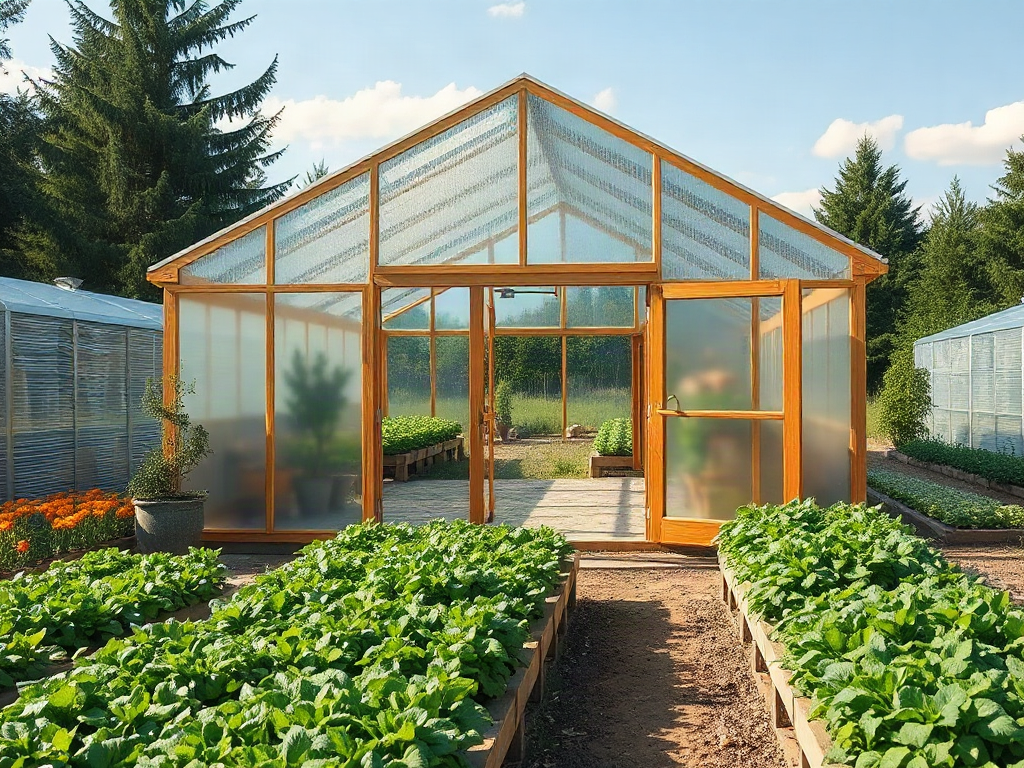
A self-sufficient greenhouse for year-round growing combines a climate-appropriate structure with passive solar gain, insulated heat storage, captured rainwater, efficient irrigation, and crops matched to seasonal light. It should reduce outside inputs rather than promise complete independence, because winter production may still require backup heat, stored water, or supplemental lighting. Place thermal mass where sunlight can warm it, insulate the foundation and non-solar surfaces, and ventilate before excess humidity causes condensation or disease. Begin with cold-tolerant winter greens instead of heat-demanding fruiting crops, then track temperature, water use, and battery reserves before expanding the system.
Define What Self-Sufficient Means at Your Site
Useful greenhouse independence begins with an input inventory, not a technology shopping list. Record what the structure will need for heating, cooling, irrigation, lighting, fertility, pest control, and replacement parts. Then separate essential loads from optional ones. Freeze protection and irrigation may be essential; maintaining summer temperatures for tomatoes through the darkest winter weeks usually is not.
Local weather sets the practical boundary. A greenhouse in a sunny, dry climate may collect abundant solar energy but struggle to store enough water and shed summer heat. A cloudy northern site may have reliable precipitation yet lack sufficient winter sunlight for warm-season crops. Wind exposure, snow loading, drainage, tree shade, and the lowest expected temperatures all affect the design. Monthly averages alone are inadequate because equipment must survive short periods of extreme cold, heat, or cloud cover.
Define measurable operating goals before sizing systems. A realistic first goal might be keeping hardy greens above freezing, supplying drip irrigation from stored rainwater, and running fans from a small independent electrical system. A much harder goal is holding warm nights, powering lights, and harvesting cucumbers in midwinter. The latter requires substantially more heat and electricity, even if both structures are called self-sufficient.
Create a simple resource budget using daily and seasonal units. Estimate liters of irrigation water used during a hot week, watt-hours consumed by every fan and pump, and the heat required during the coldest nights. Compare those demands with roof catchment, winter sunlight, battery storage, and available biomass or other backup fuel. Oversizing collection without enough storage—or installing large tanks without enough roof area to refill them—produces an expensive mismatch.
A common mistake is treating self-sufficiency as the absence of all purchased inputs. Glazing eventually needs repair, pumps fail, and some crop nutrients leave the property with each harvest. A stronger definition is operational resilience: the greenhouse can protect priority crops through ordinary interruptions while using few recurring external inputs. Readers developing A self-sufficient greenhouse for year-round growing should establish that boundary before selecting equipment.
Build the Greenhouse Around Heat Retention and Ventilation
The shell determines how much machinery the greenhouse will need for the rest of its life. Orient and shape it to capture useful winter sun, resist local wind and snow, and limit heat loss through unnecessary exposed surfaces. In the Northern Hemisphere, a clear southern exposure generally provides the strongest winter solar opportunity; in the Southern Hemisphere, the solar-facing side is typically north. Nearby trees and buildings should be checked for low winter shadows, not merely summer shade.
Glazing choices involve a tradeoff between light transmission, durability, insulation, and cost. Single-layer film is inexpensive but loses heat quickly and is vulnerable to damage. Inflated double film reduces heat loss but needs a blower. Twin-wall or multiwall polycarbonate usually offers better insulation and durability, although it costs more and admits less light than clear single glazing. Glass lasts well and transmits light effectively, but its weight, breakage risk, and relatively weak insulation complicate autonomous operation in cold regions.
Insulating opaque walls, the foundation perimeter, and the north wall in a northern site often conserves more energy than adding another heater. Air leaks around doors, vents, and glazing joints also matter. An entry vestibule reduces the rush of cold air when the door opens. Removable night curtains can slow heat loss, but they must retract during the day and dry properly so they do not trap persistent moisture against plants or framing.
Thermal mass moderates temperature swings rather than creating heat. Water barrels, masonry, or a well-coupled soil bed absorb daytime warmth and release part of it after sunset. Place mass where sunlight or warm greenhouse air can reach it without shading crops. A wall of cold barrels hidden under a bench may provide far less value than expected. Track predawn temperature for several weeks to determine whether the mass is large enough and receiving sufficient daytime heat.
Ventilation is equally important. Roof vents allow hot, moist air to rise out, while lower inlets admit replacement air. Automatic wax-cylinder vent openers can function without electricity, though powered exhaust fans may still be needed during hot, still weather. Condensation dripping each morning, persistent leaf wetness, or large temperature differences between the roof and crop canopy indicate weak airflow. The typical failure is sealing a winter greenhouse tightly while ignoring humidity; conserving heat then creates conditions favorable to fungal problems and poor pollination.
Match Off-Grid Energy to Essential Loads
An autonomous electrical system should serve small, efficient loads before attempting electric space heating. Pumps, monitoring equipment, circulation fans, vent motors, and controls can often be supported by a modest solar array and battery bank. Resistance heaters and high-output grow lights consume energy on a different scale, especially during winter when solar production is weakest and heating demand is greatest.
List each device’s power rating and expected daily runtime, then calculate daily watt-hours. A fan drawing 40 watts for eight hours uses 320 watt-hours; an irrigation pump drawing 60 watts for half an hour uses 30. Add conversion losses and a reserve for cloudy conditions rather than sizing the battery to a perfect sunny day. Equipment with a high starting surge may also require an inverter larger than its normal operating wattage suggests.
Heating deserves a separate plan. Passive solar capture, insulation, thermal curtains, below-grade construction where suitable, and thermal mass should lower the load first. Backup heat may come from an appropriately installed heater, a hydronic system, or another locally practical source. Combustion equipment requires safe venting, adequate clearances, and carbon-monoxide precautions; improvised unvented heaters introduce moisture and potentially dangerous gases. Electrical and fuel systems should comply with applicable local requirements, particularly in wet greenhouse conditions.
Controls should fail safely. If a controller, sensor, or battery stops working on a freezing night, a mechanical thermostat, independent alarm, or alternative vent and heat strategy can protect the crop. Place sensors at plant height, shield them from direct sun, and compare them periodically with a second thermometer. A sensor attached to a warm wall can report acceptable conditions while seedlings at the bench edge freeze.
Use a staged commissioning checklist before relying on the system:
- Measure: Log indoor and outdoor temperatures, humidity, and electrical use without valuable crops at risk.
- Stress-test: Observe performance through several cloudy days and a cold night.
- Prioritize: Give freeze protection and water delivery power before convenience loads.
- Verify recovery: Confirm batteries recharge and water temperatures rebound after a demanding period.
Signs of a balanced system include stable predawn temperatures, batteries that regularly return to a healthy charge, and fans that control condensation without exhausting all stored energy. Repeated low-voltage shutdowns mean the load, storage, or generating capacity must change—not that another gadget should be added.
Close the Water, Soil, and Nutrient Loops
Water independence depends on collection area, storage volume, seasonal rainfall, and crop demand. Roof runoff can be directed through debris screening and a first-flush arrangement into an opaque, covered cistern. Keep insects, animals, and sunlight out of stored water, and provide a safe overflow route away from foundations. Water quality requirements depend on its source and use; edible crops should not be exposed to contaminated runoff or unsafe storage practices.
Gravity-fed drip irrigation is simpler than a pressurized system, but low-pressure emitters must be selected carefully and elevation must provide enough head. Standard emitters may distribute unevenly when pressure is inadequate. A small efficient pump provides more control but creates an electrical dependency. In either case, filters are necessary because sediment and organic growth can block narrow passages.
Storage must reflect rainfall timing rather than annual totals. A large roof may fill a tank quickly during spring storms and still leave it empty after weeks of summer irrigation. Estimate demand by measuring actual use from representative beds, then reserve capacity for the longest likely dry interval. Mulch, drip lines, shade cloth during severe heat, and morning irrigation reduce losses, but excessive conservation can leave salts concentrated in beds if there is never enough drainage to flush them.
Soil fertility is harder to close completely. Finished compost, crop residues, leaf mold, worm castings, and carefully managed manure can return organic matter and nutrients. Yet harvesting vegetables continuously exports minerals. Compost made only from greenhouse residues cannot replace everything removed because it recycles the same limited pool. Periodic soil or growing-media tests can reveal pH drift, salinity, and nutrient imbalances before visual symptoms become severe.
A durable approach separates composting from crop production until materials are fully decomposed and safe to use. Fresh manure and unfinished compost can damage roots, introduce pathogens, or release nutrients at the wrong time. Rotate plant families where space permits, remove diseased material rather than composting it in a weak pile, and maintain habitat for beneficial insects without assuming they will control every outbreak. The water-and-fertility side of A self-sufficient greenhouse for year-round growing succeeds when inputs are measured and replenished deliberately, not when the system is described as closed.
Schedule Crops Around Light and Heat Availability
Year-round growing does not mean every crop grows equally well every month. Temperature can be supplied, but low winter light often remains the limiting factor. During short, cloudy days, mature cold-tolerant crops may hold well while new growth slows sharply. Planning autumn sowings early enough to establish plants before the darkest period is usually more efficient than trying to force rapid winter germination and growth.
Leaf lettuce, spinach, mâche, kale, chard, scallions, parsley, and some Asian greens are reasonable cool-season candidates, subject to cultivar and local conditions. Tomatoes, peppers, cucumbers, and basil need more warmth and light. Keeping those fruiting crops productive through winter can consume far more energy than maintaining greens and roots. A practical greenhouse changes its crop mix seasonally instead of imposing midsummer conditions all year.
Use distinct climate zones if the structure is large enough. Seed-starting benches can receive focused bottom heat while established hardy crops occupy cooler beds. A low inner tunnel or row cover inside the greenhouse creates an extra insulating air layer around priority plants at night. Vent or remove it during sunny periods; temperatures can climb quickly even when outdoor air is cold.
Succession sowing should respond to actual growth rates. A weekly schedule may work in spring but create overcrowding in winter when harvests slow. Record sowing, transplanting, and harvest dates for each season, then adjust intervals. Leggy seedlings, pale leaves, and stalled growth can indicate inadequate light, excessive warmth relative to light, crowded spacing, or root problems. More fertilizer will not correct a light deficit and may worsen salt accumulation.
Summer operation requires its own crop strategy. Shade cloth, large vents, circulation, and heat-tolerant selections can keep production viable, but some climates make an empty or lightly planted midsummer greenhouse more rational than intensive cooling. Watch for flowers dropping, leaf edges scorching, rapid wilting despite moist soil, and nighttime temperatures that remain high. Those signs call for better heat rejection or a seasonal pause, not simply more irrigation.
Start with one winter bed and document the result before filling the greenhouse. Compare harvest value with fuel, electricity, water, and labor used. That record exposes whether the system is genuinely resilient or merely transferring dependence from the utility grid to purchased fuel, batteries, soil amendments, and replacement crops.
For location-specific design loads, crop calendars, rainwater quality, and greenhouse pest management, consult your regional university extension service, agricultural department, building authority, and the equipment manufacturers’ official installation documents. Local sources are especially valuable because snow, wind, rainfall, winter light, and electrical requirements vary substantially by site.
Frequently Asked Questions
Can a greenhouse be completely self-sufficient?
Complete independence is uncommon because harvested nutrients, worn components, and prolonged weather extremes may require outside inputs. A more achievable target is low-input operation with stored water, independent power, passive temperature control, and planned backup capacity.
What is the most efficient way to heat an off-grid greenhouse?
Reduce demand first through insulation, air sealing, night curtains, solar orientation, and thermal mass. Supply targeted heat to roots or a protected inner growing zone before heating the entire air volume, while maintaining safe backup heat for extreme cold.
How much rainwater storage does a greenhouse need?
Storage depends on roof area, rainfall timing, crop area, irrigation method, and the longest expected dry period. Measure actual daily use during warm weather and size storage against the dry interval rather than relying only on annual rainfall totals.
Which crops are easiest to grow through winter?
Cold-tolerant leafy crops such as spinach, mâche, kale, lettuce, chard, and scallions generally require less energy than fruiting crops. Sow early enough for plants to establish before local light levels reach their winter minimum.
Does thermal mass eliminate the need for a heater?
Thermal mass delays temperature changes by storing daytime warmth, but it does not generate energy. Its effectiveness depends on mass, solar exposure, insulation, and the length of the cold period, so severe climates may still require backup heat.
Conclusion
Reliable greenhouse autonomy comes from reducing demand before expanding supply. Audit the site, define the minimum winter crop and temperature targets, and improve the shell before buying batteries, heaters, or elaborate controls. Size water and electrical storage for difficult weather sequences rather than ideal days, and preserve safe backup options for freezing temperatures, equipment failure, and extended drought.
Begin with hardy crops, one monitored growing zone, and a full season of records. Track predawn temperature, humidity, irrigation use, battery recovery, sowing dates, and harvested output. Those observations reveal whether the next investment should be insulation, ventilation, storage, generation, or a simpler crop schedule. A greenhouse that follows local seasons while protecting essential production will usually be more durable than one designed to reproduce summer conditions every day of the year.