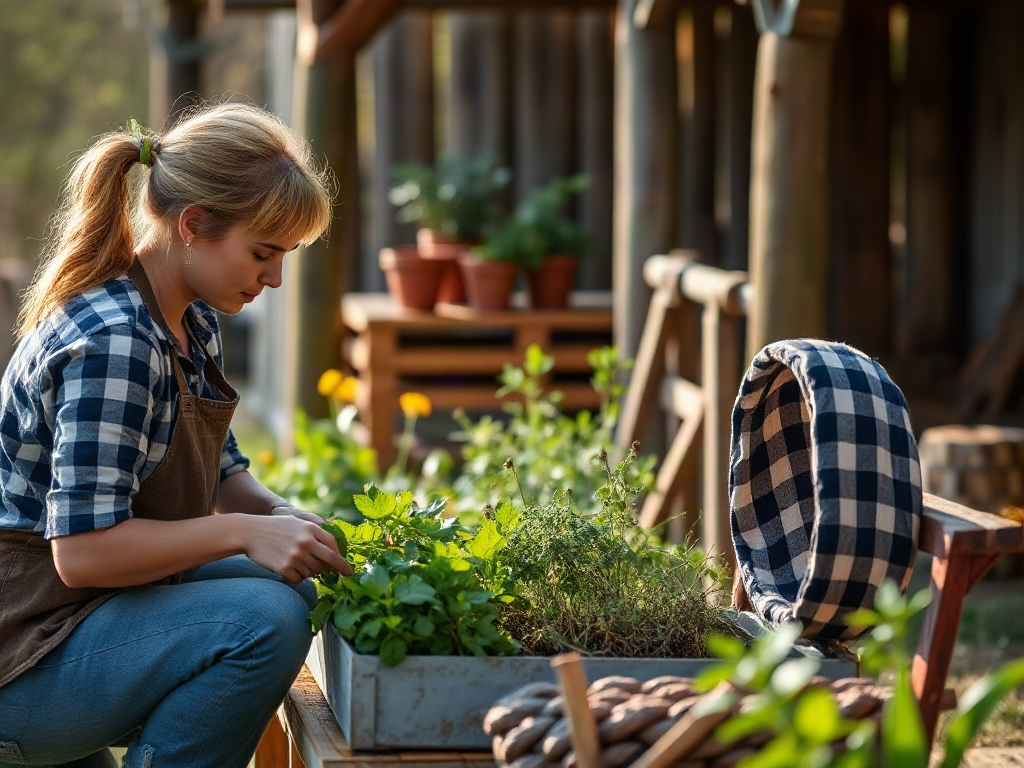
Women beginning homesteading can progress safely by learning household resilience, gardening, food preservation, tool use, animal care, and property systems in that order while keeping each project small enough to repeat. Begin with cooking from staples, storing water, growing a compact bed, and handling basic hand tools before adding pressure canning, livestock, or complex repairs. Repetition matters more than acquiring land or equipment because routine practice exposes gaps in timing, sanitation, strength, and recordkeeping. Advancement should follow demonstrated competence: consistent harvests before expansion, reliable preservation methods before bulk processing, and dependable daily chore capacity before animals arrive.
Build Household Resilience Before Expanding Outdoors
A capable homestead begins with repeatable household systems rather than acreage, livestock, or expensive equipment. Cooking with shelf-stable ingredients, keeping a working pantry, managing water, reducing waste, and tracking supplies create immediate resilience in an apartment, suburban home, or rural property. These tasks reveal how much food the household actually consumes and how much labor can fit into an ordinary week.
Start by choosing several meals that rely primarily on basic ingredients such as dried beans, rice, oats, flour, root vegetables, eggs, or seasonal produce. Cooking these meals repeatedly teaches portion planning, substitution, storage, and efficient use of leftovers. A pantry inventory should record purchase dates and quantities without becoming an elaborate administrative project. If food expires unnoticed or staple ingredients regularly run out, the system is too large or too complicated.
Water management deserves equally practical attention. Store a modest quantity in food-safe containers, learn how to shut off the household supply, and identify where leaks are most likely to appear. Stored water needs rotation and protection from contamination. Rainwater collection may later support gardens where local rules allow it, but it should not be treated as automatically safe for drinking. Potable-water planning and irrigation storage solve different problems.
A useful first phase lasts long enough to repeat the core routines several times. Practice baking a familiar loaf, preparing a meal entirely from pantry ingredients, sharpening a kitchen knife, mending a torn seam, and completing a weekly inventory. These modest tasks build judgment that transfers directly to larger projects. The related resource on Homesteading skills women beginners can learn progressively can be used to map these routines against available time and space.
The common mistake is buying specialized supplies before establishing a routine. A grain mill has little value if whole grains are rarely used, and extensive emergency storage becomes wasteful if nothing is rotated into meals. Progress is visible when supplies are used before they spoil, meals remain manageable during a busy week, and minor household disruptions no longer require improvised decisions.
Develop Garden Skills Through One Complete Growing Cycle
Gardening becomes a dependable homesteading skill only after the grower has observed planting, maintenance, harvest, and cleanup as one connected cycle. A small plot provides better instruction than several neglected beds because watering patterns, pest pressure, soil behavior, and harvest timing remain visible. Containers, a narrow in-ground row, or one raised bed can each serve this purpose.
Choose a few crops suited to the site rather than copying a broad seed list. Leaf lettuce and radishes offer quick feedback in cool conditions, while bush beans, cherry tomatoes, or summer squash need warmer soil and more room. Herbs near the kitchen are useful when they are harvested frequently. Before planting, observe direct sun for several days and confirm access to water. A productive bed placed far from a hose can create more labor than a larger bed close to the house.
Soil structure and drainage matter more than decorative bed design. Water should soak into the root zone without leaving the soil saturated for long periods. Compost can improve organic matter, but adding excessive unfinished material may interfere with planting and attract pests. Mulch reduces evaporation and suppresses weeds, yet thick mulch against tender stems can retain damaging moisture. Check beneath it rather than watering on a fixed calendar.
Keep a simple garden record with sowing dates, weather observations, pest problems, and harvest quantities. Suppose six tomato plants produce more fruit than the household can eat but beans are used at every meal. The next season should shift space toward beans instead of repeating the original layout. Records turn preference and performance into planting decisions.
Expansion should follow a successful cycle, not enthusiasm at seed-ordering time. Signs of readiness include regular harvesting, weeds controlled before they set seed, and a clear plan for surplus. Warning signs include repeated wilting, forgotten produce, or beds that cannot be maintained during a demanding week. Before adding square footage, improve irrigation access, crop selection, or scheduling. Women looking for progressive practice can use Homesteading skills women beginners can learn progressively as a reminder that competence is measured by completed cycles rather than garden size.
Add Food Preservation According to Risk and Harvest Volume
Food preservation should progress from low-risk methods to processes that demand precise temperature, acidity, or pressure control. Freezing, refrigeration, and dehydration are sensible entry points because beginners can practice preparation, labeling, portioning, and stock rotation without immediately managing a pressure canner. Water-bath and pressure canning require tested recipes and strict processing instructions.
Freezing is often the practical choice for small harvests. Blanching suitable vegetables before freezing can protect quality, while berries and chopped peppers may be prepared differently. Package foods in quantities the household will actually use and label each container with its contents and date. The limitation is dependence on electricity and freezer space. A freezer inventory taped nearby can prevent older packages from disappearing beneath newer ones.
Dehydration reduces storage volume and works well for many herbs, fruits, and selected vegetables. Finished food must be dry enough for safe storage and protected from moisture afterward. Texture and drying time vary with slice thickness, humidity, and the appliance, so visual appearance alone is not always a reliable endpoint. Follow the dehydrator manufacturer’s directions and preservation guidance from a university extension or the National Center for Home Food Preservation.
Canning introduces a sharper distinction between acidic and low-acid foods. Boiling-water methods are used only for appropriate high-acid foods and tested acidified recipes. Low-acid vegetables, meats, and similar products require pressure canning under validated instructions. A pressure cooker is not automatically a pressure canner, and personal recipes should not be improvised by changing jar size, ingredient ratios, or processing time. Altitude can also affect processing requirements.
A compact progression keeps the workload proportional to the harvest:
- First: refrigerate or freeze one familiar ingredient in useful portions.
- Next: dehydrate a small batch and check it during storage.
- Then: use a current tested water-bath recipe exactly as written.
- Later: pursue pressure canning after learning equipment operation and local altitude adjustments.
The frequent failure is preserving more food than the household wants to eat. Ten jars of an unpopular relish represent ingredients, energy, jars, and time that could have served a staple food. Success means sealed or frozen products remain identifiable, show no signs of spoilage, rotate into normal meals, and justify the labor required.
Practice Tools, Maintenance, and Livestock Care in the Right Order
Tool competence grows through controlled jobs, while livestock competence begins with dependable daily routines. Both areas carry consequences that are less forgiving than an untidy pantry or a disappointing garden bed. Beginners should separate tasks that can be practiced independently from those requiring instruction, protective equipment, or professional service.
Begin with hand tools used for common maintenance: measuring tape, hammer, screwdrivers, adjustable wrench, pruning shears, shovel, and a manual saw appropriate to the material. Practice identifying fasteners, measuring twice, making a pilot hole, tightening a loose hinge, replacing a simple hose washer, and cleaning tools after use. Good technique reduces fatigue and matters more than assuming every job requires upper-body strength. Stable footing, sharp cutting edges, and tools sized to the user’s hand improve control.
Power tools should be added one at a time. Read the manual, inspect guards and cords or batteries, secure the workpiece, and use task-appropriate eye, hearing, respiratory, and hand protection. Gloves are useful for many jobs but may be unsuitable around rotating equipment where they can catch. Electrical panels, structural work, gas systems, major tree felling, and uncertain plumbing faults are not suitable trial projects. Knowing when to stop is part of self-reliance rather than evidence of failure.
Livestock should come after the household has demonstrated spare chore capacity through changing weather and busy periods. Before acquiring hens, goats, rabbits, or other animals, calculate daily feed and water work, secure housing, fencing, manure handling, predator protection, veterinary access, and backup care. For example, a household that cannot arrange dependable weekend watering should delay chickens even if a coop is available. Animals create obligations every day, not only when eggs, milk, or meat are wanted.
Borrowing equipment, attending a hands-on class, or helping an experienced keeper can be more informative than buying immediately. A beginner can practice fence repair without owning animals and volunteer for feeding chores before committing to a herd or flock. Signs of readiness include completing maintenance without rushed shortcuts, budgeting for recurring costs, and having a written plan for illness or absence. Repeated injuries, escaped animals, dirty water containers, or postponed repairs signal that the operation has exceeded current capacity.
Frequently Asked Questions
Can a woman begin homesteading without owning land?
Yes. Cooking from staples, pantry rotation, container gardening, sewing repairs, dehydration, tool care, and household water planning can all be practiced in limited space, subject to lease and local rules.
Which homesteading skill should a complete beginner learn first?
Start with meal preparation and pantry management because both produce frequent practice, expose actual household consumption, and reduce waste before larger growing or preservation projects begin.
How can a beginner know when to add another skill?
Add complexity when the current routine works through busy weeks without spoilage, skipped care, unsafe shortcuts, or excessive expense. Reliable repetition is a better benchmark than time spent studying.
Is pressure canning appropriate for a first preservation project?
It is usually better to practice labeling, freezing, or dehydration first. Pressure canning can follow when the user can operate approved equipment and follow a current tested recipe, including altitude adjustments.
Should beginners raise chickens as their first livestock?
Chickens may be manageable for some households, but they still require secure housing, daily feed and clean water, predator protection, health monitoring, manure management, and backup care before purchase.
Conclusion
Progressive homesteading works best when each new responsibility rests on a routine that already functions. Establish meals, pantry rotation, and household water awareness before enlarging the garden. Complete one growing cycle before planning substantial preservation, then match each preservation method to its safety requirements and the amount the household will consume. Tool practice should move from controlled hand-tool jobs toward carefully selected powered equipment, with professional help reserved for hazards beyond the user’s training. Livestock belongs at the end of the sequence because living animals cannot be paused when work, weather, illness, or travel disrupts the schedule. Choose one small skill to repeat this week, record what failed or consumed too much time, and improve that system before adding another obligation.