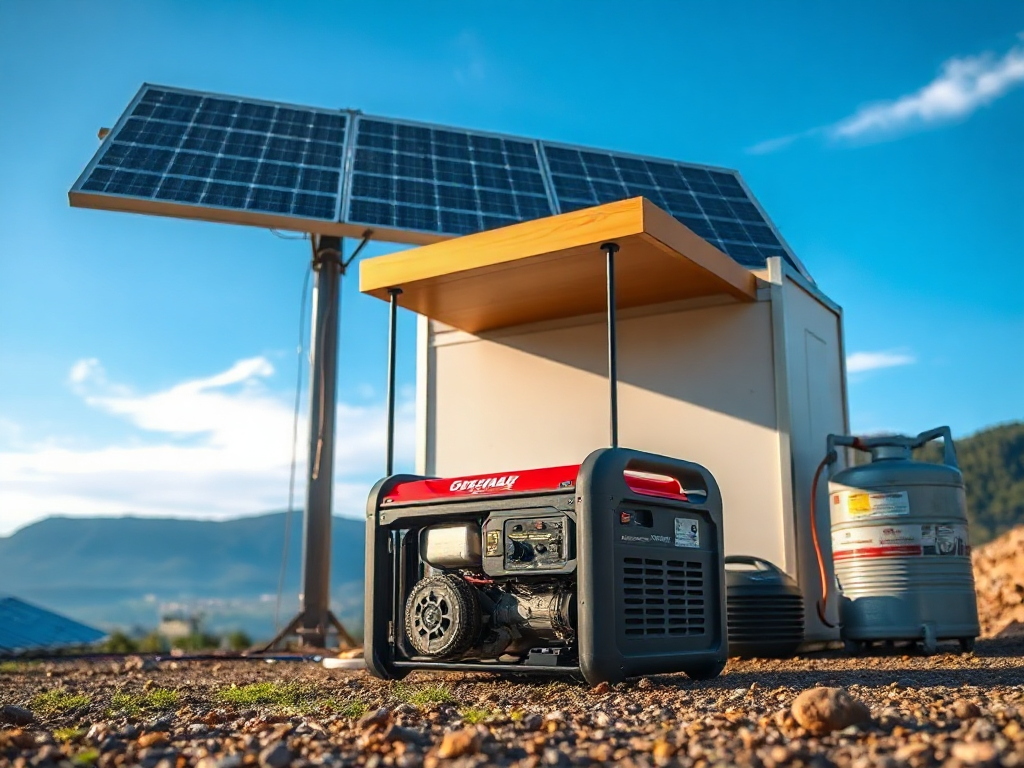
The best backup generator strategy for self-sufficient energy combines a properly sized generator, a battery or renewable source when practical, prioritized electrical loads, and a tested fuel plan. A generator should cover essential circuits such as refrigeration, water pumping, communications, heating controls, and battery charging rather than every appliance at once. Inverter generators or standby units may reduce fuel waste at lighter loads, while propane, diesel, gasoline, and dual-fuel systems each impose different storage and maintenance demands. Transfer equipment must be installed safely, ventilation must prevent carbon monoxide exposure, and monthly test runs should confirm starting, connection, runtime, and fuel readiness before an outage.
Define Essential Energy Before Buying a Generator
A self-sufficient power plan begins with deciding which services must continue during an outage. Generator size should follow those priorities, not the total wattage of every appliance in the house. Refrigeration, a well pump, communications equipment, medical devices, heating controls, lighting, and battery charging may represent the essential load, while electric resistance heating, clothes dryers, water heaters, and workshop tools can usually wait.
Write down each critical device, its running wattage, and its starting demand if the manufacturer provides it. Motors in pumps, refrigerators, freezers, and compressors may draw a brief surge when they start. Adding only the running figures can produce a generator that appears adequate on paper but stalls when two motors start together. A practical load schedule identifies which equipment runs continuously, which runs in short cycles, and which must never overlap.
For example, a rural property with a 240-volt well pump may need a different arrangement from a small cabin using a 120-volt pressure pump. The cabin could operate essential circuits from a modest portable inverter generator, while the property with a deep-well pump may need a larger generator, a soft-start device, or a separate pumping schedule. A larger generator is not automatically safer or more independent: it may consume more fuel at light loads and encourage unnecessary appliance use.
Use a simple priority order:
- Life safety: medical equipment, carbon monoxide alarms, emergency communications, and heating controls.
- Water and food: pumps, refrigeration, freezers, and food-preservation equipment.
- Habitation: selected lighting, internet or radio equipment, and modest cooking loads.
- Convenience: laundry, entertainment, power tools, and nonessential heating or cooling.
The common mistake is sizing around a short-term peak without defining a daily operating pattern. A load audit that includes starting surges, voltage requirements, and expected hours of use gives a more useful foundation. Readers comparing this approach with Best backup generator strategy for self-sufficient energy should treat the load list as the design document, not an afterthought.
Match Generator Type, Capacity, and Fuel to the Property
Generator choice should reflect runtime, weather exposure, repair capability, electrical demands, and fuel storage rather than brand reputation alone. Portable gasoline units are accessible and flexible, but gasoline storage requires careful rotation and approved containers. Propane stores for longer periods and burns cleanly, though cold conditions, tank size, and vaporization limits can affect performance. Diesel often suits larger standby equipment and heavy loads, but fuel maintenance and cold-weather handling deserve attention. Dual-fuel models provide flexibility but add valves, controls, and operating decisions.
Portable inverter generators generally offer quieter operation, cleaner power for sensitive electronics, and better efficiency when the load is light because their engine speed can vary. Their limitations include lower capacity and potential difficulty supporting large 240-volt loads. Conventional open-frame generators may deliver more power for less money, but they can be louder and less economical during low-demand periods. A permanently installed standby generator can start automatically and connect through a transfer switch, yet it depends on a fixed fuel supply and professional installation.
Capacity should account for both continuous demand and motor starting. A unit rated for essential circuits may still be unsuitable if the well pump, air-source heat pump, or septic pump starts while a battery charger is drawing heavily. Staggering loads, using a generator-friendly charger, or installing motor-start assistance may reduce the required capacity. Oversizing has a cost beyond the purchase price: lightly loaded engines may run inefficiently, and larger fuel tanks, exhaust clearances, and maintenance needs can complicate the installation.
Fuel selection is also a resilience decision. A property with reliable propane deliveries may favor propane, while a remote site with stored diesel and mechanical repair skills may prefer diesel equipment. Gasoline can be practical for short outages but is a weak sole strategy for prolonged isolation unless rotation and stabilizer procedures are already established. Keep the generator’s fuel type aligned with the energy sources used by vehicles, heating equipment, and farm machinery only when that alignment does not compromise storage safety.
Check the nameplate, owner’s manual, voltage output, transfer equipment compatibility, noise limits, cold-start requirements, and service intervals before purchase. The failure mode to avoid is buying a high-output unit that cannot run the property’s most demanding essential motor or cannot be refueled safely where it will operate.
Build a Layered System With Batteries and Renewable Power
A generator becomes more useful when it is reserved for heavy or prolonged loads instead of running continuously for every small electrical need. Solar panels, a battery bank, and direct conservation can handle some daytime or low-power demand, allowing the generator to run in deliberate charging windows. This layered design reduces idle runtime and gives the household more than one way to maintain refrigeration, communications, lighting, and water systems.
The battery does not replace the generator unless its capacity, solar production, inverter rating, and seasonal conditions support the essential load. A battery bank may run a refrigerator, lights, networking equipment, and device chargers overnight, but a well pump or electric cooking appliance may exceed the inverter’s surge capability. Solar output also varies with cloud cover, snow, shading, panel orientation, and winter daylight. Treat renewable power as a useful layer with measurable limits, not as guaranteed backup.
A sensible operating sequence is to use stored battery energy for small loads, run solar-connected equipment when production is available, and start the generator when the battery reaches a defined reserve or a high-demand task is scheduled. The generator can then charge the battery while operating near an efficient load level. Exact settings depend on battery chemistry, inverter controls, and manufacturer limits, so the system should follow the equipment documentation rather than improvised voltage thresholds.
Consider a homestead with a 5-kilowatt generator, a modest solar array, and a battery inverter. During a winter outage, solar may cover communications and lighting for part of the day, while the generator runs for a planned period to charge the battery and operate the well pump. The household can then avoid running the engine overnight simply to power a few small devices. A cabin without battery storage may instead use the portable generator in short manual intervals, but it must protect refrigeration and restart loads carefully.
Battery systems introduce their own risks and costs, including installation space, fire precautions, temperature limits, replacement planning, and conversion losses. The common misconception is that adding solar automatically makes a generator unnecessary. The better question is which loads each layer handles, how long it can operate, and what happens during several cloudy days or a fuel-delivery interruption.
Install, Store, and Test the System Safely
Safe installation determines whether backup power is an asset or a hazard. A portable generator belongs outdoors in a location where exhaust cannot enter doors, windows, crawl spaces, or ventilation openings. It must remain dry, stable, and separated from combustible materials according to the manufacturer’s instructions. Carbon monoxide can accumulate even when the generator seems far from the building, so indoor operation, garage operation, and improvised weather enclosures are unacceptable.
Permanent connection requires correctly rated transfer equipment so generator power cannot energize utility lines or create a dangerous backfeed. A qualified electrician should evaluate the service panel, grounding and bonding arrangement, neutral configuration, voltage, and selected circuits. Plugging a generator into a household outlet with a homemade cord bypasses protective design and can expose occupants and utility workers to energized conductors.
Fuel storage needs an equally deliberate plan. Use approved containers, protect them from heat and ignition sources, label them clearly, and rotate stored fuel according to the fuel and stabilizer manufacturer’s guidance. Propane cylinders and diesel tanks require appropriate placement and inspection. Never refuel a hot generator; allow it to cool and follow the manual. Keep oil, filters, spark plugs or fuel filters, fuses, and the correct tools on hand because a fuel reserve is useless if a small maintenance failure stops the engine.
Test the complete chain, not merely the engine. A monthly exercise can confirm that the generator starts, reaches stable output, transfers correctly, runs the intended loads, and shuts down normally. Test under a meaningful load when the manual permits it. Watch for hunting, unusual smoke, voltage alarms, fuel leaks, overheating, battery failure, or a transfer switch that does not return to normal utility power. A generator that starts easily with no load may still fail when a pump or charger engages.
Store the operating instructions where the equipment is located and mark the essential circuits. The weak assumption is that new equipment will work during an emergency without rehearsal. A supervised test in ordinary weather is the safest time to find an incompatible charger, missing connector, dead starter battery, or inaccessible fuel container.
Use an Outage Operating Plan That Conserves Fuel
An outage plan turns equipment into usable capacity. Decide in advance which circuits operate together, when the generator starts, what battery reserve is protected, and who checks fuel, oil, temperature, and ventilation. The plan should distinguish a six-hour interruption from a multi-day event because a strategy that is comfortable for one evening may waste fuel rapidly over a week.
Run high-demand equipment in batches when possible. A well pump can fill a pressure tank or storage cistern, then shut down while refrigeration and battery charging continue. Laundry, power-tool use, electric cooking, and water heating should be scheduled rather than allowed to overlap with motor starts. If the generator sounds strained, voltage fluctuates, or a breaker trips, remove nonessential loads before restarting equipment. Repeated overloads can damage both the generator and connected electronics.
A useful written checklist includes:
- Confirm the outage and isolate utility power through the approved transfer method.
- Inspect the generator, oil level, fuel supply, exhaust path, cords, and weather conditions.
- Start with essential loads only, then add equipment one circuit at a time.
- Record runtime, refueling time, unusual symptoms, and remaining fuel.
- Rotate batteries and fuel supplies, and schedule post-outage maintenance.
Fuel budgeting should use the actual load rather than the generator’s maximum rating. A unit running a pump for ten minutes and charging batteries for an hour may consume far less than one operated continuously to power a whole house. Conversely, a lightly loaded generator may be inefficient, so consolidating charging and pumping into planned windows can improve the useful energy obtained from each gallon or cylinder.
Practice matters for households with children, older adults, animals, or anyone dependent on medical equipment. Assign clear responsibilities and keep a manual alternative for water, lighting, and communication where feasible. A generator plan is failing when nobody knows which breaker supplies the pump, fuel cannot be reached safely, or the household discovers during an outage that the battery reserve was drained by entertainment loads. The strongest setup is simple enough to operate under stress and specific enough to prevent guesswork.
Frequently Asked Questions
What size generator is usually suitable for essential household loads?
Size the unit from measured running loads plus starting surges, with special attention to pumps, compressors, and electric heating. A smaller unit serving selected circuits is often more fuel-efficient than one sized for the entire home.
Is propane better than gasoline for emergency backup?
Propane can simplify long-term storage, while gasoline may be easier to obtain for short outages. Neither is universally better; compare storage conditions, winter performance, availability, tank capacity, and the generator’s documented fuel ratings.
Can solar panels replace a backup generator?
Solar can reduce generator runtime, especially when paired with batteries, but cloudy weather, winter production, battery capacity, and large motor loads may limit independence. Design each source for specific loads and operating periods.
How often should a standby or portable generator be tested?
Follow the manufacturer’s exercise and maintenance schedule, and perform practical outage drills regularly. Testing should verify starting, stable output, transfer equipment, essential loads, fuel delivery, and safe shutdown rather than merely letting the engine idle.
What is the most dangerous generator mistake?
Operating a generator in an enclosed or partially enclosed space creates a carbon monoxide hazard. Backfeeding through an outlet is also dangerous; use approved transfer equipment and follow qualified electrical installation guidance.
Further Reading
Authoritative Sources
- Academy of Nutrition and Dietetics
eatright.orgProfessional nutrition guidance, healthy eating resources, and practical dietitian-reviewed advice.
- U.S. Department of Agriculture
usda.govOfficial food, nutrition, agriculture, and consumer guidance from the USDA.
- NIH Office of Dietary Supplements
ods.od.nih.govResearch-based fact sheets on nutrients, supplements, dietary intake, and safety considerations.
- International Society of Sports Nutrition
sportsnutritionsociety.orgEvidence-informed sports nutrition resources and position stands for active people and athletes.
Conclusion
Reliable self-sufficient energy comes from matching equipment to priorities, then operating that equipment as a coordinated system. List essential loads, account for motor-start surges, choose fuel that can be stored and replenished safely, and decide whether batteries or solar can handle low-demand periods. A transfer switch, outdoor placement, carbon monoxide protection, maintained fuel, and realistic testing deserve as much attention as generator output.
Next, measure the loads that matter most, mark the circuits they use, and run a supervised outage drill. Record what starts, what overloads the system, how quickly fuel is consumed, and which manual alternatives are needed. That evidence will produce a more durable plan than buying the largest available generator and hoping it covers every situation.