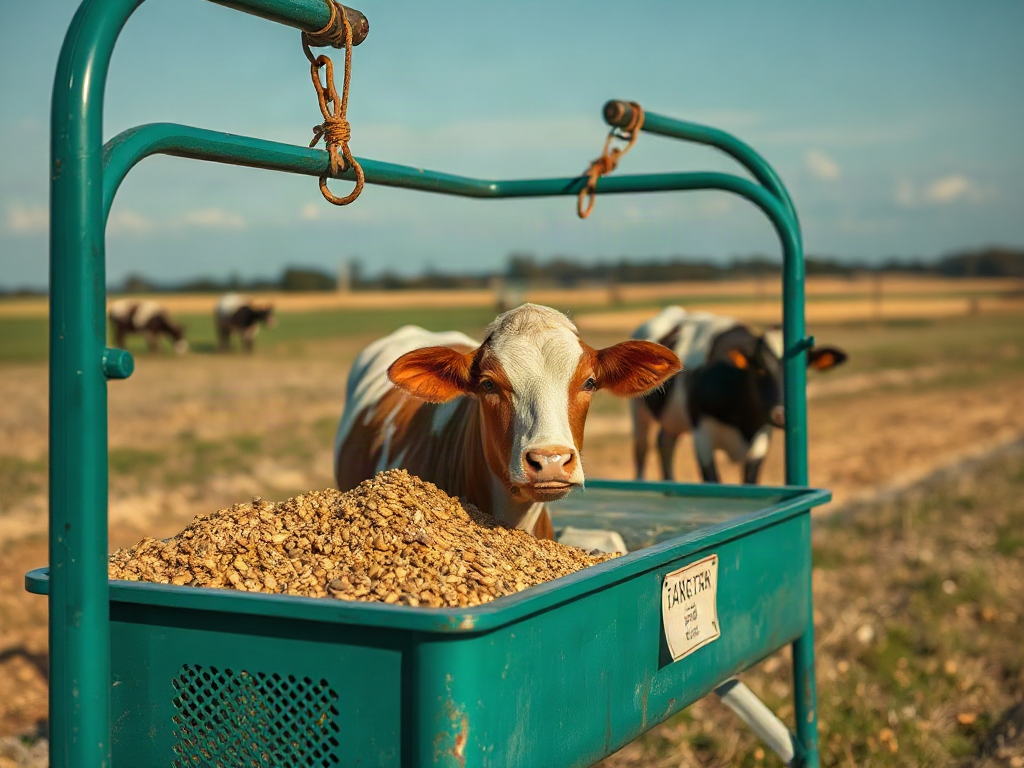
A cattle self-feeder setup reduces feed loss when the trough lip is set near shoulder height, the feed opening limits aggressive rooting, and the unit stands level on firm, well-drained ground. Adjust the gate so cattle can reach feed without dragging large mouthfuls onto the apron, then watch for spilled grain, bridging, and moisture after each refill. Provide enough feeding access to prevent crowding without exposing an unnecessarily wide feed face. Recheck settings whenever cattle size, ration texture, weather, or group behavior changes, because a feeder that works for dry pellets may waste a coarse or dusty mix.
Where Should a Cattle Self-Feeder Be Placed?
Feeder location affects waste before any gate or trough adjustment is made. Cattle need a stable approach that lets them stand squarely at the feed face rather than reaching from mud, an uneven slope, or a deeply tracked lane. A feeder that rocks or settles out of level can deliver more feed to one end, leave stale material at the other, and create openings that no longer match their original settings.
Choose elevated, well-drained ground that remains accessible to both cattle and refill equipment. The site should shed runoff away from the feeder without directing manure-laden water toward a pond, stream, well, or feed storage area. Avoid roof drip lines and low spots where water can enter the trough. If the feeder must remain in one location, a compacted aggregate base or appropriately designed concrete apron can provide steadier footing and make spilled feed visible. Local drainage, runoff, and manure-management requirements should inform permanent site work.
Orientation also matters. Position the feed face so prevailing wind does not routinely drive rain or snow into the trough. Shelter can reduce weather exposure, but an enclosed corner may encourage crowding or trap moisture. Leave enough open space for subordinate cattle to approach and withdraw without being pinned against a fence. The refill side should be separated from normal cattle traffic when possible, especially if a loader, auger, or feed truck is used.
Consider a feeder placed beside a muddy gateway. Even if its feed gate is correctly set, cattle may brace awkwardly, push harder against one another, and carry mud into the trough. Moving that same unit to a drained pad can reduce contamination and make wasted grain easier to measure. The tradeoff is convenience: a location close to storage may shorten refill time, but convenience should not outweigh safe equipment access, drainage, or cattle movement.
A common mistake is assuming that rotating a portable feeder automatically solves mud problems. Moving it after deep tracking develops often spreads wasted feed and manure across a larger area. Move portable units before the surface fails, or stabilize a dedicated feeding zone. After placement, confirm that the feeder is level front to back and side to side, then check it again after heavy rain, freezing and thawing, or repeated refill traffic.
How to Set Trough Height and Feed Opening
Trough geometry should let cattle eat comfortably while discouraging them from sweeping feed out with their muzzles. Use the manufacturer’s adjustment system as the starting point because feeder dimensions differ, then evaluate the setting against the size and behavior of the cattle actually using it. The working height should encourage a natural head position without forcing animals to kneel, overreach, or lift their heads with loose feed still in their mouths.
The feed gate controls how much material enters the eating area. An opening that is too large keeps a deep pile in front of the animals, making it easy to sort ingredients and pull mouthfuls over the lip. An opening that is too narrow can restrict access, cause bridging, and increase pushing as cattle work for feed. Make small, even adjustments across the feeder rather than changing one end dramatically. Allow the herd to consume the excess already in the trough before judging a narrower setting.
Use this setup sequence when commissioning or readjusting the feeder:
- Level the unit: Correct settlement and verify that all legs or skids are stable.
- Inspect the trough: Remove spoiled feed, hardened fines, twine, and other obstructions.
- Set a conservative opening: Follow the feeder instructions and avoid filling the trough to its outer edge.
- Observe several feeding periods: Watch both dominant and subordinate animals rather than judging only the first cattle to arrive.
- Change one variable: Adjust the gate, height, or location separately so the cause of improvement or failure remains clear.
Signs of a workable setting include a shallow, consistent feed layer, normal access around the unit, and little edible material outside the trough. Repeated head tossing, feed accumulating on cattle backs, aggressive pushing, or a crescent of grain on the ground points to an exposed feed face, crowding, or an uncomfortable reach. A polished outer lip can also indicate that cattle are pressing hard against the feeder.
Do not weld permanent extensions or remove guards before checking the feeder manual and the effect on structural safety. Homemade alterations may create sharp edges, entrapment spaces, or uneven loading. Mixed groups present another constraint: a height suitable for mature cows may not serve smaller calves. Separate feeding arrangements or a feeder designed for the intended class of cattle may waste less than trying to make one fixed opening accommodate a wide size range.
Matching Feeder Design to Feed and Herd
Feed form and herd pressure determine whether a technically sound feeder remains economical in use. Pellets, cracked grain, meal-like feeds, and coarse mixed rations do not flow or sort in the same way. Fine material may leak through seams or become airborne, while coarse ingredients can bridge above the gate. Moist feeds and bulky forage-based mixtures may not be appropriate for a gravity self-feeder unless the equipment was designed for them.
Inspect the ration as it enters the feeder and again after cattle have eaten. If fines remain while larger particles disappear, cattle may be sorting rather than simply consuming the mix. Opening the gate farther usually makes sorting easier, not harder. A more uniform feed form, a smaller exposed pile, or a different delivery method may be needed. Ration changes should be planned with a qualified cattle nutrition professional because self-feeding can affect intake patterns, and abrupt changes in concentrate access may create animal-health risk.
Feeding space must match group behavior as well as head count. Too few usable openings can concentrate dominant animals at one point and cause others to reach from the side, bump the feeder, or eat rapidly when access becomes available. More openings may reduce competition, but an oversized feed perimeter exposes additional feed to weather and can leave sections stale. Observe whether cattle distribute themselves around the feeder or cluster at the easiest-flowing side; clustering may reveal an out-of-level bin or uneven gate setting rather than inadequate total capacity.
For example, a feeder may perform cleanly with uniform pellets but develop a band of fines beneath the trough after a switch to a cracked, dusty blend. Raising the lip will not correct leakage through worn seams, and narrowing the gate will not stop wind from lifting dust. The response should match the loss pathway: repair gaps, reduce drop height during filling, protect the trough from wind-driven precipitation, or discuss feed form with the supplier.
Capacity is another tradeoff. A large hopper reduces refill frequency, yet feed may remain longer in humid conditions and defects can go unnoticed between visits. A smaller unit requires more labor but encourages frequent inspection. Regardless of capacity, use feed in a sensible rotation, keep lids and seals functional, and never climb into or work beneath a loaded feeder. Follow manufacturer procedures for clearing a blockage; gravity-fed material and moving components can create engulfment, pinch, and stored-energy hazards.
How Do You Check and Correct Feed Loss?
Feed loss should be diagnosed by where the material appears and when it accumulates. Fresh feed directly below the trough usually points to pulling, nosing, leakage, or an overfull feed face. Wet or moldy material inside the trough suggests weather entry, poor drainage, or feed remaining too long. A sudden pile after filling may indicate an open gate, damaged seam, or feed surging through a bridged section.
Inspect the feeder at consistent times, including shortly after filling and during active use. Sweep or collect old material from a defined area before observation so new loss is distinguishable. A practical record can note the date, ration, weather, gate position, cattle group, location of spilled feed, and corrective action. Exact weighing is helpful when practical, but photographs from the same angle can reveal whether the spill line is shrinking or merely moving.
| Observed sign | Likely mechanism to check | Practical next step |
|---|---|---|
| Feed heaped along the outer lip | Gate too open or cattle sorting | Reduce exposure gradually and reassess feed uniformity |
| More feed at one end | Feeder out of level or gate uneven | Stabilize the base and match settings across the feed face |
| Wet, clumped material | Rain entry, condensation, or poor turnover | Check lid, orientation, seals, and refill quantity |
| Spillage during crowded periods | Competition or inadequate usable access | Observe stocking pressure and add suitable access if needed |
| Fines beneath seams | Wear, gaps, or dusty feed | Repair the leak and evaluate feed handling |
Change one likely cause at a time and give the cattle enough use to show whether the adjustment worked. If the gate is narrowed, the feeder is moved, and the ration changes on the same day, the useful lesson is lost. The exception is an immediate safety, spoilage, or severe leakage problem, which warrants prompt correction rather than a controlled trial.
Do not treat all feed on the ground as a feeder-setting problem. Birds, rodents, wind, loader spills, and cattle entering the refill zone can produce similar evidence. Likewise, an empty trough does not prove the opening is too narrow; the hopper may be bridged above it. Before widening a gate, confirm that feed is present, dry enough to flow, and unobstructed. Never place hands or tools into a loaded mechanism unless the equipment has been secured according to its instructions.
A successful correction leaves less edible feed outside the unit without causing empty feed spaces, persistent crowding, restricted flow, or deteriorating feed condition. Continue checking hardware, hinges, fasteners, guards, seals, and the supporting surface. Wear develops gradually, and seasonal changes in cattle size, precipitation, and ration texture can make an old setting unsuitable even when nobody has intentionally moved it.
Frequently Asked Questions
How high should a cattle self-feeder trough be?
Set it for the size of cattle using the feeder and follow the manufacturer’s dimensions. Cattle should reach feed without kneeling, straining, or routinely dragging feed over the lip; mixed-size groups may need separate arrangements.
Should the trough stay full of visible feed?
No. A deep, constantly exposed pile encourages sorting and spillage. Aim for reliable access with a shallow working layer, then verify that the hopper flows properly and subordinate cattle can eat.
Why is feed collecting under only one end of the feeder?
The feeder may be out of level, the gate may be uneven, or one section may be damaged. Check the base and compare openings before assuming cattle preference is the cause.
Can a self-feeder be placed directly on pasture?
A portable unit can be used on suitable ground, but high traffic can quickly create mud and settlement. Move it before the surface deteriorates or establish a drained, stable feeding area.
How often should a self-feeder be inspected?
Check it during routine cattle observation and after refilling, severe weather, ration changes, or movement to a new site. Increase inspection frequency when feed is bridging, getting wet, or appearing outside the trough.
Conclusion
Effective feed-loss control comes from treating the feeder, ration, site, and cattle group as one operating system. Begin with firm drainage and a level unit, then set the trough and gate for the animals using it rather than relying on an old position mark. Watch where feed accumulates, how cattle approach, and whether material remains dry and free-flowing.
Make small, documented adjustments unless a safety or spoilage problem requires immediate action. Repair leaks instead of compensating with gate changes, and reconsider feed form or feeder type when bridging and sorting persist. The next practical step is to clean the surrounding area, observe one normal feeding period, photograph the loss pattern, and correct the most likely pathway. Recheck after weather, ration, or group changes so a previously efficient setup does not quietly become wasteful.
For equipment-specific dimensions and safe adjustment procedures, consult the self-feeder manufacturer’s current manual. Cattle ration changes, concentrate access, and intake concerns should be discussed with a qualified livestock nutrition professional or veterinarian; local university extension and agricultural agency materials can also provide region-specific guidance on feed management, drainage, and manure runoff.