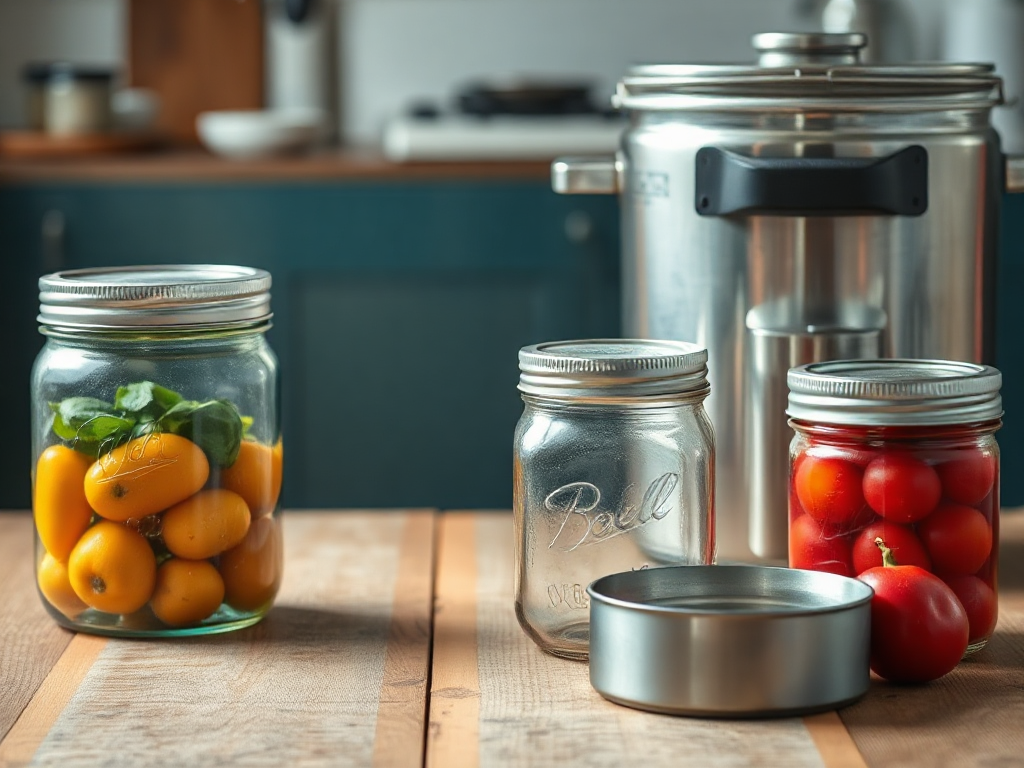
Canning pressure adjustments at high elevation depend on the canner type and the tested recipe’s pressure method: increase pressure for a weighted-gauge canner or adjust the dial-gauge pressure as altitude rises. Higher elevation lowers atmospheric pressure, so steam reaches the required processing temperature at a different gauge reading. Use the altitude table from your canner or extension service, maintain the specified pressure for the full processing time, and never compensate for pressure changes by shortening the time. Confirm the elevation of your kitchen, vent the canner thoroughly, and restart timing if pressure falls below the required setting.
Why Elevation Changes Pressure-Canning Settings
High elevation changes the relationship between the pressure shown on a canner gauge and the temperature inside the vessel. Atmospheric pressure is lower at higher elevations, so water boils at a lower temperature than it does near sea level. Pressure canning relies on a controlled steam environment reaching a temperature high enough for the tested recipe, particularly when processing low-acid foods such as vegetables, meats, poultry, and seafood.
The gauge does not directly tell you the temperature of the food in every part of every jar. It reports pressure relative to the surrounding atmosphere. As altitude increases, the pressure setting needed to produce the intended processing condition may change. That is why a recipe written for sea level should not be transferred automatically to a mountain kitchen without checking the applicable altitude table.
For example, a pressure value that is suitable at a coastal location may not be the correct setting at 4,000 feet. The adjustment is not a matter of preference or a way to speed up processing. It exists because the surrounding air pressure changes the steam-temperature relationship. A reader who assumes that “10 pounds” has exactly the same meaning everywhere may underprocess food if the wrong table is used.
Altitude also affects water-bath canning, but the correction is usually made by increasing processing time rather than by adding pressure. Pressure canning and boiling-water canning should not be treated as interchangeable methods. The food’s acidity, jar size, packing style, processing method, and elevation all belong to the tested instructions for that product.
Before using Canning pressure adjustments at high elevation, establish the elevation where the canner will operate. A property’s advertised elevation may be rounded, and nearby locations can differ. If the elevation is close to a table boundary, use the more conservative applicable range or confirm the value with a local extension office.
Choosing the Correct Pressure Adjustment
The first decision is whether the canner uses a weighted-gauge regulator or a dial gauge. Those devices measure pressure differently, and their altitude instructions are not automatically interchangeable. A weighted-gauge canner commonly uses a specified weight or set of weights, while a dial-gauge canner requires the operator to monitor a numerical reading. The tested recipe may specify one pressure method, a range, or an alternative setting for the other gauge type.
Weighted-gauge adjustments often involve using a higher pressure setting at increasing elevations. Dial-gauge adjustments may require a different pressure value at designated altitude ranges. The exact correction must come from the recipe, canner manufacturer, or a recognized food-preservation authority. Do not infer the number from a general internet chart if the chart does not identify the gauge type and altitude range.
A recipe calling for 10 pounds with a weighted gauge is not necessarily equivalent to a dial-gauge instruction calling for 10 pounds. The gauge design, calibration, and tested process matter. A dial gauge can also drift over time, particularly if it is stored carelessly or used frequently. Extension services commonly recommend periodic testing of dial gauges; a gauge that reads inaccurately can create a larger problem than a small arithmetic mistake.
Pressure adjustment does not replace other recipe controls. Jar size, headspace, ingredient proportions, preparation method, and processing time remain fixed unless the tested instructions specifically provide an alternative. Increasing pressure is not a universal correction for a shortened processing time, an oversized jar, dense packing, or an untested recipe.
Use this order of decisions:
- Identify the exact food and tested recipe.
- Confirm the canner’s gauge type and condition.
- Verify the operating elevation.
- Apply the pressure or weight listed for that gauge and altitude.
- Follow the complete venting and timing instructions.
A common mistake is selecting the highest pressure available because it seems safer. Excess pressure may damage jars, force liquid from containers, or affect texture without correcting an inappropriate process. The correct setting is the one matched to the tested method, not the largest number the equipment can display.
Using a Pressure Canner at Altitude
Successful altitude canning depends on controlling the entire process, not merely turning up the pressure. Begin with the recommended amount of water in the canner, place prepared jars on the rack, and secure the lid according to the manufacturer’s directions. The vent must be open during the initial heating period so air can escape and steam can replace it.
Venting deserves special attention because a mixture of air and steam does not provide the same processing environment as pure steam at a given gauge reading. Once a steady column of steam has vented for the time specified by the tested instructions, close the vent or place the regulator as directed. Only then should the pressure build. Starting the timer while the canner is merely heating, or before the required pressure is reached, creates an incomplete process.
At high elevation, pressure may fluctuate as the burner cycles, the canner loses heat, or the operator adjusts the regulator too aggressively. Watch the gauge and make small heat adjustments. If the pressure drops below the recipe’s required level, the usual safety instruction is to bring it back to the required pressure and restart the processing time from the beginning. Do not estimate the lost minutes or add a short extension unless an authoritative tested procedure says to do so.
Consider a batch of green beans processed in a dial-gauge canner at a mountain home. The operator reaches the altitude-adjusted pressure, begins timing, and then lowers the burner until the needle falls several pounds below the target. Even if the jars remain hot, the original timing no longer represents the required pressure exposure. Restarting the timing is inconvenient, but guessing would leave the process unsupported.
Cooling is another control point. When processing ends, turn off the heat and allow the canner to depressurize naturally. Forced cooling, lifting the regulator prematurely, or running water over the lid can cause liquid loss, jar breakage, or seal problems. After pressure returns to zero, wait the period specified by the equipment instructions before opening the lid, directing steam away from your face and hands.
The pressure adjustment table should be kept with the recipe rather than recalled from memory. A printed chart, verified manufacturer manual, and current tested recipe reduce the chance of mixing instructions from different canners.
Mistakes That Undermine Safe Processing
The most serious mistake is changing pressure and time independently. A higher pressure setting does not automatically make an untested processing time safe, and a longer time does not necessarily correct a pressure failure. Heat penetration depends on the food’s density, jar dimensions, pack style, starting temperature, and other recipe details.
Another frequent error is using a water-bath recipe in a pressure canner without following a validated pressure-canning process. A pressure canner is not a shortcut for adapting recipes. Low-acid foods require a tested pressure process; adding a few minutes or choosing a convenient pressure number cannot establish one.
Liquid loss is often blamed on altitude alone, but it may result from rapid pressure changes, excessive heat, insufficient headspace, raw packing, or removing the lid too soon. Some siphoning does not automatically mean the food is unsafe, but jars with a failed seal, visible spoilage, broken glass, or serious loss of liquid require careful evaluation. Do not taste questionable canned food.
Operators also sometimes mistake the altitude adjustment for a correction to the boiling point of the food itself. The adjustment applies to the pressure-canning system and its tested processing conditions. It does not mean every recipe should be modified by the same amount. A recipe’s stated gauge type and pressure range control the decision.
Equipment condition matters. Check the gasket, vent opening, rack, lid-lock mechanism, and regulator before a batch. A clogged vent can interfere with pressure control, while a damaged gasket may prevent the canner from sealing properly. A dial gauge that has not been checked when testing is available should not be treated as unquestionably accurate. Weighted gauges still need inspection for cleanliness and proper fit.
When instructions conflict, prioritize a current tested recipe and the canner manufacturer’s manual, then seek clarification from a university extension food-preservation program or another recognized authority. Do not combine the most conservative-looking pieces from unrelated sources; that can produce a process no organization has evaluated.
A Practical Altitude Canning Checklist
A short pre-batch checklist can prevent more errors than trying to remember pressure adjustments while the canner is already hot. Write the elevation, gauge type, pressure setting, and processing time beside the recipe before preparing the food. That simple step separates measurement decisions from the distractions of filling jars and managing heat.
Before loading the canner, inspect the jars for cracks, use new lids as directed by the lid manufacturer, and prepare the food according to the tested recipe. Confirm that the jar size matches the instructions. A larger jar is not an acceptable substitute merely because it fits in the canner.
During processing, look for a stable pressure reading rather than repeated swings. A burner set too high can cause violent movement and liquid loss; a burner set too low may allow pressure to fall. The goal is steady maintenance at the altitude-adjusted setting. Keep the regulator and gauge visible, but avoid opening or disturbing the canner to check the jars.
Use this compact decision check when something goes wrong:
- Pressure never builds: inspect the lid seal, gasket, vent, heat source, and water level after the canner cools safely.
- Pressure falls during timing: restore the required setting and restart timing according to tested guidance.
- Gauge behavior seems unusual: stop relying on an unverified dial and have it tested or use an approved alternative if the recipe permits.
- Jars lose liquid: review heat control, headspace, pressure changes, and cooling procedure before the next batch.
The signs of a well-controlled process are not simply sealed lids. They include correct recipe selection, full venting, stable adjusted pressure, complete timing, natural depressurization, and clean storage checks afterward. A seal indicates the lid has attached; it does not by itself prove that the food received a safe process.
For a new canner, a tested recipe and a clearly marked altitude chart are more useful than attempting several adjustments at once. Experienced operators may compare gauge behavior across batches, but they should still preserve the tested recipe’s limits. The practical priority is repeatability: the same food preparation, jar format, pressure method, and measured elevation each time.
For current processing times and altitude tables, consult the USDA Complete Guide to Home Canning, your pressure-canner manufacturer’s manual, or a university extension food-preservation program. These sources are more reliable than unverified recipe adaptations because they identify the gauge type, food category, jar size, and tested process behind the recommendation.
Frequently Asked Questions
Why does high elevation require a pressure adjustment?
Lower atmospheric pressure changes the temperature produced by a given gauge reading. The altitude adjustment helps the canner reach the tested processing condition for the recipe.
Should I increase pressure or processing time?
For pressure canning, follow the tested altitude instruction for your gauge type. Do not independently increase pressure or shorten time; boiling-water canning commonly uses time adjustments instead.
Do weighted-gauge and dial-gauge canners use the same altitude chart?
No. Their instructions may differ by gauge type and altitude range. Use the chart supplied by the recipe source or manufacturer.
What should I do if pressure drops during processing?
Restore the required pressure and restart the processing timer from the beginning unless a current tested authority provides different instructions.
Can I use a higher pressure to make canning safer?
Not automatically. Excess pressure can damage jars or reduce quality, and it does not validate an untested recipe or compensate for an incorrect processing time.
Further Reading
Authoritative Sources
- Academy of Nutrition and Dietetics
eatright.orgProfessional nutrition guidance, healthy eating resources, and practical dietitian-reviewed advice.
- U.S. Department of Agriculture
usda.govOfficial food, nutrition, agriculture, and consumer guidance from the USDA.
- NIH Office of Dietary Supplements
ods.od.nih.govResearch-based fact sheets on nutrients, supplements, dietary intake, and safety considerations.
- International Society of Sports Nutrition
sportsnutritionsociety.orgEvidence-informed sports nutrition resources and position stands for active people and athletes.
Conclusion
Altitude adjustments are part of the tested pressure-canning process, not an optional refinement. Identify the actual elevation, determine whether the canner uses a weighted or dial gauge, and apply the matching instruction from a dependable recipe or equipment manual. Full venting, steady pressure, correct timing, and natural cooling matter just as much as the number selected on the gauge. If pressure falls, treat the timing as interrupted rather than trying to calculate a quick fix. Before the next batch, write the setting and time beside the recipe, inspect the canner, and verify any dial gauge that may be inaccurate. Consistent preparation and documented settings make high-elevation canning more predictable without relying on guesswork.