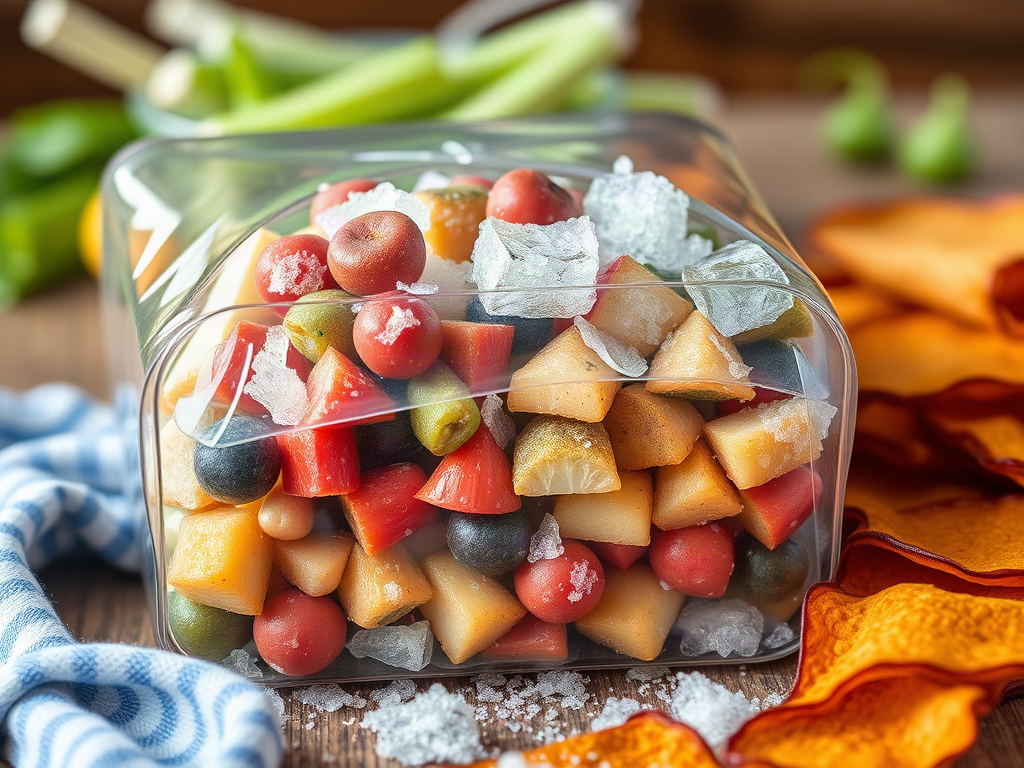
Freezing and dehydrating suit different beginner goals: freezing preserves more of a food’s fresh texture but needs dependable cold storage, while dehydrating removes moisture for lightweight, shelf-stable storage. Freeze berries, chopped vegetables, cooked meals, and meats when you have freezer space and want ingredients close to their original form. Dehydrate sliced fruit, herbs, vegetables, and properly prepared lean meat when portability, compact storage, or backup power independence matters more. Blanch vegetables before freezing, dry foods until they are leathery or crisp as appropriate, cool them fully, and package both methods to limit air and moisture.
How Freezing and Dehydrating Preserve Food
Freezing and dehydrating slow food deterioration through different mechanisms. Freezing turns much of the available water into ice, reducing the water that microorganisms can use and slowing enzyme activity. Dehydrating removes enough moisture through controlled heat and airflow that bacteria, yeasts, and molds have less water available for growth. The preservation method therefore changes not only storage life but also texture, weight, preparation, and equipment needs.
Frozen food usually remains closest to its fresh state, although ice crystals can damage plant cells. Slow freezing or poor packaging may leave vegetables limp after thawing because expanding ice ruptures cell walls. Dehydrated food becomes smaller, lighter, and more concentrated in flavor. Apple slices may be chewy, green beans may become firm and rehydrate well in soup, and herbs may crumble into a seasoning rather than return to their original form.
Neither option is automatically safer or more convenient. A freezer depends on continuous electricity and usable space; a dehydrator depends on adequate drying, clean handling, and packaging that keeps moisture out afterward. A power outage can threaten frozen food, while humid storage can soften dried food and create conditions for spoilage. Readers comparing the methods should judge the whole storage system, not just the preservation step.
A useful way to begin is to match the method to the intended meal. Frozen diced peppers can go directly into a skillet, whereas dehydrated peppers are better for soups, camping meals, or compact pantry storage. If fresh texture matters, freezing usually deserves priority. If shelf space, transport, or reduced dependence on a freezer matters more, dehydration may be the more practical choice. The related Freezing versus dehydrating food for beginners comparison becomes clearer when the final use is specified first.
Which Foods Suit Each Method
Freezing works particularly well for foods whose texture remains acceptable after thawing or cooking. Berries, peas, corn, chopped onions, blanched greens, shredded zucchini, cooked beans, soups, casseroles, and raw meat are common candidates. Foods with high water content can become soft after thawing, but that may not matter in smoothies, sauces, stews, or baked dishes. A whole cucumber, by contrast, is a poor freezing candidate if the goal is a crisp salad ingredient.
Vegetables often benefit from brief blanching before freezing. Heat slows enzymes that would otherwise contribute to color, flavor, and texture changes during storage. The food must then be cooled promptly and drained well so excess surface water does not create a large block of ice. Freezing a tray of separated pieces before transferring them to a bag can make portions easier to measure and reduce clumping.
Dehydrating is well suited to fruit slices, herbs, mushrooms, onions, peppers, carrots, tomatoes, and vegetables intended for broth or cooked meals. It is also useful for lightweight ingredients such as dried fruit or vegetable chips, though crisp snack texture requires more moisture removal than a soft, chewy result. Lean meat can be dehydrated as jerky only when preparation, heating, drying, and storage follow reliable food-safety directions; improvised low-temperature methods are not a safe shortcut.
Some foods deserve a deliberate comparison rather than a blanket recommendation. Strawberries freeze with a soft texture but retain useful flavor for smoothies; dehydrated strawberries occupy little space and work in trail mixes or oatmeal. Tomatoes freeze well for sauces, while dehydrated tomatoes offer concentrated flavor in bread, pasta, and stews. Dairy-rich sauces may separate after freezing, and fatty foods generally store poorly when dehydrated because fat does not evaporate and can become rancid. A small test batch reveals more than committing an entire harvest to one method.
Beginner Methods That Avoid Common Failures
Successful freezing begins with quality ingredients, preparation, and packaging. Wash produce as appropriate, remove damaged portions, cut pieces to a useful cooking size, and blanch vegetables that need enzyme control. Cool blanched food, drain it thoroughly, and pack portions with as little trapped air as practical. Label each package with the food and date. Flat packages freeze faster and stack more efficiently than deep, irregular containers.
Freezer burn is a quality problem caused by moisture leaving the food and interacting with air; it does not mean that every affected item is automatically unsafe, but the dried, discolored areas may taste tough or stale. Thin bags, loose seals, and oversized containers increase the risk. A vacuum sealer can reduce air exposure, but careful ordinary freezer bags or rigid containers can also work when filled appropriately and sealed well.
Dehydration requires uniform pieces and steady airflow. Slice food to a consistent thickness so thin pieces do not scorch while thick pieces remain damp. Arrange pieces without overlap, follow the appliance manufacturer’s temperature guidance, and rotate trays if the machine dries unevenly. Food should be cooled before packaging because warm pieces can produce condensation inside a sealed container. That hidden moisture is a common reason apparently dry food later develops mold.
Conditioning dried fruit is a useful quality check: place cooled pieces in a container for several days and inspect or shake the container daily. If moisture appears on the container or pieces, return the food to the dehydrator. Do not taste questionable food to decide whether it is safe. Another frequent mistake is treating a dehydrator’s timer as proof of dryness. Piece size, sugar content, humidity, and airflow all change drying time, so texture and moisture checks matter more than a single preset.
Beginners can use this compact workflow:
- Prepare: sort, clean, trim, and cut food consistently.
- Choose the endpoint: decide whether the food will be cooked, rehydrated, or eaten as a snack.
- Package promptly: exclude air for frozen food and moisture for dried food.
- Label and rotate: record the date and use older packages first.
Storage, Quality, and Practical Decision-Making
The better method depends on the household’s constraints. Freezing is usually simpler for a beginner who already owns a reliable freezer and cooks meals such as chili, soup, or stir-fry. It preserves convenient portions and requires little rehydration. Its weaknesses are space, electricity, freezer failure, and the loss of quality that can occur when packages thaw and refreeze. Keep a freezer thermometer and avoid packing it so tightly that air cannot circulate during freezing.
Dehydrating is attractive when storage volume and portability matter. A jar of dried onions or mushrooms takes far less room than the equivalent frozen portion, and lightweight ingredients are useful for hiking or emergency meal kits. The tradeoff is preparation time, altered texture, and the need for genuinely dry storage. Use moisture-resistant containers, keep them away from heat and sunlight, and inspect food periodically for clumping, off odors, color changes, or visible growth.
Choose freezing when the priority is fresh-like texture, quick cooking, or preserving moist prepared meals. Choose dehydration when the priority is compactness, transport, room-temperature pantry storage, or ingredients for soups and stews. Use both when the harvest contains different kinds of food: freeze berries for smoothies, dehydrate herbs for seasoning, freeze blanched beans for side dishes, and dry sliced vegetables for broth mixes.
Cost also deserves a realistic look. A freezer may already be available, but containers and electricity continue to matter. A dehydrator uses electricity during a drying cycle, and an oven may be less efficient for small batches, especially if it cannot maintain low heat and airflow. Sun drying is not a universal beginner substitute because humidity, insects, dust, and temperature control can make results unreliable. The best first project is a modest batch that can be checked easily, not the largest amount of food available.
Use the same care with either method: begin with wholesome food, clean equipment, accurate labeling, and a storage location you can monitor. For tested processing times and safety instructions, consult the USDA, National Center for Home Food Preservation, or a state university extension rather than relying on a social-media chart. More detailed planning can be organized through freezing and dehydrating food for beginners notes that record the food, cut size, treatment, drying or freezing result, and preferred use.
Frequently Asked Questions
Is freezing or dehydrating easier for a first project?
Freezing is usually easier when freezer space is available because preparation is familiar and drying endpoints are not involved. Dehydrating becomes straightforward after practicing with a small batch of sliced fruit or herbs.
Does dehydrating preserve more nutrients than freezing?
Neither method preserves every nutrient equally. Heat, air exposure, cutting, storage time, and preparation affect results, while dehydration concentrates nutrients and calories by removing water rather than creating a nutritionally identical fresh product.
Do vegetables need blanching before freezing?
Many vegetables benefit from blanching because it slows enzyme-related quality changes. Follow a tested timing chart for the specific vegetable, then cool and drain it before packing.
How can I tell whether dehydrated food is dry enough?
Texture depends on the food: fruit may be pliable without releasing moisture, while some vegetables should be brittle. Cool the food before judging it, then condition dried fruit and watch for condensation or soft spots.
Can frozen and dehydrated food be used together?
Yes. Frozen ingredients suit meals where moisture and texture matter, while dried ingredients work well in soups, rice dishes, seasoning blends, and portable meal kits. Combining both methods can make better use of limited storage space.
Further Reading
Authoritative Sources
- Freezing and Food Safety
fsis.usda.govExplains safe handling, packaging, thawing, and quality considerations for frozen foods
- Drying Foods
nchfp.uga.eduProvides tested home-drying information for fruits, vegetables, herbs, and jerky
- Dehydrating Food
extension.usu.eduOffers practical extension guidance on preparation, equipment, and storage of dried foods
Conclusion
Freezing is the practical choice for preserving moisture, familiar texture, and ready-to-cook portions when reliable freezer space is available. Dehydrating earns its place when compact storage, portability, and pantry independence matter more than fresh texture. Begin with foods that match the method: blanch vegetables before freezing, slice drying candidates evenly, and treat meat dehydration as a food-safety process rather than an experiment. Packaging is part of preservation, so exclude air from frozen packages and protect dried food from humidity. Test a small batch, label it, and judge the result by how you actually cook and eat it. Once those results are recorded, expanding into a mixed freezing-and-dehydrating system is more useful than choosing one method for every food.