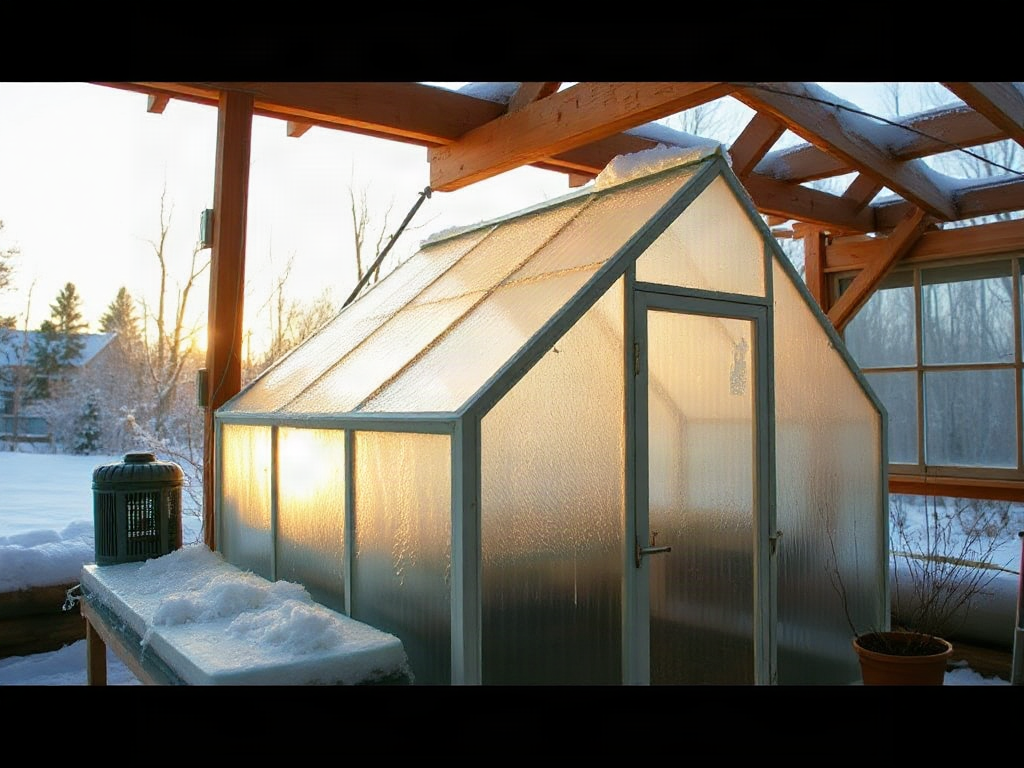
Greenhouse heat retention during off-grid winters depends on reducing nighttime heat loss, storing daytime warmth, and preventing cold air leakage without relying on continuous fuel or grid power. Prioritize a well-sealed structure, insulated north-facing surfaces, double-layer glazing or an interior thermal curtain, and water or stone thermal mass placed where sunlight reaches it. Ventilation should be controlled carefully because excessive night airflow can erase daytime gains, while inadequate daytime ventilation creates condensation and plant stress. A low-energy backup heater, freeze alarm, and stored emergency fuel remain useful because passive systems cannot replace every lost degree during prolonged cloud, wind, or extreme cold.
Where Winter Greenhouse Heat Loss Happens
Winter performance is determined less by the amount of heat a greenhouse collects at noon than by how quickly that heat leaves after sunset. A greenhouse loses warmth through transparent panels, gaps around doors and vents, conductive framing, cold soil, and air exchange caused by wind. Clear skies can make radiative heat loss especially noticeable: the interior surface of the glazing cools, and warm air transfers energy toward it. Wind then increases leakage through small openings that may be harmless in mild weather but costly during a long freezing night.
The first useful task is to identify the dominant loss rather than immediately adding a heater. A hand check around door edges, vent hinges, panel joints, and foundation transitions can reveal drafts. On a still evening, a smoke pencil or a thin strip of tissue may show moving air, though open flames should never be used around plastic, dry plant material, or stored fuel. Condensation patterns also offer clues. Heavy moisture on one cold wall may indicate a colder surface or poor air circulation, while frost at a frame joint often points to a thermal bridge.
Location changes the calculation. A greenhouse beside a south-facing wall may receive reflected warmth and shelter from prevailing wind, whereas a freestanding structure needs stronger wind protection and more deliberate insulation. Shade from evergreen trees can reduce winter solar gain even when it blocks some wind. A short, bright winter day may provide enough warmth for a properly insulated structure, but several cloudy days can leave water barrels and masonry too cold to recover without backup heat.
A common mistake is treating daytime temperature as the main success measure. Plants respond to the overnight minimum, root-zone temperature, humidity, and duration of cold exposure. Recording outdoor temperature, interior air temperature, and soil or thermal-mass temperature at dawn for several nights gives a more useful baseline than a warm afternoon reading. The results should guide upgrades: seal drafts first, then improve the weakest transparent surface, then add storage or backup heat.
Thermal Mass, Glazing, and Insulation Choices
Thermal mass stores heat during sunny hours and releases it after dark, but it does not create warmth. Water is usually more space-efficient than loose soil or stone because it stores substantial heat per unit of volume and circulates warmth within the container. Dark, opaque barrels or sealed tanks can collect solar energy while avoiding algae growth and leaks associated with open containers. Place mass inside the sunlit growing area, not in a shaded corner where it contributes little during the day.
Mass has limits. A few small containers may moderate temperature swings around seedlings but will not carry a large, leaky greenhouse through a severe cloudy night. Large tanks occupy growing space, add considerable weight, and can create a serious structural or flood hazard if shelving is not designed for them. Stone, concrete, and earth can provide useful buffering where they already form a floor or wall, but adding them solely for heat storage may be less effective than improving glazing or installing an insulated curtain.
Transparent coverings create another tradeoff. Single glazing is inexpensive and transmits light well, yet it loses heat rapidly. Double-wall polycarbonate, twin-wall film, or an additional interior layer reduces conductive and convective losses by trapping still air. A second layer must be installed without large gaps that allow wind to flush away the insulating air space. Dirty or algae-covered glazing reduces solar collection, so cleaning and repairing damaged panels can produce more value than adding more thermal mass.
Insulate surfaces that do not need to transmit sunlight. The north wall, foundation perimeter, and lower portions of sidewalls are common candidates. Rigid insulation protected from moisture can reduce heat flow into frozen ground, while straw bales or other organic materials require careful separation from persistent dampness and pests. Do not cover the south-facing roof with opaque insulation during the main winter collection period unless the structure is overheating or the crop arrangement makes that surface unhelpful.
For a small structure, compare upgrades by their nighttime effect. An insulated north wall may be cheaper and simpler than replacing every panel. A removable interior curtain can reduce the volume that must be kept warm, especially when only a few shelves contain winter greens. Readers comparing Greenhouse heat retention during off-grid winters options should consider usable growing area, available labor, repairability, and whether a material still works after repeated wetting, freezing, and ultraviolet exposure.
Nighttime Covers, Air Sealing, and Ventilation
A thermal curtain is often one of the most practical off-grid improvements because it reduces the area exposed to cold glazing after sunset. Woven insulating fabric, greenhouse-rated bubble insulation, or a purpose-built curtain can be suspended over the roof and sidewalls, provided it is secured against wind and kept clear of heaters and lights. A curtain that is easy to deploy is more useful than a theoretically better barrier that requires awkward daily handling and remains unused.
Seal the structure while preserving safe operation. Door sweeps, compressible gaskets, repaired panel joints, and adjustable latches can reduce uncontrolled air exchange. Vents should close firmly but remain operable for daytime humidity control. Sealing every opening permanently is a poor solution because plants release moisture, and wet leaves or cold surfaces encourage disease problems. Vent briefly on sunny days when the interior is warmer, then close before the structure begins losing more heat than it gains.
Air movement inside the greenhouse is different from outside-air exchange. A small, efficient fan may distribute warmth from barrels near the roof to plants near the floor, but a fan does not add heat and can increase evaporation. If the fan depends on batteries, its nighttime runtime should be tested in real cold because battery capacity and charging performance may decline. Passive circulation through well-placed openings may be adequate in a compact structure, while taller greenhouses often develop a warm ceiling and cold crop zone.
Night covers can fail through moisture, abrasion, or poor fit. Fabric touching wet glazing may remain damp and degrade, while a loose film can flap, tear, and open a large leak during a storm. Check corners, fasteners, and curtain edges after the first windy night. A useful sign is a smaller dawn temperature drop with no persistent increase in condensation. If the interior is warmer but dripping wet, the next adjustment is controlled ventilation, plant spacing, or moisture management rather than simply adding another layer.
Do not assume a warmer air reading means safer plants. Root containers placed against a cold wall may freeze while a sensor near the roof reports acceptable conditions. Put at least one thermometer at crop height and another near the most vulnerable root zone. This makes the system responsive to the conditions that actually damage plants, not just the warmest location in the structure.
A Practical Off-Grid Winter Heat Plan
An effective plan uses passive retention first and reserves stored energy for conditions passive measures cannot handle. Begin by listing the crops and their minimum acceptable conditions, then divide the greenhouse into a smaller protected zone if only a few plants need warmth. Winter greens, hardy herbs, and dormant plants may tolerate a cool environment that would be unsuitable for tender seedlings. Reducing the heated volume can save more fuel than trying to warm every aisle.
Use a simple priority sequence before the first serious freeze:
- Repair leaks, secure doors, and inspect glazing and foundation edges.
- Install or test the interior curtain and confirm that it cannot contact a heater.
- Place thermal mass in sunny positions and check containers for leaks or structural overload.
- Measure crop-height and root-zone temperatures through clear and cloudy nights.
- Test the backup heater, fuel storage, battery system, alarm, and manual override.
Fuel choice involves more than heat output. Combustion heaters may require ventilation and can add moisture or carbon monoxide risk; they should be installed and operated exactly as specified, with appropriate detectors and safe clearances. Electric resistance heat is simple at the point of use but may overwhelm a small solar-battery system during a cold spell. A low-wattage heating cable designed for protected horticultural use may target a root zone more efficiently than heating the entire air volume, but it still needs suitable electrical protection and monitoring.
Cloudy weather deserves its own operating rule. If the greenhouse receives little sun for two days, thermal mass may no longer recover, and a nighttime temperature that was safe after a bright day may become unsafe. Set a personal trigger based on measured crop temperature, available fuel, and forecast conditions rather than on a fixed promise that passive methods will carry the structure indefinitely. Keep emergency covers, spare fasteners, and a dry backup heat source accessible; a repair made after midnight is less likely to be careful or safe.
Review the system after each cold event. Note the outdoor low, wind, cloud cover, dawn interior temperature, crop condition, and energy used. A repeated cold root zone suggests insulation or crop placement needs attention, while a rapid whole-structure decline suggests leakage or insufficient thermal resistance. This record helps distinguish a worthwhile upgrade from an expensive addition that merely makes the greenhouse warmer for a few afternoon hours.
Frequently Asked Questions
Does thermal mass keep a greenhouse warm all night?
Thermal mass releases stored daytime heat, but its effect depends on sunlight, container volume, insulation, outdoor temperature, and wind. It cannot compensate for major air leaks or several cloudy days.
What should be insulated first?
Seal doors and panel joints first, then address the weakest transparent surface and non-sun-facing walls. A removable interior curtain is often useful when only part of the greenhouse needs protection.
Are water barrels safe inside a greenhouse?
They can be useful when sealed, stable, and placed on a structure designed for their weight. Protect them from freezing expansion, leaks, algae exposure, and accidental tipping.
Should greenhouse vents stay closed all winter?
No. Vents may need brief daytime use to control humidity and condensation, but they should be closed before evening cooling becomes substantial. Automatic controls require testing during power interruptions.
What is the most dependable backup for an off-grid greenhouse?
No single option fits every site. A properly installed low-energy heater, safe fuel reserve, temperature alarm, and manual emergency plan provide more resilience than relying on passive heat alone.
Further Reading
Authoritative Sources
- Academy of Nutrition and Dietetics
eatright.orgProfessional nutrition guidance, healthy eating resources, and practical dietitian-reviewed advice.
- U.S. Department of Agriculture
usda.govOfficial food, nutrition, agriculture, and consumer guidance from the USDA.
- NIH Office of Dietary Supplements
ods.od.nih.govResearch-based fact sheets on nutrients, supplements, dietary intake, and safety considerations.
- International Society of Sports Nutrition
sportsnutritionsociety.orgEvidence-informed sports nutrition resources and position stands for active people and athletes.
Conclusion
Reliable winter greenhouse performance comes from slowing heat loss before adding heat. Seal the envelope, protect the most exposed glazing, insulate nonproductive surfaces, and use thermal mass where winter sun can charge it. A nighttime curtain can be especially valuable when the growing area is small, while crop-height and root-zone sensors reveal problems hidden by a warm ceiling. Treat cloudy periods, wind, equipment failure, and combustion safety as part of the design rather than unusual exceptions. Test the system before freezing weather, record dawn temperatures after real cold events, and improve the weakest measured point first. Passive measures can stretch limited fuel and battery capacity, but a tested backup and a clear emergency procedure remain necessary for prolonged severe weather.