Map the Waste Stream Before Changing Habits
Waste reduction becomes manageable when the household identifies what is actually being discarded, rather than relying on general advice. For seven days, record each item destined for disposal and note its source: food preparation, shipping materials, cleaning products, personal care, repairs, or occasional projects. Weighing bags is useful, but a written inventory is often enough to reveal the largest avoidable categories.
The distinction between avoidable waste and unavoidable residuals determines where effort belongs. A damaged package, disposable cup, or short-lived gadget may be prevented through a purchase decision. A broken ceramic item, contaminated plastic film, or empty chemical container may still require offsite handling. Treating both groups alike leads to wasted effort; trying to process hazardous or non-recyclable material at home creates unnecessary risk.
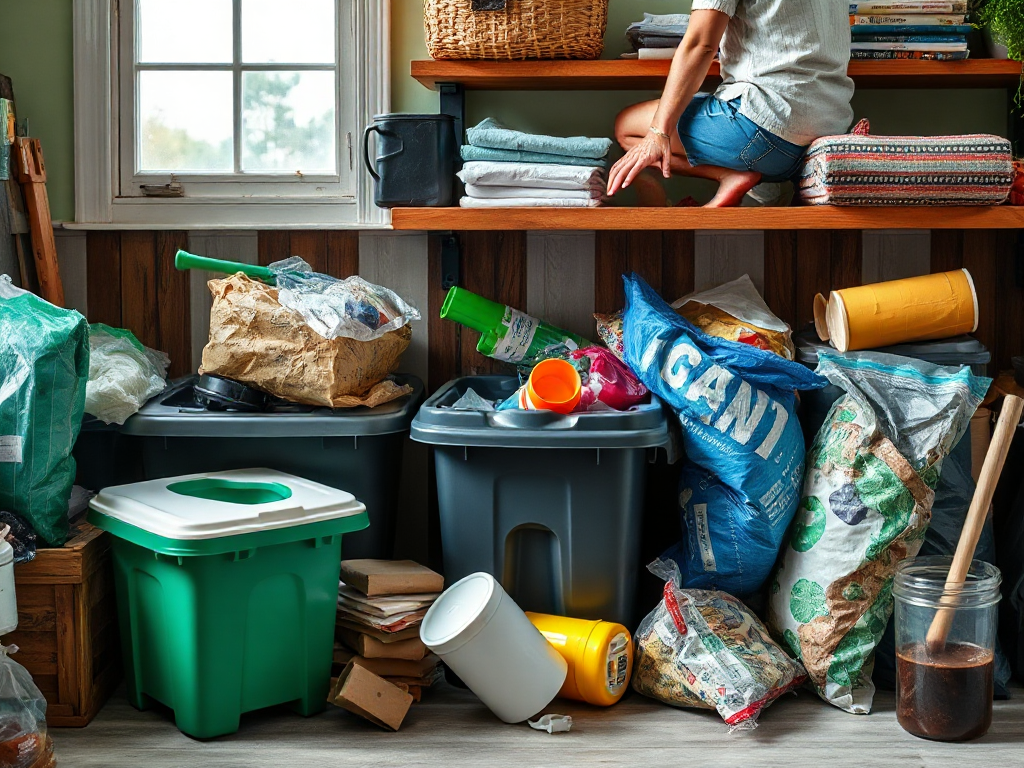
A rural household might discover that its largest weekly burden is not food scraps but sacks from animal feed, mail-order packaging, and multilayer snack wrappers. Another home may produce little packaging but accumulate batteries, paint cans, and worn textiles. The correct response differs. Before buying equipment such as a composter, shredder, or baler, measure the stream and estimate how much material the equipment would truly handle.
Use a simple priority order:
- Prevent materials from entering the home.
- Reuse or repair items already owned.
- Process clean organic material or suitable recyclables.
- Arrange safe storage and an approved destination for the remainder.
A common mistake is measuring success only by the number of bags produced. Volume can fall while hazard, odor, or contamination rises. A better review asks whether food is staying out of dry storage, whether containers remain clean and pest-resistant, and whether batteries, oils, medicines, and chemicals have a known destination. That assessment gives the household waste reduction plan a practical starting point.
Reduce Packaging and Extend Product Life
The most reliable waste reduction happens before an item becomes household refuse. Buying concentrated products, refillable goods, durable tools, and foods with little packaging can reduce both storage needs and disposal trips. The choice should reflect actual use: a bulk purchase is not efficient if it spoils, attracts pests, or arrives in packaging that cannot be reused.
Reusable containers work best when they replace a recurring stream rather than becoming another collection of unused objects. A sturdy container for dry staples, a washable produce bag, and a refill bottle may displace repeated packaging. By contrast, accumulating specialty containers for every possible purpose can consume storage space and eventually create its own disposal problem. Select a small, compatible set that can be washed, labeled, stacked, and repaired.
Product life extension also has a direct effect on waste volume. Sharpening tools, replacing fasteners, patching fabric, maintaining appliances, and buying repairable models often delay disposal. The tradeoff is time: repair is worthwhile when the item is safe, serviceable, and likely to remain useful. A cracked food container, damaged electrical cord, or corroded pressure vessel should not be kept merely to avoid discarding it.
Packaging choices require attention to the final material, not just the first impression. A cardboard box may be easy to flatten and reuse, while a laminated pouch may have no practical household processing route. Clean paper can serve as packing material or fire-starting material only where that use is safe and appropriate; glossy, coated, or chemically contaminated paper should not be burned in a household stove. Glass can be reused repeatedly, but it is heavy and breakable, so local transport and storage conditions matter.
Try changing one purchasing category at a time. Compare the discarded packaging from a month of individually wrapped goods with a refill or larger-format alternative, including spoilage and transport. The common failure is pursuing “zero waste” products without checking durability, cleaning requirements, or end-of-life handling. A lower-waste purchase is the one that reduces recurring material while fitting the household’s budget, space, and actual consumption.
Process Food Scraps Without Creating New Problems
Food scraps are often the largest category that can be managed at home, but they should not be treated as ordinary rubbish. Moist organic material decomposes, produces odors, attracts insects and rodents, and contaminates paper or recyclable materials. Separating it at the point of preparation keeps the dry stream cleaner and makes composting or another biological process more predictable.
A well-managed compost system needs an appropriate balance of moist nitrogen-rich material, dry carbon-rich material, air, and moisture control. Vegetable trimmings, fruit peels, coffee grounds, and small amounts of plain plant material may fit a household compost system. Dry leaves, shredded untreated paper, or fine wood material can help absorb excess moisture. Meat, dairy, oils, pet waste, and diseased plants require more caution because they can create odor, pathogens, or wildlife problems; whether they belong in a particular system depends on its design and local guidance.
Location matters as much as the recipe. A bin placed beside a doorway may be convenient but unpleasant if drainage or aeration is poor. A sealed container can control short-term odors indoors, yet it must be emptied regularly and cleaned. An open pile may suit a spacious, monitored site but is a poor choice where bears, livestock, dogs, or neighborhood animals can reach it. Compost that remains slimy, foul-smelling, or visibly attractive to pests is signaling excess moisture, insufficient aeration, unsuitable inputs, or too much material at once.
Not every home needs a large compost pile. A small enclosed tumbler, a managed bin, a buried system where appropriate, or a local arrangement with a farm or community garden may be more practical. The alternative is to reduce scraps through meal planning, freezing surplus food, using stems and trimmings in cooking, and buying quantities that the household can consume. Processing food waste is useful only if the method remains sanitary and manageable through hot, wet, or frozen seasons.
Never assume that composting makes hazardous material harmless. Ash, treated wood, chemical residues, synthetic fibers, and unknown powders should stay out of the biological stream. For a more detailed application of these choices, use the waste reduction and composting reference as a reminder to match inputs to the actual system rather than to a generic list.
Sort, Store, and Move Residual Waste Safely
Even a careful household will produce residual waste, and the absence of municipal collection makes its storage plan part of waste reduction. Separate materials into at least four groups: reusable items, organic material, clean recoverable material, and residual or hazardous material. This prevents a leaking food container from ruining cardboard and keeps batteries or chemical containers from entering a burn barrel or compost bin.
Use rigid, sealable containers for items that may leak, break, or attract pests. Label them by material and date when accumulation may be prolonged. Keep batteries, solvents, fuels, pesticides, medicines, fluorescent lamps, and sharp objects away from heat, children, animals, and food storage. Original labels are valuable because an unknown container is harder to transport and handle safely. Never combine chemicals simply to save space.
Recycling is not the same as placing an item in a recycling container. A material may be technically recyclable but unacceptable at the nearest drop-off, especially if it is wet, food-soiled, flexible, composite, or mixed with incompatible components. Contact the intended facility before making a special trip. Store clean paper and containers only when a realistic outlet exists; otherwise, a growing stockpile shifts the problem rather than solving it.
Burning household waste is a particularly weak substitute for disposal service. Plastics, foams, treated wood, colored paper, batteries, and unknown materials can release harmful smoke or leave contaminated ash. Burial also creates long-term contamination and pest concerns and may conflict with local requirements. A private hauler, transfer station, retailer take-back program, hazardous-waste event, scrap dealer, or charitable reuse outlet may each serve a different category.
Plan transport before storage fills. A small, clean load moved periodically is easier to sort than a mixed pile that has weathered for months. The common mistake is delaying all disposal until a trip becomes urgent, then mixing incompatible materials to save time. A written destination list, labeled containers, and a threshold for scheduling a drop-off provide a safer exit route without pretending that every item can be handled onsite.
Build a Routine That Works Without Collection Service
A workable system assigns each material a destination before the household changes its purchasing habits. Create a simple chart with columns for material, prevention option, storage method, destination, and review interval. Include occasional wastes such as electronics, mattresses, renovation debris, tires, and large appliances; these items can dominate the practical burden even when weekly rubbish is minimal.
Use a short weekly check to inspect food storage, compost condition, reusable containers, and dry recyclables. Once a month, review purchase records or receipts and identify one recurring item to replace, buy less often, or obtain in a different format. Seasonal reviews matter because gardening, heating, preserving food, storms, and home repairs can change the waste stream substantially.
Signs that the system is working include less wet material in storage, fewer emergency disposal trips, clean and usable reusable items, and a stable compost process without persistent odor or pests. Signs of failure include overflowing containers, unmarked chemicals, mixed bags, repeated spoilage, or materials being burned because no destination was arranged. Those signals usually call for a simpler system, not more equipment.
Households differ in available space, transport, income, time, and access to private services. A person living far from a recycling center may reasonably prioritize prevention and reuse over collecting bulky low-value materials. A household near a retailer take-back program may focus on batteries, electronics, and packaging returns. The strongest plan is modest enough to maintain and specific enough that every remaining category has a safe next step.
Waste reduction without municipal collection is therefore an operating routine rather than a single project. Keep the household disposal checklist visible where purchases and sorting decisions occur. Adjust it when a destination closes, a container fails, or a new material enters the home. Reducing the stream is valuable, but maintaining safe storage and dependable final handling remains the non-negotiable part.
Frequently Asked Questions
What should a household reduce first?
Start with recurring packaging, spoiled food, and disposable products. These categories often offer repeated prevention opportunities, unlike occasional broken or hazardous items.
Can all food scraps go into a home compost bin?
No. Accepted materials depend on the system, but meat, dairy, oils, pet waste, and contaminated material commonly create odor, pest, or sanitation problems.
Is burning household rubbish a safe disposal method?
Do not burn plastics, batteries, treated wood, foams, chemical containers, or unknown materials. Smoke and ash may contain hazardous substances, so use an appropriate disposal outlet instead.
How should recyclables be stored without collection service?
Keep only clean, dry materials with a confirmed destination. Use covered containers, separate glass and sharp items, and avoid storing recyclables indefinitely when the outlet is uncertain.
What if the nearest disposal facility is far away?
Reduce trips by preventing bulky purchases, consolidate compatible materials, and ask retailers, private haulers, transfer stations, or community programs about take-back options before traveling.
Further Reading
Authoritative Sources
- Academy of Nutrition and Dietetics
eatright.orgProfessional nutrition guidance, healthy eating resources, and practical dietitian-reviewed advice.
- U.S. Department of Agriculture
usda.govOfficial food, nutrition, agriculture, and consumer guidance from the USDA.
- NIH Office of Dietary Supplements
ods.od.nih.govResearch-based fact sheets on nutrients, supplements, dietary intake, and safety considerations.
- International Society of Sports Nutrition
sportsnutritionsociety.orgEvidence-informed sports nutrition resources and position stands for active people and athletes.
Conclusion
A household without municipal collection needs a material plan that begins before purchase and ends with a confirmed destination. Track the waste stream, prevent recurring packaging, repair useful goods, separate food scraps immediately, and use a compost method suited to the site and inputs. Store residual and hazardous materials in labeled, protected containers rather than burning or burying them. Review the system weekly for odor, pests, contamination, and accumulating items, then arrange transport before storage becomes urgent. The best arrangement is not the most elaborate one; it is the smallest routine that the household can maintain through seasonal changes, limited space, and long travel distances. Safe final handling matters as much as reducing volume, because an unseen stockpile is still an unresolved waste problem.