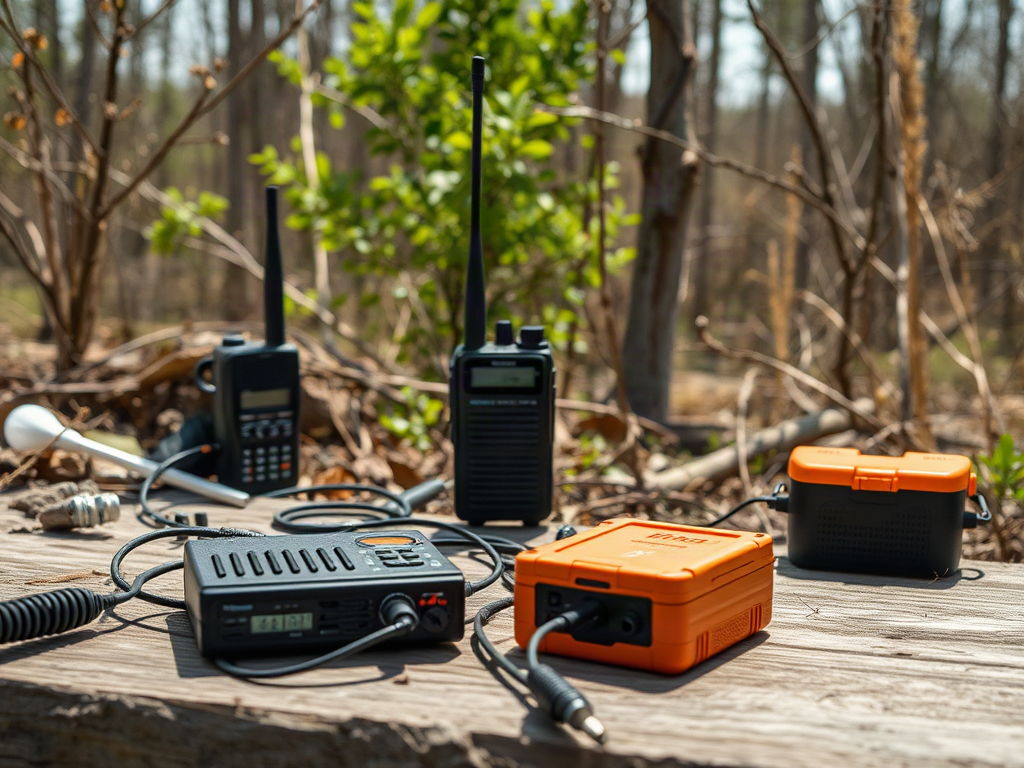
Off-grid communications during extended infrastructure outages depend on layered tools: local two-way radios, scheduled check-ins, written message procedures, and independent power. Radio range falls with terrain, buildings, antenna height, and battery condition, while satellite devices may fail when subscriptions, sky visibility, or charging access become problems. A practical plan assigns call signs, contact windows, message priorities, and a relay location before service disappears. Store spare batteries safely, test every device from the places where it will be used, and avoid transmitting sensitive details over open channels. The strongest setup combines short-range coordination with a distant contact method rather than treating one device as a complete replacement for normal networks.
How Extended Outages Change Communication
Extended infrastructure outages remove the assumptions behind ordinary communication. A mobile phone may still show a full battery yet fail because nearby towers lack generator fuel, backhaul connections, or functioning network equipment. Internet messaging can stop for a different reason: the local router may work, but the upstream connection or neighborhood power supply does not. Communication planning therefore has to separate local contact, regional contact, and emergency information gathering instead of treating them as one problem.
Local communication is usually the easiest layer to preserve. A handheld radio can connect people within the same property, worksite, or neighborhood when cellular service is unavailable. Its useful range is shaped less by the number printed on the package than by terrain, building materials, antenna position, and radio settings. Two users on opposite sides of a hill may lose contact at a distance where two users with clear elevation can communicate reliably.
Regional contact is harder because it requires either a relay, a higher antenna, a functioning repeater, or a separate network such as satellite communication. A satellite messenger may provide a valuable path when terrestrial systems are down, but it still depends on battery power, a clear view of the sky, account activation, and the provider’s operating network. A radio is not automatically more dependable than a satellite device; each fails under different conditions.
A useful first exercise is to map who must communicate with whom and why. A household may need local coordination between buildings, while a remote worker may need a once-daily welfare message to someone outside the affected area. Those needs call for different equipment and different message rules. The internal Off-grid communications during extended infrastructure outages plan should identify the minimum message that answers each need, such as location, condition, supplies required, and next contact time.
Choosing Radios, Satellite Devices, and Written Methods
Equipment selection should follow the communication task rather than the appeal of a particular gadget. Short-range license-free radios may suit family or team coordination, but their output, channel access, and antenna options can be limited. Amateur radio can offer more capability and longer-distance possibilities, yet it requires appropriate licensing and operator knowledge. Marine, aviation, and public-safety frequencies should not be used casually; transmit only where the equipment and authorization are appropriate.
Handheld two-way radios are practical when several people need to coordinate movement, watch duties, repairs, or supply collection. Their weaknesses are predictable: small batteries drain quickly in cold weather, users talk over one another, and advertised range assumes conditions that rarely exist in a wooded or built-up area. A simple radio with familiar controls can outperform a feature-rich unit that nobody has practiced using.
Satellite messengers and satellite phones are more suitable for reaching a distant contact when local infrastructure is unavailable. They may support text, location sharing, or voice depending on the model and service plan. Their tradeoffs include recurring fees, slower message delivery, dependence on sky visibility, and the need to hold or place the device correctly during transmission. A satellite device should be treated as a separate long-distance layer, not as a substitute for local radios.
Written methods remain useful when batteries, devices, or operators fail. A weather-resistant message board at an agreed location can tell people where a team went and when it will return. Printed contact cards can preserve call signs, frequencies, check-in windows, and meeting points without relying on a stored phone. Written notes expose information to anyone who finds them, so use neutral wording and avoid recording sensitive medical, financial, or security details.
- Choose local radios for routine coordination within a known area.
- Choose satellite equipment for distant contact when sky access and charging are manageable.
- Choose written relays as a low-tech fallback or supplement, especially for people who may miss a radio call.
The common mistake is buying several communication devices without deciding which one carries urgent traffic. Assign each tool a role, test its real range, and document what happens when the primary method fails. The communications outage checklist should include equipment limitations as well as equipment names.
Designing a Reliable Contact and Relay Plan
A communication plan becomes usable when it specifies who calls, when they call, which channel they use, and what happens after a missed check-in. “Stay in touch” is too vague for a prolonged outage. A better arrangement might set local radio checks at fixed times, reserve a second channel for urgent traffic, and establish a written relay point if a person cannot reach the group directly.
Use plain language and short message formats. A routine check-in could state call sign, location, condition, and next action. An urgent message should identify the immediate need without filling the channel with background conversation. Repeating the critical details once can reduce errors, but extended explanations should move to a safer or less congested method.
Scheduled contact windows conserve power and reduce missed calls. If every person transmits randomly, batteries drain and listeners may not know whether silence means safety, sleep, equipment failure, or evacuation. A schedule also gives people a defined time to move to a better position, raise an antenna, or attempt the backup method. The schedule needs flexibility for weather, work, and emergencies; a missed routine call should trigger a stated follow-up rather than an improvised search.
Relay planning matters when direct range is insufficient. A person on high ground may pass a message between two valleys, or a trusted location may hold written updates for people traveling different routes. Relays add delay and can distort messages, so use a repeat-back rule for important details such as times, quantities, and destinations. Never assume a relay operator can keep a message confidential on an open channel.
Build a compact priority list before an outage:
- Immediate threats to life or safety.
- Location and condition of separated people.
- Changes to agreed routes, meeting points, or shelter arrangements.
- Requests for specific supplies or technical assistance.
- Routine status updates and administrative information.
A realistic scenario exposes weak planning. If two people leave to inspect a water source and fail to return for the evening window, the group should already know whether to wait, send a search team, leave a note, or use a distant contact. The decision depends on hazards and local knowledge, but the communication trigger should not be invented under pressure.
Power, Antennas, and Field Testing
Power management determines whether communication equipment remains useful after the first few days. Store batteries according to the manufacturer’s instructions, protect them from heat and moisture, and keep charging options separate from the devices they serve. A small solar panel may replenish equipment during clear weather, while a vehicle adapter or battery bank may be more dependable during storms. Each option has limits: solar charging is weather-dependent, vehicle use consumes fuel, and battery banks eventually need recharging.
Reduce unnecessary energy use by keeping routine transmissions short, lowering screen brightness, using scheduled listening periods, and switching devices off when they are not assigned to monitor a channel. Do not disable features blindly; a location or delivery function may be central to a particular emergency message. Label batteries and cables so that a tired operator can identify compatible equipment without trial and error.
Antenna position often produces a larger improvement than buying a more powerful handheld. Moving an antenna above a roofline, away from metal obstructions, or to a clear elevation can change whether a signal is usable. Long cables, poor connectors, and improvised mounting can erase that gain. Outdoor installations also require attention to weather exposure and safe placement away from overhead electrical lines.
Test from actual operating locations, not only from the kitchen table. Walk the route between buildings, try the basement and the upper floor, and check contact with the planned relay position. Record where speech becomes broken, where a message fails to send, and how long a charged device lasts under the planned schedule. A test that succeeds once in calm weather does not establish reliable performance during heavy rain, snow, smoke, or a crowded channel.
Keep the test record simple: date, location, device, channel or service, weather, result, and corrective action. If a radio works only from an upstairs window, that is a planning fact, not a minor inconvenience. If satellite messages require several attempts from beneath trees, identify a safe open-sky position before the outage rather than searching for one during a crisis.
Common Failures and Safer Operating Habits
The most frequent failure is human, not electronic. People forget call signs, confuse channels, speak too quickly, or assume silence confirms receipt. Short practice sessions can correct these problems more effectively than adding equipment. Every regular user should know how to turn the device on, select the assigned channel, adjust volume, transmit, acknowledge a message, and report a failure.
Open radio channels should be treated as public. Avoid broadcasting names, exact inventories, access codes, medical details, or predictable absence schedules. Use agreed neutral identifiers where appropriate, but do not mistake informal codes for strong encryption. Satellite messages and online accounts also require account security; protect login information and review what location data a service shares.
Another weak assumption is that a repeater or distant contact will remain available throughout an outage. Repeaters may lose grid power, suffer equipment damage, or become congested. A contact outside the affected area may have no reliable information if local callers provide incomplete details. The backup should therefore be physically and technically different: a second radio channel is not a complete backup for a failed radio, but a radio plus written relay or satellite device creates more independence.
When communication fails, check the simplest causes first: battery condition, volume, channel selection, antenna connection, obstruction, and whether the other person is listening during the agreed window. Move to the planned higher or open position before changing settings at random. If only one person cannot communicate, compare their device with a known-working unit. If everyone fails to reach the same contact, suspect the relay or distant network rather than repeatedly draining batteries.
Review the plan after every drill or real outage. Remove channels nobody can use, replace cables that create intermittent faults, update printed contacts, and revise meeting points when roads or buildings change. The off-grid communications plan should remain small enough to follow under fatigue. Reliability comes from clear roles, tested paths, conserved power, and realistic expectations—not from assuming any single technology will work everywhere.
Frequently Asked Questions
What is the best communication device for a long outage?
No single device fits every situation. Local radios, a satellite device for distant contact, and written relays provide more resilience than relying on one technology.
How far can handheld radios communicate without infrastructure?
Range depends on terrain, buildings, antenna height, radio design, and interference. Test the exact routes and locations rather than relying on advertised distance.
Do satellite messengers work when cell service is down?
They may work because they use a different network, provided the device has service, power, and a sufficiently clear view of the sky.
How should a household organize radio check-ins?
Set fixed contact windows, assign call signs and channels, define urgent-message rules, and specify what action follows a missed check-in.
What information should not be shared over an open channel?
Avoid exact inventories, access codes, detailed travel plans, names tied to sensitive circumstances, and other information that could compromise safety or privacy.
Further Reading
Authoritative Sources
- Academy of Nutrition and Dietetics
eatright.orgProfessional nutrition guidance, healthy eating resources, and practical dietitian-reviewed advice.
- U.S. Department of Agriculture
usda.govOfficial food, nutrition, agriculture, and consumer guidance from the USDA.
- NIH Office of Dietary Supplements
ods.od.nih.govResearch-based fact sheets on nutrients, supplements, dietary intake, and safety considerations.
- International Society of Sports Nutrition
sportsnutritionsociety.orgEvidence-informed sports nutrition resources and position stands for active people and athletes.
Conclusion
Communication resilience during a long infrastructure outage comes from matching each need to a tested path. Use local radios for nearby coordination, reserve satellite equipment or an outside relay for distance, and keep printed procedures available when devices or batteries fail. Set contact windows, practice concise messages, protect private information, and record the locations where signals actually work. Power deserves the same attention as equipment: store compatible batteries, maintain more than one charging option, and reduce unnecessary transmissions. Before the next disruption, run a realistic drill that includes a missed check-in, a failed device, and a blocked route. The result should be a small, understandable system that people can operate while tired, distracted, or separated—not a collection of gadgets whose limits remain unknown.