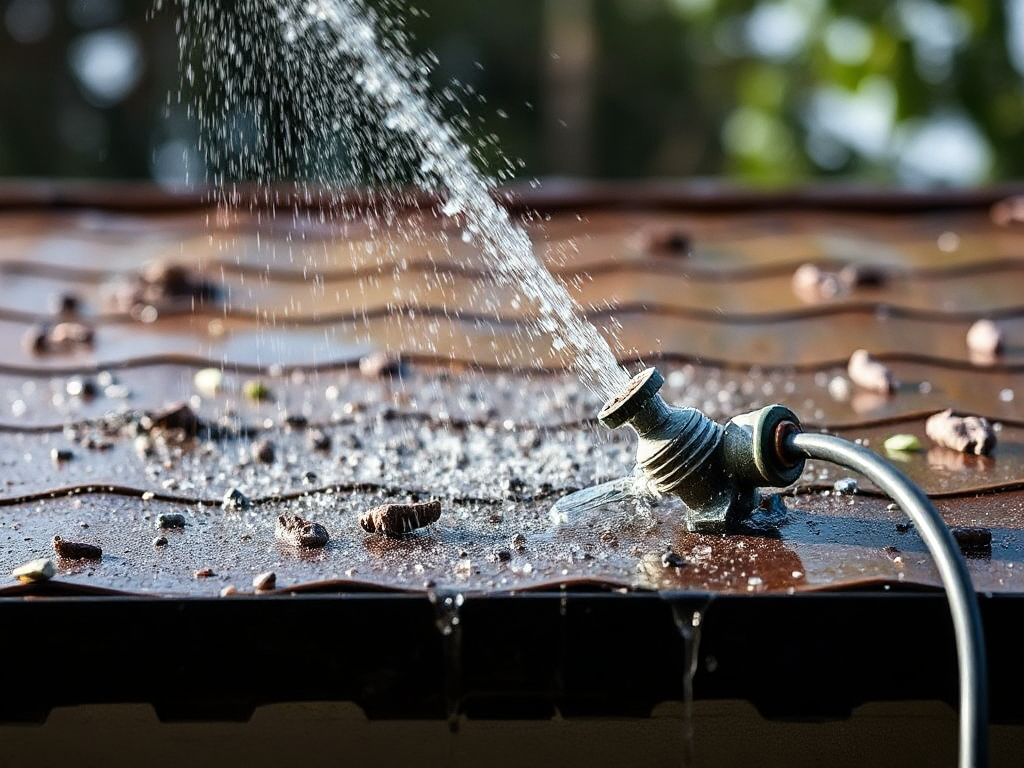
Rainwater disinfection after roof contamination events should begin by stopping collection, removing contaminated debris, flushing the roof and first-flush diverter, and treating stored water with a method suited to its intended use. Bird droppings, dead animals, smoke residue, floodwater, and roof-cleaning chemicals can introduce pathogens or contaminants that ordinary chlorination may not remove. Do not assume boiling or disinfectant makes water safe if pesticides, fuels, metals, or other chemicals are present. Inspect and clean the catchment system, discard heavily affected water, and use laboratory testing or public-health advice when contamination is uncertain or severe.
Why Roof Contamination Changes the Water-Safety Decision
Roof contamination is not a single hazard. A short period of bird activity may add fecal organisms, while a dead animal, wildfire smoke, floodwater, or a nearby chemical spill can introduce substances that require a completely different response. The first decision is therefore not which disinfectant to pour into the tank; it is whether the water contains a biological hazard, a chemical hazard, or both.
Rainwater moving across a roof can carry droppings, nesting material, insects, dust, leaves, ash, and residues from roofing products. Gutters and screens remove some solids, but they do not reliably eliminate microorganisms dissolved or suspended in the flow. Organic matter also consumes chlorine, reducing the free disinfectant available to inactivate bacteria and viruses. Cloudy water can interfere with ultraviolet treatment because particles shield organisms from the light.
That distinction matters during an incident. If the suspected contamination is fecal material and the water is otherwise clear, physical cleaning followed by an appropriate microbial treatment may be reasonable for non-potable or, where properly verified, potable use. If the roof was exposed to fuel, pesticides, solvents, fire-fighting foam, or heavy ash, disinfection alone is not a purification step. Boiling kills many organisms but does not remove most chemical contaminants, and chlorine does not make every chemical exposure harmless.
A practical example is a bird nest found above a downspout. The response can focus on stopping inflow, removing the nest with suitable protective precautions, cleaning the affected catchment components, and disposing of the first flush. A roof coated with oily residue after a nearby fire demands a more conservative decision: isolate the tank, avoid household use, and seek advice about testing and disposal rather than trying repeated chemical treatments.
Use Rainwater disinfection after roof contamination events as a risk-control process, not a routine dose adjustment. The contamination source, water clarity, tank condition, intended use, and available testing should determine the next step.
What to Do Before Disinfecting Stored Rainwater
The catchment system should be made clean and hydraulically stable before treatment begins. Stop incoming water by diverting the downspout or disconnecting the inlet, then identify where the contamination entered: roof surface, gutter, leaf screen, first-flush device, inlet pipe, or storage tank. Photographing the condition before cleaning can help explain the event to a laboratory or public-health adviser.
Remove loose debris from the roof and gutters without washing it into the tank. Wear gloves and avoid dry sweeping material that may contain infectious particles. A damaged screen, blocked first-flush chamber, cracked pipe, or overflowing gutter can continue introducing contamination after the visible source is gone. Inspect the tank cover and overflow as well; rodents, insects, and surface runoff can enter through poorly sealed openings.
Stored water requires a separate judgment. If contamination is heavy, the tank has a strong odor, visible sludge, an oily sheen, or an unknown chemical exposure, draining and cleaning may be safer than attempting to rescue the supply. Disposal must avoid sending contaminated water into a stream, well area, vegetable bed, or neighboring property. Local environmental or public-health authorities can advise on unusual spills and large tanks.
For a limited fecal-contamination event, remove sediment where practical and clean accessible components according to the tank manufacturer’s instructions. Do not enter a tank to scrub it: confined spaces can contain dangerous atmospheres and create a drowning risk. A professional should handle internal entry. After cleaning, allow suspended solids to settle or use suitable prefiltration before ultraviolet or chemical treatment.
A compact response sequence is useful:
- Isolate: stop collection and label the water as untreated.
- Identify: determine whether the event involved feces, animals, smoke, flooding, or chemicals.
- Remove: clear the roof, gutters, screens, and first-flush components.
- Assess: decide whether stored water should be discarded or tested.
- Treat: select a method only after the water is as clear and clean as practical.
A common mistake is disinfecting a dirty tank while leaving the contaminated roof connected. That may produce a temporarily treated batch while new contamination continues to enter. Another is relying on smell or appearance; clear water can still contain pathogens, and an odor may indicate organic decay or chemicals that treatment cannot solve.
Choosing a Treatment Method for the Contamination
For microbial contamination, the main household options are boiling, chemical disinfection, ultraviolet treatment, and filtration paired with disinfection. Each has a different weakness. Boiling is independent of water clarity and equipment calibration, but it requires fuel, time, heat-safe storage, and careful handling. It is most practical for small quantities used for drinking, cooking, brushing teeth, or making ice.
Chemical treatment can be useful for a larger volume when the water is relatively clear and the product label provides directions for that type of water. Chlorine demand rises with organic debris, warmer water, and some dissolved substances. Follow the product’s stated concentration, contact time, and limitations rather than estimating a dose from household bleach strength. Never mix chlorine products with acids, ammonia, or other cleaners. The treated water may retain a taste or odor, but appearance alone does not confirm adequate disinfection.
Ultraviolet systems can treat flowing water without adding a residual chemical, yet they depend on clear water, adequate lamp output, correct flow rate, and functioning sensors or maintenance indicators. A lamp that still glows may not deliver the required germicidal dose. UV also offers no continuing protection in a storage container, so treated water must be protected from recontamination.
Filters are often misunderstood. A sediment filter can reduce particles and improve clarity, while a properly rated microbiological filter may reduce specific organisms. Neither should be assumed to remove every contaminant, and a filter that becomes clogged or is installed backward may perform poorly. Filtration is especially valuable before UV because it reduces particle shielding, but it does not replace the UV dose or other required treatment.
Consider the intended use when choosing among these methods. Water for toilet flushing or irrigation has a different risk profile from water for drinking. Water used on edible crops deserves caution because contamination can reach produce, hands, and soil. During a suspected chemical event, postpone use for all household purposes until the contaminant and treatment pathway are understood; switching from chlorine to boiling does not resolve that uncertainty.
One weak assumption is that a stronger disinfectant dose is always safer. Excess chemical can damage equipment, create objectionable by-products, or encourage unsafe handling, while still failing against a chemical pollutant. The useful comparison is not “strong versus weak,” but “appropriate method after adequate pretreatment versus a method being asked to do work it cannot perform.”
For additional context on managing a contaminated catchment, see Rainwater disinfection after roof contamination events alongside the instructions for the tank, filter, UV unit, or disinfectant product actually installed.
Restarting Collection and Verifying Safe Use
Collection should restart only when the roof and conveyance path are clean, the first-flush device is functional, and the tank has been assessed. A clear day after cleaning is not automatically a clean restart: dust, loosened roof material, and cleaning residues may remain. Diverting the first rainfall after the event gives the catchment a chance to rinse, but it does not correct chemical contamination or replace testing when the source is uncertain.
Check the system at several points rather than inspecting only the tank. Look for fresh droppings on the roof, trapped material in gutter screens, standing water in the first-flush chamber, damaged seals, and sediment at the tank inlet. Confirm that overflow cannot flow back toward the inlet or contaminate a well. If water is intended for drinking, use a qualified laboratory and sampling instructions that match the suspected hazard; a single test cannot necessarily rule out every possible contaminant.
Keep treated water protected after disinfection. Clean containers, covered outlets, dedicated hoses, and clean hands matter because a safe batch can be contaminated again during transfer. Store boiled water in sanitized, covered containers and use it within the period recommended by the relevant public-health guidance. For chemically treated systems, record the product, concentration, time, and date so a failed result can be traced to a process rather than guessed at later.
Signs that the response is not working include recurring turbidity, a returning odor, visible film, rapid filter blockage, unexplained illness, or a positive microbial result. Those signs call for stopping consumption and reassessing the source, not simply repeating the same treatment. A failed UV unit, exhausted carbon filter, or contaminated tank may require component replacement and cleaning.
Prevention reduces the size of the next incident. Keep vegetation away from the roof, maintain screens, inspect first-flush components before wet weather, secure tank covers, and record unusual events such as animal access, roof repairs, smoke exposure, or flooding. A maintenance log is more useful than relying on memory, particularly when several people share the system. The goal is not to make every event harmless; it is to detect contamination early and avoid using an unsuitable treatment.
For a household deciding between salvaging and discarding water, risk tolerance should be conservative when infants, older adults, pregnant people, or immunocompromised individuals may consume it. When the event involves unknown chemicals or extensive flooding, professional assessment is more appropriate than improvised disinfection. The safest next action may be securing an alternate water supply while the catchment is isolated.
Frequently Asked Questions
Can chlorine make rainwater safe after bird droppings reach the roof?
It may reduce microbial risk when the water has been cleaned and clarified first, but chlorine is not a substitute for removing droppings, flushing the catchment, or following the product’s contact-time directions.
Should rainwater be boiled after a roof contamination event?
Boiling is useful for small amounts suspected of microbial contamination. It does not remove fuel, pesticides, metals, smoke residues, or other chemical pollutants.
How long should the first rain be diverted after cleaning a roof?
Use the first-flush device and follow the tank or local health guidance. The required diversion depends on roof condition, rainfall, and the type of contamination; a fixed time period cannot cover every event.
Can a UV purifier treat contaminated tank water?
UV may inactivate microorganisms in sufficiently clear water at the equipment’s specified flow and dose. It does not remove chemicals, and it cannot compensate for a dirty tank or a failed lamp, sensor, or prefilter.
When should contaminated rainwater be discarded?
Discard or isolate it when contamination is heavy, chemical exposure is suspected, the tank has an oily film or persistent odor, or testing and professional advice cannot establish a suitable treatment path.
Further Reading
Authoritative Sources
- Ready.gov
ready.govOfficial household preparedness guidance, emergency plans, and supply checklist resources.
- FEMA
fema.govFederal emergency management information, disaster planning resources, and recovery guidance.
- American Red Cross Emergency Preparedness
redcross.orgPractical emergency preparation, safety, and response guidance for households.
- CDC Emergency Preparedness and Response
cdc.govPublic health guidance for disasters, emergency response, and recovery conditions.
Conclusion
Roof contamination requires a source-based response. Isolate the catchment, identify whether the event involved microorganisms or chemicals, remove debris without spreading it into the tank, and inspect the full path from roof to outlet. Clear water can still be unsafe, while boiling or chlorine may be inadequate for chemical exposure. Select treatment only after pretreatment and match it to the intended use, equipment limits, and people who may consume the water. If the tank shows an oily sheen, unusual odor, heavy sludge, or an unknown exposure, use an alternate supply and seek qualified testing or public-health advice. A maintained first-flush diverter, sealed tank, clean screens, and a written inspection record make the next contamination event easier to control.