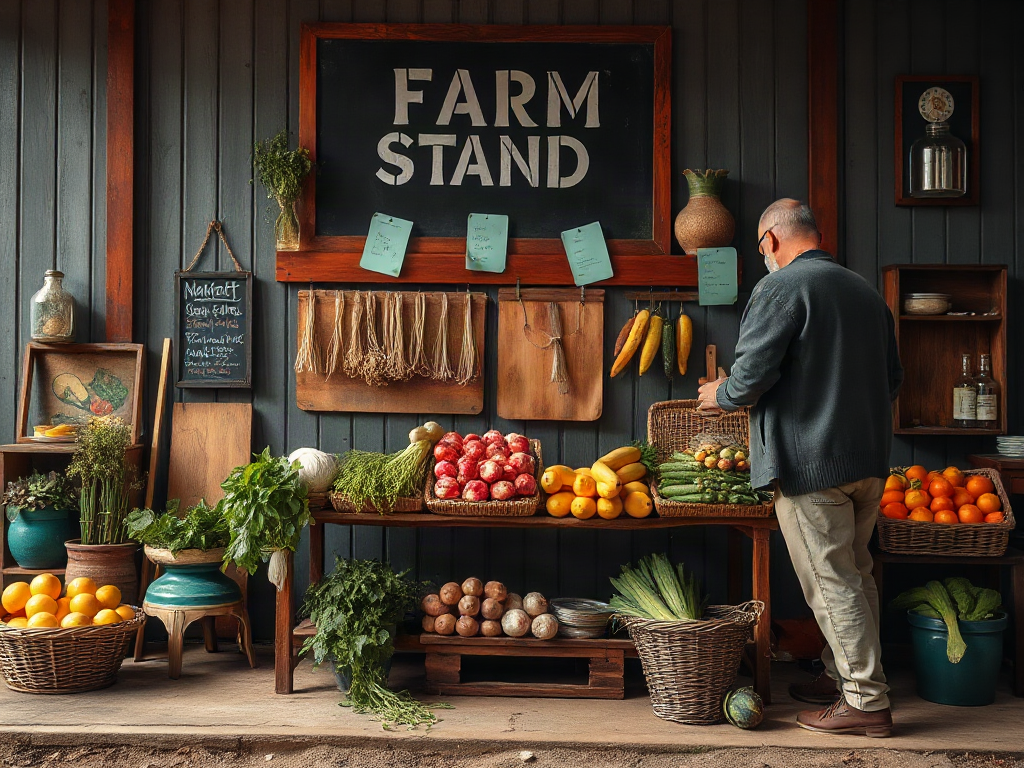
Safe self-serve farm stand sales depend on a visible roadside location, clearly priced products, protected payment options, and a simple restocking and inspection routine. Use enclosed cash hardware alongside QR or card payment, package food to limit handling, and display contact details for questions or payment problems. Reduce loss by offering modest quantities, removing cash frequently, recording inventory, and positioning the stand where neighbors or passing traffic provide natural oversight. Before opening unattended, confirm local zoning, food-sale, labeling, tax, scale, and roadside-access requirements because the rules differ by location and product.
Where Should an Unattended Farm Stand Go?
A good stand location gives drivers enough time to notice it, enter safely, park without blocking traffic, and return to the road with a clear view. High traffic alone does not make a site suitable. A blind curve, narrow shoulder, steep driveway, or muddy pull-off can turn casual buying into an access problem. Evaluate the approach from both directions at the speed customers are likely to travel, not only while standing beside the proposed site.
Visibility provides both marketing and passive oversight. A stand that can be seen from a home, farm workspace, neighboring property, or regularly traveled road is less isolated than one hidden behind vegetation. Lighting may make an early-morning or evening stand easier to use, but it should illuminate prices, payment instructions, and walking surfaces without shining into the road or nearby homes. If nighttime monitoring is impractical, post firm operating hours and remove products and cash after closing.
The physical layout should separate vehicles from merchandise. A stable parking surface, a defined pedestrian path, and a counter set back from moving cars reduce confusion. Place heavy products such as pumpkins or bagged soil on low platforms so customers do not need to lift them over delicate produce. Keep crates, signs, extension cords, and canopy legs out of the walking route. A roof with sufficient overhang protects goods from light rain and direct sun, while side panels can provide shade without enclosing the stand so tightly that customers cannot be seen.
Consider how the site behaves during poor weather. Wind can overturn chalkboards, scatter paper bags, and lift an inadequately anchored canopy. Rain can soften cardboard packaging and create slippery ground. Use weighted or fixed signs, washable display surfaces, and drainage that carries water away from the buying area. A permanent shed costs more than a movable cart, but it offers better weather protection and lets the seller anchor payment equipment. A cart may suit seasonal weekend sales where the entire setup is stored each night.
Check land-use, driveway, roadside-sign, and parking requirements before committing to construction. Rules may differ between sales of products grown on the property and sales of items obtained elsewhere. A common mistake is building an attractive stand first and asking about access or zoning afterward. Confirm the permitted location, then test the layout with an empty display and an actual vehicle before stocking it.
Which Products Work Best Without an Attendant?
Unattended selling favors products that are easy to identify, simple to price, and reasonably stable during the hours displayed. Pumpkins, winter squash, potatoes, onions, garlic, dried flowers, and bagged kindling generally tolerate handling better than tender greens or ripe berries. Fragile or temperature-sensitive items may still be sold, but they require smaller display quantities, more frequent checks, and suitable cooling or shade.
Unit pricing is usually easier for customers than calculations based on weight. A labeled bag of six apples or a basket offered at one stated price can be purchased without a scale or assistance. If products are sold by weight, determine whether local weights-and-measures rules apply and whether the scale and price display meet those requirements. Do not assume that an informal roadside setup is exempt.
Packaging should protect food while allowing buyers to judge quality. Ventilated produce bags can reduce handling of loose items, while rigid berry containers help prevent crushing. Clear labels should identify the product, price, quantity, and any necessary storage direction. Prepared foods, eggs, dairy products, meat, canned goods, baked goods, and other regulated categories may face requirements beyond those for intact produce. Consult the appropriate local agriculture, health, revenue, or market authority before adding them.
A useful display plan matches shelf conditions to product needs:
| Product Type | Display Approach | Main Constraint |
|---|---|---|
| Firm whole produce | Shaded crates or baskets | Heat, bruising, and dirt |
| Tender produce | Small batches in a cooler or protected case | Rapid quality decline |
| Flowers and herbs | Stable containers with appropriate water or wrapping | Wilting and wind |
| Bagged nonfood goods | Dry shelving above ground | Moisture and torn packaging |
Start with a narrow selection rather than turning the stand into an unsupervised general store. Three products with obvious labels are easier to count, rotate, and keep presentable than a crowded assortment with several prices. For example, a small stand might offer one basket size of tomatoes, one bag size of potatoes, and individual squash. If customers repeatedly ask for smaller portions, add one clearly differentiated size rather than several nearly identical choices.
Watch for condensation, wilting, insect activity, leaking containers, sun exposure, and mixed old and new stock. A full display is not a success if the bottom layer is deteriorating unseen. Rotate stock by removing the older batch before adding fresh goods, cleaning the surface, and then returning only products that remain saleable. The failure mode to avoid is leaving surplus inventory outside simply because unattended sales require less labor at the counter.
How Can Payments and Inventory Be Protected?
Payment security works best as a layered system rather than a single cash box. Offer a fixed, tamper-resistant cash container for buyers who prefer cash and a digital option for buyers without exact change. Mount the box to the structure, shield its opening from casual viewing, and empty it at irregular but frequent intervals. A lightweight lockbox sitting on a table protects neither the money nor the box.
Digital payment can reduce cash accumulation, but a printed QR code has its own weakness: someone may cover it with a replacement code. Print the business or recipient name beside the code, protect the sign from weather, and inspect it whenever the stand is checked. Encourage customers to verify the recipient shown in their payment app before sending money. If mobile reception is unreliable at the stand, test the transaction process there rather than assuming it will work because service is available at the farmhouse.
Clear signs prevent more loss than complicated instructions. Each item needs a visible price at the product and, when useful, on a central price board. State whether tax is included, whether change is available, which digital methods are accepted, and how buyers can report a problem. A phone number or other monitored contact method helps when a customer finds damaged goods, cannot complete payment, or is unsure which price applies.
Inventory records reveal patterns that casual observation misses. Begin each selling period with a count by product and package size. Record remaining stock and collected payments at closing, accounting for anything removed because of spoilage or damage. The numbers may not reconcile perfectly, especially with cash and unattended shopping, but repeated gaps tied to a certain hour, product, or confusing price can guide changes.
Cameras may deter theft and help investigate incidents, but they introduce privacy, placement, notification, data-security, and legal questions. If used, aim them at the sales and payment area rather than neighboring property or unrelated public activity, post any notice required in the jurisdiction, restrict access to recordings, and avoid audio recording unless its legality has been confirmed. A camera should supplement good placement and low cash exposure, not justify leaving valuable equipment or a large inventory unattended.
Respond proportionately to losses. A missing tomato does not warrant turning a welcoming stand into a heavily restricted enclosure, while repeated theft of cash boxes calls for a different payment setup or staffed hours. Trial quantities limit exposure during the first weeks. Signs that controls are working include close inventory reconciliation, fewer customer questions, intact payment signage, and predictable spoilage. Recurring unexplained shortages or abandoned unpaid selections indicate that prices, payment steps, surveillance, or operating hours need revision.
Daily Opening and Closing Checklist
A written routine keeps food quality, cash handling, and site safety from depending on memory. Assign each check to a person and a time, even when the stand is operated by one household. The routine should reflect the products, weather, traffic pattern, and distance between the stand and the main work area.
Before opening, walk the customer route from the parking area to the display. Look for standing water, ice, loose boards, protruding fasteners, unstable crates, pest evidence, and signs displaced by wind. Clean food-contact or display surfaces using methods appropriate to the material and product. Confirm that prices match the day’s stock and that digital payment signs have not been altered. Count the starting inventory before arranging it so the closing count has a useful baseline.
Use this compact operating sequence:
- Open: Inspect access, stabilize displays, stock sound products, verify labels, and test payment directions.
- Check: Revisit the stand on a schedule suited to heat, product fragility, traffic, and cash volume.
- Correct: Remove damaged food, replenish bags, clean spills, collect excess cash, and document unusual shortages.
- Close: Count remaining goods, retrieve payments, remove perishables, secure equipment, and record waste or damage.
During hot or stormy weather, shorten the inspection interval rather than relying on the normal schedule. A cooler is useful only if it maintains conditions appropriate for its contents; a closed container sitting in the sun may trap heat. Likewise, shade moves during the day. Check the actual product area in the afternoon before assuming a morning observation is sufficient.
The closing record should distinguish sales from shrink and spoilage. Suppose 20 bags of potatoes were set out, 7 remained, and payment covered 12. Record the one-bag difference rather than quietly treating all 13 missing bags as sales. A single discrepancy may be a counting or payment error. A repeated pattern deserves attention to package labels, payment instructions, cash collection, or stock placement.
Operational records do not replace required business records. Determine which sales, tax, food-safety, producer, and labeling documents apply locally, and keep them in the form and for the period the relevant authority requires. Liability coverage and property insurance should also be discussed with an insurer that understands roadside sales; a homeowner or farm policy should not be assumed to cover every retail activity.
The common mistake is adding products or longer hours faster than the inspection routine can support. Expand only when the current setup stays clean, stocked, reconciled, and easy for customers to understand. If produce repeatedly deteriorates between checks, reduce the batch size or shorten the display period. If buyers call about payment, rewrite the sign and test it with someone who has never used the stand.
Frequently Asked Questions
Should an unattended farm stand accept cash?
Cash remains useful for buyers without digital payment, but use an anchored deposit box, avoid providing an exposed change jar, and collect money regularly. Pairing cash with a verified digital option reduces reliance on either method.
What is the easiest produce to sell unattended?
Firm, recognizable produce with a reasonable shelf life is usually simplest. Squash, potatoes, onions, garlic, and pumpkins tolerate display better than berries, tender greens, or very ripe fruit.
How often should a self-serve stand be checked?
Set the interval according to temperature, product fragility, traffic, and cash volume. Inspect more often during heat, storms, peak traffic, or when selling delicate goods; any visible quality decline means the interval is too long.
Do self-serve farm stands need permits?
Requirements vary by jurisdiction, site, and product. Ask local authorities about zoning, road access, signs, taxes, food sales, labeling, scales, and any rules that distinguish homegrown products from resale goods.
How can QR code payment signs be made safer?
Place the expected recipient name beside the code, protect the sign from weather, inspect it for overlays or replacement stickers, and tell customers to verify the recipient in their payment app before confirming.
Conclusion
A dependable unattended stand is built around controlled exposure rather than blind trust. Choose a site where entry, parking, and exit are clear; stock products that can remain saleable between inspections; and make every price and payment step unambiguous. Secure cash to the structure, inspect digital payment signs, and use opening and closing counts to separate actual sales from waste or unexplained loss.
Begin with a small assortment and limited hours. Run the stand long enough to observe afternoon sun, bad weather, customer questions, spoilage, and payment patterns before expanding. Confirm local requirements for the site and each product category, then document a routine that another household member or worker can follow. The next practical step is to test the proposed location with signs, empty crates, and a parked vehicle before buying or building permanent fixtures.