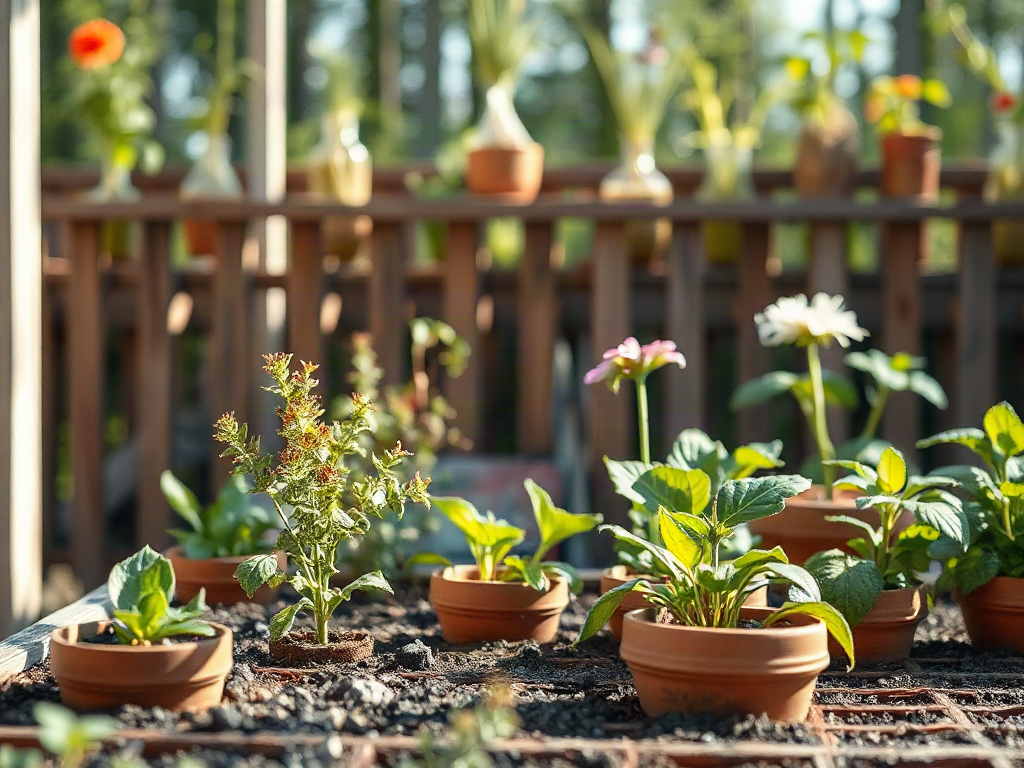
Self-sufficient gardening for beginners with limited water works best when the garden is kept small, matched to the local climate, and managed around soil moisture rather than a fixed watering calendar. Prioritize high-value crops, build organic matter into the soil, cover exposed ground with mulch, and deliver water near plant roots through drip lines or careful hand watering. Group plants by water demand and favor dependable producers such as chard, herbs, bush beans, and suitable regional varieties. Track harvest weight, irrigation use, and crop failures so each season produces more useful food per gallon instead of merely expanding the cultivated area.
Define Realistic Food and Water Goals
A water-limited garden should be designed around useful harvests, not maximum planted area. A beginner who cultivates every available corner may create more demand than the water supply can support during the hottest part of the season. A smaller bed that stays evenly productive is more valuable than a large plot filled with stressed plants and unfinished crops.
Begin by identifying what self-sufficiency means for the household. Producing every calorie is rarely a practical first-season target because staple crops require substantial space, time, storage, and often more water than expected. Supplying frequently used herbs, salad greens, cooking vegetables, or preserved tomatoes is a more workable starting point. These foods can replace regular purchases without requiring the garden to meet the household’s entire diet.
Water availability must be considered at its seasonal low point rather than its annual average. Rainfall during cool months does not necessarily help vegetables through a hot, dry summer unless it can be stored legally and safely. Check local rules before installing rain barrels or larger catchment systems, and use covered containers that exclude debris and reduce mosquito access. Stored rainwater is a supplement, not a reason to plant beyond the volume available.
A simple first-season water budget can prevent overplanting. Estimate the amount held in storage, the reliable household water allocation, and the number of weeks that typically pass without meaningful rain. Then reserve some capacity for heat waves, leaks, and newly planted seedlings. Precision will improve after one season of recording actual use.
| Planning Question | Beginner Priority | Warning Sign |
|---|---|---|
| What will the harvest replace? | Several regularly purchased vegetables | Planting crops nobody routinely eats |
| How much area can be watered reliably? | One or two compact beds | Expanding before peak summer |
| Where will surplus go? | Immediate meals, freezing, or safe preservation | Produce spoiling before use |
| How will performance be measured? | Water used and edible yield harvested | Judging success by bed size alone |
Keep a weekly log of irrigation, rainfall, planting dates, and harvest weight. Wilt that recovers by evening may reflect temporary heat stress, while repeated morning wilt, dry soil below the surface, flower drop, and undersized fruit indicate that demand is exceeding supply. If those signs appear across the bed, reduce new plantings and protect established crops rather than trying to rescue an oversized plan.
Which Crops Produce More With Less Water?
Crop selection should balance water demand with edible yield, household use, climate, and time to maturity. No vegetable is drought-proof while germinating or establishing roots. Even varieties described as heat- or drought-tolerant need consistent moisture early on, and fruiting crops may lose flowers or develop poor-quality produce when watering swings sharply between dry and saturated soil.
Fast crops can be efficient because they occupy irrigated ground for fewer weeks. Radishes, baby greens, and some turnips fit this pattern, although leafy vegetables often need steady moisture to avoid bitterness or tough growth. Chard generally offers a longer picking window than head lettuce because outer leaves can be harvested repeatedly. Bush beans mature in a concentrated period, while pole beans may yield longer but require support and a longer irrigation commitment.
Perennial culinary herbs can provide strong value once established. Rosemary, sage, thyme, and oregano often tolerate drier conditions than tender vegetables when their climate and drainage needs are met. That does not make them universally suitable: rosemary can suffer in severe cold, while Mediterranean herbs commonly decline in wet, poorly drained soil. Choose plants using regional extension guidance and local growing experience rather than relying only on a national seed description.
Large, thirsty crops deserve closer scrutiny. Sweet corn needs substantial space and is normally planted in blocks for pollination, making it a weak fit for a tiny water budget. Pumpkins and sprawling winter squash can shade soil and produce storage food, but their vines occupy considerable ground and fruit production may disappoint under sustained water stress. Tomatoes can be worthwhile when the household eats or preserves them, yet a few well-managed plants usually make more sense than a long row.
Use a short selection process before buying seed:
- List household priorities. Rank vegetables by how often they are eaten and how expensive or difficult they are to buy locally.
- Check seasonal fit. Match days to maturity with frost dates, summer heat, and the dependable watering period.
- Favor repeated or concentrated value. Choose crops that offer multiple pickings or a useful amount for storage.
- Limit experiments. Test one or two unfamiliar varieties without assigning them most of the available bed.
Success is visible when plants reach harvest before the harshest weather, the produce is actually used, and water demand remains manageable. Repeated bolting, blossom loss, bitter leaves, or abandoned produce means the crop calendar or selection needs revision. Replace poor performers next season rather than increasing irrigation automatically.
How Can Soil Hold Water Longer?
Moisture lasts longer when soil can absorb water, store part of it within the root zone, and remain protected from direct sun and wind. Bare, compacted ground often sheds heavy irrigation at the surface or loses it quickly through evaporation. Improving soil structure and covering the surface can therefore reduce waste before any new watering equipment is purchased.
Organic matter contributes to aggregation, pore space, and biological activity, but it is not an instant cure. Mix finished compost into a new bed in moderate amounts rather than filling the bed with compost alone. Excessive amendments may create nutrient imbalances, and an abrupt textural boundary can interfere with drainage in some sites. Native soil type, bed depth, slope, and underlying compaction still determine how water moves.
A mulch layer shields moist soil and suppresses weeds that compete for water. Straw, shredded leaves, and other clean organic materials are useful around established vegetables. Keep mulch slightly away from stems to reduce persistent dampness at the crown, and inspect beneath it before watering. The surface may look dry while the root zone remains moist, or the mulch may intercept a light sprinkling that never reaches the soil.
Different soils require different responses. Sandy soil drains rapidly, so smaller but appropriately thorough irrigations may be needed more often while organic matter is built over time. Clay soil accepts water slowly and may remain wet below the surface; low application rates and pauses reduce runoff. Raised beds improve control and drainage but can dry faster than in-ground soil, especially when narrow, exposed, or filled with a very porous mix.
Plant spacing creates another tradeoff. Close spacing can shade the ground once leaves fill in, but crowding increases competition and reduces air movement. Follow the mature spacing range on the seed packet, then use succession planting rather than packing every seedling into one bed. Pull weeds while they are small because established weeds consume moisture and become harder to remove without disturbing crop roots.
Check moisture at root depth instead of judging by color at the surface. Push a finger or narrow trowel several inches into the soil near, but not against, a plant. Soil that is cool and lightly cohesive may not need more water; dusty soil through the root zone usually does. Persistent puddles, sour odors, yellowing plants, or continually saturated soil point toward excessive irrigation or poor drainage, not water scarcity.
What Is the Most Efficient Watering System?
Efficient irrigation applies water slowly where active roots can reach it and stops before runoff or deep drainage carries it away. Drip tubing or soaker hose commonly suits compact vegetable beds because it wets the soil rather than the surrounding paths. Hand watering can be equally controlled in a very small garden, but it demands attention and becomes inconsistent as the planted area grows.
Drip systems are not automatically efficient. Emitters may clog, fittings may leak, and poorly spaced lines can leave part of the root zone dry. Run the system, then inspect the wetting pattern by digging small test holes at several points. Water should spread through the crop’s root area without flowing out of the bed. Flush lines as recommended by the manufacturer and use filtration when the water source carries sediment.
Watering early in the day generally reduces evaporative loss and gives foliage that becomes wet a chance to dry. The correct frequency still depends on soil, weather, plant size, and growth stage. A timer should be treated as a starting control rather than proof that the bed received the right amount. Pause irrigation after meaningful rain and increase monitoring during hot, windy weather or when plants begin flowering and setting fruit.
Deep watering is often presented as a universal rule, but the practical goal is to moisten the active root zone without sending water beyond it. A young transplant with a small root system needs water close to its root ball. An established tomato needs a broader wetted area. Applying a large volume beside a new seedling may move below its roots, while tiny daily sprinkles can promote shallow rooting and leave deeper soil dry.
Group plants into irrigation zones according to demand. Established thyme should not share the same schedule as newly transplanted chard, and seedlings should not dictate permanent watering for an entire bed. Containers form a separate zone because they heat and dry faster; larger pots, light-colored containers, and surface mulch can reduce the speed of moisture loss, but drainage holes must remain open.
Test changes one at a time. Adjust the runtime, inspect the soil later that day, and check again before the next planned cycle. A working system produces even growth, moist soil at root depth, little runoff, and no persistently soggy patches. Uneven wilting along one row often signals blocked emitters or poor line placement. Whole-bed stress despite wet soil may instead reflect damaged roots, disease, heat, or waterlogging, so adding more water can make the problem worse.
Conclusion
A dependable low-water garden grows from disciplined limits. Choose a cultivated area that can be supported during the driest weeks, reserve it for crops the household will use, and protect the root zone with suitable soil improvement and mulch. Apply water according to observed moisture rather than habit, then check whether it is spreading evenly beneath the surface.
For the first season, record rainfall, irrigation, planting dates, crop failures, and edible harvests. Those notes reveal whether the next improvement should be a different variety, altered planting date, repaired drip line, deeper mulch, or simply fewer plants. Expand only when the existing beds remain productive through peak heat without exhausting stored or permitted water. Self-sufficiency develops through reliable output and lower waste, not through planting the largest possible plot.
Frequently Asked Questions
How small should a beginner water-wise garden be?
Start with one or two beds that can be watered and inspected in minutes. Expand only after tracking summer water use, harvests, and crop losses through a complete growing season.
Is drip irrigation always better than hand watering?
Drip irrigation is convenient for regular beds, but careful hand watering may be simpler for a few containers or a tiny plot. Either method wastes water if it causes runoff or misses the active roots.
How can I tell whether mulch is helping?
Compare soil beneath the mulch with an uncovered edge several hours after watering. Useful mulch leaves the root zone moist longer without producing saturated soil, stem rot, or hiding persistent leaks.
Can household graywater be used on vegetables?
Graywater rules and health requirements vary by location. Check local public-health and water regulations before use, avoid untreated water on edible plant parts, and do not assume soaps or household contaminants are soil-safe.
Should drought-stressed plants receive extra fertilizer?
Not automatically. Fertilizer does not correct inadequate moisture, damaged roots, or excessive heat, and concentrated salts may add stress. Diagnose soil moisture and irrigation coverage before changing fertility.
Further Reading
Authoritative Sources
- WaterSense Outdoors
epa.govEPA resources explain outdoor water efficiency, irrigation practices, and ways to identify avoidable water loss
- USDA PLANTS Database
plants.usda.govThis federal database helps gardeners research plant distribution, characteristics, and regional suitability
- Watering the Vegetable Garden
extension.umn.eduUniversity of Minnesota Extension provides practical guidance on vegetable irrigation, soil moisture, and watering methods
- USDA Natural Resources Conservation Service by State
nrcs.usda.govState-level NRCS pages can direct readers to locally relevant soil, water, and conservation information