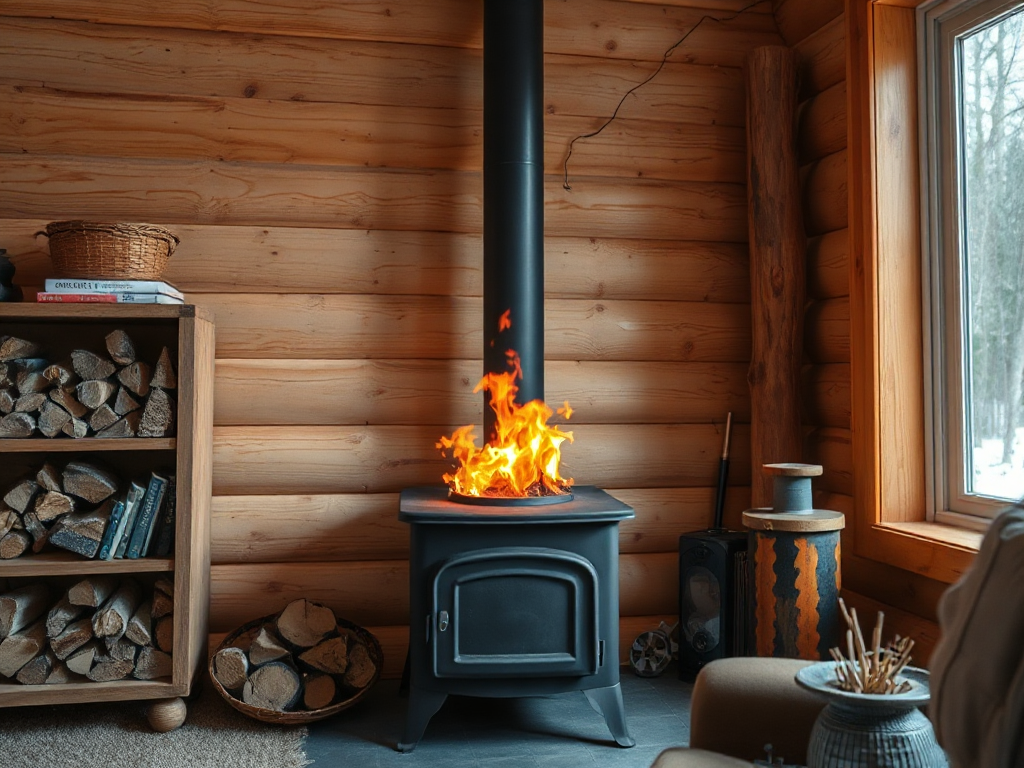
Wood stove heating safety in self-sustainable homes depends on controlling heat, smoke, and combustion from installation through daily operation. A listed stove, correctly sized chimney, noncombustible floor and wall protection, adequate combustion air, and working smoke and carbon monoxide alarms form the safety base. Burn only dry, untreated firewood, keep loading doors closed, and remove ash in a covered metal container outdoors. Chimney deposits, overheated clearances, blocked flues, and improvised repairs create serious risks, especially when a home is remote from emergency services. Seasonal inspection, safe wood storage, and a written response plan make the system more dependable without treating self-reliance as a substitute for local code or professional inspection.
Build the Safety Margin Into Installation
A safe wood-heating system begins with the relationship between the stove, the room, the chimney, and nearby combustible materials. A stove that appears small and manageable can still produce intense radiant heat, while a chimney that passes through a ceiling or roof introduces a separate set of clearance and fire-containment requirements. In a self-sustainable home, installation decisions deserve extra scrutiny because a remote location may delay help and make replacement parts or professional service difficult to obtain.
Use a listed stove and follow its installation manual rather than relying on a general picture of how older wood stoves were installed. The manual specifies minimum clearances, connector-pipe arrangements, hearth dimensions, and acceptable venting components. Local building and fire authorities may impose additional requirements. A handmade heat shield, an unapproved barrel stove, or a shortened chimney may seem economical, but these choices can change surface temperatures and draft behavior in ways that are difficult to judge by sight.
Floor protection must extend far enough to catch sparks and embers around the loading door, and wall protection must preserve the required air gap when a shield is used. A metal sheet fastened directly to a wall is not automatically an effective heat shield because it may transfer heat into the wall framing. The chimney needs continuous support, proper penetration protection, and a cap that limits rain, debris, and animal entry without restricting exhaust.
Consider two installation scenarios. A compact stove placed near a central masonry wall may distribute heat efficiently, but a long connector pipe can still overheat nearby framing if clearances are wrong. A stove in a detached cabin may have plenty of room around it, yet a poorly supported chimney exposed to wind can leak or shift. The safer choice is not simply the arrangement with more open floor area; it is the arrangement that meets the appliance instructions, maintains stable venting, and remains inspectable.
Before the first fire, document the stove model, chimney components, clearance measurements, and alarm locations. Photograph concealed sections before closing walls or ceilings. Have the installation reviewed by a qualified professional or the relevant local authority when possible, particularly if the home uses an unusual roof, a masonry chimney, or a converted structure. The common mistake is treating the hearth as the whole safety system while ignoring the chimney route and concealed combustible framing.
For broader planning context, the principles in Wood stove heating safety in self-sustainable homes should be considered alongside the home’s insulation, ventilation, and backup-heating choices.
Control Combustion, Draft, and Indoor Air
Wood burns safely when the fire receives enough air, the flue stays warm enough to carry exhaust upward, and the chimney remains unobstructed. Restricting air too aggressively can produce a smoky, low-temperature fire that deposits creosote, while excessive draft can make the stove burn too quickly and drive room temperatures beyond comfortable limits. The objective is controlled combustion, not the longest possible burn from one load of wood.
Combustion also consumes indoor air. In a tightly sealed house, a powerful exhaust fan, kitchen hood, clothes dryer, or other appliance can depressurize the room and interfere with chimney draft. Smoke may spill through the loading door or leak from joints when the house is under negative pressure. A dedicated outside-air connection may be appropriate for some stoves and buildings, but it must be compatible with the appliance and installed according to its instructions rather than improvised with flexible ducting.
Watch the behavior of the stove during normal operation. A stable fire should exhaust through the chimney without persistent smoke entering the room, and the stove should respond predictably when its controls are adjusted. Repeated smoke rollout, a sluggish flame, unusual odor, or a newly difficult-to-light fire can indicate wet fuel, a blocked flue, inadequate draft, or pressure competition inside the home. Opening a window may temporarily change the symptoms, but it does not correct a blocked chimney or defective installation.
Fuel moisture matters because wet wood uses heat to evaporate water instead of sustaining efficient combustion. The result may be more smoke, less usable heat, and faster deposit formation. Split and season firewood under cover with air circulation; do not assume that wood feels dry on the outside. Construction scraps, painted boards, treated lumber, plastics, and household waste can release hazardous compounds, damage the stove, or create unstable burning. Clean, dry, untreated firewood is the appropriate fuel.
A common misconception is that closing the air control nearly shut guarantees a safe overnight fire. It may extend the burn, but if the fire smolders, the chimney can accumulate deposits and the room may receive less heat than expected. A modest, clean-burning fire with a properly sized load is generally easier to control than an oversized stove operated at its lowest setting. If the home repeatedly overheats before the fire can be reduced, the appliance may be poorly matched to the building’s heat demand.
Operate the Stove Without Creating Hidden Hazards
Daily operating habits determine whether a correctly installed stove remains safe. Load wood only when the stove is stable enough to accept it without a surge of smoke, open the door gradually, and keep the door closed except during loading or tending. A screen or open-door operation is not a substitute for a sealed loading door because sparks, gases, and embers can escape into living space.
Keep curtains, furniture, clothing, paper, tools, and firewood well away from the stove and connector pipe. Do not use the stove top as a drying rack for gloves or clothing; fabric can ignite or fall against a hot surface. Children and visitors need a clear explanation of the hot-zone boundary, especially in a small home where the stove sits in a passageway. A sturdy barrier may be useful, but it must not interfere with loading, inspection, or required clearances.
Use a metal ash shovel and a covered metal container when removing ash. Hot coals can remain capable of igniting material long after the fire appears out. Place the container on a noncombustible surface outdoors, away from decks, walls, vegetation, and stored fuel. Never transfer ash to a cardboard box, plastic bin, compost pile, or area beneath a porch. Ash may eventually be useful in limited garden or soil applications, but safe cooling and storage come first.
Remote homes often combine a stove with battery systems, generators, solar equipment, or propane appliances. That combination creates practical conflicts: cords may cross hot areas, fuel may be stored too close to the stove, and residents may use the stove during a power outage while alarms have depleted batteries. Keep electrical equipment and fuel containers outside the stove’s heat zone, maintain independent alarm power where possible, and inspect the room before starting a fire after a long absence.
Imagine returning to a cabin after a week away in freezing weather. The safest first fire is not a large load intended to heat the building quickly. Check the chimney opening and room, confirm alarms function, inspect the stove and pipe for damage or animal blockage, and build a small fire using dry kindling. A frequent failure mode is rushing this sequence because the interior feels cold; haste increases the chance of smoke spillage, overfiring, or discovering a problem after the stove is already hot.
Residents should know the signs of overfiring, including a roaring fire that cannot be moderated, glowing stove or pipe components, unusual metallic noise, or nearby surfaces becoming excessively hot. Close the stove controls if doing so is safe, keep the door shut, move people away, and call emergency services if a chimney or structural fire is suspected. Do not pour water into a hot stove or climb onto a roof to investigate a chimney during an active event.
Manage Chimneys, Ash, Fuel, and Emergencies
Chimney maintenance is a continuing safety task rather than a once-only installation step. Burning wood produces smoke particles and condensable compounds that may adhere to the flue, particularly when fuel is wet, fires are smoldered, or the chimney stays cool. The amount and rate of buildup depend on the appliance, fuel, draft, and use pattern, so a calendar alone cannot replace inspection.
Arrange inspection and cleaning according to the stove manufacturer’s instructions, local requirements, and the observed condition of the flue. A qualified chimney professional can identify cracked liners, loose joints, damaged caps, nesting, corrosion, and deposits in locations that are not visible from the room. A homeowner may inspect accessible areas, but sweeping from below with a basic brush does not prove that the entire venting system is sound.
Wood storage affects both heating performance and fire exposure. Stack fuel off the ground under a roof or cover that protects it from rain while allowing air movement. Keep the main wood pile separate from the house when the site permits, and bring inside only a modest working supply. Storing a full season’s firewood against the exterior wall may save carrying effort, but it can encourage insects, retain moisture, and place combustible material close to the building.
Smoke alarms should be installed on every level and near sleeping areas, while carbon monoxide alarms should be placed according to the device instructions and local guidance. Test them regularly and replace batteries or units as required. A carbon monoxide alarm is a warning device, not evidence that a stove room is safe; it cannot compensate for a blocked flue, poor draft, or a leaking appliance. Anyone experiencing headache, dizziness, weakness, nausea, or confusion should leave the building and seek emergency assistance rather than trying to diagnose the source indoors.
A useful seasonal priority sequence is:
- Before the heating season, inspect the stove, chimney, hearth, clearances, cap, alarms, and fire extinguisher.
- During operation, use dry untreated wood, observe draft and smoke behavior, and keep combustibles out of the heat zone.
- After unusual events, such as a chimney fire, water intrusion, impact, or suspected overfiring, stop using the system until it has been evaluated.
- At the end of the season, remove excess ash safely, protect the chimney opening from pests, and record repairs or recurring symptoms.
The weak assumption to avoid is that self-sufficiency means handling every task alone. Cutting and seasoning your own wood can reduce dependence on deliveries, but chimney inspection, structural assessment, and emergency response may require outside expertise. A dependable household plan identifies who to call, where shutoffs and extinguishers are located, and how occupants will leave if smoke or carbon monoxide appears.
For related household planning, review Wood stove heating safety in self-sustainable homes together with backup heat and cold-weather shelter plans. Safety improves when the stove is treated as one component of a complete heating system, not as an isolated appliance.
Frequently Asked Questions
How often should a wood stove chimney be cleaned?
Use the manufacturer's guidance and arrange inspection based on actual use and deposit buildup. Heavy use, wet wood, smoke, or a cool flue may require more frequent attention than occasional operation.
Can I burn construction scraps in a wood stove?
No. Painted, glued, treated, or plastic-containing materials can release hazardous pollutants and may damage the stove or chimney. Burn only clean, dry, untreated firewood approved for the appliance.
Where should wood-stove ashes be stored?
Place ashes in a covered metal container outdoors on a noncombustible surface, well away from buildings, decks, vegetation, and firewood. Assume embers may remain hot for an extended period.
Does a carbon monoxide alarm make a wood stove safe?
No. It provides an important warning but does not correct poor draft, a blocked chimney, or a leaking appliance. Keep alarms working and maintain the entire venting system.
What should I do if smoke enters the room?
Keep the stove door closed if safe, move people away from the smoke, ventilate only when appropriate, and stop using the stove until the cause is identified. A blocked flue, wet wood, pressure imbalance, or draft problem may be involved.
Further Reading
Authoritative Sources
- Ready.gov
ready.govOfficial household preparedness guidance, emergency plans, and supply checklist resources.
- FEMA
fema.govFederal emergency management information, disaster planning resources, and recovery guidance.
- American Red Cross Emergency Preparedness
redcross.orgPractical emergency preparation, safety, and response guidance for households.
- CDC Emergency Preparedness and Response
cdc.govPublic health guidance for disasters, emergency response, and recovery conditions.
Conclusion
Safe wood heating in a self-sustainable home rests on disciplined details: a listed and correctly installed appliance, protected clearances, a sound chimney, dry untreated fuel, adequate draft, and working smoke and carbon monoxide alarms. Daily habits matter just as much as hardware. Avoid smoldering fires, keep the loading door closed, store only a small amount of wood indoors, and cool ashes in a covered metal container outside. Inspect the system before each heating season and after any unusual event such as overfiring or chimney damage. Self-reliance is strengthened, not weakened, by using qualified inspection and emergency services when a problem exceeds household skills. Treat the stove as part of a complete heating plan, with safe evacuation and backup arrangements already decided.