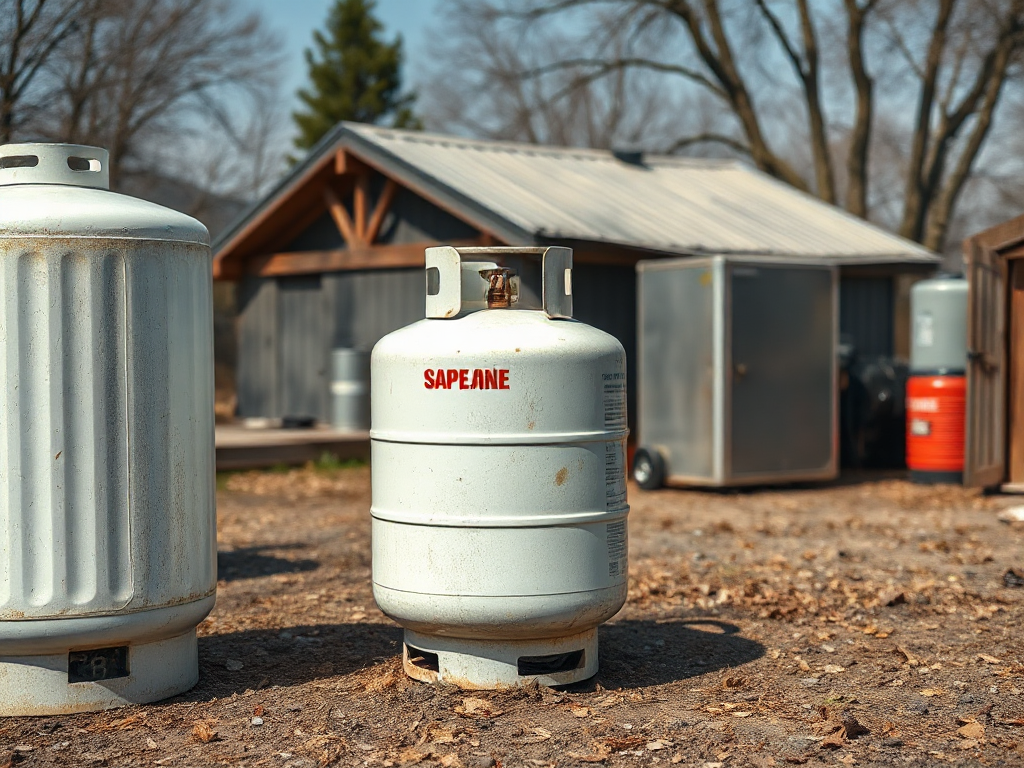
Safe propane storage for off-grid household resilience depends on outdoor tank placement, adequate separation from ignition sources, routine inspection, and a written emergency plan. Keep cylinders upright on a stable, noncombustible base in a well-ventilated location, protect them from vehicle impact and flooding, and never store them inside a dwelling, crawl space, shed, or enclosed utility room. Check valves, hoses, regulators, mounting hardware, and visible corrosion before each refill or seasonal restart. Size reserves around actual appliance demand and delivery limits rather than assuming a larger tank is automatically safer. Everyone who may use the system should know how to shut off the service valve, recognize a propane odor, leave the area, and contact the supplier or emergency services.
Choosing a Safe Propane Storage Location
Location determines how safely propane can remain on an off-grid property. Propane containers belong outdoors in an open, ventilated area where a leak can disperse rather than collect near floors, drains, pits, or enclosed structures. The exact separation distances and installation requirements depend on container type, capacity, local rules, and the work performed, so the propane supplier or a qualified installer should confirm the proposed site before placement.
A level, stable base matters because a shifting cylinder can strain the service valve, regulator, or connected piping. Use a support arrangement appropriate to the container and keep the tank upright unless it is specifically designed and installed as a stationary bulk vessel. Do not bury portable cylinders, stack them casually, or place them where snow, brush, stored lumber, or household refuse can hide damage or restrict access.
Think about ordinary events rather than only calm weather. A tank beside a driveway may be convenient for delivery but vulnerable to a backing vehicle. A tank below a roof edge may be exposed to falling ice or concentrated runoff. A low area may appear sheltered until floodwater moves the container or carries debris into its fittings. A practical site should allow delivery access, visual inspection, emergency shutoff, vegetation control, and safe clearance from windows, doors, vents, electrical equipment, generators, outdoor cooking appliances, and other ignition sources.
Impact protection is useful when traffic cannot be kept away. Bollards or another suitable barrier should protect the container without blocking the supplier’s access or preventing a responder from reaching the valve. Avoid improvising a cage from combustible materials. The surrounding area should remain clean and accessible, while the tank itself should not be treated as a shelf for tools, firewood, tarps, or equipment.
One common mistake is choosing the most hidden location. Concealment may reduce visual clutter, but it also delays detection of corrosion, displaced supports, damaged piping, or vegetation pressing against the tank. A better compromise is a visible, orderly location with controlled access. Record its position on a property map and make sure visitors or household members can identify the emergency shutoff without approaching a suspected leak.
Tank Condition, Connections, and Inspection Routines
Propane storage safety depends on the whole delivery system, not just the steel container. The tank, cylinder valve, relief device, regulator, pigtail, shutoff valve, fixed piping, appliance connectors, and mounting points work as one system. A sound tank connected to cracked tubing or a damaged regulator still creates a serious hazard.
Inspect visually before a refill, after severe weather, and before restarting appliances after a long shutdown. Look for deep rust, bulges, dents, gouges, damaged valve guards, loose supports, missing caps, cracked hoses, insect nests, and signs that water or soil has collected around the base. Do not scrape aggressively, paint over suspected damage, tighten fittings, or attempt valve repairs yourself. Describe the observation to the propane supplier or a qualified technician and keep the equipment out of service if its condition is uncertain.
Odor is a useful warning signal, but it is not a complete inspection method. Propane is odorized to help people detect a leak, yet odor perception varies and nearby smells may mask it. A household should never rely on an odor test by deliberately opening a valve or applying an unsafe flame. If the odor of propane is noticed, avoid switches, engines, phones used in the immediate area, and anything that could create a spark. Leave first, then call from a safe location.
Connections deserve special attention after equipment changes. A new generator, heater, range, or water heater can alter demand and may require different regulators, piping, ventilation, or professional commissioning. Portable cylinders should not be connected to household appliances with makeshift adapters. Appliance manuals and the fuel supplier’s instructions should govern compatible components, while local inspection requirements may apply to permanent installations.
A useful household record includes the tank owner or supplier, container type and capacity, service-valve location, appliance connections, inspection dates, refill history, and emergency contact numbers. This information helps a replacement operator or responder understand the system quickly. The weak assumption to avoid is that a system is safe because it worked last winter. Corrosion, animals, weather, construction, and unauthorized modifications can change conditions while the appliances remain unused.
Sizing Propane Reserves for Household Resilience
Reserve planning should match propane consumption, refill access, and the consequences of running out. Propane may fuel cooking, refrigeration, water heating, clothes drying, space heating, backup generation, or specialized equipment, and each use has a different duty cycle. A large container can reduce refill frequency, but it does not remove inspection needs, delivery constraints, regulator requirements, or the hazard of storing more fuel than the site and household can manage responsibly.
Begin with an appliance inventory. Record each appliance’s input rating from its data plate or manual, then estimate hours of operation during ordinary, cold-weather, and emergency conditions. The result is a planning estimate, not a guarantee: thermostatic heating varies with weather and building efficiency, while a generator’s fuel demand changes with electrical load. A simple log of tank levels and operating hours over several weeks often produces more useful information than a guess based on the appliance with the largest label.
Separate essential demand from optional demand. Heating, cooking, water heating, or a medical-support load may receive priority, while a clothes dryer or workshop heater can be deferred during a delivery interruption. This approach makes the reserve more resilient because it gives the household a controlled way to stretch fuel rather than forcing an unplanned shutdown.
For example, a household that uses propane mainly for cooking may need a modest reserve and a clear refill trigger. A household relying on propane for winter heat and generator operation needs a different plan, including weather exposure, delivery lead time, road access, and an alternative heat or cooking method. The second household should not simply copy the first household’s tank size. It should test whether the proposed reserve covers a plausible interruption while retaining a margin for uncertainty.
Keep cylinders and bulk tanks within the limits specified for that equipment and local authority. Never transfer propane between containers casually or fill a container beyond its permitted fill level. Portable cylinders should be refilled through an authorized service, and damaged or out-of-date containers should be evaluated by the supplier rather than kept as emergency spares.
A practical reserve review asks four questions:
- Which appliances are essential during a short delivery interruption?
- What is the observed daily or weekly consumption in the hardest season?
- How quickly can a supplier reach the property after snow, flooding, or road damage?
- What safe, non-propane alternatives are available for cooking, heat, or lighting?
Running the system until the gauge is nearly empty is a poor test of resilience. Refill timing, gauge interpretation, weather, and supplier schedules all introduce uncertainty. Establish a refill threshold based on actual use and access conditions, then revise it after each season.
Emergency Actions and Seasonal Risk Management
An emergency plan should tell people exactly what to do when propane is suspected, not merely list a supplier’s telephone number. Anyone who may operate the appliances should know the location of the service valve, the quickest exit route, the safe outdoor meeting point, and the rule to avoid ignition sources near a suspected leak. If a strong odor, hissing sound, visible vapor, fire, or damaged container is present, leave the area and contact emergency services or the propane supplier from a safe location. Do not return until qualified responders say it is safe.
Do not operate the tank valve during a suspected leak unless a trained responder or supplier gives clear instructions and the action can be taken without entering danger. Never test for leaks with a match, lighter, or improvised method. A household fire extinguisher may be appropriate for a small incipient fire only when a person has a clear escape route and knows how to use it; it is not a substitute for evacuation and professional response.
Severe weather changes the inspection priority. Before a storm, clear loose objects and vegetation from the area without striking the tank or piping. After high winds, flooding, wildfire exposure, or heavy snow, inspect from a safe distance for movement, impact, damaged fittings, or blocked access. Floodwater can displace containers and introduce debris, while wildfire heat can damage components even when no obvious leak is visible. A supplier or qualified technician should assess questionable equipment before service resumes.
Cold weather creates a different set of problems. Snow should not be piled against valves or regulators, and access paths should remain usable for delivery and emergency response. Do not apply an open flame to warm a container or use an improvised heater near it. If an appliance performs poorly, the cause may be fuel supply, regulator condition, venting, or appliance maintenance; changing parts without diagnosis can add risk.
Keep the emergency plan with the household’s other resilience records and practice it briefly at the start of the heating season. Include supplier contact information, appliance manuals, container details, the location of alternative cooking equipment, and instructions for visitors. A common failure is storing the plan on a phone that may be unavailable during a power or network outage. A printed copy in a known, safe location provides a useful backup.
For broader planning, connect propane decisions with Safe propane storage for off-grid household resilience, generator placement, ventilation, fire protection, and winter access. Fuel storage is only one part of household continuity; safe operation depends on the surrounding systems and the people using them.
Conclusion
Reliable propane storage begins with a suitable outdoor location, a stable and accessible installation, and equipment that is inspected rather than assumed sound. Match reserve capacity to measured appliance use, delivery limitations, and essential household services, then set a refill threshold before supplies become critical. Protect tanks from vehicle impact, flooding, falling debris, vegetation, and unauthorized modifications, while keeping valves and inspection points visible. Make the emergency response simple: leave when a leak is suspected, avoid sparks and flames, and call from a safe location. Before each high-demand season, review the tank, connections, access route, supplier information, and household instructions. Those routine decisions provide more resilience than simply purchasing a larger container.
Frequently Asked Questions
Can propane cylinders be stored inside an off-grid home?
No. Store cylinders outdoors in a ventilated location appropriate to the container and local requirements. Propane should not be kept in living areas, basements, crawl spaces, or enclosed sheds.
What should be checked before storing a propane cylinder?
Check for corrosion, dents, damaged valve guards, loose supports, cracked hoses, missing caps, and blocked access. Have questionable equipment assessed by the propane supplier or a qualified technician.
Is a larger propane tank automatically safer?
No. A larger tank may reduce refill frequency, but it still needs proper placement, inspection, compatible equipment, delivery access, and compliance with applicable requirements.
What should a household do if it smells propane?
Leave immediately without operating switches, engines, phones, or flames near the suspected leak. Call the propane supplier or emergency services from a safe location and do not return until cleared.
How can a household estimate its propane reserve?
List essential appliances, record their actual operating time and fuel use, account for seasonal demand and delivery delays, and set a refill threshold before the tank is nearly empty.
Further Reading
Authoritative Sources
- Ready.gov
ready.govOfficial household preparedness guidance, emergency plans, and supply checklist resources.
- FEMA
fema.govFederal emergency management information, disaster planning resources, and recovery guidance.
- American Red Cross Emergency Preparedness
redcross.orgPractical emergency preparation, safety, and response guidance for households.
- CDC Emergency Preparedness and Response
cdc.govPublic health guidance for disasters, emergency response, and recovery conditions.