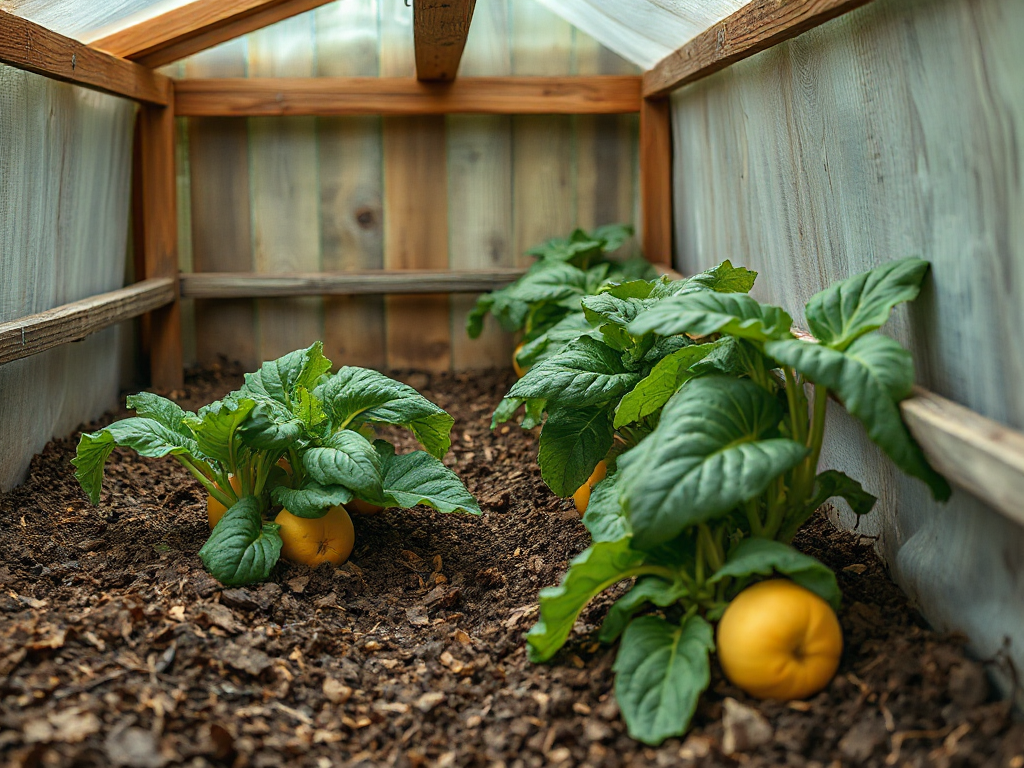
Match Humidity to the Vegetable, Not the Room
Stored vegetables do not all need the same cellar atmosphere. Carrots, beets, turnips, parsnips, and celeriac lose quality quickly when surrounding air is too dry, because their tissues give up water and become limp or shriveled. Onions, garlic, and many winter squashes have a different storage requirement: relatively dry air and good surface drying help protect their skins and necks from mold.
A root cellar therefore works as a set of small storage environments rather than one perfectly adjusted room. A packed bin of damp sand or sawdust can preserve moisture around carrots, but placing onions beside that bin may expose them to conditions that encourage soft necks and fungal growth. Separating crops by humidity preference is often more effective than trying to force the entire cellar toward one middle setting.
Temperature also changes how humidity behaves. Cool air can hold less water than warm air, so a cellar that seems comfortable during the day may develop condensation when the temperature drops at night. Condensation on walls, shelves, jars, or vegetable skins is a warning that moisture is reaching its dew point. It is not proof that the crop is being stored well.
Use the crop as the starting point for the layout. Place moisture-loving roots in ventilated crates, perforated bags, or storage boxes that retain dampness without becoming airtight. Keep dry-storage crops in a separate zone with more exposed airflow. Potatoes occupy an intermediate position but should still be protected from light and from direct contact with wet floors or leaking walls. The linked topic Root cellar humidity control for stored vegetables is most useful when applied crop by crop rather than as a single room-wide number.
A common mistake is assuming that visible moisture always means healthy humidity. Wet soil clinging to roots, unhealed cuts, and bruised skins can create localized decay even when the room reading appears reasonable. Harvest vegetables as dry and intact as practical, remove loose soil without aggressive washing, and allow surfaces to dry before packing. High humidity preserves sound produce; it does not rescue damaged produce.
Measure Moisture and Control Air Movement
A hygrometer gives root cellar humidity control a measurable starting point, but one reading from a single wall is not enough. Humidity can vary between the floor, ceiling, outside wall, and densely packed storage bins. A sensor near a damp foundation may report a wetter microclimate than the center of the room, while a sensor above a warm appliance or near a vent may understate the conditions around the vegetables.
Place a dependable hygrometer at vegetable height and check it in more than one location during changing weather. Compare the room reading with physical evidence: crisp roots that are losing weight suggest excessive dryness, while slick surfaces, fuzzy growth, or wet container walls suggest excess moisture or inadequate air exchange. The instrument helps identify a trend, but the crop supplies the practical test.
Ventilation removes excess moisture, odors, and heat, yet opening a vent at the wrong time can make conditions worse. Bringing in cold outdoor air may dry the cellar when that air has low absolute moisture, but outdoor air that is mild and damp can add water vapor. A simple comparison of indoor and outdoor temperature and humidity is more useful than leaving a vent permanently open. When the outside air is warmer and visibly humid, short ventilation periods may be preferable to continuous exchange.
Air movement should be gentle and distributed. A fan aimed directly at carrots or potatoes can dehydrate exposed surfaces, whereas a low-speed exchange that moves air through the room can reduce stagnant pockets. Leave space between stacked containers and walls, keep vents clear, and avoid packing boxes tightly against a cold masonry surface where condensation can form.
Under real constraints, passive ventilation may be sufficient for a small, cool cellar with modest storage. A larger room, damp foundation, or heavy harvest may require more deliberate exhaust or dehumidification, but dehumidifiers can lower moisture too aggressively and add heat. Choose the least forceful adjustment that corrects the observed problem. The related reference point Root cellar humidity control for stored vegetables should be treated as a monitoring routine: record readings, note weather, inspect produce, and change one control at a time.
The failure mode to avoid is chasing a target number while ignoring airflow. A cellar can show an acceptable average humidity and still contain a dead-air pocket where one crate rots. Inspect corners, undersides of containers, and the backs of shelves rather than relying on the display alone.
Separate Crops and Manage Containers
Containers determine whether the cellar’s moisture reaches the vegetable evenly or becomes trapped around it. Carrots and similar roots generally benefit from a moist packing medium that is only damp, not saturated. The medium should hold the roots apart, limit surface drying, and allow inspection. A sealed plastic bag can retain moisture effectively, but if condensation accumulates inside, the same barrier can hold water against the crop and accelerate decay.
Ventilated crates, slatted boxes, and perforated storage bags offer a useful compromise for many root crops. They allow some exchange while reducing direct exposure to moving air. For onions and garlic, mesh bags or shallow trays are usually more appropriate than enclosed bins because their cured skins need dry circulation. Winter squash should have room around each fruit so a small damaged area can be seen before it affects neighboring produce.
Storage zones should reflect both humidity and inspection needs. Keep high-humidity root bins away from cured onions, garlic, and squash. Do not place crates directly on concrete or soil; a raised shelf permits air movement underneath and makes leaks easier to detect. Line shelves only with materials that remain dry and washable, since absorbent cardboard can conceal spills and become a mold reservoir.
Consider a practical comparison: one large mixed-produce rack is convenient but forces incompatible crops into the same air conditions. Several smaller zones take more space and require labeling, yet they make adjustment possible. If the cellar is small, use the driest, best-ventilated location for cured crops and reserve the most humid protected area for roots. This arrangement is often more valuable than buying another container.
Before storage, sort firmly. A cut, bruised, diseased, or soft vegetable should not enter a long-term bin with sound produce. Check stored crops on a schedule suited to the crop and room conditions, turning or opening containers only as needed. Remove one decaying item promptly, clean any contact surface, and investigate whether condensation or poor airflow caused the problem. Do not simply add more ventilation to a bin that is already too dry.
Container choice is also a tradeoff between preservation and visibility. A deep packed box may hold moisture well but makes inspection slower; shallow layers are easier to monitor but expose more produce to air. Root cellar humidity control for stored vegetables improves when storage design makes the correct condition easy to maintain and the first signs of failure easy to see.
Diagnose Problems and Adjust the Cellar
The pattern of damage usually identifies the humidity problem more accurately than a single measurement. Shriveled carrots, rubbery beets, and limp greens indicate that the crop is losing water faster than the storage environment replaces it. Increase local moisture with a suitable damp packing medium, reduce direct airflow, or move the container to a less exposed position. Avoid wetting vegetables directly, because surface water can create a decay zone.
Soft spots, slimy surfaces, fuzzy growth, or a sour odor point toward excess moisture, damaged produce, poor sanitation, or stagnant air. Begin by removing affected vegetables and checking the container, floor, wall, and nearby produce. If the room is generally damp, improve drainage and controlled air exchange before relying on a dehumidifier. If only one packed bin is wet, changing the packing medium or reducing its moisture may solve the local issue without drying the whole cellar.
Sprouting has several possible causes, including temperature shifts, crop maturity, and storage conditions, so it should not automatically be blamed on humidity. Condensation, however, deserves immediate attention because repeated wetting of skins can weaken storage quality. Mold on onions or garlic often means they were not adequately cured, were bruised, or are being held in air that is too damp. These crops should not be placed in the same humid zone used for roots.
Use a short adjustment sequence rather than changing everything at once:
- Record humidity and temperature at vegetable height in two or more locations.
- Inspect produce, containers, walls, floor, and ceiling for condensation or leaks.
- Remove damaged items and correct sanitation before changing the setpoint.
- Adjust one variable, such as vent timing, container spacing, or packing moisture.
- Recheck the crop and readings after the cellar has experienced a normal temperature cycle.
Weak assumptions often create larger losses. A permanently open vent may dry roots or admit damp air; a sealed bin may preserve moisture or trap condensation; and a high room humidity reading may benefit carrots while harming onions. Treat the cellar as a changing system. Seasonal outdoor conditions, harvest moisture, wall temperature, and the amount of stored produce all affect the result.
The practical goal is not a perfect display reading. It is stable, crop-appropriate moisture with no persistent condensation, no unexplained weight loss, and no spreading decay. When the cellar cannot provide separate zones, prioritize sound harvests, use containers that can be checked quickly, and store crops with similar needs together.
Frequently Asked Questions
Should a root cellar be humid or dry?
It depends on the crop. Root vegetables generally need moist air or damp packing, while onions, garlic, and winter squash usually store better in drier, well-ventilated conditions.
How can I tell if my cellar is too humid?
Look for persistent condensation, wet container walls, slimy surfaces, mold, sour odors, and rapidly spreading soft spots. Confirm the pattern with a hygrometer placed near the stored vegetables.
Does opening the cellar vent lower humidity?
Sometimes. Venting can remove moisture when outdoor air is colder and drier in absolute terms, but warm damp outdoor air may increase cellar moisture. Compare conditions before opening the vent.
Can vegetables be stored in sealed plastic bags?
Sealed bags can retain moisture around roots, but they also trap condensation and decay. Perforated bags or ventilated containers are safer when surface wetness is a concern.
Why are my carrots shriveling in storage?
They are likely losing water through dry air, excessive airflow, or inadequate packing. Use a slightly damp, clean packing medium and reduce direct drafts without creating wet surfaces.
Further Reading
Authoritative Sources
- Academy of Nutrition and Dietetics
eatright.orgProfessional nutrition guidance, healthy eating resources, and practical dietitian-reviewed advice.
- U.S. Department of Agriculture
usda.govOfficial food, nutrition, agriculture, and consumer guidance from the USDA.
- NIH Office of Dietary Supplements
ods.od.nih.govResearch-based fact sheets on nutrients, supplements, dietary intake, and safety considerations.
- International Society of Sports Nutrition
sportsnutritionsociety.orgEvidence-informed sports nutrition resources and position stands for active people and athletes.
Conclusion
Reliable storage depends on matching moisture to the vegetable rather than pursuing one cellar-wide humidity target. Keep carrots, beets, and other roots from drying by using suitable damp packing and protection from drafts, while giving onions, garlic, and winter squash a drier, more open environment. Measure at vegetable height, inspect low-airflow areas, and treat condensation, soft spots, shriveling, and odors as diagnostic clues. Raised containers, separated crop zones, sound produce, and controlled venting usually solve more problems than aggressive equipment changes. Begin with a two-location hygrometer check and a careful inspection, then adjust one variable at a time. A stable cellar is one where produce remains sound and easy to monitor, not merely one that displays a preferred number.