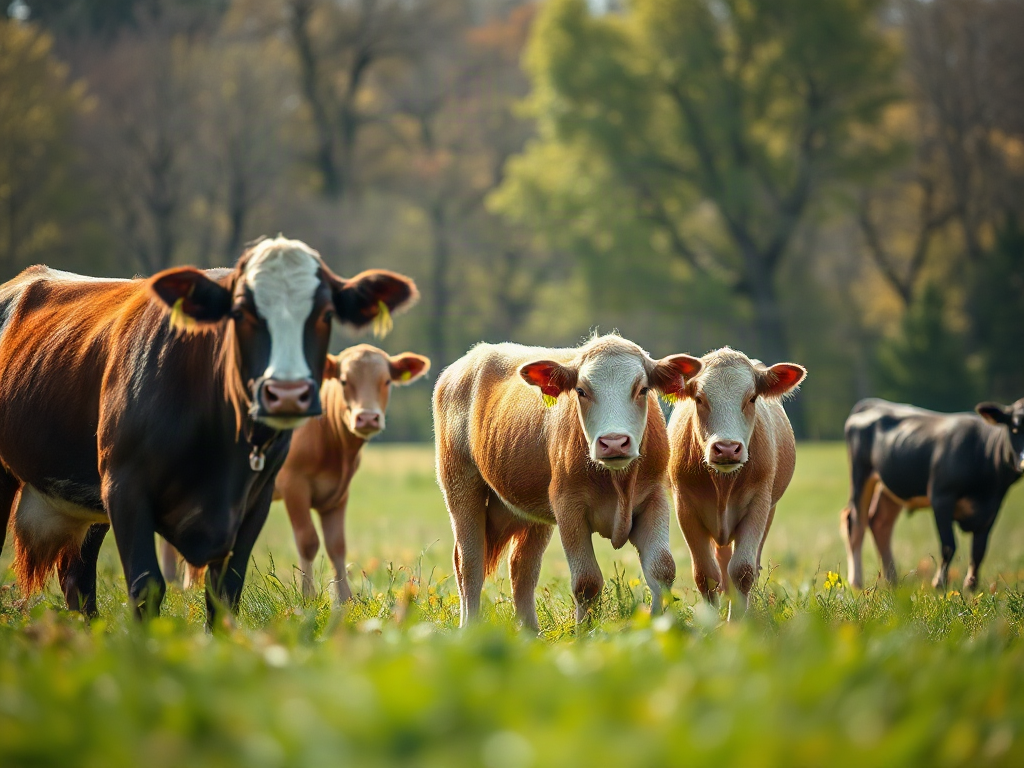
Livestock feed independence through on-site forage comes from matching forage species and grazing systems to the animals, soil, rainfall, and winter storage available on the property. Productive pasture, browse, hay crops, and carefully managed residues can reduce purchased feed, but they do not remove the need to balance protein, energy, minerals, and dry-matter supply. Rotational rest, soil fertility, weed control, and harvest timing determine whether forage remains nutritious or becomes mature, stemmy, and difficult to consume. A reliable system also carries reserve hay or another fallback for drought, frozen ground, slow spring growth, and overgrazed paddocks. The practical goal is measured feed resilience, not complete separation from outside inputs.
Define the Feed Independence Goal
Feed independence is best measured as the share of usable livestock nutrition produced and stored on the property, not as a promise to buy nothing. A small holding may grow pasture and hay while still purchasing salt, mineral supplements, breeding-specific feed, or emergency forage. That arrangement can be more dependable than attempting to grow every ingredient regardless of land, weather, and animal needs.
The first calculation is a feed inventory. List each animal class, including cows with calves, dry sheep, goats, poultry, or working animals, then estimate how much forage each group can consume during the grazing season and dormant months. The estimate must account for trampling, spoilage, uneven grazing, and periods when animals cannot reach pasture. Forage quantity alone is misleading: a lush field that is low in dry matter or poorly balanced in protein may not replace purchased feed.
Feed quality changes as plants mature. Young leafy growth is generally more digestible than coarse stems and seed heads, while legumes can contribute more protein than many mature grasses. Those broad patterns vary with species and growing conditions, so a forage test is more useful than judging a field by color. Testing is particularly valuable before replacing a known ration for lactating, growing, or heavily working animals.
A common mistake is treating acreage as the main measure of independence. Two properties with the same area can produce very different amounts because of soil depth, drainage, rainfall, fertility, slope, and grazing pressure. A modest, well-managed pasture with a hay reserve may outperform a larger tract that is continuously grazed and repeatedly exposed to bare soil. Use Livestock feed independence through on-site forage as a production target that can be audited each season.
Choose Forage That Fits the Holding
Forage selection should follow climate, soil behavior, animal preference, and management capacity. Cool-season grasses may provide strong spring and autumn growth in suitable regions, while warm-season grasses can carry production through hotter months. Legumes such as clovers, alfalfa, or locally adapted alternatives may add protein and biological nitrogen, but they also bring establishment, persistence, and animal-health considerations. Browse plants can be valuable for goats and mixed herds, yet they should not be assumed to supply a complete ration.
Species diversity can spread production across weather patterns, but a mixture is not automatically better. A grass-legume stand may fail if one component is poorly adapted, grazed at the wrong height, or outcompeted during establishment. Before planting, examine soil test results, drainage, pH requirements, frost exposure, and the availability of seed suited to the region. A local university extension service or conservation agency can help identify forage types that have performed under similar conditions without turning a recommendation into a guarantee.
Consider function as well as yield. A fast-growing annual may provide a useful bridge between perennial flushes, but it demands repeated planting and may leave the farm exposed if wet weather prevents seeding. A permanent pasture can reduce annual labor but may recover slowly after drought or severe grazing. Hay fields provide control over harvest timing, whereas standing forage reduces machinery needs but leaves more of the crop vulnerable to weather and trampling.
For example, a mixed goat-and-sheep property might combine permanent grass, a browse strip, and a small high-quality hay area. Goats can use woody and leafy vegetation that sheep may ignore, while sheep may graze the grass more closely. The arrangement still requires monitoring because goats can damage preferred shrubs and sheep can suppress regrowth if access is not rotated. Planting a single high-yield crop everywhere is often less resilient than assigning different areas to grazing, browsing, and conserved feed.
The weak assumption to avoid is that native or volunteer plants are automatically safe and nutritious. Some weeds are unpalatable, some become problematic at particular growth stages, and some can contaminate hay. Identify unfamiliar plants before allowing heavy access, and treat toxic-plant risk as a management question rather than relying on animal instinct.
Manage Grazing, Cutting, and Regrowth
Forage independence depends less on maximum daily access than on maintaining enough leaf area for recovery. When animals repeatedly bite regrowth before roots and crowns have replenished reserves, pasture density declines, desirable species disappear, and bare soil expands. A practical grazing system moves animals according to plant recovery, not a fixed calendar alone.
Divide the available area into paddocks or temporary sections when fencing and water access allow it. Give a grazed area a rest period long enough for useful regrowth, then adjust the interval when rainfall, temperature, and plant growth change. The aim is not uniform grazing at all times. It is to prevent animals from repeatedly selecting the same plants while leaving an adequate residual height that protects the soil and supports photosynthesis.
Observe three indicators: the amount of leaf remaining after grazing, the speed of regrowth, and the proportion of desirable plants in the stand. If animals are losing condition despite apparent pasture abundance, forage may be too mature, sparse, or nutritionally diluted. If plants are grazed nearly to the ground and recovery takes longer after each cycle, stocking pressure is exceeding the land’s current capacity. Reducing access, moving animals sooner, or feeding stored forage can protect next month’s production.
Hay harvest requires a different tradeoff. Cutting earlier may preserve digestibility and leaf quality, but the crop contains less dry matter per cutting and may need careful drying. Waiting for maximum bulk can produce more weight, yet mature stems may be less valuable to animals and can increase refusal. Weather forecasts, crop maturity, drying conditions, and storage space must be considered together. Hay that is baled too wet can heat, mold, or lose quality, while hay stored uncovered can suffer weather damage.
A useful division is to reserve the strongest fields for high-demand animals and use lower-quality forage for maintenance animals only when testing and observation support that decision. A lactating animal, growing young stock, and a dry mature animal do not necessarily need identical forage. Failing to separate those needs can lead to unnecessary purchased feed for one group or poor performance in another.
Continuous grazing is not always wrong, especially on large, low-input rangeland with suitable stocking rates, but it offers less control over selective grazing and recovery. Intensive subdivision can improve observation and utilization, yet it adds fencing, water, labor, and movement demands. Choose the simplest system that protects regrowth and can actually be maintained during busy periods.
Cover Winter, Drought, and Nutrient Gaps
Seasonal gaps determine whether on-site forage remains dependable. Most holdings have a period when growth slows because of cold, drought, excessive heat, saturated soil, or short daylight. The gap may be brief in one year and severe in another, so a feed plan should include stored forage and a response threshold before pasture condition deteriorates.
Estimate the reserve from the number of animals, the expected length of the forage gap, and a realistic allowance for waste. Storage losses vary with bale type, weather exposure, handling, and feeding method. Hay placed directly on muddy ground may be lost from the bottom, while an unprotected bale feeder can allow animals to trample edible material. Keeping feed dry and presenting it in a way that limits contamination can matter as much as producing another cutting.
Drought management should begin before the pasture looks exhausted. Watch plant recovery, soil exposure, water availability, and animal body condition. If rain fails and regrowth stops, shorten grazing periods or remove animals to a sacrifice area while feeding hay. Sacrificing a small, manageable area can be preferable to damaging the entire pasture, because recovery from widespread overgrazing may require reseeding, erosion repair, and a long rest period.
Forage also has nutritional limits. Grass hay may supply adequate maintenance energy for some mature animals but fall short for milk production, late gestation, growth, or hard work. Mineral needs are not reliably met by pasture appearance, and some animals require targeted supplementation. Use forage analysis, animal condition, production stage, and veterinary or livestock-nutrition advice when deciding whether minerals, protein, or energy supplements are needed. On-site forage can be the foundation without being the only ingredient.
Consider a winter scenario in which a farm stores only enough hay for an average season. An early freeze extends the feeding period, and a wet spring delays pasture access. The shortage then appears when local hay is expensive or unavailable. A reserve sized only for normal conditions is not a reserve; it is a forecast. Keep a defined emergency margin, inspect stored bales periodically, and decide in advance which animals would be sold, relocated, or fed first if supplies become tight.
Build a Practical Forage Independence Plan
A workable plan connects land capacity, animal demand, labor, and records. Begin with a map showing pasture, hay ground, browse, water points, shade, gates, and areas unsuitable for grazing. Mark seasonal strengths and weaknesses rather than assuming every acre contributes equally. The map can reveal that a distant field is rarely used because moving animals there takes too much time, or that a wet corner should be protected rather than counted as dependable forage.
Record grazing dates, rainfall observations, forage tests, hay quantities, purchased feed, animal condition, and pasture recovery. These records turn general impressions into decisions. If a paddock repeatedly fails after summer grazing, the response might be lower stocking, different rest periods, drainage work, or a forage change. If hay quality is consistently poor, changing harvest timing may be more useful than expanding acreage.
Use a staged approach rather than renovating the entire property at once. First protect existing productive forage with sensible stocking and recovery. Next improve water distribution or access where those constraints cause uneven use. Then test a small planting of an adapted forage or annual bridge crop. Expand only after observing establishment, animal acceptance, weed pressure, and performance through the relevant season.
- Measure supply: estimate usable grazing days, stored hay, likely waste, and emergency reserves.
- Match demand: separate maintenance animals from growing, lactating, late-gestation, or working stock.
- Protect recovery: adjust stocking and rest when plants stop replacing leaf mass.
- Verify quality: test hay or pasture when feed changes could affect animal performance.
- Review failure points: identify drought, winter, labor, fencing, water, and storage vulnerabilities.
Signs that the system is working include stable animal condition, adequate regrowth, less bare soil, predictable hay use, and fewer urgent purchases. Signs of failure include declining pasture density, repeated forced grazing of recovering areas, increasing refusals, unexplained weight loss, and a reserve that disappears before the next growth period. The on-site forage approach should be revised from those observations, not defended as a fixed ideology.
Financial independence and biological independence are different goals. Buying a small amount of specialized feed may be cheaper and safer than forcing unsuitable land to produce it. Likewise, investing in fencing or water may reduce purchases more reliably than buying exotic seed. Prioritize the constraint that limits usable forage first, then measure whether the investment changes feed availability, quality, labor, or resilience.
Frequently Asked Questions
Can livestock live entirely on forage grown on the property?
Some mature animals may meet maintenance needs from suitable forage, but growing, lactating, late-gestation, or working animals may need additional energy, protein, or minerals. Testing and body-condition monitoring are safer than assuming pasture is complete.
How much land is needed for feed independence?
No universal acreage figure applies. Soil, rainfall, forage species, stocking rate, animal size, growing season, and stored-feed requirements can change carrying capacity substantially. Local forage estimates and records are more useful than a generic acreage rule.
Is rotational grazing required?
No, but animals need enough access management and recovery time to prevent repeated close grazing. Rotational fencing can improve control, while a simpler system may be appropriate if stocking is low and pasture recovery is easy to observe.
Should pasture be planted with grass and legumes?
A compatible grass-legume mixture may broaden forage quality and seasonal production, but success depends on soil conditions, climate, grazing behavior, and establishment. Select adapted species and trial a small area before committing the whole holding.
What is the most common cause of forage shortages?
Shortages often result from counting total pasture rather than usable forage after waste, poor recovery, seasonal dormancy, and animal demand are included. Overgrazing and inadequate hay reserves can turn a temporary weather problem into a long feed deficit.
Further Reading
Authoritative Sources
- Academy of Nutrition and Dietetics
eatright.orgProfessional nutrition guidance, healthy eating resources, and practical dietitian-reviewed advice.
- U.S. Department of Agriculture
usda.govOfficial food, nutrition, agriculture, and consumer guidance from the USDA.
- NIH Office of Dietary Supplements
ods.od.nih.govResearch-based fact sheets on nutrients, supplements, dietary intake, and safety considerations.
- International Society of Sports Nutrition
sportsnutritionsociety.orgEvidence-informed sports nutrition resources and position stands for active people and athletes.
Conclusion
Reliable feed independence begins with an honest account of what the land can produce, when it produces it, and which animals require the best quality. Adapted pasture, browse, hay ground, and managed recovery can reduce purchased feed, but a resilient system still plans for frozen soil, drought, delayed growth, storage losses, and nutritional gaps. Protect regrowth before expanding acreage, test forage when animal demand is high, and keep a reserve that covers more than an average season. Track animal condition, grazing dates, hay use, and pasture response so each year improves the next decision. The practical next step is to map the holding, divide animals by nutritional demand, measure current forage reserves, and correct the constraint that causes the earliest shortage.