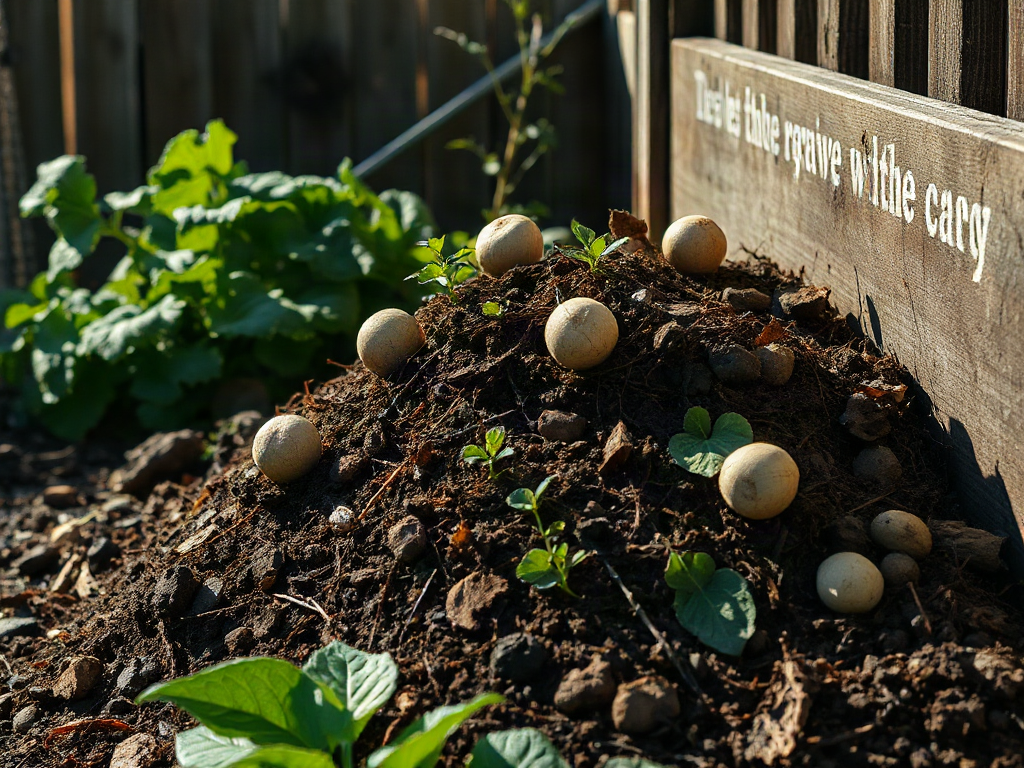
Humanure compost safety for non-food gardens depends on complete, managed composting, strict separation from edible crops, and protection from runoff, pets, children, and direct contact. Use a dedicated bin with abundant carbon cover, maintain heat and moisture rather than relying on time alone, and allow a long curing period after active decomposition. Do not use unfinished material around vegetables, herbs, fruit trees, or crops whose edible parts touch the soil. Treat uncertain batches as unsafe, keep tools and footwear separate, and place finished compost only on ornamental beds, trees, or other clearly non-food areas.
What Makes Humanure Compost Safer
Humanure compost becomes less hazardous when heat, microbial activity, time, and separation work together. Fresh feces may contain disease-causing organisms, parasite eggs, and other contaminants, so the material should never be treated like ordinary leaf compost at the point of collection. The safety goal is not to make a questionable pile look dark; it is to create conditions that reduce biological hazards and then keep the finished material away from edible production.
Heat is useful because active decomposition can damage or kill many pathogens, but a warm-looking pile is not proof that every portion received the same treatment. Center areas may heat while edges, the base, or newly added pockets remain relatively cool. A covered, well-built pile with adequate carbon material is more reliable than a shallow heap exposed to weather. Temperature records can improve confidence, but household systems often lack uniform heating and laboratory verification, so conservative end use remains appropriate.
The non-food boundary reduces consequences if treatment was incomplete. Ornamental shrubs, flowers, shade trees, privacy plantings, and lawn edges are lower-contact destinations than vegetable beds. Even there, the compost should not be placed where children play, pets dig, stormwater carries material downhill, or people routinely handle the soil without gloves. Humanure compost safety for non-food gardens is therefore a system decision involving treatment, placement, access, and maintenance rather than a single temperature target.
A common mistake is assuming that “compostable” means “safe anywhere.” Composting changes the material, but it does not erase the need for boundaries. Another weak assumption is that a dry pile is safer than a moist one; excessive dryness can stop the biological activity needed for treatment. Aim for a damp, covered, oxygenated mass without liquid leaking from the pile.
Building and Managing a Dedicated Compost System
A dedicated humanure system should prevent contact with fresh material and keep rainwater from washing contaminants into soil or drainage routes. A lidded or roofed bin with a stable base is preferable to an open pile. Choose a location away from wells, surface water, property boundaries, children’s play areas, and food-growing beds. Local sanitation, zoning, or environmental rules may impose additional requirements, so check those before construction.
Carbon cover is the working material in a simple composting toilet or collection setup. After each deposit, cover it completely with a dry, absorbent material such as aged sawdust, wood shavings, shredded leaves, or finished plant compost. The cover limits odor and insects while balancing the nitrogen-rich feedstock. Fine sawdust can mat when saturated, whereas coarse shavings may leave gaps; a blend often performs better. Avoid treated wood waste, glossy paper, litter containing chemicals, or material whose source is uncertain.
For a batch pile, alternate deposits with generous carbon layers and keep the mass compact enough to retain warmth without sealing it airtight. A pile that smells strongly of ammonia may need more carbon, while a stagnant, slimy pile may be too wet or poorly aerated. Excessive turning can spread fresh contamination to tools, clothing, and nearby surfaces, so do not turn casually just to make the pile look uniform. If turning is part of the chosen system, use dedicated equipment and clean it afterward.
Operational discipline matters more than decorative bin design. Keep a labeled bucket, gloves, washable footwear, and cleaning supplies assigned to the system. Do not carry the collection container through the kitchen or store it beside garden produce. A household with limited space may prefer a contained batch approach over continuous harvesting because it creates a clear “active,” “curing,” and “finished” separation. The tradeoff is that batch systems require more space and patience, while continuous systems demand closer attention to where old and new material meet.
- Cover every fresh addition immediately.
- Keep rain, runoff, and floodwater away from the pile.
- Mark the start date of each batch and restrict access.
- Keep unfinished compost out of all food-growing areas.
One failure mode is adding kitchen scraps or animal manure without considering how that changes moisture, odor, and access patterns. Plant scraps may be included only if the system can still be managed hygienically; they should not become a reason to handle the pile more often. A simple, predictable input stream is usually easier to monitor.
Curing, Handling, and Deciding Whether a Batch Is Ready
Curing is the quiet period after active additions stop. During this stage, the pile cools, remaining organic matter stabilizes, and microbial activity continues at a slower pace. Do not confuse cooling with completion. A batch may cool because it is too small, too dry, or no longer receiving fresh material, not because it has reached a dependable sanitary endpoint.
Use a written batch record rather than memory. Note the last date of fresh addition, periods of heavy rain or drought, visible wet pockets, major disturbance, and any suspected contamination event. A long curing interval provides more time than a rushed harvest, but time alone cannot compensate for a pile that was repeatedly exposed, flooded, or poorly covered. If the system never became demonstrably active and the history is uncertain, the prudent choice is to leave it longer and keep it restricted.
Finished material should be dark and crumbly, with a mostly earthy smell and no recognizable fresh fecal material. Those signs describe maturity, not laboratory safety. Do not taste-test, sift with bare hands, or use appearance as permission for food crops. Wear gloves, avoid dusty handling, wash hands and tools, and keep contaminated clothing separate from household laundry when practical.
Consider two handling choices. Leaving mature material in a contained, undisturbed area minimizes contact and is the lower-risk option. Moving it to an ornamental bed makes the compost useful but creates opportunities for spills, splashes, and tool contamination. If relocation is worthwhile, move small loads in a covered container and place them beneath mulch or into soil rather than leaving exposed piles on the surface.
Watch for warning signs that justify postponement: persistent sewage odor, wet sludge, visible flies, fresh-looking deposits, leaking liquid, animal access, or a batch record with unexplained gaps. These conditions do not prove a specific pathogen is present, but they show that the process has not been controlled well enough for confident use. Humanure compost safety for non-food gardens should favor a clear no-use decision when evidence is incomplete.
Using Finished Compost in Non-Food Landscapes
Use mature humanure compost only in clearly non-food settings, such as ornamental flower beds, hedges, windbreaks, or established landscape trees, and apply it where people will not routinely harvest, dig, or play. Keep it away from edible plants even if the edible portion is above ground. Roots, fallen fruit, splashing rain, shared tools, and accidental bed expansion can erase a boundary that looked clear on paper.
Placement matters as much as the material itself. A mulch layer can reduce dust and direct contact, but it is not a substitute for curing. Avoid slopes leading to ponds, drainage ditches, wells, or neighboring properties. Do not spread it before heavy rain, and do not use it in areas that flood. For trees, keep the compost away from trunks and avoid creating a wet ring that could damage bark or encourage pests. A thin, incorporated application in an ornamental bed is easier to manage than a deep exposed mound.
Separate tools used for this work from tools used around food crops. Wash reusable gloves and tools with appropriate household cleaning procedures, and wash hands before touching food, faucets, doors, or phones. Children and pets should not be allowed to dig in the application area. If a garden contains both ornamental and edible sections, use physical distance, permanent labels, and dedicated paths instead of relying on everyone remembering which compost went where.
The safest alternative for a household uncomfortable with these controls is not to use humanure compost at all. Commercially produced compost, plant-based compost, or a professionally managed sanitation service may offer clearer handling expectations, though each option has cost and sourcing tradeoffs. A home system can reduce waste and produce useful organic matter, but it requires space, recordkeeping, restricted access, and willingness to discard or isolate uncertain material.
Before applying a batch, confirm four points: fresh additions have stopped, the pile has had a substantial curing period, the material is mature without obvious wet or fresh pockets, and the destination is permanently non-food and protected from runoff. If any answer is no, wait or choose another disposal route. Humanure compost safety for non-food gardens is safest when convenience never outranks containment.
Frequently Asked Questions
Can humanure compost be used around fruit trees?
For a conservative household system, avoid applying it around fruit trees because fallen fruit, splash, roots, and harvesting create food-contact opportunities. Keep the compost in clearly ornamental areas instead.
Is six months long enough to make humanure compost safe?
A calendar period alone cannot verify safety. The result depends on pile size, heat distribution, moisture, carbon cover, exposure, and whether fresh material was added. Uncertain batches should remain isolated longer.
What carbon materials work best for covering fresh additions?
Dry sawdust, coarse wood shavings, shredded leaves, and aged plant compost can work when they fully cover each addition. Avoid treated wood products and materials contaminated with chemicals or litter.
How can I tell whether a humanure pile has failed?
Persistent sewage odor, liquid leakage, wet sludge, visible fresh material, insect activity, flooding, or animal access signals poor control. Isolate the batch, correct the system, and do not apply it while those conditions remain.
Should humanure compost be tested before use?
Testing may provide useful information where a qualified laboratory offers appropriate pathogen analysis, but a household visual check cannot certify safety. Testing does not replace containment, curing, hygiene, or non-food use restrictions.
Further Reading
Authoritative Sources
- Academy of Nutrition and Dietetics
eatright.orgProfessional nutrition guidance, healthy eating resources, and practical dietitian-reviewed advice.
- U.S. Department of Agriculture
usda.govOfficial food, nutrition, agriculture, and consumer guidance from the USDA.
- NIH Office of Dietary Supplements
ods.od.nih.govResearch-based fact sheets on nutrients, supplements, dietary intake, and safety considerations.
- International Society of Sports Nutrition
sportsnutritionsociety.orgEvidence-informed sports nutrition resources and position stands for active people and athletes.
Conclusion
Safe use of humanure compost in a non-food garden rests on controlled treatment and strict boundaries. Build a covered, dedicated system; balance fresh material with suitable carbon; prevent runoff and animal access; and record when each batch stops receiving additions. Curing should be treated as risk reduction, not proof that a pile is sterile. Mature material belongs only in locations that will not produce food, contact edible crops, or invite routine digging by people or pets. Use gloves, separate tools, and careful handwashing whenever a batch is moved. When the pile’s history, condition, or destination is uncertain, postponing use or choosing plant-based or professionally managed compost is the safer decision.