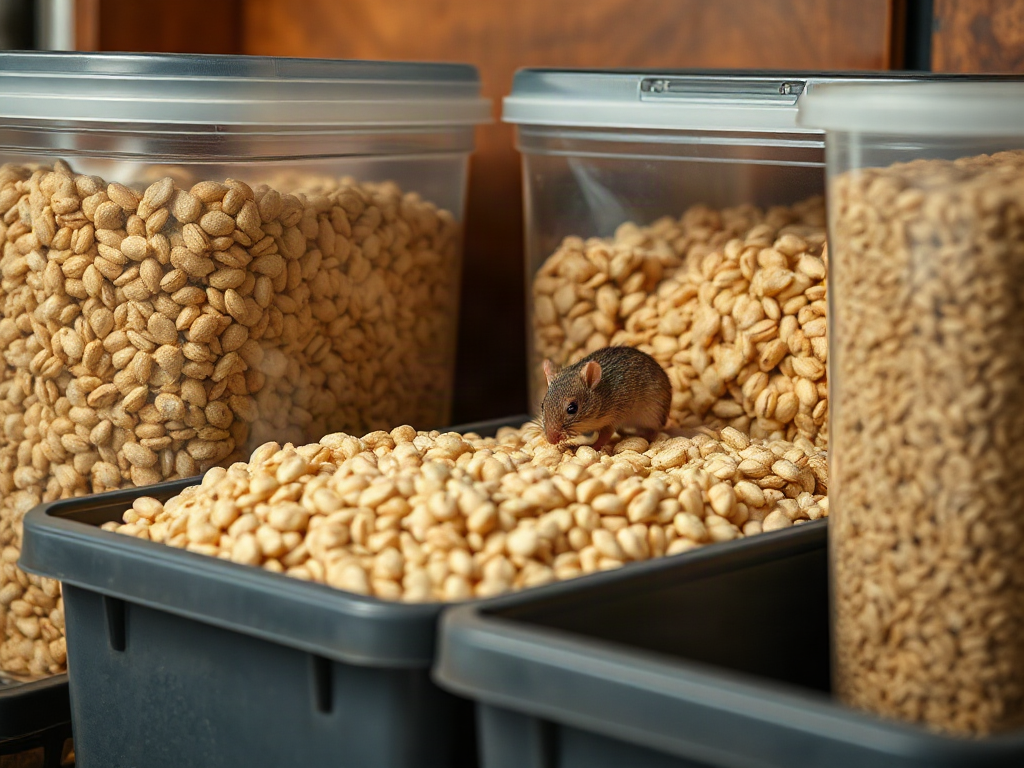
Preventing rodent damage in homestead feed storage depends on removing easy access to feed, blocking entry routes, and detecting activity before contamination spreads. Keep grain and pellets in tightly lidded metal containers, raise them off damp floors, clean spills promptly, and seal openings around doors, walls, pipes, and roof edges. Inspect for droppings, gnaw marks, nesting material, damaged bags, and stale or unusual odors each time feed is handled. Traps can reduce animals already inside, but they will not correct weak doors or exposed sacks. Discard feed contaminated by rodents rather than feeding around the damaged portion.
Why Feed Rooms Attract Rodents
Rodents remain in a feed-storage area when it supplies three things close together: concentrated food, protected nesting space, and concealed travel routes. A few pellets beneath a pallet may sustain activity even when every visible bag appears closed. Cardboard, insulation, empty sacks, and undisturbed corners then provide shelter within a short distance of that food.
Commercial feed bags are shipping packages, not rodent-proof storage. Paper and woven plastic protect feed during normal handling but offer little resistance to incisors. A mouse can damage a bag without consuming much feed, leaving an opening through which grain spills continuously. The loss then expands beyond what the animal eats because urine, droppings, hair, nesting debris, and moisture may make the remaining contents unsuitable.
Placement affects vulnerability as much as packaging. Bags stacked directly against a wall create a narrow, dark runway that is difficult to inspect. Feed beneath a workbench may remain untouched for weeks, while a frequently used bin nearby hides spilled material around its base. By contrast, an orderly row with clear space beneath and behind it makes fresh signs easier to see. The purpose of open spacing is not cosmetic; it removes concealment and makes changes visible.
Different feeds present different problems. Whole grain and cracked corn scatter readily and can collect in floor joints. Pellets produce dust and fragments as they are scooped. Mineral products may not attract rodents as strongly, but paper packaging can still be shredded for nests or contaminated by activity around adjacent feed. Pet food, poultry scratch, livestock treats, garden seed, and birdseed belong in the same control system rather than being treated as unrelated supplies.
A common mistake is measuring success by whether a rodent is seen during daylight. Most storage-room activity occurs out of sight, so absence of a sighting proves little. Fresh droppings, newly gnawed edges, tracks in dusty areas, shredded material, and unexplained feed loss provide better evidence. The first practical move in preventing rodent damage in homestead feed storage is therefore to remove hidden food and shelter while making the entire inventory easy to inspect.
Choose Containers Rodents Cannot Easily Defeat
Rigid metal containers with tight-fitting lids provide the strongest practical defense for dry homestead feed. Galvanized steel cans and purpose-built metal feed bins resist gnawing and tolerate routine barn use, provided the lid seats completely and the body has no rust holes or damaged seams. A container is only as secure as its closure; a heavy can with a loose lid still allows contamination or may be pushed open by larger pests.
Heavy-duty plastic bins can work where rodent pressure is low and inspections are frequent, but they involve a tradeoff. They are lighter, quieter, and less prone to rust in humid rooms, yet an exposed edge or corner may give a persistent rodent a starting point. Thin household totes are especially vulnerable. If plastic is used, choose a thick, food-compatible container with a latching lid, keep it away from walls, and examine the lower corners and rim for tooth marks.
Container capacity should match feed turnover. Pouring a new bag over old material can leave stale, damp, or insect-damaged feed at the bottom indefinitely. Emptying and cleaning the container between batches makes condition checks possible and supports first-in, first-out use. If old and new feed must be kept separate, use two labeled containers rather than mixing them. Record the feed type and purchase or fill date on a tag that can be replaced without confusing one batch with another.
Do not assume that transferring feed solves every storage problem. Warm feed placed in an airtight bin may carry condensation risk when temperatures swing, and a damp scoop can introduce moisture. Store only dry feed, use a dedicated clean scoop, and keep the lid closed between uses. Raising containers on a sound rack or low stand protects their bases from floor moisture and allows inspection beneath them, but the stand should not create an inaccessible nesting cavity.
Use a short container check whenever a bin is refilled:
- Closure: Confirm that the lid seats evenly and cannot be nudged aside.
- Shell: Look for corrosion, cracks, tooth marks, and opened seams.
- Contents: Check for damp clumps, webbing, droppings, unusual odor, or discoloration.
- Location: Leave enough clearance to inspect the floor and wall behind the bin.
Leaving unopened bags beside secure bins undermines the investment. If a delivery exceeds available container capacity, use the most vulnerable feed first or add suitable storage before purchasing in bulk. Lower unit cost does not compensate for a large contaminated inventory.
Seal the Building and Control Access Routes
Exclusion works when the entire route into the storage space is addressed, not merely the most obvious wall hole. Rodents exploit gaps beneath doors, damaged corners, utility penetrations, vents, roof-to-wall joints, and openings created by deteriorated siding. They may also enter through an adjoining stall or equipment bay, then travel behind stored materials to reach feed.
Begin the inspection from both sides of the building during daylight. Light visible beneath a closed door identifies a likely weakness, while rub marks or gnawing indicate a route already in use. Examine where water lines and electrical conduit cross walls, where siding meets the foundation, and where roofing or trim has pulled away. Move portable items rather than inspecting only the exposed portions of the room.
Durable repairs combine a gnaw-resistant barrier with a sound structural patch. Metal flashing, appropriate hardware cloth, mortar, or a fitted door sweep may be useful depending on the opening and building material. Expanding foam alone is not a dependable rodent barrier because it can be chewed and may conceal rather than reinforce a gap. Stuffing a hole temporarily can help locate activity, but it should not be mistaken for a permanent repair.
Ventilation must not be sacrificed while sealing the room. Feed needs a dry environment, and blocking vents indiscriminately can encourage condensation or mold. Protect required openings with securely fastened metal mesh suited to the opening and local pest pressure instead of covering them with solid material. Keep combustible feed dust and loose material away from electrical equipment, and use care around wiring; damaged electrical components warrant qualified repair rather than an improvised patch.
Outdoor conditions determine how much pressure the building receives. Tall vegetation against walls, spilled feed near loading doors, stacked lumber, scrap piles, and unused equipment create protected approaches. Moving these features away from the storage wall improves visibility and reduces cover, although it cannot substitute for sealing the structure. A farm cat or active dog may discourage some movement but cannot reach rodents inside walls or guarantee that stored feed remains uncontaminated.
After repairs, mark the date and recheck the same locations. Fresh gnawing beside a patch means the material or attachment has failed; signs at a different point may mean the repair redirected traffic. Effective preventing rodent damage in homestead feed storage treats exclusion as maintenance, especially after storms, construction, seasonal temperature changes, or repeated door impacts.
Use Inspection, Sanitation, and Trapping as One System
A reliable control routine links daily housekeeping with scheduled inspection and targeted removal. Sanitation reduces the reward for entering, exclusion limits new arrivals, and traps address rodents already inside. Depending on only one measure creates predictable failure: traps cannot keep pace with an open entry route, while sealed containers do not remove animals nesting in wall voids.
Clean spills when they occur rather than waiting for a weekly barn cleanup. Sweep or vacuum fine feed dust as appropriate for the space, empty residues into a secure waste container, and examine under scales, pallets, and mixing equipment. Keep trash, empty sacks, and twine from accumulating. If feed is transferred outdoors, inspect the path between the delivery point and storage because dropped grain outside can draw rodents toward the building.
Set a recurring inspection interval that reflects risk. A small room opened twice daily can receive a quick check during chores and a more thorough weekly review. A remote shed or seasonal feed cache needs deliberate visits because low traffic allows damage to continue unnoticed. Date observations rather than relying on memory. A simple log of droppings found, feed damaged, traps triggered, and repairs made can reveal whether activity is declining or merely shifting.
Where trapping is appropriate, place traps along observed travel routes and protect them from children, poultry, pets, and non-target wildlife. Follow the trap manufacturer’s placement and handling directions. Locations beside walls or behind secure barriers may intercept rodents using edges for cover, but random placement in the center of a room is usually less informative. Check traps frequently so captured animals do not create odor or sanitation problems. Poison baits bring additional risks, including access by non-target animals and carcasses in inaccessible spaces; local rules and label directions must be followed if such products are considered.
Contaminated feed deserves conservative handling. Removing a visibly chewed corner does not establish that the rest of the bag is clean, because contamination may extend beyond the opening. Isolate damaged stock from usable feed, prevent livestock and pets from reaching it, and dispose of it in a way that does not create a new food source outdoors. When cleaning droppings or nesting material, avoid stirring dry debris into the air; use suitable protective practices and consult public-health guidance when contamination is extensive.
Progress has measurable signs: no fresh droppings after cleaning, no new gnaw marks, intact seals, lower trap activity, and stable feed quantities. Continued damage after several days calls for another building survey, not simply more traps. Check overlooked ceiling routes, adjoining rooms, floor drains, door closure, and supplies that were never transferred into secure containers. The system is working only when evidence stops recurring and the feed-storage layout remains easy to monitor.
Frequently Asked Questions
Are plastic feed bins rodent-proof?
Heavy plastic bins may resist occasional pressure, but they are not reliably gnaw-proof. Metal containers are preferable where rodents are active; inspect any plastic bin frequently for tooth marks around corners, rims, and latches.
Should feed bags be stored on pallets?
Pallets reduce direct floor contact but can create concealed nesting space. Secure feed in closed containers and use an open, cleanable stand that permits inspection beneath it rather than relying on a pallet alone.
Can feed from a chewed bag still be used?
Feed with evidence of rodent access should be isolated and discarded. Cutting away the damaged section does not reliably remove urine, droppings, hair, or contamination distributed within the bag.
How often should a homestead feed room be inspected?
Check visible surfaces whenever feed is handled and perform a deliberate inspection at least weekly. Remote buildings, recent infestations, and seasons with increased rodent pressure may justify more frequent checks.
Will barn cats keep rodents out of stored feed?
Cats may catch exposed rodents but cannot seal entry gaps, protect bags, or reach every nest. Treat them as incidental pressure rather than a replacement for secure containers, sanitation, repairs, and monitoring.
Conclusion
Rodent control becomes manageable when feed storage is treated as a maintained system rather than a row of closed bags. Transfer dry feed into sound metal containers, keep batches labeled and rotated, and preserve clear space for inspection. Repair doors, utility openings, vents, and structural gaps with materials that resist gnawing without blocking needed ventilation.
Next, clean the room thoroughly and document any new evidence instead of guessing whether activity has stopped. Use traps only as part of that larger process, with careful placement and protection for children and non-target animals. Repeated droppings, fresh damage, or unexplained feed loss signals an unresolved route or food source. Address that source promptly, discard contaminated stock, and reassess the room after deliveries, weather damage, or building work.