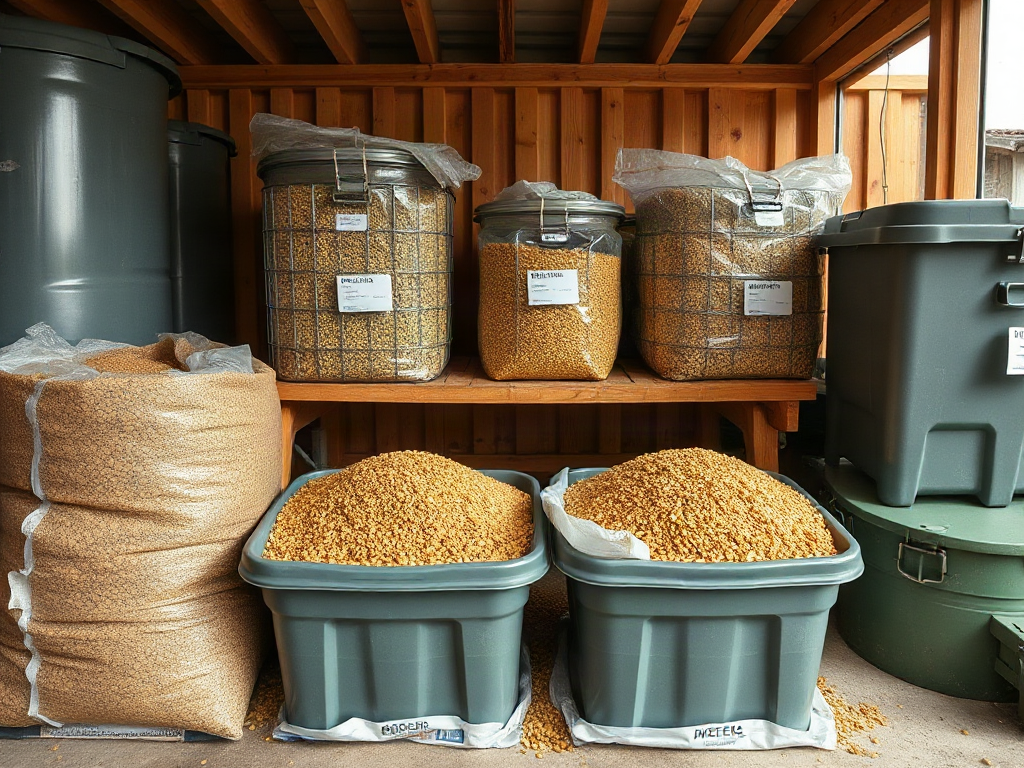
Storing animal feed safely through humid summers means limiting moisture exposure with sealed bins, a dry raised storage area, steady airflow, and stock rotation based on purchase dates. Keep bags off concrete and exterior walls, transfer opened feed into clean food-grade containers, and avoid mixing a new batch into old residue. Check for condensation, clumping, musty odors, insects, and unusual heat whenever feed is handled. Buy quantities that animals can consume while still fresh, because even a secure container cannot reverse moisture damage or make moldy feed safe; questionable feed should be isolated and evaluated rather than diluted into a sound batch.
How Humidity Damages Stored Feed
Warm, damp air changes feed storage even when rain never touches a bag. Feed ingredients exchange moisture with the surrounding air, particularly after packaging has been opened. Pellets may soften, meals may cake, and salt or mineral products may form hard lumps. Moisture also creates better conditions for mold and insects, while summer heat accelerates deterioration of fats and vitamins.
The storage room itself can create moisture. A cool concrete floor beneath warm summer air may develop condensation, and a metal shed can undergo large temperature swings between afternoon and night. Bags placed directly on concrete or pressed against an exterior wall can absorb dampness at contact points. A building that appears dry during a quick visit may therefore have a persistent microclimate behind the stack.
Feed form affects the warning signs. Whole dry grain usually allows more air movement than finely ground meal, while dense stacks of bagged feed can trap heat and humid air. High-fat feeds may develop stale or rancid odors without obvious mold. Molasses-containing rations naturally feel different from dry pellets, so their normal texture should be established when a fresh bag is opened rather than judged by a universal standard.
A common mistake is assuming that an airtight container can rescue feed that entered storage warm or damp. Sealing moisture inside may concentrate the problem. Newly delivered bags should be inspected before storage, and a container washed with water must be completely dry before refilling. If feed was exposed to a leak, floodwater, or visible condensation inside its package, moving it to a better bin does not restore its quality.
Humidity control works best as a chain: receive sound feed, keep it separated from damp surfaces, reduce contact with humid air, and use it before quality declines. Readers developing a broader system for Storing animal feed safely through humid summers should begin by identifying where moisture enters—the package, floor, wall, roof, or humid room—rather than buying containers without correcting the source.
Choose Containers and a Storage Site That Stay Dry
A suitable summer feed area is weather-tight, shaded from severe solar heating, ventilated without admitting rain, and separated from chemicals, fuel, and machinery fluids. Air movement around containers matters more than packing the maximum number of bags into a corner. Pallets or sturdy shelving should lift feed above the floor and leave enough clearance to inspect beneath and behind it.
Opened feed benefits from a rigid, lidded container made for food or animal-feed contact. The lid should seat evenly, resist pests, and remain practical enough that it is closed after every feeding. A durable plastic bin resists rust, while a sound metal can may offer stronger chewing resistance. Neither material compensates for a cracked lid, wet scoop, or placement beneath a leaking roof.
Container size should match turnover. One enormous bin may seem economical, but it encourages topping off and leaves old material in bottom seams. Several smaller bins make batches easier to separate and move, although they require more lids and floor space. For a small flock or a few rabbits, a container holding one manageable bag often provides better rotation than a bulk bin intended for months of supply.
Keep feed in its original labeled bag when practical, then place that bag inside the protective bin. The label preserves the product name, feeding directions, lot information, and manufacturer contact details. If the bag must be emptied, retain the label and lot code until that batch has been consumed. Never store feed in a container previously used for pesticides, petroleum products, cleaners, or other hazardous materials, even if it appears clean.
Use a dedicated dry scoop rather than reaching in with hands or repurposing a container that may carry water. The scoop can be hung inside a protected lid area only if it stays dry and does not prevent closure; otherwise, keep it nearby in a clean holder. Bag stacks should be modest and stable, because compressed lower bags are harder to inspect and more likely to remain forgotten.
The weakest assumption is that ventilation always means leaving feed exposed. Room airflow removes trapped humidity, but the feed itself still needs closed packaging. Open bags in front of a fan invite dust, insects, and humid air into the ration. Improving Storing animal feed safely through humid summers therefore requires both a ventilated room and sealed individual storage, not one in place of the other.
Control Inventory With a Summer Feed Routine
Summer inventory should be sized by consumption rate rather than by the largest discount available. Calculate approximately how much each animal group eats between purchases, then allow only a modest reserve for delivery interruptions. Smaller, more frequent purchases cost more per trip and may lose bulk pricing, but they reduce the amount exposed to prolonged heat and humidity. Remote households may need a larger reserve, making container quality and inspection frequency more consequential.
Date every bag when it arrives and keep batches separate. Use the oldest sound feed first, but do not let rotation rules override condition: a questionable older bag should be isolated rather than fed merely because it is next in line. Avoid pouring new feed over remnants. Empty the bin, remove dust and fines, inspect seams, and make certain the interior is dry before adding another batch.
A compact summer routine keeps small defects from becoming whole-bin losses:
- At delivery: Reject or isolate torn, wet, unusually hot, or badly caked packages and record the product and lot information.
- At each feeding: Notice odor, texture, insect activity, condensation, and whether animals respond differently to the ration.
- Weekly: Inspect lids, wall and floor clearances, roof-leak paths, pallet surfaces, and hidden corners for droppings or dampness.
- Between batches: Empty the container fully, clean out residues, and allow any washed surface to dry before refilling.
Cleaning methods must fit the situation. Dry brushing or vacuuming feed dust may be preferable when the bin is otherwise clean because it avoids adding water. Washing may be appropriate after contamination, but hurried refilling of a damp bin defeats the purpose. Strongly scented cleaners can leave residues or odors, so follow the container and feed manufacturer’s relevant instructions and rinse only where suitable.
Track consumption changes as well as storage dates. Feed that lasts longer because animals have been moved to pasture, sold, or switched to another ration may exceed the storage period originally expected. Conversely, a heat-related dip in intake means an open bag remains exposed longer. Adjust the next purchase instead of maintaining the same order automatically.
A working system is visible when batches remain distinct, the oldest usable feed is easy to reach, containers empty completely, and no unexplained residue builds up. Repeated condensation, fresh clumps, webbing from insects, or feed left through several purchase cycles signals that the routine or buying quantity needs revision.
Recognize Spoilage, Pests, and Unsafe Feed
Suspect feed should be stopped and isolated before anyone tries to determine whether it is usable. Warning signs include visible mold, musty or sour odors, unexpected clumping, damp patches, discoloration, insect webbing, larvae, rodent droppings, gnawed packaging, or unusual warmth within the feed. Compare against a newly opened known-good sample of the same product when possible, because color and odor vary among formulations.
Visible mold is not a reliable measure of the full problem. Growth may occur inside clumps or lower in a bin, and some mold-related hazards cannot be judged by sight or smell alone. Removing the visibly affected portion or blending suspect material with clean feed does not establish safety. Different animal species and life stages also vary in sensitivity, so a ration that appeared to cause no immediate problem in one group should not be assumed suitable for another.
Rodent or wildlife contamination calls for a different response than ordinary staleness. Droppings, urine, nesting material, or damaged packaging can introduce biological contamination, while poisoned rodents may create additional hazards around feed rooms. Protect the remaining stock, locate access points, and clean the area without scattering contaminated dust into open containers. Repairing gaps and improving bin closure is more durable than repeatedly placing exposed bait near feed.
If animals refuse a normally accepted ration, develop digestive changes, appear unwell, or show reduced performance after a new batch is introduced, stop using that batch and preserve its label and lot code. Contact the feed manufacturer or supplier for product-specific guidance. A veterinarian is the appropriate resource when animals show illness or when exposure risk is uncertain; storage advice cannot diagnose the cause.
Disposal must keep rejected feed away from livestock, pets, wildlife, water, and future feed supplies. Local waste requirements and manufacturer instructions may affect the appropriate route, especially after chemical or flood contamination. Composting is not automatically suitable, because animals can reach a pile and some contaminants are not resolved by ordinary compost conditions.
The costly mistake is treating uncertain feed as a sunk-cost problem and continuing to use it. The price of replacement should be weighed against animal health, disrupted production, and the difficulty of identifying what was consumed. The practical threshold is condition, not appearance alone: when storage history or contamination cannot be established confidently, obtain product-specific advice rather than trying to salvage the batch.
Frequently Asked Questions
Should animal feed be refrigerated during humid weather?
Most dry commercial feeds are intended for a cool, dry storage area rather than a household refrigerator. Refrigeration can create condensation when cold feed meets warm air, so follow the product label for any feed requiring special temperature control.
Can feed bags sit directly on a concrete floor?
No. Raise bags on clean pallets or shelving and leave clearance from walls. Concrete can transmit moisture, conceal condensation, and make the bottom of a stack difficult to inspect.
Is clumped feed always spoiled?
Not always, because some mineral and molasses products naturally cake. New or worsening clumps, damp interiors, heat, discoloration, or abnormal odor warrant isolation and advice from the supplier or manufacturer.
Can new feed be poured on top of old feed?
Avoid topping off. Residue can hold moisture, insects, or deteriorated material and makes batch tracking difficult. Empty, inspect, clean, and dry the container before adding the new batch.
What should I do with moldy animal feed?
Stop feeding it, isolate it from other stock, retain the label and lot code, and contact the supplier or manufacturer. Do not dilute it with clean feed; seek veterinary advice if animals may have consumed it or appear unwell.
Conclusion
Reliable summer storage comes from controlling the full path between delivery and feeding. Inspect every bag, keep batches identifiable, place feed above floors and away from walls, and use containers that close securely without trapping residual wash water. Match purchases to actual consumption so feed does not remain through repeated cycles of heat and humidity.
Set a weekly inspection time and correct moisture sources before adding more stock. Condensation, musty odor, new clumping, insects, damaged packages, or unexplained animal refusal should trigger isolation rather than an attempt to blend the problem away. If a batch has uncertain contamination or animals become unwell, retain its product information and seek guidance from the manufacturer, supplier, or veterinarian. A dry room, disciplined rotation, and early rejection of questionable feed provide more protection than any single bin.