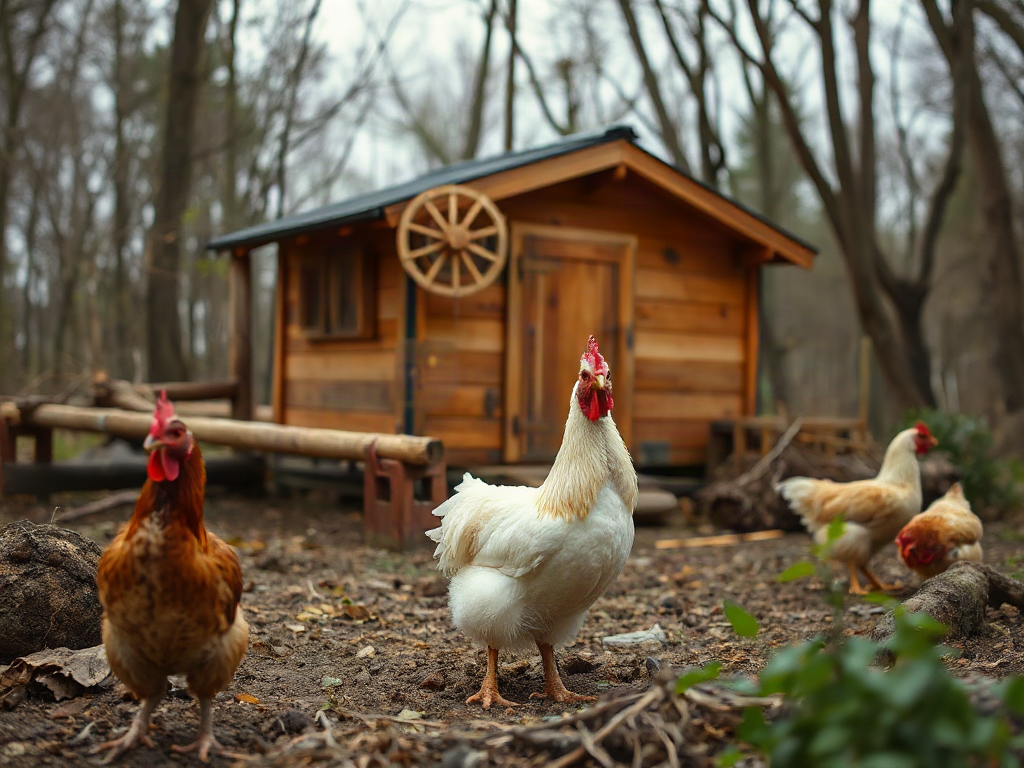
A self-sustaining chicken coop uses practical resource loops to reduce waste and purchased inputs without compromising flock health or sanitation. The strongest design combines captured rainwater with a reliable backup, deep carbon bedding, managed compost, protected feed storage, seasonal forage, and manure-fed garden fertility. Chickens still need nutritionally complete feed, clean water, secure housing, ventilation, and routine care; household scraps or pasture alone are not dependable substitutes. Build the system around easy daily access, predator resistance, and materials that can be cleaned or replaced.
What Can a Coop Realistically Produce for Itself?
A resilient coop recovers useful outputs and reduces avoidable consumption, but it does not operate without outside care. Chickens convert purchased feed, garden residues, insects, bedding, and water into eggs, manure, scratching labor, and heat. The practical goal is to capture more of that value while keeping nutrition, hygiene, and welfare ahead of the desire for independence.
Feed is usually the hardest input to replace. Laying hens require an appropriate balance of energy, protein, amino acids, minerals, and vitamins. A yard may provide insects, seeds, greens, and activity, yet its contribution changes with season, stocking density, weather, and soil condition. Kitchen scraps have the same limitation: they are variable and can displace balanced feed if offered too freely. Treat forage and suitable scraps as supplements rather than the nutritional foundation unless rations have been formulated with qualified guidance.
Water collection, bedding reuse, and fertility recovery are more achievable. Roof runoff can cover part of flock demand when storage is clean and rainfall is adequate. Dry leaves, untreated wood shavings, chopped straw, or other suitable carbon materials can absorb manure before moving into a managed compost pile. Finished compost can then support orchard trees or garden beds rather than allowing nutrients to accumulate in the run.
A useful test is whether each loop remains safe during an interruption. A rain barrel is not resilience if it runs dry during the hottest week. A deep-litter floor is not resource efficiency if wet bedding produces persistent ammonia odor. A forage run is not regenerative if hens strip it to bare soil and stand in mud. Every recovered resource needs a backup or a stopping rule.
Track a few observable results: litter stays friable rather than matted, drinkers remain clean, stored feed shows no moisture or pest damage, vegetation receives recovery time, and egg output does not decline after dietary changes. These signs reveal more than a claim of being fully self-sufficient. They show whether the coop is converting resources without transferring costs to bird health, soil condition, or daily labor.
Design Resource Flows Before Building
Coop placement determines whether routine chores conserve resources or create repeated work. Put the structure on well-drained ground with convenient access to feed storage, a dependable water source, compost handling, and the areas where finished fertility will be used. A shaded summer location may reduce heat pressure, while winter sun can help dry surfaces; local climate should decide the balance.
Map the direction of materials before choosing decorative features. Feed travels from sealed storage to the feeder. Water moves from a roof or supply line to storage and drinkers. Clean bedding enters the coop, absorbs manure, and exits toward compost. Finished compost travels to perennial plantings or beds. When these paths cross gates, stairs, or long muddy routes, the supposedly efficient system becomes difficult to maintain.
The building itself should favor dryness and serviceability. Roof overhangs keep runoff away from walls and can supply gutters. High ventilation openings release moisture without placing roosting birds in a direct draft. Removable droppings boards, wide doors, and an accessible bedding floor make collection easier. Predator resistance remains non-negotiable: strong latches and securely attached hardware cloth are more dependable than lightweight screening where predators may push, pull, or dig.
A compact planning sequence keeps priorities clear:
- Protect the flock: Establish secure nighttime housing, ventilation, shade, and drainage.
- Shorten daily routes: Position feed, water, tools, and clean bedding near their points of use.
- Separate clean and dirty materials: Keep feed and water storage away from manure, runoff, and compost handling.
- Add recovery systems: Install gutters, compost bays, movable fencing, or garden connections only after basic care works smoothly.
- Plan failure access: Make barrels, pipes, floors, and feeders easy to inspect, empty, and clean.
Complex automation often loses to simple, visible equipment. A long nipple line can reduce spilled water, but hidden leaks may saturate bedding. An automatic feeder can save time, but poorly sealed components may invite rodents. Choose automation when it can be checked quickly and operated manually during freezing weather, power loss, or repairs.
Sketch a wet-season scenario before construction. If a storm overflows the tank, runoff should move away from the coop and not through the run. If the flock must remain confined, covered space should still accommodate feeding, drinking, and scratching without crowding all activity around one muddy doorway. Designing for the least convenient month produces a more durable resource system than optimizing only for pleasant weather.
How Should Water and Feed Be Managed?
Water and feed systems should reduce loss without hiding contamination. Chickens need continuous access to drinkable water, so harvested rainwater should be treated as a supplemental supply unless storage capacity, water quality, and seasonal rainfall are dependable. Keep a conventional backup available rather than forcing the flock to depend on a barrel with an uncertain level.
A practical rain setup begins with a sound roof, screened gutters, an opaque covered tank, controlled overflow, and a way to divert dirty initial runoff. Avoid collecting from roofing or coatings of uncertain suitability. Place storage where it cannot tip, where hoses can be disconnected, and where sediment can be removed. Gravity delivery is convenient, but elevation changes pressure; every drinker must be checked at bird height rather than assumed to work because the tank is full.
Clear-looking water is not automatically safe. Algae, droppings, insects, wildlife access, sediment, or material leaching can affect stored water. Inspect odor, clarity, tank condition, and drinker cleanliness, and switch to a known safe supply whenever quality is doubtful. Local extension services or water-testing resources can help owners assess collection materials and risks specific to their region.
Feed conservation starts with buying quantities the flock can consume while the product remains fresh. Store bags in sealed, chew-resistant containers above damp floors. Position feeders beneath cover and adjust them near the birds’ back height to limit scratching and billing-out. A tray under a feeder may reveal how much is being spilled, but spilled feed should not remain where it attracts rodents or becomes moldy.
Garden produce and household leftovers can recover some food value when they are fresh, suitable for chickens, and offered in modest amounts. Remove spoiled, moldy, heavily salted, or questionable material rather than treating the coop as a disposal route. Check local rules because restrictions on feeding household food waste can vary. Grit, calcium sources, and complete layer feed also serve different purposes; random scraps do not replace them.
Use consumption patterns as an operating signal. A sudden increase in water loss may indicate a leaking fitting rather than thirsty birds. Damp feed, rodent droppings, caked material, or a sour smell means storage has failed. Reduced eating or drinking, unusual behavior, or declining production warrants prompt investigation and may justify veterinary advice. Resource efficiency comes from catching loss early, not from rationing essentials.
How Do Bedding, Manure, and Compost Connect?
Bedding turns concentrated droppings into a material that can be handled, composted, and returned to soil. The process works when dry, carbon-rich bedding absorbs moisture and is replenished before the surface becomes wet or compacted. It fails when owners interpret “deep litter” as permission to leave manure unmanaged.
Start with a dry floor and an absorbent material appropriate for poultry housing. Stir or turn areas that pack down, especially below roosts and near entrances, and add dry bedding when droppings begin to dominate. Ventilation carries moisture out of the structure; bedding alone cannot correct a leaking drinker, roof intrusion, or overcrowding. Persistent ammonia odor, condensation, flies, slimy patches, and matted litter are failure signs that call for removal and correction of the moisture source.
Droppings boards provide a useful alternative or addition. They capture the concentrated nighttime manure beneath roosts, allowing frequent scraping while the main floor stays cleaner. This requires more regular handling but uses less bedding. Deep bedding spreads labor over longer intervals but demands adequate floor depth, active inspection, and dry conditions. A hybrid system—scraped boards above a moderately bedded floor—often gives a manageable balance.
Move used litter into a compost system protected from uncontrolled runoff and inaccessible to the flock. Poultry manure is nitrogen-rich, so mix it with leaves, straw, wood shavings, or other carbon material. The pile should be moist rather than saturated and large enough to retain some heat, while still being turned or managed according to the chosen composting method. Do not apply fresh manure directly around edible crops shortly before harvest; compost maturity and food-garden timing require cautious handling.
Finished compost should look and smell earthy, with the original manure and bedding no longer readily recognizable. Even then, application should match soil needs. Repeatedly dumping all coop compost into one small bed can overload nutrients rather than improve fertility. Rotate destinations among orchard trees, ornamental plantings, and garden areas where appropriate, and consider soil testing if poultry compost is used year after year.
The loop is working when the coop remains dry, the compost pile does not produce foul leachate, and garden soil receives measured additions rather than raw waste. If bedding use rises sharply, diagnose the cause before sourcing more material. A dripping waterer, poor roof drainage, or too many birds for the space will consume carbon continuously without fixing the underlying problem.
How Can Forage and Gardens Support the Flock?
Forage works best as a managed landscape service, not as a promise of free feed. Chickens scratch for insects, eat tender vegetation, disturb mulch, and deposit manure. Those behaviors can clear spent beds or reduce some pest habitat, but the same activity can uproot seedlings, expose roots, compact wet soil, and strip a run bare.
Rotation gives plants and soil time to recover. Divide the available space into multiple sections, use a movable enclosure, or admit birds to selected areas only after harvest. Duration should respond to ground condition rather than a fixed calendar. Move the flock when vegetation is being grazed to the crown, bare patches expand, the surface becomes muddy, or manure accumulates faster than it can disperse.
A garden scenario shows the tradeoff. After a vegetable bed finishes producing, hens can enter to eat remaining greens, search for insects, and break apart light residue. They should leave before wet weather turns the bed into compacted mud, and they need exclusion well before new seeds or transplants arrive. Permanent garden fencing is usually more reliable than expecting birds to ignore attractive crops.
Perennial plantings can make better partners than exposed annual beds. Mulberry, appropriate fruit trees, shrubs, and robust groundcovers may provide shade, dropped fruit, leaf litter, or insect habitat, subject to climate and plant safety. Protect trunks and roots from concentrated scratching, and identify plants before allowing access; not every ornamental or volunteer plant is suitable for poultry.
Use covered forage trays or protected planting frames where land is limited. Wire-topped frames let shoots grow above the birds’ reach while leaves are nipped through the mesh. They add greens and activity but do not produce a balanced ration. Sprouting grain also shifts the form and moisture content of feed rather than creating nutrients from nothing, and poorly managed sprouts can mold.
Evaluate the land as closely as the birds. Useful forage management leaves some living cover, avoids persistent mud, and distributes manure across more than one sacrifice area. If rotation is impossible, a well-drained covered run with imported carbon material may be more responsible than attempting pasture on insufficient ground. The better choice is the one that remains clean and stable under the actual flock size, rainfall, and labor available.
Frequently Asked Questions
Can a chicken coop be completely self-sustaining?
Complete independence is rarely realistic. Most flocks still need balanced feed, dependable drinking water, replacement materials, health monitoring, and secure housing even when the coop recovers rainwater, compost, forage, and garden leftovers.
Can chickens live on garden scraps and free-range forage?
No. Those foods vary in quantity and nutrient content, so they should supplement rather than displace an age-appropriate complete ration. Monitor intake and remove spoiled or unsuitable material promptly.
Is rainwater safe for chickens?
It may be usable when the collection surface is suitable and the system excludes debris, wildlife, light, and contamination. Maintain a known safe backup and change supplies whenever stored water quality is uncertain.
How do I know deep litter is failing?
Ammonia odor, wet clumps, condensation, flies, or slimy bedding indicate excess moisture or manure. Remove affected litter and correct leaks, drainage, ventilation, or stocking pressure instead of simply adding another layer.
Where should composted chicken bedding be used?
Use mature compost where soil and crop needs justify it, distributing applications rather than repeatedly loading one bed. Follow cautious food-garden timing and consider soil testing when poultry compost is applied regularly.
Conclusion
Build the coop around dependable care first, then connect resource loops that can be inspected and interrupted safely. Secure housing, dry footing, ventilation, complete feed, and clean backup water deserve priority over elaborate automation. Once those needs are stable, add roof collection, spill-resistant feeding, recoverable bedding, managed compost, and rotational forage one system at a time.
Watch the outputs as carefully as the inputs. Odor, mud, mold, pests, bare ground, or declining flock performance indicate that a loop is overloaded or poorly matched to the site. Dry litter, clean equipment, recovering vegetation, mature compost, and shorter chore routes show useful progress. Begin by mapping feed, water, bedding, manure, and garden movement across the property, then fix the largest source of waste before adding another feature.