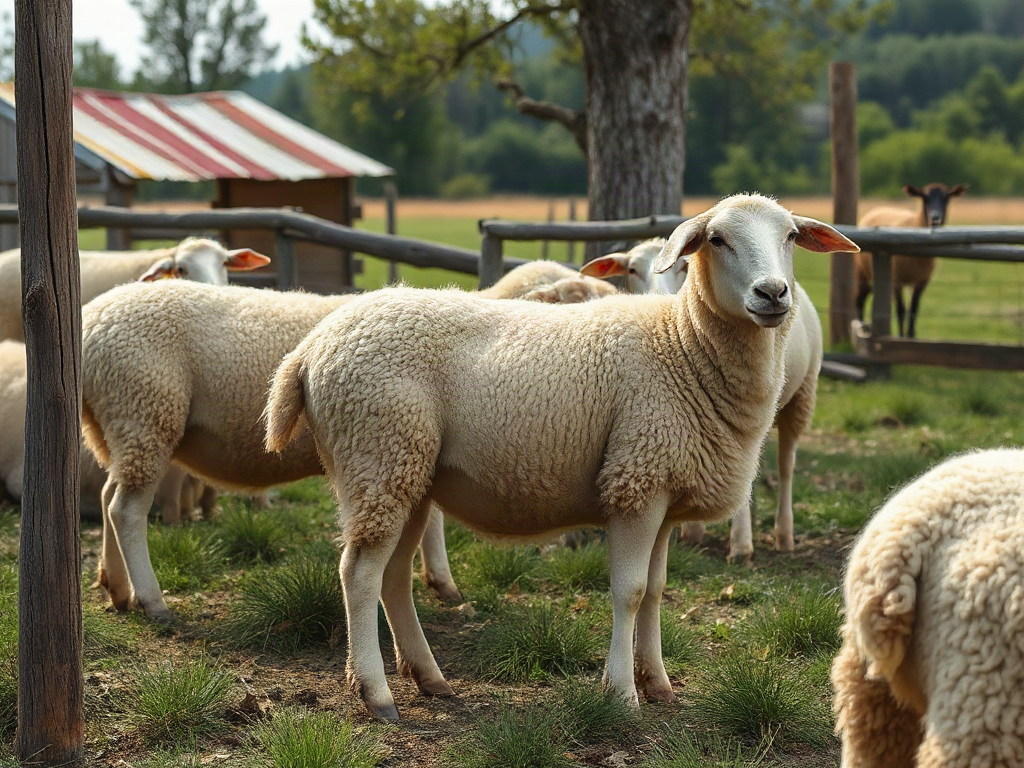
A workable homesteading sheep setup combines managed grazing, a dry three-sided shelter, secure fencing, and a flock of at least two animals, with three to five often being a more resilient starter group. Available forage, seasonal regrowth, parasite pressure, winter feed storage, and handling capacity should determine flock size rather than a fixed sheep-per-acre rule. Rotate animals before pasture is grazed too short, provide constant clean water and sheep-specific minerals, and reserve a sacrifice area for wet or dormant periods. Expand only after the land supplies dependable forage and the homestead can handle shearing, hoof care, lambing decisions, and veterinary costs.
How Much Grazing Land Do Sheep Need?
Pasture capacity is a forage calculation, not a universal acreage formula. Productive, well-drained grass and legume pasture may carry more sheep than the same acreage of thin, shaded, drought-prone, or waterlogged ground. Rainfall, soil fertility, plant species, slope, growing-season length, and the animals’ size all change how much feed the land produces. A ewe nursing twins also consumes more than a dry maintenance ewe, so even one flock has changing demands through the year.
Begin by separating total land from grazeable land. Buildings, lanes, ponds, dense woods, gardens, eroded slopes, and permanently wet patches do not count as usable forage simply because they sit inside the property boundary. Then inspect what the sheep can actually eat. A field may look green while containing mature stems, weeds, or low-growing plants already grazed below a useful height. Sheep select preferred leaves first, making visual estimates from outside the fence unreliable.
A conservative first season is more informative than an ambitious stocking estimate. Start with fewer animals, record how long each paddock feeds them, and monitor how quickly plants recover after grazing. Recovery is working when desirable plants produce fresh leaves and establish enough height before sheep return. It is failing when bare soil appears, regrowth is bitten repeatedly, weeds gain ground, or purchased hay becomes necessary during a period when pasture should normally be productive.
| Pasture signal | Likely meaning | Practical response |
|---|---|---|
| Plants recover before the next rotation | Current demand may fit forage growth | Keep records before adding sheep |
| Preferred plants stay closely cropped | Return intervals are too short | Extend rest or reduce grazing pressure |
| Hay is needed during normal growth | Forage supply is below flock demand | Use fewer animals or improve pasture |
| Deep mud forms near gates and water | Traffic is damaging soil structure | Move access points or use a sacrifice lot |
The common mistake is sizing the flock from a neighbor’s sheep-per-acre figure without comparing land or management. That number may reflect irrigated pasture, routine fertilizer, supplemental feeding, or a shorter grazing season. Ask a local extension office or experienced forage adviser about regional pasture productivity, but treat any estimate as a starting point. The homestead’s own grazing records should control later expansion.
Building a Workable Grazing System
A useful grazing system controls where sheep eat, how long they remain, and how much recovery the plants receive. A single continuously occupied field encourages selective grazing: favored species are bitten again as soon as they regrow, while coarse plants mature untouched. Subdividing the same ground into several paddocks makes it easier to move the flock as forage conditions change rather than waiting until the entire pasture looks exhausted.
Permanent perimeter fencing provides the secure boundary; internal divisions can be permanent or movable. Woven wire is a common physical barrier for sheep, especially where lambs are present. Properly managed electric fencing can divide paddocks efficiently, but sheep must be trained to respect it, vegetation must not drain the charge, and the energizer and grounding system must be checked routinely. Wool can reduce an animal’s sensitivity to a weak fence, so a line that appears intact may still be ineffective.
Rotation should respond to plant growth rather than a rigid calendar. Spring regrowth may justify quicker moves and shorter rest periods, while summer heat or drought can require much longer recovery. Move sheep while useful leaf area remains. Grazing plants nearly to the soil weakens regrowth, reduces ground cover, and puts sheep closer to manure-contaminated material where parasite exposure may be greater. Rotation can reduce repeated grazing pressure and manage exposure, but it should not be treated as a substitute for veterinary-informed parasite monitoring.
A compact operating check before each move keeps the system grounded in field conditions:
- Forage: Is there enough leafy material in the next paddock, and has it recovered?
- Fence: Is the boundary intact, energized where applicable, and free of entanglement hazards?
- Water: Can every sheep reach clean water without crowding or crossing a weak fence?
- Animals: Are body condition, manure consistency, gait, and grazing behavior normal?
- Exit: Is there a dry route for moving the flock without churning a muddy lane?
A sacrifice area is especially valuable on small acreage. This deliberately protected holding space takes the traffic during saturated weather, drought, or winter dormancy while the main pasture rests. It requires hay, water, manure management, and a firm surface suited to local drainage conditions, but sacrificing a limited area is usually preferable to damaging every paddock. Allowing sheep to wander the full property during a forage shortage merely spreads overgrazing and mud.
The failure mode to watch is movement without recovery. Shifting sheep between small sections every few days may look like rotational grazing, yet it achieves little if animals return before plants rebuild leaf area. Keep a simple paddock log with entry date, exit date, forage condition, weather, and return date. Those observations reveal whether the system is preserving pasture or only rearranging grazing pressure.
What Kind of Shelter Do Sheep Need?
Sheep need protection from driving rain, severe wind, heat stress, and persistent mud more than they need an elaborate enclosed barn. In many settings, a dry three-sided shed oriented away from prevailing storms gives adult sheep a place to retreat while maintaining ventilation. Local climate changes the design: exposed cold regions may require greater wind protection, while hot and humid areas benefit from deep shade, open airflow, and enough space to prevent crowding.
Site selection matters as much as the structure. A shed at the bottom of a slope can collect runoff and turn bedding into a wet manure pack. Place shelter on naturally elevated, well-drained ground, direct roof water away from entrances, and keep the approach firm enough for daily access. Damp bedding increases ammonia, soils fleeces, and creates poor footing. Adding straw repeatedly without removing saturated material hides the problem rather than correcting drainage.
Ventilation should remove moisture without directing a cold draft across resting animals. A tightly sealed outbuilding may feel warm to a person but trap condensation and stale air. Watch the underside of the roof and walls during cold weather; persistent moisture indicates inadequate air exchange or excessive stocking density. In summer, observe whether sheep crowd the doorway or avoid entering. Those behaviors can reveal that the shelter is too hot, dark, or poorly ventilated.
The layout should also support routine handling. A small catch pen connected to the shelter or lane makes health checks, hoof inspection, shearing preparation, and treatment directed by a veterinarian safer than chasing sheep around a pasture. Feed storage must be physically separated so animals cannot break into grain or contaminate hay. Tools, medicines, and fencing supplies also need secure storage beyond the flock’s reach.
Shelter space cannot be judged by floor area alone. Horned animals, timid sheep, ewes with lambs, and dominant flockmates may need more room and multiple escape paths. A structure technically large enough can still fail if one animal blocks the only entrance. Observe the flock during rain: if subordinate sheep remain outside despite seeking cover, widen the opening, provide another protected area, or reduce crowding.
A frequent mistake is building the shed before planning water, winter feeding, manure removal, and vehicle access. Picture the wettest week of the year rather than a dry construction day. Hay must reach the flock, manure must leave, frozen or leaking water must be serviced, and a sick animal may need prompt examination. A modest shelter with drainage and handling access usually functions better than a larger building isolated in a muddy corner.
How Many Sheep Should a Homestead Keep?
Sheep are flock animals, so keeping one alone is generally a poor arrangement; at least two compatible sheep are needed, while three to five can provide a practical starting group for a prepared small homestead. A group of three offers social continuity if one animal must be isolated for examination or treatment. The upper limit, however, should come from winter feed, pasture recovery, shelter capacity, fencing reliability, and the keeper’s ability to perform routine care.
Purpose changes the calculation. A few wethers can be simpler for grazing and fiber than a breeding flock because there is no lambing season or ram management. Breeding ewes create fluctuating numbers, higher nutritional demands around late pregnancy and lactation, and a need for lambing space and closer observation. Keeping a ram adds fencing, handling, separation, and breeding-timing considerations that many first-year keepers underestimate. Using an outside breeding arrangement, where locally available and biosecurity can be managed, may avoid maintaining a ram year-round.
Count peak occupancy rather than the number purchased. Four bred ewes can become a much larger group after lambing, even if some lambs will later leave. The pasture, shelter, water system, and handling pen must work during that temporary peak. Feed planning should also cover the least productive season. If stored hay is difficult to source, expensive to transport, or vulnerable to spoilage, a flock that fits summer grass may still exceed the homestead’s dependable capacity.
Labor is another hard ceiling. Sheep need regular observation because subtle changes in appetite, posture, gait, isolation, or body condition may be the first sign of trouble. Routine responsibilities may include moving fences, carrying water, managing bedding, arranging shearing, checking hooves, protecting feed, and coordinating veterinary care. These tasks intensify during severe weather, lambing, or parasite problems rather than arriving evenly throughout the year.
Before increasing flock size, verify four forms of spare capacity: forage remains after normal grazing, hay storage covers a disrupted season, shelter does not force timid animals outside, and the handling area works without unsafe improvisation. Add animals gradually and reassess the next full seasonal cycle. Selling or rehoming excess sheep after pasture has deteriorated is harder than delaying expansion.
The misleading assumption is that small-bodied breeds automatically solve limited-land problems. Smaller sheep may consume less per animal, but five small sheep can still place more pressure on pasture and labor than two larger ones. Breed traits also affect fencing, shearing, parasite resilience, mothering, and climate suitability. Choose animals for the homestead’s conditions and intended use, then size the flock around measured resources rather than appearance.
Frequently Asked Questions
Can I keep just one sheep?
Sheep normally need sheep companions, so a solitary animal is not a sound default. Keep at least two compatible sheep, and consider three so one is not left alone when another requires temporary isolation.
Can sheep live entirely on pasture?
Good pasture may supply much of their seasonal forage, but growth and quality vary. Plan for hay during winter, drought, pasture recovery, or other shortages, plus clean water and minerals formulated specifically for sheep.
Do sheep need a fully enclosed barn?
Not in every climate. A dry, well-ventilated three-sided shelter may be adequate when it blocks prevailing weather and provides shade, but severe climates, lambing, or medical isolation may require more protection.
How often should sheep be moved to fresh pasture?
Move timing should follow forage availability and recovery rather than a fixed number of days. Growth is faster in favorable spring weather and slower during heat, drought, cold, or dormancy.
Are sheep-specific minerals necessary?
Use a mineral product intended for sheep because mineral tolerances differ among livestock species. Local forage and water also influence needs, so discuss regional deficiencies and supplementation with a veterinarian or qualified livestock nutrition adviser.
Conclusion
Successful sheep keeping begins with an honest inventory of usable forage, dry shelter, secure boundaries, winter feed, and daily labor. Establish the perimeter fence, water access, handling space, and wet-weather sacrifice area before animals arrive. Then begin with a small social group and document paddock use across a full growing season rather than expanding from an acreage rule.
Pasture should recover between visits, shelter should remain ventilated and dry, and every sheep should be able to eat, drink, rest, and enter cover without being displaced. Bare soil, repeated hay feeding during expected pasture growth, muddy entrances, escape attempts, or declining body condition are signals to change management rather than add animals. Use local extension guidance for forage conditions and build a relationship with a livestock veterinarian for flock-health decisions. Expansion makes sense only after the existing system has spare capacity through both its best and worst seasons.