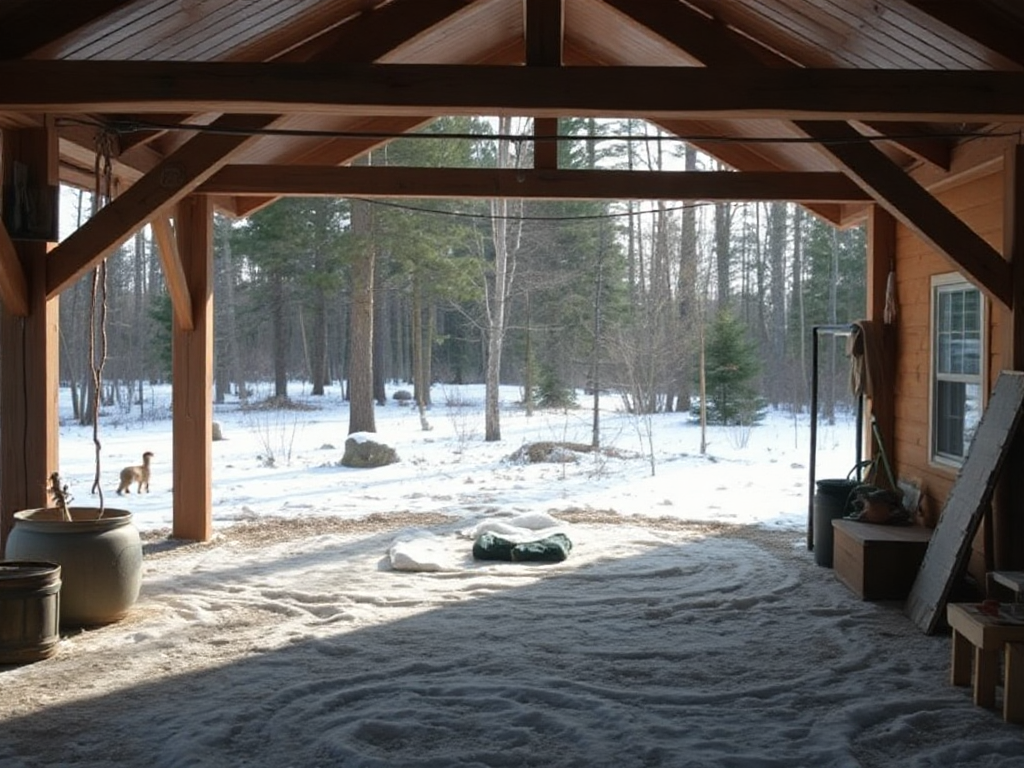
Yes, an off-grid homestead can support a family year-round when its water, power, shelter, food, sanitation, and income systems are sized for the hardest season rather than average conditions. Reliable winter heat, protected water lines, stored staple foods, backup power, and a plan for medical care or outside purchases determine whether the arrangement remains workable. A productive garden alone is not enough because harvests are seasonal, batteries have limited reserves, and livestock add daily responsibilities during poor weather. Families should test each system through a full winter, track fuel and food use, and keep a realistic off-site contingency before treating the homestead as a permanent year-round home.
What Year-Round Support Actually Requires
A homestead supports a family year-round when it can provide dependable shelter, potable water, sanitation, heat, food, energy, communication, and access to outside services during every season. “Off-grid” usually means the property is not connected to one or more public utilities; it does not mean the household must produce every item it uses. A sustainable arrangement may still rely on purchased fuel, replacement parts, veterinary care, school transportation, medical services, or occasional groceries.
The useful question is not whether a property looks productive in summer. It is whether the household can function during the least favorable combination of weather, workload, and equipment failure. A sunny June may hide weak battery capacity, an exposed well line, or insufficient food storage. January can reveal whether the home retains heat overnight, whether water remains accessible, and whether a parent can complete essential chores while roads are blocked.
Families also need to separate physical capacity from household capacity. A large garden, multiple animals, and wood heat may increase resilience, but they also consume time. A household with young children or demanding jobs may be better served by a smaller garden, fewer animals, and a larger pantry. The year-round homestead question is therefore both an engineering decision and a workload decision.
A practical assessment should examine:
- Whether water remains safe and available during drought, freezing weather, and power loss.
- Whether heat, cooking, refrigeration, and communications can continue after several cloudy days.
- Whether stored food covers the gap between harvests without excessive dependence on one crop.
- Whether roads, healthcare, schooling, work, and emergency transport remain reachable.
The common mistake is treating self-reliance as an all-or-nothing identity. A property may be highly resilient while still needing propane deliveries or a monthly town trip. That hybrid model is often more practical than forcing the family to produce fuel, clothing, animal feed, building materials, and every calorie on site.
Water, Heat, and Power Through the Hardest Season
Water and winter heat deserve priority because food production cannot compensate for a failed basic utility. A spring, well, cistern, or hauled-water system must be evaluated for flow, storage, treatment, and access—not merely for whether water is present on the property. A pump-dependent well needs a plan for generator power or manual transfer, while a surface source requires treatment and protection from contamination.
Freezing conditions create failures that are easy to underestimate. Pipes can freeze in crawl spaces, pumps can become inaccessible under snow, and an outdoor tank may be unusable when the family needs it most. Insulation may slow freezing but does not replace heat or circulation in severe weather. Families should identify shutoffs, drain vulnerable lines when appropriate, protect filters from freezing, and store an emergency quantity of treated water inside the living space.
Heating design should match the building, fuel supply, and the people operating it. A woodstove can provide useful heat and cooking capability, but it requires dry wood, safe chimney maintenance, physical labor, and a backup plan if the primary operator is sick. Propane systems offer convenience but introduce delivery dependence. Electric heat may be simple to control but can overwhelm a modest solar-battery system. Comparing these options on ordinary days misses the important question: what happens after a cold, cloudy week?
Power planning works best when loads are ranked rather than treated equally. Refrigeration, water pumping, medical equipment, communications, and lighting generally matter more than workshop tools or laundry. A family should measure actual appliance use, understand inverter limits, and reserve battery capacity for overnight and emergency needs. Solar panels can produce well below their usual output during snow cover or persistent cloud, so a generator, extra fuel, or another charging method may be necessary.
One weak assumption is that adding more panels solves every energy problem. More generation does not help if batteries are undersized, wiring is poorly protected, or the well pump has a high startup demand. A useful test is to operate the home for several days under restricted generation while recording water use, battery state, fuel consumption, and the tasks that had to be postponed. That evidence is more valuable than a system label or a theoretical peak output.
Food Production, Storage, and Household Workload
Food security on a homestead comes from combining production with storage and purchasing flexibility. Gardens can supply fresh vegetables, herbs, and some preservation crops, but harvest timing is narrow and weather can damage an entire planting. A family that plans around fresh produce alone may face a long winter with little dietary variety and too much pressure on a single growing season.
A stronger food plan layers several forms of supply: shelf-stable staples, preserved garden produce, eggs or meat where appropriate, perennial foods, and a cash or trade pathway for gaps. Grains, beans, cooking fats, canned goods, root vegetables, and frozen items each have different storage needs. A freezer may hold valuable food but depends on reliable power; a cool storage room reduces that dependency but needs suitable temperature and humidity. Preservation also requires equipment, jars or containers, fuel, and time.
Livestock can improve food availability while increasing year-round obligations. Chickens may provide eggs, but they still need water, feed, predator protection, and care during storms. Larger animals can supply meat, fiber, or manure, yet purchased feed may become the largest recurring input. A small flock that fits the family’s daily routine is usually more resilient than a diverse collection that requires constant attention.
Children and adults also need food beyond raw calories. A workable pantry includes familiar meals, ingredients that can be prepared with available fuel, and options for illness or disrupted schedules. A household that owns a pressure canner but lacks a reliable way to heat it during a power outage has storage capacity on paper, not necessarily usable food security.
Track consumption before expanding production. Record how much flour, oil, rice, animal feed, coffee, infant food, pet food, and preserved produce the household uses over several months. Then compare that demand with realistic yields after pests, crop failure, seed loss, and family absences. The most resilient homestead plan treats purchased supplies as intentional reserves rather than evidence of failure.
Testing Readiness Before Making the Move
A family should test an off-grid homestead before depending on it full-time. Short visits are useful for finding obvious defects, but they rarely expose the cumulative strain of winter chores, limited power, isolation, and repeated maintenance. A staged trial gives the household time to discover whether the systems work together and whether the daily routine is acceptable.
Begin with a written inventory of critical systems and their failure modes. For water, note the source, treatment method, pump, storage, and backup. For heat, record fuel on hand, wood moisture or delivery timing, ventilation, alarms, and an alternate warm room. For power, list essential loads, charging methods, battery reserve, generator maintenance, and fuel storage. Add communications, transportation, sanitation, food, tools, and emergency contacts.
Then conduct tests that resemble actual stress rather than convenient demonstrations. Spend a cold period using only the planned heating system. Simulate a low-solar stretch by limiting discretionary electrical use. Shut down the normal water pump briefly and confirm that the backup method is safe and practical. Cook several meals with the emergency fuel. If a task takes an hour in summer but three hours in snow, record the winter figure.
Readiness indicators include stable indoor temperatures, predictable water treatment, manageable battery reserves, sufficient stored fuel, and chores that fit the family’s schedule. Warning signs include repeated alarm bypasses, improvised extension cords, dependence on one adult, untested stored food, or a generator that has not started under load. A system that works only when its most experienced operator is present is not yet a family system.
Keep an exit plan even after the property performs well. Maintain a vehicle suitable for local conditions, cash for urgent purchases, current medical supplies, and a place to stay if fire, illness, flood, or equipment failure makes the home unsafe. This is not a rejection of off-grid living; it prevents a temporary technical problem from becoming a family emergency.
Use the homestead readiness assessment as a recurring process. Review it before winter, after major equipment changes, and whenever the household’s needs change. A baby, aging parent, new job, livestock expansion, or reduced income can alter the answer even when the land and buildings remain the same.
For site-specific decisions, consult local university extension publications, public health guidance on private water systems, building and fire-safety authorities, and equipment manufacturers’ installation manuals. These sources can clarify seasonal conditions and safety requirements that a general homesteading plan cannot establish.
Frequently Asked Questions
How much land does a family need for a year-round off-grid homestead?
Land needs vary with climate, soil, water, livestock, and how much food the family intends to produce. A smaller property with dependable water and nearby services may work better than a larger, dry parcel with poor access.
Can solar power run an entire off-grid household?
It may cover household needs when loads are efficient and storage is properly sized, but winter cloud, snow, pump startup demand, and heating loads often require a generator or another backup.
Is a garden enough to feed a family throughout the year?
No. A garden is seasonal and vulnerable to weather and pests. Year-round food planning also needs stored staples, preservation, seed planning, and a realistic approach to purchased supplies.
What is the most common off-grid homestead failure?
Overdependence on one system or one person causes many preventable failures. A household may have adequate equipment but lack backup water, fuel, maintenance skills, or a routine that another family member can manage.
Should a family move off-grid all at once?
A staged transition is usually safer. Test the property across difficult weather, measure actual consumption, and correct water, heat, power, access, and workload problems before making the homestead the only residence.
Further Reading
Authoritative Sources
- Academy of Nutrition and Dietetics
eatright.orgProfessional nutrition guidance, healthy eating resources, and practical dietitian-reviewed advice.
- U.S. Department of Agriculture
usda.govOfficial food, nutrition, agriculture, and consumer guidance from the USDA.
- NIH Office of Dietary Supplements
ods.od.nih.govResearch-based fact sheets on nutrients, supplements, dietary intake, and safety considerations.
- International Society of Sports Nutrition
sportsnutritionsociety.orgEvidence-informed sports nutrition resources and position stands for active people and athletes.
Conclusion
An off-grid homestead can serve a family through every season, but dependable living comes from tested systems rather than an impressive summer harvest. Water access, winter heat, backup electricity, food storage, sanitation, transportation, and household workload should be evaluated together. Prioritize the weakest essential system first: a productive garden does not offset frozen pipes, an oversized solar array does not replace fuel planning, and livestock are not resilient if nobody can care for them during a storm. Spend a full difficult season measuring real use, practicing backup procedures, and identifying tasks that depend on one person. Keep practical outside connections for healthcare, supplies, repairs, and evacuation. That approach produces a homestead that is genuinely livable instead of merely self-sufficient on paper.