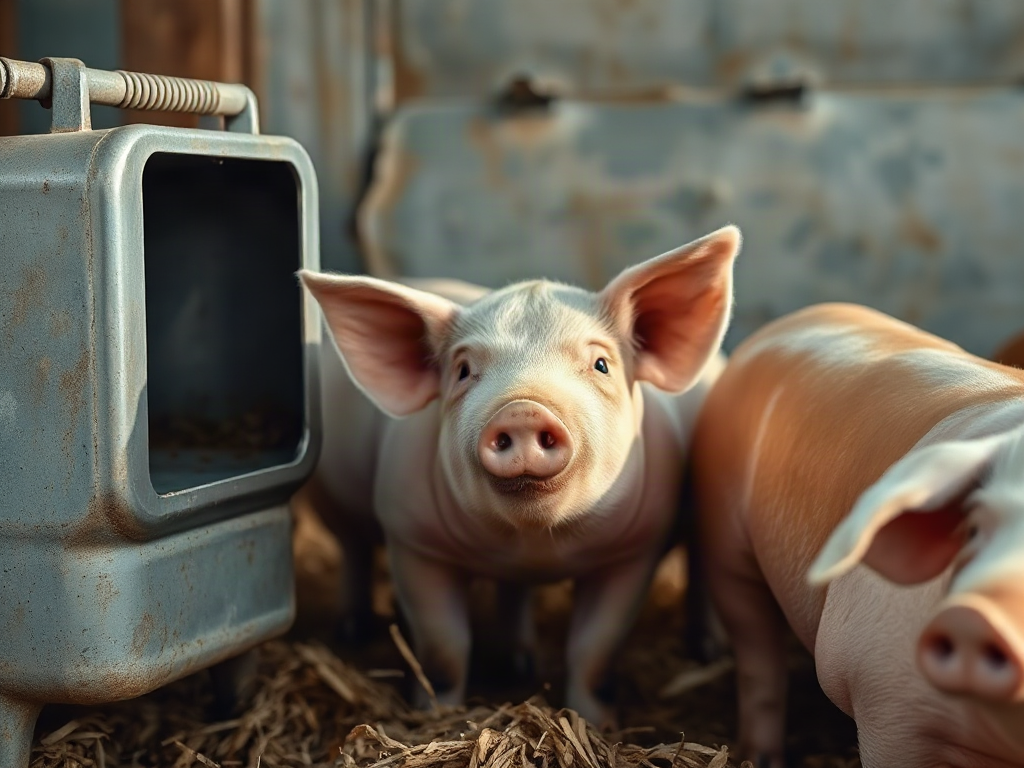
Self-feeder options for pigs prevent waste and overfeeding most effectively when feeder type, trough opening, feed flow, and stocking pressure are matched to the animals using them. A well-adjusted feeder should expose enough feed for easy access without leaving a deep pile that pigs can root, sort, or sweep onto the floor. Dry feeders are simple and easy to inspect, while wet-dry models may suit pigs that readily use the integrated water source. Check the feeder daily for bridging, damp feed, blocked spaces, and fresh spillage.
Which Pig Self-Feeder Design Fits Your Setup?
Feeder design determines how pigs reach the ration, how easily they can displace it, and how much labor is required to keep it dry and flowing. The practical choice is not simply the feeder with the largest hopper. It is the model that fits the pigs’ size, the ration’s physical form, the pen environment, and the frequency with which someone can inspect it.
A conventional dry self-feeder drops meal or pellets into a separate trough. It is straightforward to fill and makes feed condition easy to observe. Its main weakness is that an overly generous gate setting can create a deep feed bed. Pigs may then nose through the ration, push it over the trough lip, or selectively eat preferred particles. Fine meal can also bridge in a hopper or collect moisture more readily than intact pellets.
A wet-dry feeder combines feed access with a drinking point in the eating area. Pigs can moisten the ration as they consume it, which may reduce airborne dust and feed carried away on the snout. The tradeoff is tighter management: leaking drinkers, excessive water flow, or neglected corners can turn feed into sour paste. A wet-dry unit should not be treated as a fill-and-forget system, and pigs still need dependable access to water appropriate for the setup.
Covered outdoor feeders protect feed from direct rain and provide storage where daily hand feeding is impractical. Protection must extend beyond the hopper lid. Wind-driven rain can enter the trough, condensation can damp the lower feed column, and uneven ground can let pigs rock or tip a light unit. A weather-resistant feeder should therefore have a stable base, sheltered trough, secure lid, and drainage around—not into—the feeding area.
Gravity barrels and improvised hoppers may be inexpensive, but smooth feed flow alone does not make them economical. Sharp edges, weak anchoring, unrestricted discharge, and crevices that retain old feed can erase the initial savings. Before using any feeder, confirm that pigs cannot become trapped, lift a panel, reach moving hardware, or contaminate stored feed. A sound commercial feeder is often the easier choice when fabrication quality or safe adjustment cannot be assured.
How Should Feed Flow Be Adjusted?
The correct feed-flow setting leaves a light, accessible layer in the trough rather than a mound. Pigs should be able to eat without repeatedly striking the mechanism, but they should not be able to bury their snouts and sweep loose feed sideways. Because gate markings differ among feeders, visual inspection is more reliable than copying a numbered setting from another unit.
Begin with a conservative opening after cleaning and filling the feeder. Watch several pigs eat, including smaller or less assertive animals. If they work the agitator but little feed appears, or if the trough becomes bare while pigs are actively feeding, open the gate slightly. If feed covers most of the pan, collects outside the feeder, or is being rooted rather than eaten, reduce the opening. Make one small change at a time and reassess after the group has used it.
Feed form changes the result. Pellets generally roll and discharge differently from coarse meal, while a finely ground ration may compact or bridge. A setting that worked for one delivery can fail after a change in formulation, particle structure, moisture, or pellet durability. Refilling on top of a suspected bridge is a common mistake because the hopper appears full even though pigs cannot obtain enough feed below.
| What You Observe | Likely Meaning | Practical Response |
|---|---|---|
| Thin feed layer with little floor spillage | Flow is near the usable range | Keep the setting and continue daily checks |
| Deep trough bed or fresh feed outside | Gate may be too open or trough poorly fitted | Narrow the opening and inspect the lip or dividers |
| Full hopper but empty trough | Feed may be bridging or the mechanism may be blocked | Check flow safely before assuming feed is available |
| Damp clumps or sour odor | Water intrusion, leakage, or stale residue is likely | Remove affected feed and correct the moisture source |
Do not judge adjustment only by how long a hopper lasts. A longer refill interval could mean lower waste, restricted access, or a blockage. Compare consumption patterns with pig behavior, body condition, trough appearance, and feed found on the floor. Sudden departures from the usual pattern deserve investigation before the feeder is simply topped up.
Can Pigs Overeat From a Self-Feeder?
Free-choice access can lead some pigs to consume more energy than their current purpose requires, but a self-feeder does not automatically cause harmful overfeeding. The result depends on age, genetics, ration energy density, health, temperature, social competition, and whether the pigs are being grown for a defined production goal or maintained as breeding or companion animals.
Growing pigs are commonly managed with ready access to a balanced ration because uninterrupted access supports consistent intake. That principle should not be extended blindly to every animal. Mature pigs, animals with low activity, and pigs already carrying excessive body condition may need a controlled feeding plan developed around their nutritional needs. Restricting only the feeder opening is a poor substitute: it can increase frustration and competition without ensuring that each pig receives an appropriate amount.
Feed waste can also resemble overconsumption. If a hopper empties quickly, first examine the bedding and ground around it. Fresh meal under a feeder, pellets pushed beyond the pen, or feed mixed into wet mud indicates disappearance rather than intake. Rodents, wild birds, loose lids, and nighttime tipping can further distort refill records. Estimating intake from hopper level alone may therefore produce the wrong management decision.
Monitor the pigs as well as the equipment. Changes in body condition, uneven growth within the group, persistent crowding, loose manure, repeated vomiting, reduced activity, or an abrupt shift in appetite warrant attention. These signs do not identify a single cause, and illness should not be blamed on feeder adjustment without assessment. A veterinarian or qualified swine nutrition professional can help evaluate unexpected intake, poor growth, digestive signs, or a ration that may not fit the animals.
Avoid using low-quality bulky ingredients merely to keep pigs occupied while limiting calories. A ration must still supply suitable protein, amino acids, minerals, vitamins, energy, and fiber for the class of pig. When controlled feeding is appropriate, measured meals, adequate feeding positions, and observation of individual access are more dependable than partially closing a self-feeder and hoping competition distributes feed fairly.
Feeder Space, Placement, and Weather Protection
Even a well-designed feeder wastes feed when pigs cannot approach it comfortably or when the surrounding area stays wet. Limited feeding space favors dominant animals, encourages pushing, and may cause smaller pigs to grab feed and retreat. Too much exposed trough, however, creates additional surfaces where feed can become stale or contaminated. Manufacturer capacity guidance is a starting point, but actual behavior in the pen remains the decisive check.
Observe the group during busy feeding periods rather than only when the pen is quiet. Repeated displacement, pigs waiting while spaces remain physically unusable, biting near the feeder, or a widening difference in body size may indicate that access is inadequate. Adding pigs to a pen without reconsidering feeder capacity is a frequent failure. Adding a second feeder can improve access, but only if both units are placed so that one pig cannot guard the approaches.
Placement affects cleanliness and losses. Set the feeder on a firm, level surface where spilled feed is visible and removable. A trough beside a wall may reduce traffic on one side, yet the layout must still permit cleaning and inspection. Avoid low spots that collect runoff and locations directly beneath a roof edge. Outdoors, orienting the opening away from prevailing rain can help, but it does not replace a proper hood or shelter.
Water access requires equal care. Placing separate drinkers too far away can interrupt normal feeding and drinking patterns, while a leaking nipple beside a dry trough can ruin feed rapidly. With a wet-dry feeder, check that water delivery functions without continuously flooding the pan. Frozen lines, excessive pressure, damaged valves, and sediment can all change performance after the original installation.
Secure the unit according to its design. Pigs are strong enough to shift light feeders, pry at loose edges, and enlarge small gaps through repeated rooting. Anchoring should not create protrusions or pinch points. If a feeder moves, tilts, or develops a widening gap at the trough, stop treating the resulting losses as a feed-flow problem; repair the physical installation first.
Daily Checklist for Waste and Feeder Failures
A short inspection catches losses before refill records or pig condition reveal them. Perform the check while pigs are present so their interaction with the feeder can be observed. Looking only into the hopper misses access problems at the trough, while looking only at the trough misses bridging and spoiled feed above it.
- Observe access: Confirm that pigs of different sizes can approach, eat, and leave without persistent displacement.
- Inspect the feed bed: Look for a shallow usable layer rather than a buried pan, bare trough, wet paste, or compacted material.
- Check the surrounding floor: Distinguish a few scattered particles from repeated piles, trails, or feed incorporated into bedding.
- Test delivery safely: Verify that feed moves through the hopper and that adjustment hardware remains secure.
- Check feed quality: Remove clumps, mold-suspect material, stale residue, or feed with an abnormal odor rather than mixing it into a fresh load.
- Review the pigs: Note appetite, body condition, manure changes, injuries, and animals that are not reaching the feeder.
Keep a simple record of feed added, adjustment changes, observed waste, and unusual conditions such as rain or a ration change. The record need not estimate intake with false precision. Its purpose is to reveal patterns: a feeder that suddenly empties faster, a recurring wet corner after storms, or increasing variation among pigs.
Cleanliness requires judgment. Emptying and cleaning a contaminated feeder is worthwhile; constantly allowing fresh feed to sit on old, damp residue is not. Before washing, plan how the unit will dry completely, because adding feed to a wet hopper can create another blockage. Follow the feeder manufacturer’s cleaning and maintenance directions where available.
An approach is working when pigs have dependable access, the ration stays fresh, floor losses remain minimal, and refill patterns are reasonably stable. It is failing when adjustment changes are frequent but the same spillage returns, pigs compete heavily, feed cakes in the hopper, or body condition moves away from the intended goal. At that point, reconsider feeder capacity, location, ration form, water leakage, and animal grouping rather than continuing to turn the gate.
Frequently Asked Questions
Are dry or wet-dry feeders better for pigs?
Dry feeders are simpler to inspect and separate feed from water. Wet-dry feeders may reduce dust and let pigs moisten feed, but they require close attention to water flow, leaks, and sour residue. The better option is the one that can be checked and maintained reliably in the specific pen.
How much feed should be visible in a pig feeder trough?
A light layer should be available without a deep pile covering the pan. Because trough shapes and feed forms differ, watch pigs use the unit and adjust gradually. Bare areas during active eating suggest restricted flow; a buried pan and fresh floor spillage suggest excess flow.
Why is a full self-feeder not delivering feed?
Feed may have bridged because of fine particles, moisture, compaction, or foreign material. The agitator or gate may also be blocked or damaged. Inspect the mechanism safely and remove compromised feed instead of assuming a full hopper means pigs have access.
Should mature pigs have unlimited access to a self-feeder?
Not necessarily. Mature, breeding, low-activity, or overweight pigs may require controlled intake based on body condition and nutritional purpose. Do not create restriction by merely narrowing the feeder opening; use an appropriate measured-feeding plan and obtain professional nutrition guidance when needed.
How can I tell whether feed is being eaten or wasted?
Check the floor, bedding, mud, trough edges, and areas outside the pen for fresh feed. Compare those findings with pig behavior, condition, manure, and refill records. A rapidly emptying hopper accompanied by visible deposits indicates loss rather than consumption.
Conclusion
Choose a self-feeder by matching its delivery system and weather protection to the ration, pen, pig size, and available inspection time. Once installed, concentrate on the trough rather than the hopper label: maintain a shallow feed bed, correct moisture and bridging promptly, and watch whether every pig can use the available spaces.
Record refills and adjustment changes, but interpret those numbers alongside floor spillage, body condition, behavior, and feed quality. Rapid disappearance is not proof of excessive intake, and a full hopper is not proof that feed is available. If pigs show unexpected appetite, digestive signs, poor growth, or unsuitable body condition, review the ration and consult a veterinarian or swine nutrition professional. The next practical step is to observe one full feeding period, inspect the surrounding floor, and make only the smallest adjustment supported by what you see.