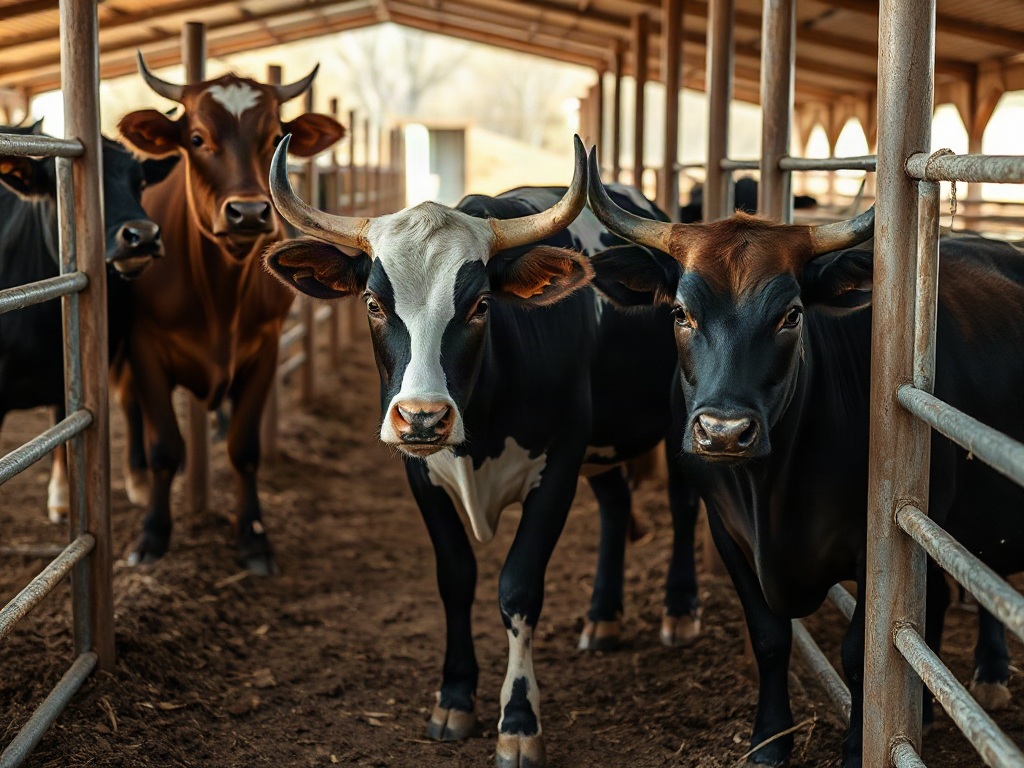
Safe cattle sorting for beginners combines calm handling with facilities that let animals see a clear path, move in small groups, and enter the correct pen without people standing in escape routes. Before opening a gate, remove sharp projections, improve footing, secure latches, identify an emergency exit, and decide exactly where each animal belongs. Apply pressure near the edge of the animal’s flight zone, then release it as soon as movement begins rather than chasing or crowding. A sorting alley, dependable gates, and protected handler positions reduce close contact, while excessive noise, overcrowding, blind corners, and working alone increase the chance of balking, turning, crushing, or escape.
How Cattle Respond During Sorting
Cattle move according to what they can see, where pressure comes from, and whether the route ahead appears open. Their flight zone is the area around them that prompts movement when a person enters it. Its size is not fixed: frequently handled cattle may tolerate a closer person, while excitable or unfamiliar animals may react at a much greater distance. Walking directly into that space can trigger rapid movement, but remaining there after the animal responds may cause it to hurry, turn back, or collide with others.
The point of balance, commonly near the shoulder, helps determine direction. A handler positioned behind the shoulder generally encourages forward movement; moving ahead of it tends to slow or reverse the animal. This principle works only when the animal can locate the handler and see a viable destination. A cow facing a dark doorway or a blocked alley may refuse to advance regardless of where the person stands. Increasing pressure in that situation treats hesitation as defiance when the actual problem is visual uncertainty.
Pressure and release provide a better approach than continuous pursuit. Step toward the edge of the flight zone until the animal takes the intended step, then pause or step away. The release tells the animal that forward movement removed the pressure. Repeated correctly, this produces steadier travel than shouting, striking gates, or crowding from behind. Handlers should avoid kneeling, turning their backs on cattle, or placing themselves between an animal and a rigid barrier.
Group behavior matters as much as individual response. Cattle generally prefer to follow companions and may resist leaving the herd alone. Sorting two or three animals into a receiving pen can establish a visible destination for those that follow. Conversely, forcing a lone animal away from every familiar animal may produce circling or attempts to return through the gate. Bulls, cows with young calves, injured animals, and highly agitated cattle warrant added distance and a more conservative plan.
A useful observation test is whether cattle walk with their heads at a natural height and continue through the opening without repeated retreat. Raised heads, bunching, defecation associated with agitation, rapid tail movement, repeated vocalizing, or attempts to climb indicate that pressure should be reduced. Readers using Cattle sorting for beginners: safe handling and facilities as a first-session reference should practice reading movement from outside the pen before attempting close sorting.
Facilities That Support Safe Movement
A workable sorting facility creates defined destinations while keeping handlers out of pinch points. At minimum, it needs a holding area, a controlled exit, secure gates, and separate receiving pens. An alley or narrow sorting lane adds control because it limits turning and allows one animal or a small group to be directed at a decision gate. Pens should match the number and size of cattle being worked; an overfilled pen removes the space needed to turn animals calmly, while an oversized pen may require handlers to travel too far inside it.
Footing deserves priority over cosmetic upgrades. Mud, ice, manure buildup, polished concrete, loose boards, and abrupt floor changes can cause slipping or refusal. Drainage and regular cleaning often improve an existing facility more than adding another gate. Grooved or otherwise traction-supporting surfaces may be useful in high-traffic areas, but grooves should not create sharp edges or trip hazards. Inspect the route at cattle eye level for dangling chains, protruding bolts, broken rails, wire ends, and gaps that could trap a leg or head.
Gate placement determines whether sorting can be done from a protected location. A well-positioned gate swings freely, latches positively, and does not require a person to stand in the opening as cattle pass. Avoid gates that can pin a handler against a fence or swing back under animal pressure. Sliding gates or gates operated from outside the animal path can reduce exposure where the layout permits. Every person should know which spaces are true escape routes; climbing a weak panel or squeezing through an untested gap is not an emergency plan.
Visual details frequently explain why a structurally sound alley performs poorly. Deep shadows, glare on metal, flapping clothing, coats hung on rails, pooled water, and equipment lying beyond a gate can stop forward movement. Walk the cattle route before loading the pen and view openings from the animals’ likely approach. Correcting a shadow or moving a bucket may resolve a balk more safely than adding people behind the herd. Solid sides can limit distractions in a crowding area, but fully enclosed construction may hinder handler visibility if poorly designed.
Portable panels may suit occasional work or rented land, but they must be anchored and connected for the expected animal pressure. Lightweight panels that bow or walk across the ground are not equivalent to permanent fencing. Beginners with improvised facilities should sort fewer cattle at once and avoid using a vehicle, loose rope, or person as a substitute for a secure barrier. A pre-use inspection in Cattle sorting for beginners: safe handling and facilities should cover traction, gate travel, latches, sharp points, visibility, receiving-pen capacity, and human exits.
A Controlled Sorting Sequence
A safe session begins with a written destination for every class of animal. Decide whether cattle are being separated by ownership, age, sex, health status, breeding group, or treatment need, and mark receiving pens clearly for the crew. Changing the criteria while cattle are moving creates contradictory gate decisions. If identification depends on ear tags, confirm that numbers can be read from the planned observation point rather than expecting someone to step close to an uncertain animal.
Load the holding area below the point where cattle lose room to turn and settle. Give the group a brief period to look around, then bring a small draft toward the sorting point. One person should control the decision gate whenever possible, while another brings cattle forward without filling the gate opening. Extra helpers are useful only when each has a defined position; several people applying pressure from different sides create mixed signals and block the animals’ apparent exits.
- Prepare: Close unrelated gates, clear distractions, test latches, and confirm that receiving pens have water or other required provisions if cattle will remain there.
- Position: Keep handlers outside direct travel lanes and establish a protected location for the gate operator.
- Move a small draft: Use the edge of the flight zone to start movement, then release pressure before animals rush the gate.
- Make one decision: Open the intended route early enough that it looks available, close it only after the animal has cleared the swing area, and verify the latch.
- Recount and reconcile: Compare pen totals with the sorting record before mixing or transporting any group.
Consider a group of twelve yearlings that must be split into two ownership groups. Pushing all twelve toward a central gate invites crowding and makes tag reading difficult. Moving three at a time gives the gate operator time to identify each animal and leaves space to redirect a mistake. If one yearling turns back, let the draft settle and rebuild forward movement rather than sending a handler into the middle of the group. A sorting mistake is usually safer to correct from a receiving pen than during a congested gate decision.
Communication should be brief and agreed upon beforehand. The gate operator needs to hear the animal’s destination, not several simultaneous instructions. Stop the flow if identification is uncertain, a latch fails, an animal falls, or a handler loses a protected position. Speed gained by continuing through a developing hazard rarely compensates for the increased exposure.
Signs that the sequence is working include walking rather than running, prompt gate clearance, minimal turning, and handlers who can maintain their assigned positions. Repeated balking at one location points toward a facility or visual problem. Disorder across the whole pen more often indicates excessive pressure, too many cattle, or conflicting handlers. The practical objective is a repeatable flow, not the fastest possible pass.
Failure Signs, Corrections, and Facility Priorities
When cattle stop, turn, or surge, pause before applying more force. A single balking point suggests a shadow, noise, footing change, narrow opening, unfamiliar object, or handler standing where cattle want to go. Move the distraction, alter the approach angle, or reduce the draft size. If animals crowd the entrance and then reverse, the receiving route may look closed or offer insufficient space. Adding noise from behind usually compresses the group without fixing the cause.
Repeated escapes indicate a containment failure, not simply difficult cattle. Examine gate gaps, panel height and strength, latch design, and whether pressure is concentrating at a corner. Do not attempt to hold a failing gate by hand. Clear people from the pressure area, settle the cattle if possible, and repair or reinforce the barrier before resuming. An escaped animal should not be chased by people on foot across open ground; use secure boundaries and a calm plan suited to the property and animal involved.
Budget improvements should address the greatest consequence first. Repair weak fencing and unreliable latches before buying specialized handling accessories. Improve traction and remove sharp hazards before changing alley geometry. Next, create a protected gate-operating position and enough receiving pens to avoid re-sorting. A curved alley or purpose-built crowding area may improve flow for frequent handling, but it cannot compensate for poor maintenance, overloading, or people standing in the animals’ path.
Working alone adds risk because no one can summon help, manage a second gate, or respond if the handler is injured. Some routine gate changes may be possible from outside secure pens, but beginners should not enter confined areas with loose cattle alone. Arrange a competent helper, keep a charged phone accessible outside the pen, and tell someone where the work is occurring. Children, visitors, and dogs should remain outside the handling area unless they have a specific, safe role appropriate to the operation.
After each session, record where animals hesitated, which latch was awkward, whether pen capacity was adequate, and where a person had to enter an exposed position. Those notes distinguish a one-time animal response from a recurring design defect. The strongest next step may be moving a gate stop, adding a protected pass-through, changing lighting, or simply sorting four animals per draft instead of eight. Use the inspection principles in Cattle sorting for beginners: safe handling and facilities before the next session rather than relying on memory after cattle enter the pen.
Frequently Asked Questions
How many cattle should a beginner sort at one time?
Use the smallest group that moves calmly and leaves room for clear gate decisions. Two to four animals may be manageable in many beginner setups, but pen size, animal temperament, and identification method should determine the actual number.
Should cattle be sorted from inside or outside the pen?
Protected positions outside the direct animal path are preferable whenever the facility allows them. Entering a confined pen increases exposure to kicking, crushing, and sudden turns, especially around bulls, cows with calves, or agitated cattle.
Why do cattle stop at an open gate?
The opening may contain a shadow, glare, poor footing, moving object, unfamiliar surface, or person blocking the apparent route. Inspect the scene from cattle eye level and correct the visual or physical obstacle before adding pressure.
Are portable cattle panels adequate for sorting?
They may be adequate for limited use when their strength, connections, anchoring, and height suit the cattle and expected pressure. Lightweight or unsecured panels should not be treated as dependable containment.
When should a sorting session be stopped?
Stop when cattle are piling up, a person loses an escape route, a gate or fence begins to fail, footing becomes unsafe, or an animal falls or becomes highly agitated. Correct the cause before restarting.
Conclusion
Effective cattle sorting comes from controlling space and choices rather than overpowering animals. Inspect the entire route before loading a pen, give every group a known destination, and keep the gate operator in a protected position. Small drafts make identification and redirection easier, while timely pressure-and-release encourages movement without creating a surge. Treat persistent balking as information: check sight lines, footing, noise, gate width, receiving space, and handler placement before escalating pressure.
For the next sorting session, repair containment defects first, mark usable human exits, assign one responsibility to each helper, and establish clear stop conditions. Record hesitation points and near misses afterward. Those observations provide a practical improvement list for the facility and help determine whether the safest change is a repair, a layout adjustment, fewer cattle per draft, or experienced assistance.