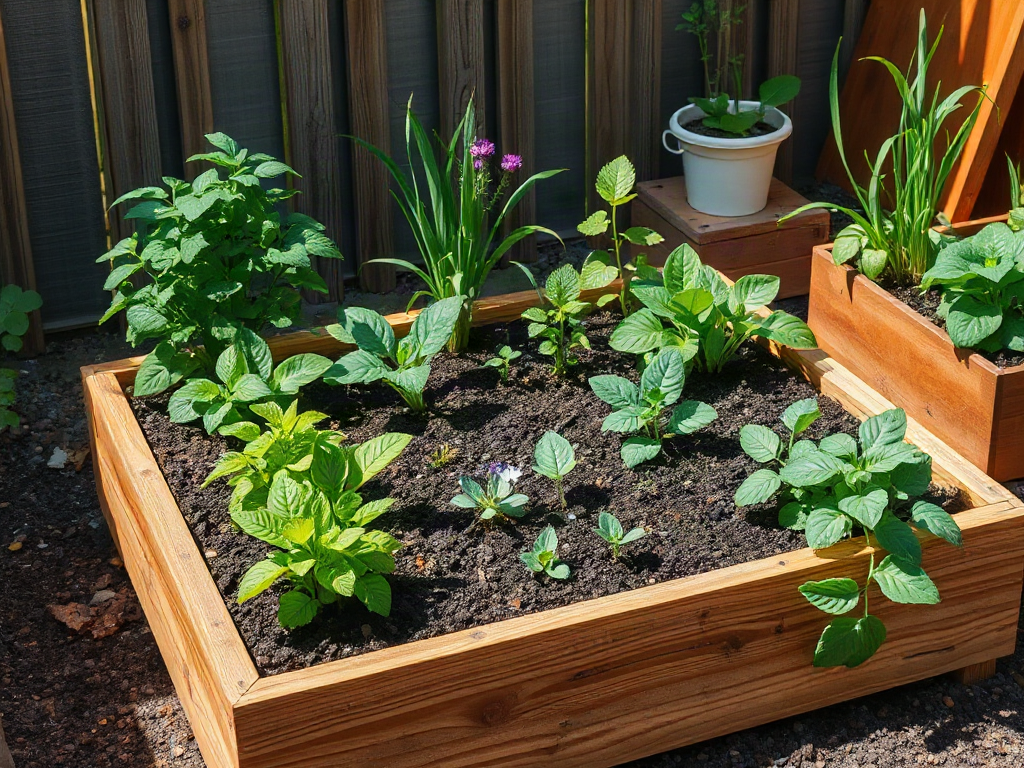
Square foot gardening for beginners in small spaces works by dividing a compact raised bed into one-foot squares, then assigning each square a crop density based on mature plant size. Use a bed no wider than four feet, place tall crops on the side least likely to shade shorter plants, and fill it with loose, compost-rich soil that drains well. Sow one large plant, four medium plants, nine smaller plants, or sixteen closely spaced plants per square when the crop supports that spacing. Reliable access, steady watering, and prompt replanting matter more than packing every square with seeds.
Choose a Bed Size and Location That Remain Reachable
A square foot bed should fit the gardener’s reach before it fits a planting diagram. A freestanding bed can be up to four feet wide because it is accessible from both sides. A bed placed against a wall or railing should usually be about two feet wide so the back squares can be tended without stepping on the soil. Length is flexible: a 2-by-4-foot box suits a narrow patio, while a 4-by-4-foot box provides sixteen planting squares.
Access affects more than convenience. Reaching across an oversized bed encourages leaning on the soil, which compresses the pore spaces that roots need for air and water movement. Hard-to-reach corners also become places where weeds mature, pests go unnoticed, and ripe produce remains unpicked. Leave enough room beside the bed for kneeling, carrying a watering can, and harvesting broad plants without brushing against a wall.
Sunlight should be checked where the bed will actually stand, not estimated from the general brightness of the yard. Fruiting vegetables such as tomatoes, peppers, cucumbers, and bush beans generally perform best with substantial direct sun. Leaf lettuce, spinach, parsley, and some other leafy crops tolerate less light, especially where afternoon heat is intense. Observe the site during the morning, midday, and late afternoon because buildings, fences, and balcony walls can create moving shade.
Place taller plants where they will cast the least shade across the bed. In much of the Northern Hemisphere, that often means putting trellised peas, cucumbers, or indeterminate tomatoes along the north side, but nearby structures and seasonal sun angles can change the result. A trellis fixed to the brightest edge without considering shadow direction may deprive several smaller squares of usable light.
Drainage and water access deserve equal attention. A container-style bed on pavement needs open drainage holes and protection against runoff staining or damaging the surface. A bottomless frame over soil should not sit in a low spot that remains saturated after rain. If carrying water through the home is inconvenient, a smaller bed near a faucet may produce better results than a larger, distant one. The practical starting point for Square foot gardening for beginners in small spaces is therefore the largest bed that can be reached, watered, and observed easily—not the largest box the site can physically hold.
Build the Grid and Prepare Productive Soil
The grid is a management tool rather than a decoration. Divide the inside dimensions into one-foot sections with thin wood strips, durable cord, or another visible material that will not obstruct planting. Permanent dividers make it easier to seed accurately and distinguish intentional seedlings from weeds. Painted lines tend to disappear under soil and mulch, while thick boards consume valuable root and growing space.
A frame can be made from untreated, rot-resistant lumber, composite boards intended for garden use, masonry, or a purpose-built raised-bed kit. Check the intended placement before choosing heavy materials; a masonry bed is difficult to relocate, and a saturated container can impose considerable weight on a balcony or elevated deck. Renters may prefer a lighter freestanding planter that can be emptied and moved. If there is uncertainty about a balcony’s load capacity, the property owner or a qualified building professional is the appropriate source of guidance.
Bed depth should reflect the crops and the surface underneath. Shallow-rooted lettuce and radishes require less depth than carrots, tomatoes, or chard. A bottomless bed over healthy, loosened ground lets roots continue into the soil below. A box over concrete must contain the entire root zone and enough growing medium to hold moisture between waterings. Very shallow boxes heat and dry quickly, even when their footprint looks generous.
Use a loose growing medium with mature compost and ingredients that preserve drainage and moisture retention. The exact blend can vary because locally available compost, screened topsoil, and soilless components differ. Dense yard soil used alone often settles into a hard mass inside a raised box. Pure compost can also be a poor default: its nutrient content, salinity, texture, and degree of decomposition vary, and it may shrink substantially. A balanced raised-bed mix should feel crumbly when moist rather than sticky or waterlogged.
Fill the bed nearly to the top, water the mix, and check it again after settling. Add more if the level drops sharply, but do not press it down with feet or heavy tamping. Before sowing, break apart remaining clumps and remove coarse wood fragments from the upper layer, particularly in squares reserved for tiny seeds or straight-rooted crops.
A simple readiness checklist keeps construction choices tied to plant needs:
- Reach: Every square is accessible without stepping into the bed.
- Drainage: Excess water has a clear route out.
- Depth: The box accommodates the intended root systems.
- Texture: Moist mix crumbles rather than forming a dense ball.
- Grid: One-foot boundaries remain visible after watering.
Do not add a gravel layer as a substitute for drainage holes in a closed container. Water still needs a route out of the box. If puddles remain long after irrigation, check blocked outlets and compacted mix before assuming that the plants simply need less water.
Match Plant Spacing to Each One-Foot Square
Plant density is determined by mature width, not by seed size or the number of seedlings available. Common square-foot patterns place one large plant in a square, four plants in a 2-by-2 arrangement, nine in a 3-by-3 arrangement, or sixteen in a 4-by-4 arrangement. These patterns are convenient translations of conventional spacing, but the seed packet’s mature spacing remains the better authority when a variety is unusually compact or vigorous.
One-per-square crops may include broccoli, cabbage, pepper, or a compact tomato, depending on variety and support. Leaf lettuce, Swiss chard, bush beans, or similar medium crops may fit at four or nine per square according to their mature size and harvest method. Radishes and small carrots are often candidates for sixteen positions. A sprawling squash or full-size indeterminate tomato may need several squares, vertical support, or a different container entirely. Treating every vegetable as a neat one-square crop is a common planning error.
Air movement and harvest style can justify wider spacing. Lettuce grown for repeated outer-leaf harvest can remain in place longer and develop a broader crown than lettuce cut young. Beets harvested for small roots can stand closer than beets intended to reach full size. In a humid or poorly ventilated courtyard, slightly wider placement may help foliage dry more readily after watering. Maximum density is not automatically maximum usable harvest.
Plan the bed on paper before opening seed packets. In a sixteen-square bed, a manageable first layout might reserve four northern squares for trellised peas, four for leaf lettuce, two for parsley, two for radishes, two for carrots, and two for bush beans. That mix still requires seasonal judgment: cool-weather peas and lettuce may decline as heat arrives, while beans prefer warmer conditions. Planting every crop on the same date ignores those differences.
Combine compatible growth habits rather than chasing elaborate companion-planting claims. Short radishes can mature near slower carrots because they are removed earlier, and trellised peas can use vertical space above low greens if shading is controlled. The reliable benefits come from physical timing, root room, and canopy placement—not from assuming that neighboring species will repel every pest or improve each other’s flavor.
Label each square and record the variety and sowing date. If germination is poor in one square but strong elsewhere, the record helps separate old seed, unsuitable temperature, inconsistent moisture, and excessive planting depth. A useful Square foot gardening for beginners in small spaces layout leaves at least a few squares flexible. That spare capacity accommodates replacement seedlings, a crop that needs more room than expected, or a second sowing after an early harvest.
Plant, Water, and Refill the Bed Through the Season
Direct sowing by final spacing avoids the dense rows that later demand difficult thinning. Mark the correct number of positions in each square, plant seeds at the packet’s recommended depth, and place extra seeds only as insurance where germination is uncertain. Once seedlings establish, retain the strongest plant at each position. Pulling crowded seedlings late can disturb neighboring roots, so clip unwanted plants at soil level when separation is risky.
Transplants suit crops that need a longer growing period or are slow to establish, but roots should not be forced into dry pockets. Water the transplant before removal, open a hole wide enough for the root mass, settle it at the appropriate depth, and water the surrounding mix. Tomatoes are commonly planted deeper than they grew in the pot, while many other vegetables should remain near their previous soil line. Verify crop-specific instructions instead of applying the tomato method throughout the bed.
Raised beds can dry faster than ground-level plots because more of the soil is exposed to warm air. Test moisture below the surface with a finger rather than watering by schedule alone. If the upper layer is dry but the root zone remains moist, immediate irrigation may be unnecessary. Apply water slowly at soil level so it penetrates instead of running across the surface. A thin layer of clean organic mulch can moderate evaporation, but keep it from burying tiny seedlings or resting against stems.
Wilting at midday does not always prove that the bed is dry. Leaves may droop temporarily during intense heat even when deeper soil contains moisture. Check the root zone before adding water; repeated irrigation into already wet soil deprives roots of oxygen and can encourage decline. Persistent wilt in moist soil, yellowing lower leaves, sour-smelling mix, or standing water points toward drainage or root trouble. Dry mix pulling from the bed edges, crisp leaves, and rapid recovery after thorough watering point more strongly toward insufficient moisture.
Compact beds use available nutrients intensively. Before replanting an emptied square, remove diseased debris, loosen only the upper layer without damaging roots in adjacent squares, and add a modest amount of mature compost if the mix has settled. Fertilizer decisions should follow crop needs and product directions; more is not inherently better, particularly in a small soil volume where soluble salts can accumulate.
Succession planting turns limited area into repeated harvests. After radishes finish, the square might hold bush beans once the soil warms. After early peas decline, cucumbers may use the existing trellis if the remaining season is long enough. Keep expected maturity time in view: a crop planted too late may occupy valuable space without reaching harvest before frost, severe heat, or declining light. Signs the system is working include even germination, manageable foliage, water soaking in without pooling, and regular harvests. Crowded canopies, recurring wilt, stretched seedlings, and inaccessible interior squares signal that spacing, light, watering, or bed dimensions need adjustment.
Frequently Asked Questions
How deep should a square foot garden be?
Depth depends on the crop and what lies beneath the bed. Shallow greens need less soil than carrots or tomatoes, while a bottomless frame over usable ground gives roots more room than a closed box over concrete.
What can I plant in one square foot?
Depending on mature spacing, one square may hold one large plant, four medium plants, nine smaller plants, or sixteen closely spaced root crops. Confirm the variety’s spacing on its seed packet.
Can I put a square foot garden on a patio or balcony?
Yes, if the planter drains safely and the surface can support its saturated weight. Balcony gardeners should verify structural limits and prevent runoff from affecting neighboring property.
How often should I water a square foot garden?
Water when the root zone begins to dry rather than following a fixed calendar. Weather, bed depth, crop size, wind, and the growing mix all change how quickly moisture is used.
Do I need to replace all the soil each year?
Usually not. Remove unhealthy plant material, restore settled areas with suitable growing mix or mature compost, and address drainage, compaction, or nutrient issues instead of discarding usable soil automatically.
Conclusion
A productive small-space bed is built around access, root conditions, and realistic crop size. Measure the location, observe its light, and choose a width that lets you reach the center without compressing the soil. Add a visible grid, use a well-drained growing mix, and translate mature plant spacing into one, four, nine, or sixteen planting positions only where the variety supports that density. During the season, check moisture below the surface, thin promptly, support vertical crops, and record sowing dates. Begin with vegetables you regularly eat and leave some capacity for replanting. A modest bed that can be watered and inspected daily is more useful than an overcrowded layout whose interior squares are difficult to manage.