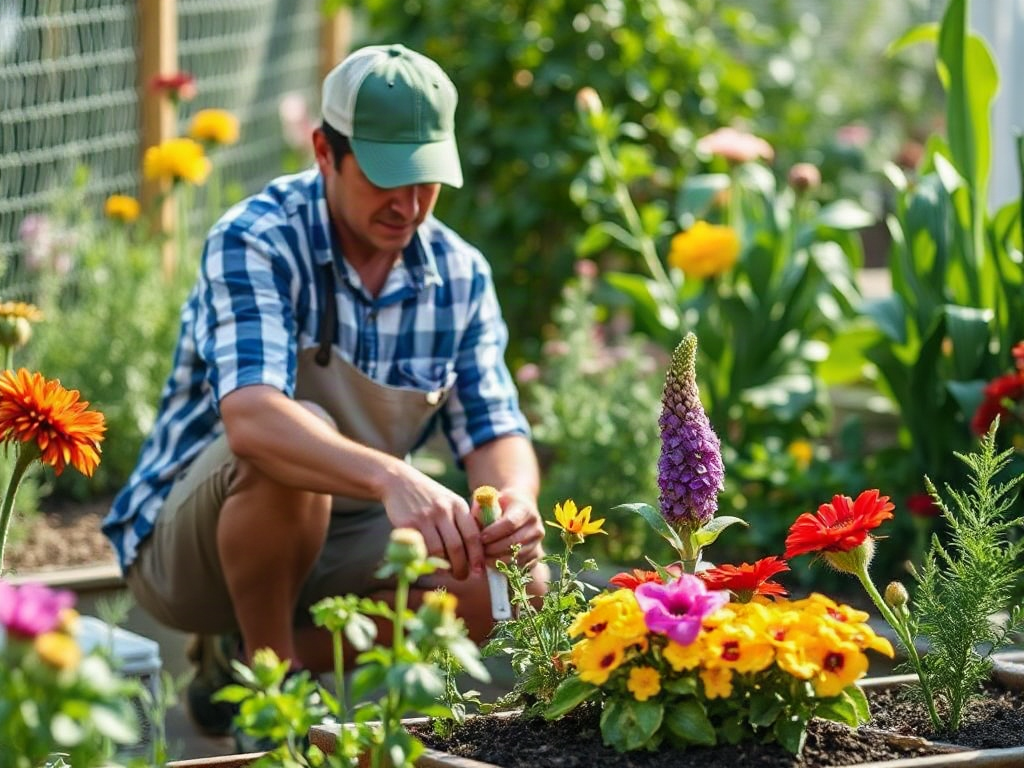
Gardening classes for beginners should teach site assessment, soil preparation, plant selection, watering, observation, and basic maintenance before advanced techniques. These skills help a new gardener match crops to sunlight and season, judge soil moisture below the surface, space plants correctly, and recognize stress before damage spreads. A useful class includes hands-on practice with real soil and plants rather than relying mainly on lectures, seed catalogs, or ambitious garden designs. Beginners should leave able to establish and monitor one small planting area, because consistent care of a manageable bed teaches more than starting several crops without enough time to observe them.
Assess Sunlight, Space, and Growing Conditions
Site assessment is the first field skill worth practicing because garden decisions made without it are mostly guesses. A beginner needs to distinguish direct sun from bright shade, notice where water collects after rain, identify competition from nearby roots, and measure the area that can receive regular care. A class should ask students to observe a location at several times of day rather than label it sunny after a single noon visit.
Sun exposure changes with buildings, fences, trees, and the season. A spot receiving strong spring light may become shaded after a deciduous tree develops its canopy. Conversely, a south- or west-facing wall can reflect heat onto plants even when the measured hours of direct light seem suitable. These details affect which crops are realistic. Fruiting vegetables such as tomatoes and peppers generally demand more direct light than leafy crops, while tender greens may tolerate some afternoon shade during hot weather.
Space should be judged by access as well as square footage. A bed that is too wide to reach from its edges invites compacted soil because the gardener eventually steps into it. Containers can solve access or poor-soil problems, but they dry faster and require closer watering attention. In-ground beds retain moisture more steadily, although they may need more preparation where soil is compacted or drainage is slow.
A useful exercise is to sketch one possible bed, mark north, record direct-light periods, and locate the nearest water source. The sketch does not need to become an elaborate landscape plan. It should expose practical constraints: a hose that cannot reach, a low corner that remains saturated, or a bed placed farther from the house than daily routines support.
The common mistake is choosing a location because it looks attractive or is currently unused. A productive site must suit both plants and the gardener’s schedule. Before enrolling, check whether Gardening classes for beginners: what skills matter first includes an outdoor site-reading exercise. Classroom diagrams are useful, but they cannot replace watching light, drainage, and access interact in an actual growing space.
Build Practical Soil and Planting Skills
Beginners need to handle soil, roots, seeds, and transplants rather than memorize an exhaustive list of amendments. Productive soil must provide roots with water, oxygen, physical support, and access to nutrients. Texture, structure, drainage, organic matter, and compaction influence those functions, but none can be diagnosed accurately from soil color alone.
A strong introductory class demonstrates simple field observations before recommending products. Students can moisten a handful of soil to see whether it feels gritty, sticky, or balanced; inspect whether water enters the surface or runs away; and use a trowel to check for dense layers. These observations do not replace a laboratory soil test, especially when pH or nutrient levels matter, but they help a gardener identify physical problems. Adding fertilizer will not loosen compacted ground, and adding sand casually to clay soil can produce an even denser mixture rather than the open structure the gardener expects.
Planting practice should cover seed depth, transplant handling, spacing, and firm root-to-soil contact. Tiny seeds are commonly buried too deeply, while transplants are sometimes left with exposed root-ball edges that dry quickly. Students should learn to read a seed packet, prepare a level seedbed, sow at the stated depth, and water gently enough that seeds stay in place. With transplants, the aim is to protect roots, settle soil around them, and check moisture across both the root ball and surrounding ground.
Spacing creates an immediate tradeoff. Crowding appears efficient when plants are small, but mature leaves may overlap, restrict airflow, complicate harvesting, and intensify competition for moisture. Excessively wide spacing wastes usable ground and leaves more bare soil exposed to weeds. The correct choice comes from the plant’s mature size and growth habit, not the dimensions of the seedling at purchase.
Signs of sound preparation include water entering the bed without prolonged ponding, soil that can be worked without being powdery or saturated, and transplants that remain upright with covered roots. Repeated crusting, standing water, or footprints that harden into depressions indicate a need to pause and correct structure or access. A beginner class should explain why a change is being made, not prescribe compost, fertilizer, or raised beds as universal answers.
Learn to Water by Observation
Watering is best taught as a soil-checking skill, not a fixed calendar instruction. Weather, soil texture, root depth, container size, mulch, and plant growth all change how quickly water is used. A schedule such as “water every day” may drown seedlings in cool conditions and still leave a small container dry during a hot, windy afternoon.
Students should learn to inspect moisture below the visible surface. Dry-looking mulch can cover moist soil, while a recently sprinkled surface may hide dry soil around deeper roots. A finger, trowel, or wooden probe can reveal whether moisture reaches the active root zone. The goal is to apply enough water to wet that zone, then allow appropriate air to return to the soil rather than keeping it continually saturated.
Consider two lettuce plantings on the same property. Lettuce in a small dark container may heat and dry rapidly, while lettuce in a mulched in-ground bed remains moist longer. Giving both the same volume at the same hour ignores their different root environments. Drip lines or soaker hoses can deliver water slowly near the soil, whereas an overhead sprinkler is easier to reposition but loses more water to wind and wets foliage and paths. Neither method corrects poor drainage or inattentive monitoring.
A concise watering practice sequence is useful:
- Check moisture beneath the surface near, but not directly against, the stem.
- Water slowly enough that the soil absorbs it instead of producing runoff.
- Wait briefly, then inspect how deeply the moisture moved.
- Recheck later under changed weather rather than assuming the interval will remain fixed.
Wilting alone is an unreliable command to add water. Plants can droop temporarily in midday heat even when the root zone is moist, and waterlogged roots may also produce wilted growth because they lack oxygen. Check the soil before responding. Consistently limp plants in dry soil, shrinking container mix, or water that never penetrates evenly signals failure. Firm growth and evenly moist—not saturated—soil indicate that the method is closer to the plant’s needs.
When comparing Gardening classes for beginners: what skills matter first, favor instruction that lets students test soil before and after watering. Watching an instructor spray a bed is less valuable than learning how to decide whether that bed needs water.
Practice Plant Selection and Seasonal Timing
Plant selection should connect climate, season, available light, space, and household use. Beginners are often encouraged to grow whatever looks appealing on a seed display, but a plant can be healthy in general and still be poorly matched to a specific garden. Local frost patterns, summer heat, rainfall, and day length shape planting windows, while each crop has its own temperature preferences and time to maturity.
Cool-season vegetables such as peas, radishes, and many leafy greens often perform differently from heat-loving crops such as beans, cucumbers, and tomatoes. The distinction affects both planting date and expectations. Setting a tender tomato outdoors during an early warm spell does not remove the risk of later cold. Sowing spinach immediately before sustained summer heat may produce rapid flowering rather than a long harvest. Local extension planting calendars are more useful than national month-by-month graphics because growing conditions vary widely.
Beginners should also compare direct sowing with transplanting. Root crops such as carrots are commonly sown where they will grow because root disturbance can distort development. Tomatoes are often transplanted to gain growing time and establish a predictable stand. Transplants cost more and can suffer shock if moved abruptly from protected conditions, while direct sowing is inexpensive but exposes emerging seedlings to weather, crusted soil, and feeding damage.
A manageable first planting might contain two dependable crops and one experimental crop rather than a dozen unrelated vegetables. For example, a gardener with spring sun and limited space could sow radishes and lettuce while testing a small row of peas. This arrangement creates repeated practice in seed depth, thinning, moisture checks, and harvest timing without generating more maintenance than a beginner can track.
The weak assumption is that a long crop list produces more learning. Too much variety makes it difficult to identify why one planting succeeded and another failed. Keep a brief record of sowing date, weather, germination, watering, and harvest. The record is working when it helps explain patterns, such as poor emergence after soil crusting or faster drying in one container. It is failing when it becomes so detailed that recording replaces garden observation.
Evaluate a Beginner Gardening Class
A worthwhile beginner class should produce observable abilities, not merely familiarity with gardening vocabulary. By the end, students should be able to assess a planting site, prepare a modest growing area, plant at an appropriate depth, check moisture, choose seasonally suitable plants, and monitor changes. Advanced pruning, grafting, elaborate irrigation design, and intensive pest identification can follow after those foundations are usable.
Course format matters. A lecture or online class can explain concepts efficiently and may suit someone comparing garden locations before spending money. Hands-on instruction is stronger for judging soil condition, sowing small seeds, handling transplants, and seeing how water moves through different media. The best choice may combine short explanations with field practice and a chance to ask questions about local weather and soils.
Before registering, review the syllabus and ask what students physically do. A strong first-course checklist includes:
- Local relevance: planting examples reflect the region’s seasons and common constraints.
- Live practice: students handle soil, sow seeds, transplant, or evaluate moisture.
- Diagnostic reasoning: the instructor explains how to distinguish dry soil from waterlogged soil and nutrient questions from structural problems.
- Realistic scale: assignments can be completed in a container or small bed.
- Follow-up value: students receive reliable references for planting dates, soil testing, and plant problems.
Be cautious when a beginner course centers on buying a large kit, promises effortless harvests, or treats one method as correct for every site. Raised beds, containers, no-dig beds, and conventional in-ground plots all involve tradeoffs. Raised beds may improve access and drainage but require materials and imported soil. Containers fit patios yet demand closer moisture management. A class should help students choose among these options rather than presenting its preferred system as universal.
Cost should be compared with practice time, class size, and local specificity. A low-cost extension workshop with a demonstration plot may offer more applicable instruction than an expensive general course filmed in another climate. Use Gardening classes for beginners: what skills matter first as a course-screening question: if the description cannot identify the abilities students will practice, request a detailed outline before enrolling.
Frequently Asked Questions
What should a complete beginner learn in the first gardening class?
The first class should cover site observation, basic soil assessment, planting depth and spacing, moisture checks, seasonal crop selection, and routine plant monitoring.
Are online gardening classes useful for beginners?
Online classes are useful for concepts and planning, especially when they address the learner’s region. Pair them with hands-on sowing, transplanting, and soil-moisture practice.
Should beginners take vegetable or general gardening classes?
Choose a vegetable class when food production is the immediate goal. A general class may be better when the learner also needs broad instruction on soil, ornamental plants, and landscape conditions.
How long does it take to learn basic gardening skills?
Core techniques can be introduced in a short course, but applying them requires observations across changing weather and plant growth. A class with follow-up sessions offers useful feedback.
Do beginners need a garden before taking a class?
No. A container, shared demonstration plot, or prospective planting site is enough for early practice. Access to a small growing area becomes valuable once planting and monitoring begin.
Further Reading
Authoritative Sources
- USDA Plant Hardiness Zone Map
planthardiness.ars.usda.govThis official map provides winter-temperature context for choosing perennial plants, though it does not replace local frost dates or summer-climate guidance
- NC State Extension Gardening Resources
gardening.ces.ncsu.eduThese extension materials offer research-based instruction on soils, vegetables, plant care, and common garden problems
- University of Minnesota Extension Yard and Garden
extension.umn.eduThis resource shows the depth and regional specificity readers should expect from reliable gardening instruction
- EPA WaterSense Watering Tips
epa.govThis federal resource explains practical ways to reduce waste while matching irrigation to soil and weather conditions
Conclusion
The strongest beginner course builds judgment through a small number of repeatable tasks. Prioritize classes that teach students to read a site, examine soil, plant correctly, test moisture below the surface, and select crops suited to local conditions. Hands-on work matters most where touch and observation affect the decision, particularly soil preparation, transplant handling, and watering.
Start with one container or reachable bed and use it as a practice area. Record planting dates, weather changes, moisture observations, and plant responses without turning the record into a burden. When comparing courses, look for regional relevance, field exercises, modest project scale, and explanations that connect symptoms with likely causes. Those features prepare a beginner to make sound adjustments after the class ends rather than follow rigid instructions that may not fit the garden.