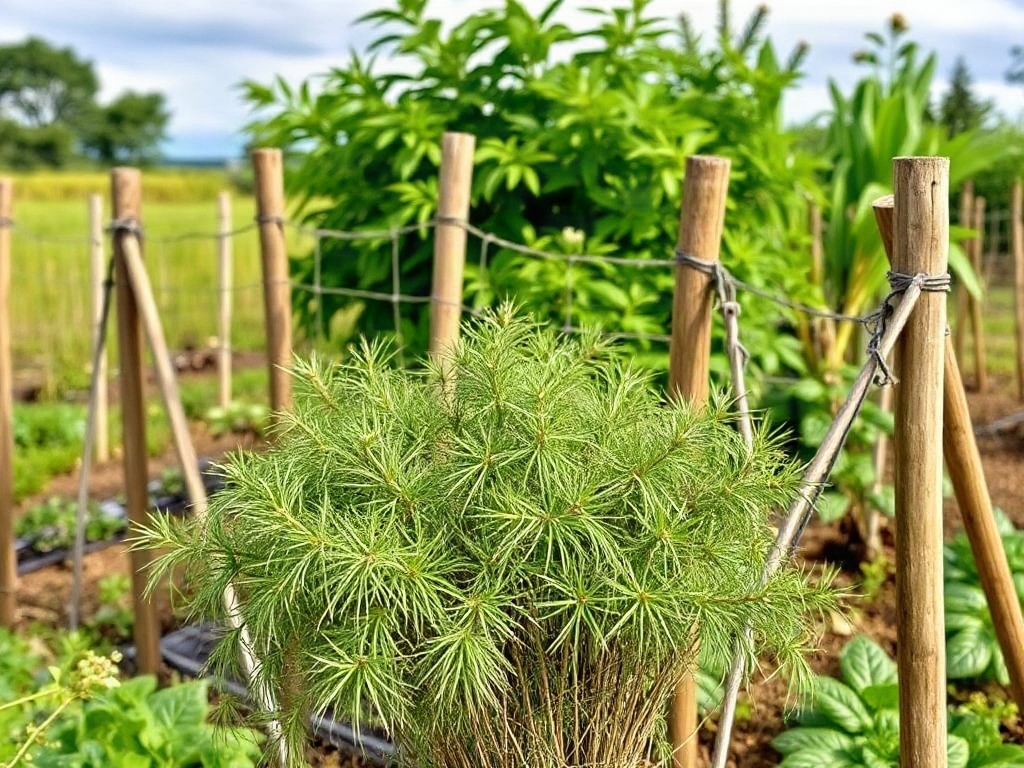
The fastest-growing living fence plants for homesteads are willow, hybrid poplar, bamboo, osage orange, privet, and regionally suitable thorny shrubs, but the best species depends on climate, soil moisture, livestock pressure, and the barrier’s purpose. Willow and poplar produce height quickly in moist ground, while osage orange develops a tougher stock barrier over time. Clumping bamboo offers dense screening in warm regions without the spreading risk of running bamboo. Plant closely enough for branches to interlock, protect young stems from browsing, and control weeds during establishment. A temporary wire fence is usually necessary until the plants become dense and structurally strong.
Which Living Fence Plants Grow Fastest?
Growth speed is useful only when it produces the density, height, and durability the site requires. A tree that sends up several feet of open, weak growth may create a quick visual screen but remain unable to turn livestock, slow wind near ground level, or block a determined deer. Compare plants by their response to local soil and moisture, their ability to branch after pruning, and the time required for stems to knit into a continuous barrier.
Willows are among the quickest choices for moist ground. Many species root readily from dormant cuttings and tolerate repeated cutting, weaving, or pollarding. Their flexible shoots can be trained into a woven fence, but they are poorly suited to dry, freely draining sites unless irrigation is dependable. Willow roots also seek moisture, so the planting line should be kept away from septic components, drains, and underground water infrastructure.
Hybrid poplars create height rapidly where soil is reasonably fertile and moisture is available. They are better treated as a tall wind or privacy layer than as a livestock-proof hedge. Their lower growth may become sparse, individual trees can have relatively short useful lives, and brittle limbs may become a maintenance concern. A mixed planting with shrubs beneath the poplars provides better low-level closure than a single row of trees.
Osage orange grows more slowly than willow or poplar on some sites, yet it has greater value where the objective is a dense, thorny farm boundary. Young stems respond to heading cuts by branching, and pliable shoots can be laid or interwoven. The tradeoff is labor: an unmanaged row can become an irregular line of small trees rather than a tight hedge. Its thorns and hard wood also make pruning more demanding.
Privet and several other vigorous hedge shrubs close gaps quickly and tolerate shearing, but suitability varies sharply by location. Some privets spread into natural areas and are regulated or discouraged in parts of the United States. Verify local invasive-species guidance before planting. A native shrub with slightly slower growth is often the better long-term choice when it avoids seed spread and recurring removal beyond the fence line.
Clumping bamboo can form a dense screen in suitable warm climates. It should not be confused with running bamboo, whose underground rhizomes may travel well beyond the intended row. Cold tolerance, mature clump width, and local restrictions need to be checked before purchase. For a broader comparison of Fastest-growing living fence plants for homesteads, begin with species proven in the same climate and soil type rather than relying on nursery growth claims alone.
Match the Species to the Fence’s Job
A living fence should be selected by function before growth rate. Privacy, wind reduction, property marking, wildlife habitat, and animal containment place different demands on the planting. Defining the job prevents a common failure: installing one fast species and expecting it to perform like a solid fence, shelterbelt, and browse-proof hedge at the same time.
For privacy, year-round foliage and low branching matter more than maximum annual height. Evergreen shrubs may take longer to establish than poplars, but they do not become transparent after leaf fall. In climates where suitable evergreens grow slowly, a two-layer design can work well: a quick deciduous nurse row provides early screening while a longer-lived evergreen or dense native shrub row develops behind it. Plan enough width for both rows at maturity.
For wind reduction, a moderately permeable barrier is preferable to a wall of foliage. Air moving through branches loses energy, while an excessively solid barrier can push turbulence over and around the planting. Multi-row plantings with shrubs at ground level and taller trees behind them reduce low gaps. Orient the line to intercept troublesome seasonal winds, but account for shade, drifting snow, and the distance between the planting and buildings, lanes, or garden beds.
For livestock containment, living plants should initially be considered fence material under construction. Cattle rub against stems, goats browse reachable leaves, pigs disturb roots, and horses may reach through openings. Thorny osage orange or hawthorn can mature into a formidable boundary, but neither protects itself during the first years. A conventional offset wire or temporary electric line keeps animals from damaging young plants and remains useful as backup when pruning opens a gap.
For wildlife value, a mixed native hedge usually outperforms a monoculture. Flowering shrubs, fruiting species, and plants with different mature heights offer cover and seasonal food, while genetic and species diversity reduce the chance that one pest or disease removes the entire barrier. Mixing species complicates shearing because growth rates differ, so it is better for an informal hedgerow than for a narrow, geometric hedge.
Site constraints can eliminate otherwise attractive candidates. Avoid thorny branches beside gates, children’s play areas, and frequently used paths. Keep large-rooted trees clear of foundations, utilities, drainage fields, and overhead lines. Before choosing from the Fastest-growing living fence plants for homesteads, inspect drainage after heavy rain, note winter exposure, and decide how much mature width can be surrendered to the fence.
Spacing and Planting for Rapid Closure
Fast closure comes from healthy roots and deliberate spacing, not simply from crowding as many plants as possible into a trench. Plants set too far apart leave persistent holes; plants packed too tightly compete early for water and light, then require thinning just as the hedge begins to function. Mature spread, pruning style, and whether the row will be woven or allowed to grow naturally should determine the interval.
A sheared shrub hedge is commonly planted more closely than an informal hedgerow. Willow cuttings intended for weaving can be set at relatively short intervals because the stems will be bent and crossed. Trees intended as an upper windbreak layer need substantially more room. Nursery labels provide a starting point, but local extension guidance is more useful because it reflects regional growth, pest pressure, and water availability. If a design uses two rows, stagger the plants so the second row covers openings in the first.
Prepare the entire strip rather than digging isolated holes in compacted turf. Grass competes strongly with young woody plants for shallow moisture, particularly during the first growing seasons. Remove perennial weeds, correct severe drainage problems, and loosen compacted soil without burying the root flare. A broad organic mulch layer suppresses new weeds and moderates soil moisture, but mulch piled against stems encourages decay and gives rodents protected access to bark.
Use this compact establishment sequence:
- Mark utilities and boundaries. Confirm the planting is entirely on the intended property and clear of buried services.
- Test the layout. Mark gates, corners, sightlines, equipment turns, and future mature width before opening the planting strip.
- Plant during a favorable dormant period. Bare-root stock and dormant cuttings generally establish with less stress when soil is workable and extreme heat is absent.
- Water the root zone deeply. Frequent surface sprinkling promotes shallow rooting; adjust irrigation to soil texture and rainfall instead of following a fixed calendar.
- Protect every plant. Use guards or an offset fence where deer, rabbits, rodents, or livestock can reach the row.
A homestead on moist bottomland might establish a woven willow boundary quickly from dormant cuttings. The same method on an exposed, drought-prone ridge may produce weak shoots, repeated dieback, and high irrigation demand. On that ridge, a slower drought-adapted native hedge can reach functional density sooner because more plants survive. Apparent speed in the first season is less valuable than consistent closure across the entire line.
Check progress at the end of each growing season. Healthy plants should show new extension growth, intact bark, and increasingly shaded soil beneath the row. Persistent wilt despite moist soil, dead tips, loose root balls, gnawed bark, or widening gaps indicate failure. Replace losses promptly while neighboring plants are still small; waiting several years leaves replacements trapped in shade and root competition.
Establishment, Training, and Long-Term Control
Training determines whether vigorous plants become a fence or merely a row of trees and shrubs. Early pruning encourages low branches, while delayed pruning often leaves bare trunks beneath a high canopy. The correct cut depends on species: willow and osage orange tolerate substantial formative work, whereas many conifers will not refill old bare wood after severe cutting. Confirm a plant’s pruning response before shortening the leader or sides.
For a dense hedge, begin shaping after the plants have established active growth rather than shearing newly planted stock repeatedly. Keep the base slightly wider than the top so sunlight reaches lower foliage. Remove competing leaders where structural weakness is likely, direct flexible stems into openings, and sanitize tools when disease symptoms are present. Woven willow or laid thorn hedges require more skill and labor than ordinary clipping, but the interlocked stems create continuity that separate upright plants cannot provide.
Water demand usually peaks during establishment, though “fast-growing” often means continued moisture demand after maturity. Irrigate based on soil conditions several inches below the surface. Sandy soil may need smaller, more frequent applications, while clay holds water longer and can suffocate roots if kept saturated. New growth that wilts during heat, scorched margins, and premature leaf drop can signal moisture stress; yellowing in persistently wet soil may point toward poor aeration rather than drought.
Inspect the fence at least seasonally for suckers, seedlings, rhizome spread, storm damage, and gaps. Running bamboo requires containment and monitoring far beyond normal hedge care, which is why clumping types are generally the more manageable screen. Privet seedlings appearing in adjacent woodland are evidence that the chosen plant is escaping its assigned role. Remove unwanted spread before it becomes a separate control project.
Expect a living barrier to change. A poplar screen may provide quick height but need replacement planting beneath it as trunks open up. A thorn hedge may become highly durable yet demand protective clothing and heavy tools. A mixed native hedgerow can support wildlife and resist single-species losses, but it will occupy more width and look less uniform. Those tradeoffs should be included in the original plan, along with access for a mower, pruning equipment, and repairs.
The most reliable approach is often hybrid: install wire for immediate security and establish plants just outside the pressure zone. The wire prevents browsing and escape while the hedge develops; later, it can remain as discreet reinforcement rather than asking vegetation to carry the full containment load. Reassess the line each year and fill weak points before removing temporary protection. That staged method costs more initially than plants alone, but it avoids losing an entire planting to one season of animal damage.
Frequently Asked Questions
What is the fastest living fence for wet ground?
Willow is often the strongest candidate because dormant cuttings can root readily and produce flexible shoots quickly. It still needs weed control, protection from browsing, and adequate spacing from drains, septic components, and water lines.
Can a living fence contain livestock without wire?
A mature, well-laid thorn hedge may deter livestock, but young plants are vulnerable to browsing, rubbing, and trampling. Use conventional or electric fencing during establishment and retain backup wire where an escape would create serious risk.
How close should living fence plants be spaced?
Spacing depends on mature width, species, and training method. Woven cuttings and clipped shrubs can be closer than trees in a windbreak. Follow regional planting guidance and stagger two rows when rapid gap coverage is the priority.
Is bamboo a good living fence for a homestead?
Clumping bamboo can make a dense screen where it is winter-hardy, but mature width and local rules must be checked. Running bamboo can spread through rhizomes and create a costly containment problem beyond the fence line.
When should a new living fence be pruned?
Begin formative pruning after the plants establish healthy growth, using a method appropriate to the species. Encourage low branching early, but do not cut conifers or other plants into old wood that cannot reliably produce replacement foliage.
Conclusion
A useful living fence is measured by dependable closure, not by the tallest first-year shoot. Identify whether the boundary must screen views, reduce wind, support wildlife, or reinforce livestock control, then choose plants that tolerate the site’s drainage, cold, heat, and available irrigation. Prepare a weed-free strip, leave enough mature width, protect young stems, and replace losses before gaps become permanent. Willow suits moist sites and active training; poplar supplies quick height; osage orange offers a tougher hedge with more pruning labor; clumping bamboo works only where climate and containment are appropriate. Keep wire in place where fence failure has serious consequences. Before ordering plants, map utilities, inspect soil moisture, verify local invasive-species guidance, and price several years of watering and maintenance—not merely the initial stock.