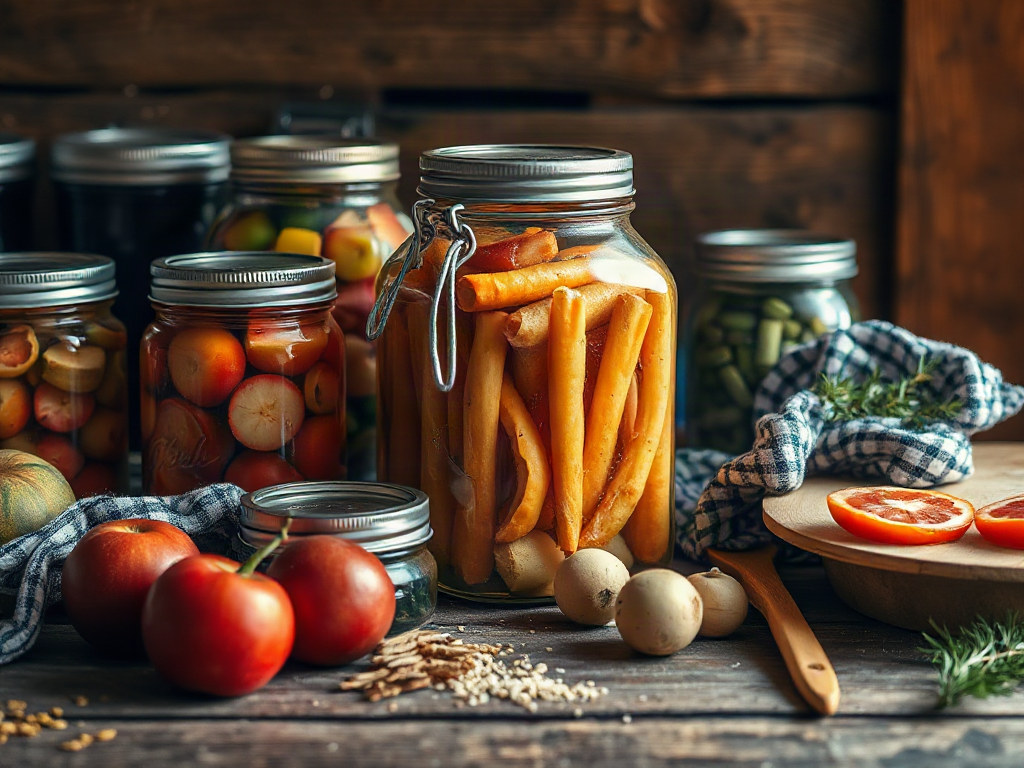
Homesteading family canning for small harvest quantities works best when each picking is matched to a tested recipe, the correct jar size, and either boiling-water or pressure processing based on acidity. Refrigerate produce until enough is available for a practical batch, but do not reduce processing time or alter ingredient ratios simply because fewer jars are being filled. High-acid fruit, pickles, and properly acidified tomatoes may suit boiling-water canning, while plain vegetables require pressure canning. Use sound jars, fresh lids, accurate headspace, and the full recipe-specific process even when the harvest yields only one or two jars.
How Should a Family Plan a Safe Small Canning Batch?
A small batch should be planned around a tested recipe rather than around whatever combination of produce happens to be on the counter. The recipe determines the preparation method, acidity, jar size, headspace, processing method, and processing time. The number of jars may be reduced, but the safety-critical instructions should remain unchanged.
Begin by estimating the usable quantity after trimming, peeling, pitting, or coring. A bowl of green beans may look substantial but yield only a couple of packed jars after damaged ends are removed. Choosing half-pint or pint jars can make a modest harvest more useful, provided the tested recipe includes directions for that jar size. Moving to a larger jar than the recipe specifies is not a safe shortcut because heat takes longer to reach the center.
Family use should shape jar selection as well. Half-pints may suit relish, jam, chutney, or tomato sauce used in small amounts. Pints often make sense for vegetables or fruit eaten at one meal. A larger jar can create waste after opening, even if it is permitted by the recipe. Conversely, processing many tiny jars can require more lids and preparation time, so the smallest jar is not automatically the most efficient choice.
A practical planning sequence is:
- Identify one food and one tested product. Decide whether the harvest will become plain produce, preserves, pickles, sauce, or another documented preparation.
- Confirm the required canning method. Acidity, not personal preference, determines whether boiling-water processing or pressure canning is appropriate.
- Check permitted jar sizes. Use only sizes covered by the recipe and never shorten the stated processing time for a smaller batch.
- Prepare one extra jar. Yield estimates vary with produce size, ripeness, and packing density.
- Allow uninterrupted time. Washing, preparing, processing, cooling, labeling, and cleanup often take longer than filling the jars.
The common mistake is treating a small harvest as low risk. A single jar still needs the same control of acidity, temperature, venting, pressure, headspace, and processing time as a full batch. If the available produce does not fit a tested recipe or the appropriate equipment is unavailable, freezing, drying, refrigeration, or immediate cooking is the better decision.
Which Canning Method Matches Each Harvest?
The food’s acidity and preparation determine the processing method. Boiling-water canning is used for appropriately high-acid foods, while low-acid foods require a pressure canner capable of reaching temperatures above boiling water. Jar count does not change that distinction: one jar of plain green beans remains a low-acid product.
Fruit preserves, many whole fruits, properly formulated pickles, and recipes containing specified acid may be candidates for boiling-water canning. Tomatoes require particular care because tested recipes may call for bottled lemon juice or citric acid in each jar. The acid type and amount should not be improvised, and vinegar in pickled products should have the acidity specified by the recipe. Fresh lemon juice and homemade vinegar can vary too much for substitutions when a tested formula names a standardized ingredient.
Plain green beans, carrots, corn, peas, meats, poultry, and most mixtures containing low-acid ingredients require pressure canning under tested directions. A pressure cooker or small pressure saucepan is not automatically equivalent to a pressure canner. Safe directions are developed for canning equipment with defined capacity and heating behavior, so families should verify that their vessel qualifies before using it for shelf-stable food.
| Small Harvest | Likely Preservation Choice | Decision Point |
|---|---|---|
| Berries or tree fruit | Boiling-water canning, freezing, or drying | Use a tested preserve or fruit-packing recipe and its listed jar size. |
| Cucumbers | Tested pickles or refrigerator pickles | Do not reduce specified vinegar or change vegetable-to-brine ratios. |
| Tomatoes | Tested boiling-water or pressure-canning recipe | Add the specified acid even when pressure processing directions are used. |
| Green beans or carrots | Pressure canning or freezing | Boiling-water processing does not make plain low-acid vegetables shelf stable. |
| Mixed vegetables | Tested pressure-canning recipe or freezer storage | Do not invent processing directions by combining separate recipes. |
Recipe age and source matter. Family notebooks can preserve valuable flavor traditions, but an old method may predate current testing or omit measurements needed for safe processing. A sensible compromise is to preserve the family recipe as a refrigerated, frozen, or freshly cooked food while using a current tested formula for shelf storage. Reliable starting points include the USDA Complete Guide to Home Canning, the National Center for Home Food Preservation, and university extension publications.
Can Produce Be Collected Until There Is Enough to Can?
Produce can sometimes be refrigerated briefly until the household has enough for a batch, but quality and perishability set the limit. Harvested vegetables continue to lose moisture and texture, while bruised, overripe, or damaged produce deteriorates faster. Canning does not restore poor-quality ingredients, and spoiled produce should never be used merely to avoid waste.
Sort each picking before storage. Keep sound produce intended for canning separate from items that need immediate use. Refrigerate crops that tolerate chilling in clean, breathable or loosely closed containers, and avoid washing berries or similarly delicate fruit until preparation unless visible soil must be removed. Tomatoes may lose eating quality under prolonged refrigeration, so a family with only one or two ripe tomatoes at a time may be better served by freezing prepared tomatoes under suitable freezer guidance and making sauce later.
Temporary freezing can be useful, but it is not neutral. Frozen berries commonly work well in jam or sauce because a soft texture is acceptable. Frozen tomatoes can suit cooked products after thawing and draining under an appropriate recipe. Cucumbers and many crisp vegetables lose structure after freezing, making them poor candidates for later pickling. The intended finished product should determine whether accumulation by freezing is worthwhile.
Consider a household harvesting a few green beans every other day. Holding them too long for a full pressure-canner run may produce limp pods and uneven quality. Better options include serving the earliest beans fresh, blanching and freezing successive pickings, or combining only sound beans in a timely pressure-canning session. The weak approach is leaving them at room temperature until the volume looks sufficient.
Preparation should remain consistent across the batch. Cut pieces to the dimensions described by the recipe, pack jars as directed, and maintain the stated headspace. Overpacking a jar to avoid leftovers can interfere with heat circulation and lead to liquid loss or sealing problems. If the last jar is short, process it only if it can be packed according to the recipe; otherwise, refrigerate the remainder for a meal.
Signs that the accumulation plan is working include firm produce, clean aroma, limited trimming loss, and enough time to process the food promptly. Sliminess, fermentation odors, leaking juices, mold, or extensive soft spots signal that the food should not enter a canning batch. When uncertain about deteriorated ingredients, discard them rather than relying on processing to correct the problem.
How Do You Process and Store Only a Few Jars?
A partial canner load follows the same tested process as a larger load, but the equipment must still be operated correctly. Use a rack to keep jars off the vessel bottom, prevent jars from tipping, and follow the canner manufacturer’s operating instructions alongside the tested recipe. Empty spaces should not be filled with improvised objects that could obstruct circulation or damage jars.
For boiling-water processing, jars must remain covered by the amount of water specified in reliable directions throughout the process. Begin timing only at the point stated by the recipe, maintain the required boil, and adjust the processing schedule for altitude. If boiling stops, follow current authoritative guidance rather than estimating how much extra time seems sufficient.
Pressure canning requires closer equipment control. The canner must be vented for the prescribed period before pressurization, held continuously at the required pressure, and allowed to depressurize naturally. Forcing cooling by opening the vent, lifting the weight, or applying cold water can cause liquid loss, jar breakage, or incomplete processing. If pressure falls below the required level, current canning guidance generally calls for restarting the full processing time once the correct pressure is restored.
Altitude affects both methods. Water boils at a lower temperature as elevation increases, so boiling-water processes require additional time at higher elevations. Pressure-canning adjustments use the pressure specified for the elevation and gauge type. A family that moves, cans at a mountain property, or does not know the elevation should confirm it before processing rather than reusing a familiar setting.
After processing, place jars upright where they will remain undisturbed and away from cold drafts. Do not tighten bands or press lids while jars cool. Once the cooling interval specified by authoritative guidance has passed, check each seal, remove screw bands, wash residue from the jars, label them with the product and date, and store them in a cool, dark, dry location.
A sealed lid does not prove that an unsafe recipe became safe. Sealing only indicates that a vacuum formed; it does not verify adequate heat treatment or acidity. Jars that fail to seal can often be refrigerated promptly, frozen in suitable containers, or reprocessed within the period allowed by tested guidance using a new lid and the full process. Bulging lids, leakage, spurting liquid, mold, or an unnatural odor are discard signals. Do not taste suspicious home-canned food to judge its safety.
Conclusion
Small harvest preservation succeeds when the family treats recipe selection as the first decision rather than the final detail. Estimate usable produce, choose a tested product, confirm the permitted jar size, and match the food’s acidity to the correct processing method. Keep each picking in good condition, but do not hold vegetables or fruit so long that quality declines simply to fill more jars.
Before the next harvest, check jars for damage, obtain fresh lids, verify canner condition, determine local elevation, and bookmark a current tested recipe. If only a modest amount ripens, compare canning with freezing, drying, refrigeration, or immediate meals. A pantry containing fewer properly processed jars is more useful than a larger collection made through altered ratios, shortened times, unsuitable equipment, or improvised recipes.
Frequently Asked Questions
Can I process only one jar in a canner?
A tested recipe can produce a small yield, but the canner must still meet the recipe and equipment requirements. Confirm minimum operating requirements in current authoritative guidance and the manufacturer’s instructions.
Can I cut a canning recipe in half?
You may reduce the number of jars when ingredient proportions remain exact, but some preserves have batch-size limits that affect set and heat penetration. Do not change acid, salt, sugar, or vegetable ratios without tested directions.
Do half-pint jars need half the processing time?
No. Use the processing time specifically listed for that jar size. Never calculate a shorter time by dividing the time given for pints or quarts.
Is open-kettle canning suitable for a tiny harvest?
No. Filling jars with hot food and allowing them to seal without a tested heat process is not a recommended substitute for boiling-water or pressure canning.
When is freezing better than canning?
Freezing is often more practical when the harvest is too small for efficient canner use, no tested recipe matches the food, or the correct pressure-canning equipment is unavailable.
Further Reading
Authoritative Sources
- National Center for Home Food Preservation: How Do I Can?
nchfp.uga.eduProvides tested instructions for boiling-water canning, pressure canning, jar handling, and specific foods
- USDA Complete Guide to Home Canning
nchfp.uga.eduOffers comprehensive federal home-canning guidance, including processing methods, altitude adjustments, and tested recipes
- Penn State Extension: Basics of Home Canning
extension.psu.eduExplains foundational equipment, processing, cooling, sealing, and storage practices for home canners
- University of Minnesota Extension: Home Canning Basics
extension.umn.eduHelps families review safe methods and practical preparation before processing garden produce