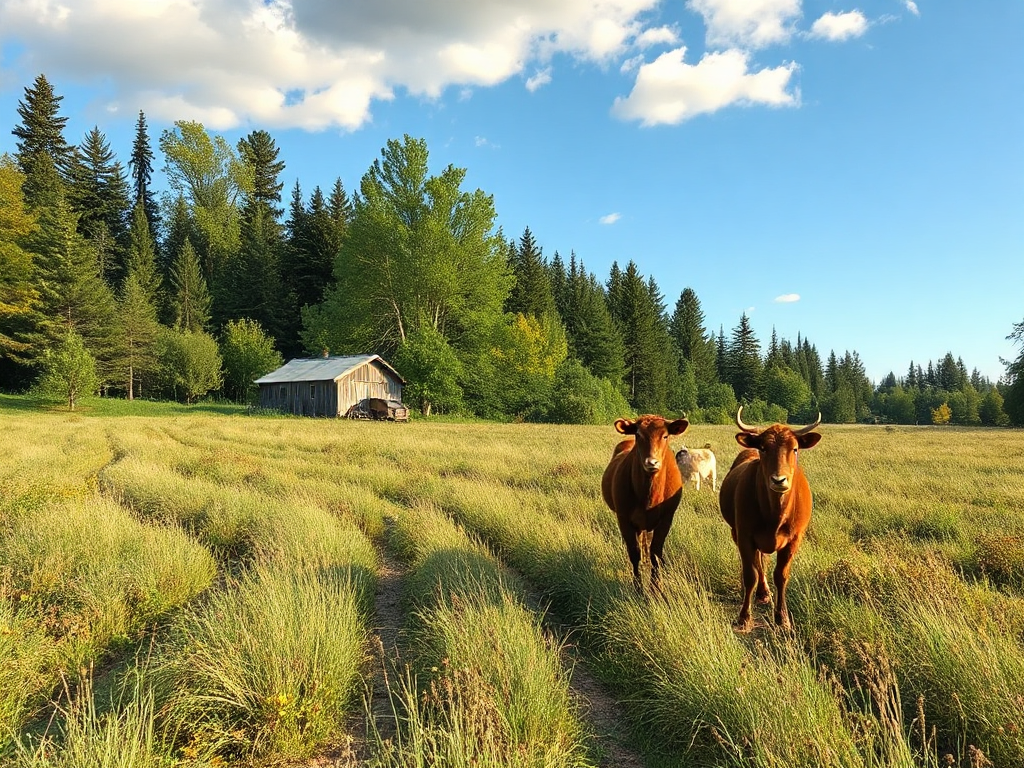
Off-grid self-sustainability commonly requires about 2–10 acres per person, but the workable amount depends on climate, soil, water access, food goals, livestock, and how much outside supply you accept. A small, intensively managed homestead may produce vegetables, fruit, eggs, and some staples on 1–2 acres, while a household raising animals, growing grain, storing firewood, and producing most calories may need considerably more. Reliable water and productive soil often matter more than raw acreage. Before buying land, map annual food demand, test the soil, verify year-round water, assess growing seasons, and reserve space for buildings, access, compost, storage, and ecological recovery. Treat land size as a production plan rather than a universal number.
What Land Size Really Means for Self-Sustainability
Land requirements for off-grid living are determined by the outputs you expect, not by acreage alone. A person seeking a low-cost rural home with solar power and a vegetable garden has a very different land requirement from a household intending to produce nearly all food, maintain livestock, harvest fuelwood, and replace purchased materials.
For many households, 2–10 acres per person is a useful early planning range rather than a promise. The lower end may work where soil is fertile, water is dependable, food production is intensive, and the household still buys grain, cooking oil, animal feed, tools, or replacement parts. The upper end becomes more realistic when land is dry, sloped, forested, heavily wooded, or expected to support grazing and firewood.
Consider two hypothetical properties. A compact five-acre parcel with deep soil, a year-round spring, a long growing season, and nearby markets could support more practical independence than a 20-acre tract with shallow soil and no dependable water. The larger property may offer privacy and timber, but it could require costly wells, irrigation, fencing, soil amendments, and longer travel for supplies.
The phrase How much land is needed for off-grid self-sustainability therefore needs a defined standard. “Self-sufficient” might mean producing fresh vegetables and eggs, covering most calories, or maintaining a closed-loop homestead with minimal outside inputs. Write down which version you mean before comparing properties.
How Food, Water, Soil, and Livestock Change the Acreage
Food production usually drives the land calculation, but water and soil determine whether the acreage is usable. A garden may occupy a small portion of a property while demanding the most reliable water, sunlight, fencing, fertility, and daily labor. Root crops, beans, squash, potatoes, and perennial fruit can contribute meaningful food, yet calories from grain, oil, and animal products require different space and equipment.
Livestock can expand the land requirement quickly. Chickens may fit near the house, but goats, sheep, or cattle need pasture, shelter, fencing, winter feed, and a plan for periods when grass stops growing. A grazing animal is not supported by the visible pasture alone; hay storage and purchased feed may be necessary. Raising animals can provide eggs, milk, meat, manure, and weed control, but it also creates labor, veterinary, processing, and water demands.
Climate changes the calculation in both directions. A long growing season can support multiple plantings, while a short season may require greenhouses, storage crops, and substantial winter reserves. Dry climates may offer abundant sun for solar power but impose strict limits on irrigation. Cold regions may provide forest resources while shortening the period available for food production.
Water deserves a separate test before acreage is treated as an asset. Check whether a well, spring, pond, roof-catchment system, or legal water connection can meet household, garden, and livestock needs through the driest part of the year. A property that requires hauling water is not equivalent to one with a dependable source, even if both have the same area. Soil tests, drainage observations, flood history, slope, and solar exposure should be evaluated alongside the parcel size.
A common mistake is counting every acre as productive. Buildings, driveways, steep ground, wetlands, shade, setbacks, rocky areas, wildlife habitat, and conservation zones may reduce the working area. A realistic plan separates total acreage from usable production acreage and includes space for composting, tool storage, food preservation, access lanes, and future repairs.
A Practical Land-Buying Calculation
A reliable estimate starts with an inventory of needs rather than a search for a magic number. List the people in the household, the foods you intend to produce, the animals you may keep, the fuel sources available, and the supplies you are willing to buy. A household that purchases flour, rice, cooking oil, coffee, animal feed, and replacement batteries can operate successfully on less land than one attempting to produce every staple.
Divide the property into functional zones on paper. One zone may hold the house, workshop, solar equipment, water systems, and access. Another may contain annual gardens and perennial crops. Additional areas may be reserved for poultry, grazing, orchard expansion, woodland, ponds, compost, and wildlife habitat. This exercise exposes hidden space requirements before a purchase becomes expensive.
A useful planning sequence is:
- Define the food target: fresh produce only, a substantial share of calories, or nearly complete household food production.
- Measure usable ground: identify soil quality, sunlight, slope, drainage, and areas that can actually be fenced or cultivated.
- Verify water: assess source reliability during drought, storage capacity, pumping needs, and water quality.
- Estimate labor: match garden size, animals, preservation, and maintenance to the hours available each week.
- Add resilience space: include crop rotation, failed harvests, firewood, repair areas, and ecological recovery.
For example, a couple may choose a three-acre property because they want a productive garden, orchard, chickens, solar power, and a modest woodlot while continuing to buy staple grains. A family planning dairy goats, extensive preservation, larger orchards, and pasture may need more acreage or may need to reduce its livestock goals. The second plan is not automatically more sustainable; it simply has a larger feed and labor burden.
Test the plan with a bad-year scenario. Ask what happens if the garden yields poorly, the well output drops, hay becomes expensive, or a household member cannot work for several weeks. Land that only works under ideal conditions may be too small for the independence you want. Conversely, buying far more land than you can inspect, improve, fence, and maintain can dilute resources and create its own failure point.
Common Acreage Mistakes and Better Priorities
The most common acreage mistake is assuming that more land automatically creates more self-sufficiency. Untested soil, uncertain water, and poor access can make a large parcel less useful than a smaller, well-situated property. Distance also matters: remote land may reduce purchase cost while increasing fuel use, repair delays, emergency access problems, and dependence on long supply trips.
Another weak assumption is that a large garden immediately replaces purchased food. Productive food systems require fertility management, seed planning, irrigation, pest control, harvesting, storage, and preservation. A garden can produce abundant summer vegetables without supplying enough winter calories. Potatoes, dry beans, squash, fruit, and other storage crops may require different soil, timing, and storage conditions than salad crops.
Livestock is another frequent source of underestimation. Animals convert land and feed into useful products, but they do not create food from nothing. A pasture that appears adequate in spring may fail during drought or winter. Before adding animals, identify fencing routes, shelter, water points, manure handling, predator pressure, and a dependable feed plan. Keeping fewer animals well is generally more practical than stretching a small acreage beyond its carrying capacity.
Prioritize the features that are difficult or expensive to correct:
- Reliable water during the driest season
- Enough sunlight and workable soil for the intended crops
- Reasonable access for vehicles, materials, and emergency services
- Terrain that permits gardens, buildings, storage, and fencing
- Local rules affecting wells, wastewater, structures, livestock, and land use
Solar panels, sheds, tanks, and garden beds can often be added gradually. A failed water source, persistent flooding, or unusable slope is much harder to fix. Buyers who focus on a dramatic acreage number may overlook these constraints and spend their budget on land that cannot support the planned system.
Planning a Sustainable Off-Grid Homestead
A sustainable homestead is sized around capacity: soil productivity, water yield, household labor, storage, and the ability to recover from setbacks. Begin with a modest production area that can be managed thoroughly, then expand after observing real harvests and workload. This approach provides evidence about what the land can produce instead of relying on optimistic diagrams or generalized acreage claims.
Keep records for at least one full growing cycle. Note planting dates, harvest quantities, irrigation use, pest damage, animal feed, labor hours, and food preserved. These records reveal whether the limiting factor is land, water, fertility, time, storage, or knowledge. If the garden is underused because daily maintenance is too demanding, buying more acreage will not solve the problem.
Design for renewability rather than maximum extraction. Rotate annual crops, protect soil with organic matter and living roots, maintain trees, manage grazing pressure, and leave habitat for pollinators and beneficial predators. Firewood systems also need a long horizon; cutting faster than trees regenerate can create a future fuel shortage even when the current woodpile is full.
Use outside inputs strategically. Buying staple foods, mineral amendments, feed, tools, or replacement components does not invalidate an off-grid plan. It may be more resilient to produce high-value perishables at home while purchasing difficult-to-grow staples. The best choice depends on local prices, climate, labor, storage, and the consequences of a supply interruption.
Readers comparing options through How much land is needed for off-grid self-sustainability should create two plans: a minimum viable homestead and a more independent version. Price both plans, identify the infrastructure each requires, and check whether the property can accommodate expansion without damaging water quality or soil health. That comparison turns an abstract acreage goal into a purchase decision.
Frequently Asked Questions
Is one acre enough for off-grid living?
One acre may support a home, solar system, intensive garden, fruit trees, and small poultry operation, especially if staple foods are purchased. It is usually limiting for grazing, firewood, and broad calorie independence.
How many acres are needed to grow most of a household’s food?
A rough planning range is 2–10 acres per person, but climate, soil, water, crop choices, livestock, and preservation methods can move the requirement substantially.
Does livestock require more land than a garden?
Often, yes. Grazing animals need pasture, winter feed, fencing, shelter, and water. Chickens and rabbits generally require less land, although feed may still be purchased.
Is water more important than acreage?
For many properties, dependable water is the stronger constraint. A smaller parcel with reliable water and usable soil may outperform a larger tract that cannot support irrigation or livestock during dry periods.
What should be checked before buying off-grid land?
Verify water availability, soil condition, sunlight, access, drainage, slope, wastewater options, local land-use rules, infrastructure costs, and the amount of ground suitable for the intended production.
Further Reading
Authoritative Sources
- Academy of Nutrition and Dietetics
eatright.orgProfessional nutrition guidance, healthy eating resources, and practical dietitian-reviewed advice.
- U.S. Department of Agriculture
usda.govOfficial food, nutrition, agriculture, and consumer guidance from the USDA.
- NIH Office of Dietary Supplements
ods.od.nih.govResearch-based fact sheets on nutrients, supplements, dietary intake, and safety considerations.
- International Society of Sports Nutrition
sportsnutritionsociety.orgEvidence-informed sports nutrition resources and position stands for active people and athletes.
Conclusion
Choose acreage by matching production goals to the land’s actual capacity. A small property can work for a household that grows vegetables, fruit, and eggs while purchasing staples, whereas a more complete food-and-fuel system may need substantially more usable ground. Water reliability, soil quality, sunlight, access, and labor deserve priority over an impressive parcel number. Before committing, map the property into production and support zones, test the soil, investigate dry-season water, and model a poor harvest year. Start with the smallest plan that meets your real objectives, preserve room for rotation and recovery, and expand only after records show that the household can manage the workload sustainably.