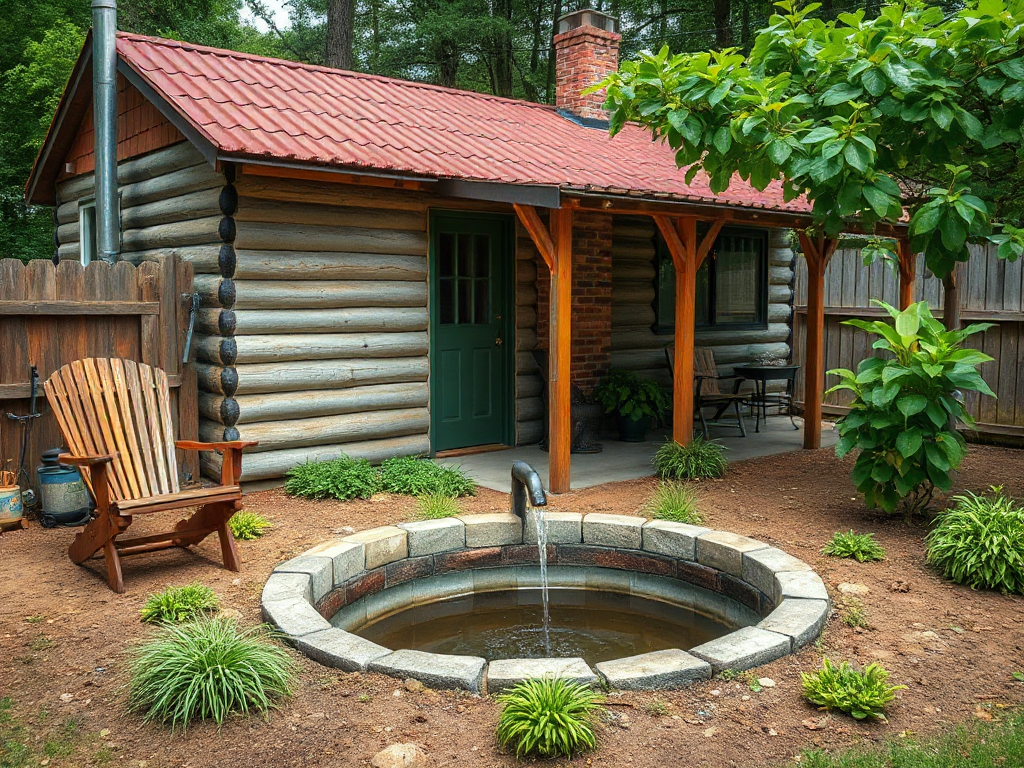
The best water sources for an off-grid self-sustainable home are a protected well, properly collected rainwater, a dependable spring, and surface water used only after rigorous treatment; the right mix depends on aquifer depth, rainfall, seasonal flow, storage capacity, and local rules. A drilled or dug well can provide the most consistent supply, while rainwater is often the simplest way to reduce pressure on groundwater. Springs may offer gravity-fed water but can become contaminated after storms, and ponds or streams require substantial filtration and disinfection. Test every source before drinking, size storage for dry periods, and keep livestock, septic systems, fuel, and compost well away from collection areas.
Evaluate Water Demand and Site Conditions
The strongest off-grid water plan begins with a site assessment rather than a favorite technology. Household drinking, cooking, bathing, laundry, cleaning, irrigation, livestock, and fire protection all place different demands on a supply. A source that comfortably covers drinking water may be inadequate for a large garden, while a high-yield well may be expensive to drill and pump.
Map the property before selecting equipment. Note slopes, drainage paths, roof areas, seasonal creeks, likely septic locations, animal enclosures, and areas where fuel or chemicals may be stored. Water moving across the land can carry bacteria, sediment, fertilizer, hydrocarbons, or animal waste into a spring box, cistern, pond, or shallow well. Distance from a contamination source matters, but elevation and drainage direction matter too.
Seasonality is often more important than a source’s best-day output. A spring that runs strongly in April may slow to a trickle in late summer. A shallow well may be affected by drought, and a roof system may collect little during a long dry spell even when its annual rainfall total looks favorable. Keep a written record of rainfall, spring flow, well recovery, tank levels, and household use across at least one dry season when possible.
A practical first-pass priority list is:
- Estimate daily indoor and agricultural demand separately.
- Identify the lowest-yield season, not the annual average.
- Test existing sources before investing in treatment hardware.
- Plan backup storage for pump failures, contamination events, and drought.
A common mistake is designing around normal use while ignoring peak demand. Guests, livestock births, garden establishment, washing harvests, or a wildfire response can quickly exceed a small system’s capacity. Treat conservation fixtures and graywater reuse as demand-management tools, not substitutes for a safe primary source. Readers comparing overall options can also review Best water sources for an off-grid self-sustainable home alongside a site-specific water budget.
Wells and Springs for Reliable Supply
Wells are often the most dependable year-round source when the property has usable groundwater, but reliability depends on construction, depth, recharge, and nearby land use. A drilled well usually reaches deeper formations and may be less exposed to short-term surface contamination than a shallow well. It also brings costs for drilling, casing, pump equipment, pressure control, electrical power, and water testing.
A shallow dug well can be practical where groundwater is close to the surface, especially for nonpotable uses, but it is more vulnerable to rainfall-driven contamination and seasonal fluctuations. A well’s static water level does not prove that it can sustain household demand. The important measurement is recovery and yield during pumping, preferably under conditions that resemble the dry season. A professional well contractor can perform the relevant testing and explain the limits of the installation.
Springs can be attractive because water may flow by gravity, reducing pumping energy. The source should be captured with a properly designed spring box, protected from surface runoff, and fitted with access for inspection and cleaning. Clear water is not automatically safe water: bacteria and parasites may be invisible, and a spring can change after heavy rain, land disturbance, or nearby animal activity.
Consider a hillside homestead with a reliable spring above the house. Gravity may move water to a storage tank, but the spring’s flow could fall below household demand in August. A well or rainwater reserve may then be more useful as a supplement than replacing the spring entirely. Conversely, a remote cabin with no proven spring may be better served by a well and roof collection than by constructing an elaborate spring system based on a wet-season observation.
Test source water before choosing treatment. Laboratory results should guide decisions about sediment filtration, ultraviolet disinfection, chlorination, iron or manganese removal, hardness, and other concerns. Do not assume a filter marketed for taste or sediment makes biologically unsafe water potable. Keep the wellhead or spring collection area protected, inspect seals and drainage, and retest after flooding, repairs, unusual taste, illness, or a change in water appearance.
Rainwater Harvesting and Cistern Storage
Rainwater is one of the most accessible sources for an off-grid home because the collection surface already exists: a roof. Gutters direct water to a tank, where screening, first-flush diversion, and treatment can produce a useful supply. Rainwater is usually low in dissolved minerals, which can be helpful for washing and some plumbing systems, but it may pick up bird droppings, roofing residues, dust, and microorganisms before reaching the tank.
Collection potential depends on roof area, rainfall timing, roof material, gutter condition, and storage volume. Annual rainfall alone can mislead. Two locations may receive similar yearly totals while one has frequent storms and the other has a long summer drought. Storage must bridge the longest expected dry interval, not merely capture the average monthly amount. A simple planning calculation uses roof catchment area multiplied by rainfall depth and a collection-efficiency allowance; actual usable volume is reduced by runoff losses, first-flush diversion, overflow, and tank access limits.
Tank placement creates important tradeoffs. A tank near the house reduces pipe runs, while an elevated tank may provide gravity pressure but requires a strong support structure. Buried tanks protect water from heat and light but cost more to install and inspect. Opaque, covered tanks discourage algae growth and keep insects and debris out. Every tank needs safe access, an overflow route that does not erode foundations, and a way to drain or clean accumulated sediment.
A family using rainwater as its only supply may need several layers of resilience: efficient fixtures, a reserve tank, a separate garden strategy, and a backup source for prolonged drought. Diverting the first runoff after a dry period can reduce roof dust entering storage, but it is not a complete treatment method. Drinking water generally needs filtration and disinfection selected for the tested water and maintained according to the equipment requirements.
Common failures include undersized gutters, uncovered tanks, dead insects in screens, inaccessible sediment, and assuming a full tank at the end of winter guarantees summer security. Check tank levels on a schedule, clean roof catchments, inspect inlet screens, and track consumption. A rainwater system works best when it is paired with conservation and another source rather than treated as an unlimited supply. The internal resource Best water sources for an off-grid self-sustainable home can help organize these choices around the property’s actual rainfall pattern.
Surface Water, Treatment, and System Design
Streams, ponds, lakes, and harvested runoff are usually backup or nonpotable sources unless the property has a robust treatment train and dependable monitoring. Surface water changes quickly. A storm can wash sediment, manure, pathogens, and chemicals into a formerly clear stream, while stagnant ponds may contain algae, organic matter, and high sediment loads. Boiling can address many biological hazards, but it does not remove fuel, pesticides, metals, salts, or other chemical contaminants.
A surface-water system normally needs more than one treatment stage. Intake protection limits leaves and large particles; settling or coarse filtration reduces sediment; finer filtration addresses smaller particles; and disinfection targets microorganisms. Ultraviolet units require relatively clear water and reliable electrical power. Chlorination requires correct dosing, contact time, and management of taste and residuals. Reverse osmosis can address some dissolved contaminants but produces wastewater and depends on pressure, membrane maintenance, and pretreatment.
For example, a property beside a seasonal creek might use a screened intake to fill a nonpotable tank for irrigation, while drinking water comes from a tested well or treated rainwater. That arrangement reduces treatment demand and limits exposure to sudden creek contamination. Using the creek for every household purpose may appear inexpensive until sediment clogs filters, pumps wear prematurely, and a storm forces the entire water system offline.
Energy availability should shape the design. Pumping from a low creek, pressurizing a house, running ultraviolet equipment, and treating high-sediment water can consume more solar-battery capacity than expected. Gravity-fed storage is attractive where elevation allows it, but pressure, freezing, and tank sanitation still require attention. Keep potable and nonpotable plumbing physically separated and clearly labeled; cross-connections can contaminate an otherwise safe drinking supply.
Use a written maintenance schedule for filters, lamps, dosing equipment, pumps, tank inspections, and laboratory testing. Warning signs include falling pressure, unusual taste, cloudy water, rapidly fouled filters, reduced spring flow, or a tank level that fails to recover after rain. Do not simply install a larger filter when the real problem is a dirty source, excessive demand, or inadequate pretreatment. For broader planning context, see Best water sources for an off-grid self-sustainable home before committing to a single-source design.
Frequently Asked Questions
Is a well the best water source for an off-grid home?
A well can be the most consistent option where groundwater yield and quality are proven. Drilling cost, pumping energy, contamination risk, and dry-season recovery should be assessed before relying on it.
Can collected rainwater be used for drinking?
It can be treated for potable use, but roof runoff needs screened collection, protected storage, appropriate filtration, disinfection, and periodic testing. Untreated rainwater should not be assumed safe.
Are springs safer than streams?
A protected spring may have fewer surface contaminants than a stream, but it can still carry bacteria or become polluted after storms. Testing and sanitary protection remain necessary.
How much water storage should an off-grid home have?
Storage should cover expected use during the longest dry period, plus a reserve for pump failure, contamination, guests, livestock, or firefighting needs. Local rainfall records and a measured water budget are more useful than a universal tank size.
Is pond or creek water suitable for household use?
It is generally better treated as a backup or nonpotable source unless a complete treatment system is designed for its changing sediment, microbial, and chemical risks. Storms can alter surface water quality rapidly.
Further Reading
Authoritative Sources
- Academy of Nutrition and Dietetics
eatright.orgProfessional nutrition guidance, healthy eating resources, and practical dietitian-reviewed advice.
- U.S. Department of Agriculture
usda.govOfficial food, nutrition, agriculture, and consumer guidance from the USDA.
- NIH Office of Dietary Supplements
ods.od.nih.govResearch-based fact sheets on nutrients, supplements, dietary intake, and safety considerations.
- International Society of Sports Nutrition
sportsnutritionsociety.orgEvidence-informed sports nutrition resources and position stands for active people and athletes.
Conclusion
A resilient off-grid water system rarely depends on one impressive source. Start by measuring household and agricultural demand, then assess the property’s dry-season well yield, spring flow, rainfall pattern, roof area, storage space, and available energy. A protected well or spring may provide the base supply; rainwater can reduce pumping and add redundancy; surface water is usually more practical for irrigation or emergency use unless treatment is carefully engineered.
Test each source before selecting equipment, separate potable and nonpotable plumbing, protect collection areas from animals and runoff, and document maintenance. The most useful design is the one that remains safe when a pump fails, a storm clouds a stream, or several rainless weeks empty the tanks.