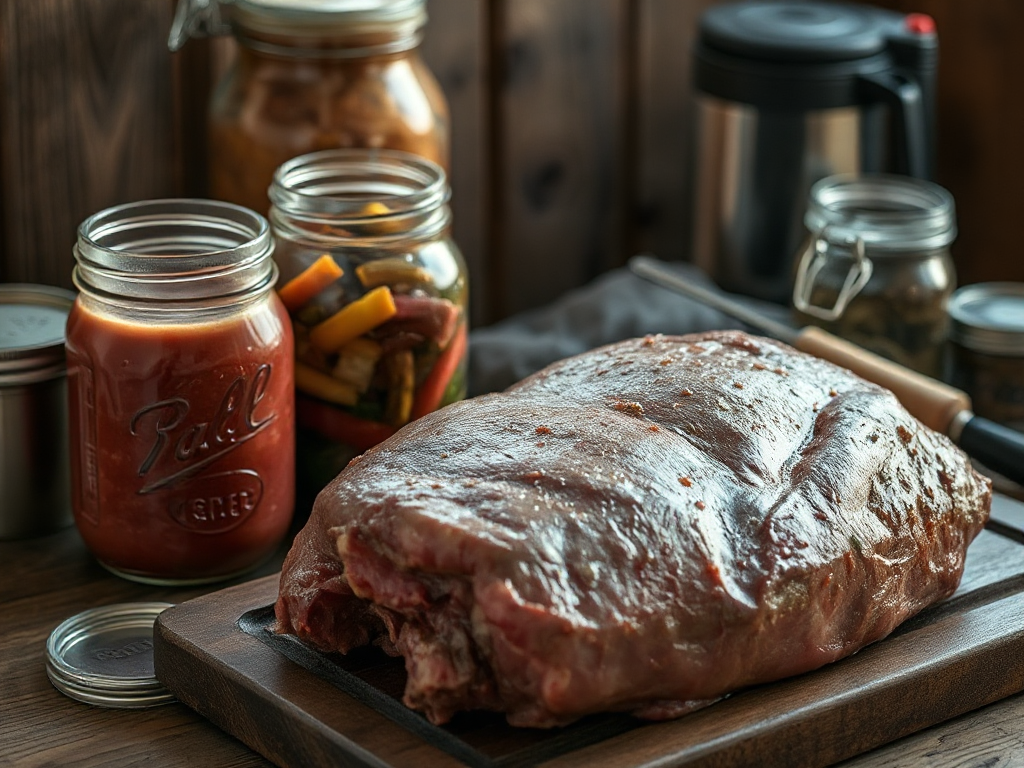
Meat preservation options without continuous refrigeration include pressure canning, salting and curing, controlled drying, smoking paired with another preservation method, and carefully managed fermentation. Each method works by limiting microbial growth through heat, acidity, reduced moisture, increased salt, or several barriers used together. Pressure canning is the most dependable shelf-stable choice for low-acid meat, while dried meat needs low moisture and protected packaging to remain safe. Smoking alone is not a reliable preservation step, and cool temperatures without measurement do not replace refrigeration. Use tested preservation instructions, inspect every batch, and discard meat with swollen containers, leaks, mold, off odors, or uncertain storage history.
How Meat Preservation Works Without Constant Cooling
Meat becomes hazardous when microorganisms have access to moisture, nutrients, suitable temperatures, and enough time to multiply. Preservation works by removing or controlling one or more of those conditions. Heat treatment can destroy many organisms; drying reduces available water; salt and sugar change the environment around microbial cells; acidity can make growth less likely; and oxygen-limiting packaging may slow certain forms of spoilage. No single technique should be judged by appearance alone, because meat can look normal while carrying dangerous contamination.
The safest choice depends on the intended storage period and the equipment available. A pressure canner is suited to cooked meat, poultry, and stocks intended for extended room-temperature storage. Drying is lighter and more portable, but it demands accurate moisture reduction, hygienic preparation, and packaging that prevents reabsorption. Salt curing can preserve whole cuts or small pieces, yet the formula, curing time, temperature, and nitrite use must be controlled rather than improvised.
Cold storage without electricity can still be useful, but a shaded pantry, cellar, or insulated box is not automatically safe for raw meat. Temperature swings, condensation, insects, and unnoticed warming create weak points. Evaporative cooling may extend the useful life of some foods, but it should not be treated as a substitute for a validated preservation process. For short-term use, a reliable thermometer and a conservative discard policy matter more than a promising container or traditional recipe.
A practical plan often combines methods rather than forcing one method to do everything. For example, a family might pressure-can stewed beef for dependable meals, dry thin strips for travel, and use a salt cure only after learning how the particular cut and curing mixture behave. Readers comparing these options may also find Meat preservation options without continuous refrigeration useful as a planning reference.
Pressure Canning for Shelf-Stable Meat
Pressure canning is generally the strongest option for keeping low-acid meat at room temperature because the process uses pressurized steam to reach temperatures higher than boiling water. That heat treatment is necessary for foods such as beef, pork, lamb, venison, poultry, and meat mixtures that are not acidic enough for water-bath canning. The sealed jar is only part of the preservation system; safe processing depends on the food type, jar size, packing style, altitude, pressure, and time specified by a tested source.
Raw-pack and hot-pack approaches have different practical results. Raw packing can be efficient for plain meat, while hot packing may reduce trapped air and suit cooked preparations. Meat should be trimmed according to the instructions being followed, and jars should not be filled so tightly that liquid circulation and heat penetration are compromised. Broths, gravies, noodles, flour, and thick sauces can change the heating behavior of a jar, so substitutions should not be assumed safe simply because the ingredients seem familiar.
Equipment condition deserves attention before processing. A pressure canner must vent correctly, maintain the required pressure, and have a functioning gauge or appropriate weight system. A pressure cooker is not automatically equivalent to a pressure canner, particularly when it is too small to hold the required jars or lacks a reliable way to monitor processing conditions. Cooling is part of the process too: forcing pressure down, moving hot jars abruptly, or tightening lids after processing can cause seal failures and liquid loss.
Consider a household preparing several jars of cubed venison before a long period without dependable power. The useful workflow is to chill and handle the meat hygienically, follow a tested recipe exactly, process at the specified pressure and time, let the canner depressurize naturally, and check seals after jars cool. A sealed lid does not prove that the heat treatment was adequate, but a broken seal does mean the jar cannot be stored as shelf-stable food. For more planning context, see preservation choices for meat when refrigeration is intermittent.
The most damaging mistake is treating pressure canning as ordinary jar cooking. Water-bath processing, oven canning, open-kettle filling, and invented processing times do not provide a dependable equivalent. When a jar is swollen, spurts on opening, leaks, smells abnormal, or has an uncertain history, tasting it to test safety is not an acceptable check.
Curing, Salting, Drying, and Smoking
Curing and drying can make meat compact, portable, and less dependent on powered appliances, but they require more control than many traditional descriptions suggest. Salt draws water from meat and affects the environment in which microbes grow. Drying lowers available moisture. Nitrite-containing curing mixtures may be used for specific products to control color and contribute to preservation, but they must be measured precisely; adding extra curing salt is not a safety improvement and can be dangerous.
Drying works best when pieces are uniform enough to lose moisture consistently. Thin strips dry more predictably than thick chunks, and excessive surface heat can create a dry exterior around a wetter center. That hidden moisture can support spoilage after packaging. A finished piece should be assessed according to a tested recipe and method, not merely by whether it feels dry on the outside. Once dried, meat should cool before packaging so condensation does not collect inside the container.
Smoking contributes flavor and may add some preservation effects, but smoking by itself should not be treated as a complete shelf-stability method. A lightly smoked roast that remains moist has very different storage needs from a properly cured and dried product. Traditional smokehouses also vary widely in temperature, airflow, cleanliness, and exposure to insects. The safer comparison is to view smoke as one barrier in a multi-step process, not as a substitute for curing, drying, cooking, or refrigeration.
Salt concentration creates another tradeoff. More salt may improve preservation conditions but can make food unpalatable and does not compensate for poor hygiene or inadequate drying. Sugar, spices, and smoke can change flavor without reliably controlling every relevant hazard. Fermented meat products are especially unsuitable for casual improvisation because acidity, salt, temperature, starter cultures, and drying conditions interact. A tested formulation is more defensible than copying a household measure from a different cut or climate.
A useful scenario is preparing jerky for a journey where refrigeration may fail for several days. Select lean meat, keep it cold during preparation if possible, slice evenly, use a tested pretreatment and drying procedure, dry thoroughly, and package in small portions that will not be repeatedly opened. If the package develops moisture, mold, leakage, or an unusual odor, discard it. Meat preservation options without continuous refrigeration should be selected according to the product’s final moisture and storage conditions, not just the method’s name.
Choosing a Method and Checking the Finished Product
The best preservation method is the one whose critical conditions can be measured and repeated in the actual setting. Pressure canning suits people who need jars of meals or plain meat and can maintain appropriate equipment. Drying suits smaller portions, transport, and limited storage space, provided the product can be dried evenly and protected from humidity. Curing may suit experienced makers of specific products, while smoking is most useful as part of a validated recipe rather than as a stand-alone answer.
Use this priority order when deciding:
- Define the storage goal: short-term emergency use, travel food, or long-term room-temperature storage require different levels of validation.
- Choose a measurable control: pressure and time, moisture reduction, salt concentration, acidity, or a tested combination.
- Match the method to the cut: minced meat, whole muscle, poultry, fatty pieces, and meat in sauce do not behave identically.
- Protect the finished food: use clean packaging, limit humidity and insects, label dates, and rotate older portions first.
- Set a discard rule: uncertainty, contamination, seal failure, mold, bulging, leakage, or abnormal odor outweighs the cost of replacement.
Packaging often determines whether a good preservation process remains successful. Dried meat exposed to humid air can soften and regain moisture. Canned jars stored where they freeze, heat excessively, or suffer repeated impacts may lose quality or seals. Cured products need conditions appropriate to that product; wrapping a moist cured cut and leaving it in a warm room is not equivalent to producing a shelf-stable dry cure. Labels should identify the product and date so old food is not mistaken for a fresh batch.
Visual inspection is useful but limited. Check jars for broken seals, seepage, bulging lids, spurting liquid, or unusual contents. Check dried meat for moisture pockets, surface growth, and condensation. Do not rely on reheating to rescue food with questionable storage history, because some hazards are not reliably corrected by ordinary cooking. If continuous refrigeration is unavailable, conservative decisions are a central part of the preservation plan rather than an afterthought.
Frequently Asked Questions
Can meat be safely stored without refrigeration?
Yes, if it has been preserved by a validated process such as pressure canning or a properly controlled curing and drying method. Raw or merely cooked meat should not be assumed safe at room temperature.
Is smoking meat enough to make it shelf stable?
Usually not. Smoking may add a preservation barrier, but moist smoked meat generally needs refrigeration or another validated treatment such as curing, drying, or canning.
Why is pressure canning used for meat?
Meat is a low-acid food, so pressure canning reaches the higher processing temperature needed for safe shelf-stable preservation. Water-bath canning is not an equivalent substitute.
How can you tell whether dried meat has failed?
Warning signs include condensation, damp centers, mold, an unusual odor, sliminess, or moisture returning during storage. When storage history is uncertain, discard the product rather than tasting it.
Can salt alone preserve every kind of meat?
No. Salt level, cut thickness, moisture, temperature, curing time, and handling all affect the result. A tested recipe is safer than increasing salt or copying a process designed for another product.
Further Reading
Authoritative Sources
- Academy of Nutrition and Dietetics
eatright.orgProfessional nutrition guidance, healthy eating resources, and practical dietitian-reviewed advice.
- U.S. Department of Agriculture
usda.govOfficial food, nutrition, agriculture, and consumer guidance from the USDA.
- NIH Office of Dietary Supplements
ods.od.nih.govResearch-based fact sheets on nutrients, supplements, dietary intake, and safety considerations.
- International Society of Sports Nutrition
sportsnutritionsociety.orgEvidence-informed sports nutrition resources and position stands for active people and athletes.
Conclusion
Without continuous refrigeration, meat preservation should be organized around a verified control rather than a traditional label or reassuring appearance. Pressure canning is the clearest choice for shelf-stable jars of meat, while drying and curing are useful when portability matters and the maker can control moisture, salt, temperature, and packaging. Smoking adds value but should rarely stand alone. Choose the method according to the cut, storage goal, equipment, and ability to repeat the process accurately. Keep finished food protected from humidity, heat, insects, and physical damage, label every batch, and discard anything with a failed seal, visible growth, leakage, abnormal odor, or uncertain history. A smaller batch made with measurable conditions is safer and more useful than a large improvised supply.