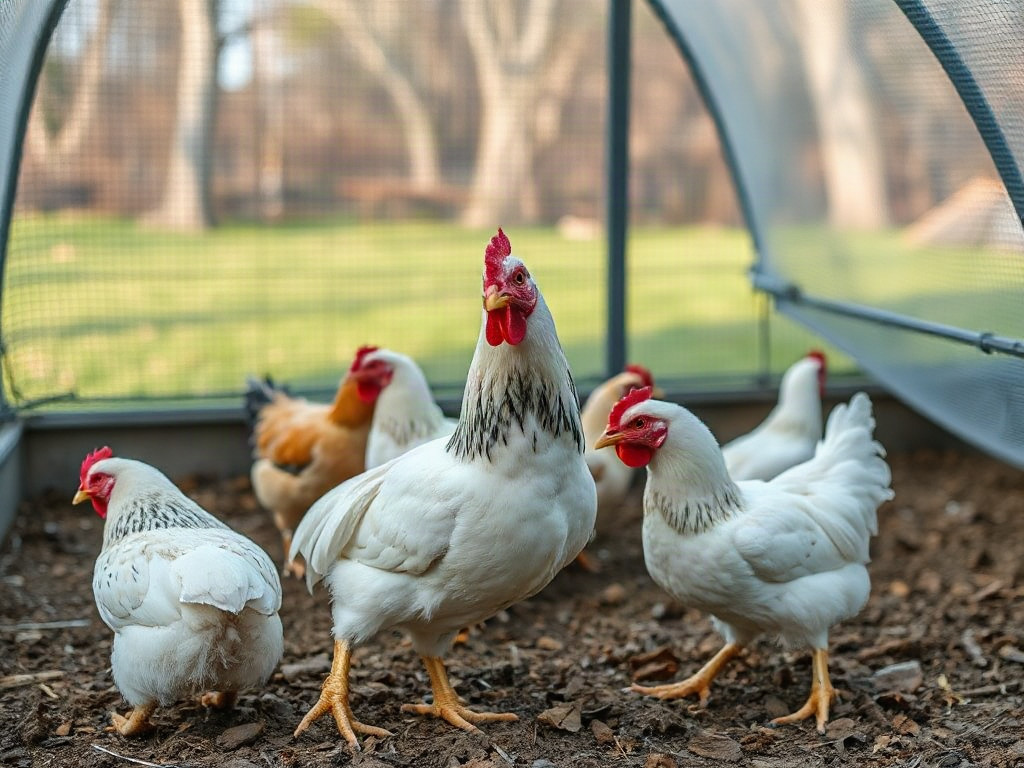
Quarantine new poultry before joining an existing flock by housing the arrivals in a separate enclosure with dedicated feeders, drinkers, footwear, and cleaning tools while monitoring them for illness. Keep the groups far enough apart to prevent direct contact and reduce exposure through droplets, manure, equipment, and caretakers. Observe appetite, droppings, breathing, posture, egg production, and any unexplained deaths, and contact a poultry veterinarian or diagnostic service if concerning signs appear. A quarantine period is useful only when daily care moves from the established flock to the newcomers and shared supplies do not carry contamination between them.
Why Separation Protects Both Groups
Recently acquired birds may look healthy while carrying an infection, external parasites, or intestinal parasites that have not yet produced obvious signs. Transport stress, a diet change, crowding, and unfamiliar surroundings can also make a mild condition more visible several days after arrival. Separating newcomers creates time to notice those changes without immediately exposing every bird on the property.
The risk runs in both directions. An established flock may have developed resistance to organisms present in its environment, while newly arrived poultry have not encountered them. Quarantine therefore protects the arrivals as well as the resident birds. A hen purchased from a local keeper, for example, could remain active and eat normally on arrival but begin coughing or passing abnormal droppings after the stress of transport. Conversely, that hen could become sick after exposure to organisms tolerated by the resident flock.
Visual separation alone is not quarantine. Birds housed on opposite sides of wire can exchange respiratory droplets, peck contaminated ground, and contact manure tracked by shoes. Shared buckets, egg baskets, crates, or catching nets provide additional routes. A more reliable arrangement treats the newcomers as a separate management unit: separate housing, separate equipment, controlled caretaker movement, and no bird-to-bird contact.
A commonly used starting point is at least 30 days of separation, but a calendar cannot certify that a bird is disease-free. Some conditions have variable incubation periods, intermittent shedding, or signs that resemble heat stress and other management problems. Local disease activity, the birds’ origin, mixed species, unexplained illness, or a history of poor recordkeeping may justify a longer period and veterinary input. Testing may also be appropriate for particular diseases or flock purposes, especially when breeding stock, exhibition birds, or valuable genetics are involved.
The weak assumption is that birds from a friend, reputable breeder, hatchery, or swap are automatically low risk. Source quality matters, but it does not replace separation and observation. Records of age, vaccination, prior illness, recent treatments, and flock testing can refine the risk assessment. They cannot show what happened during transport or guarantee that a bird was not exposed shortly before sale. For a detailed view of quarantining new poultry before joining an existing flock, begin by treating unknown health history as a reason for stronger controls rather than casual monitoring.
How to Build a Functional Quarantine Area
A useful quarantine pen must provide safe housing while limiting movement of manure, dust, equipment, and respiratory material toward the established flock. Greater physical distance is generally preferable to adjacent pens, particularly when prevailing wind or water runoff could move contaminants toward resident birds. The exact distance available varies by property, so combine distance with solid barriers, separate tools, and disciplined care routines.
Use housing that protects against weather and predators without sacrificing ventilation. Stagnant, damp air can irritate the respiratory tract and make health assessment harder, while drafts at bird level can chill young or stressed arrivals. Bedding should remain dry enough that individual droppings can be inspected. A muddy run or deeply soiled floor hides diarrhea, supports parasite exposure, and makes disinfection difficult.
The quarantine area needs its own drinker, feeder, feed scoop, bedding tools, and preferably a dedicated pair of boots. Marking equipment with colored tape helps prevent an automatic grab from the wrong storage area. Store quarantine supplies near that enclosure but protected from wild birds and rodents. Do not place the newcomers in a hospital pen previously occupied by sick birds unless it has been emptied, cleaned, disinfected with a product suitable for the surface and target organism, and allowed to dry.
A compact setup checklist keeps the physical controls practical:
- Barrier: Prevent shared fence lines, pecking contact, and access by escaped birds.
- Air and drainage: Avoid directing dust, runoff, or wash water toward the resident coop.
- Dedicated supplies: Assign separate feed, water, cleaning, and handling equipment.
- Observation access: Provide enough light and room to inspect each bird without prolonged chasing.
- Waste control: Keep manure, used bedding, and disposable materials away from flock traffic.
A garage, basement, or enclosed porch may seem convenient, but poultry dust, odors, noise, and potential pathogens make occupied household spaces poor choices. A pen immediately beside the main coop is also easier to manage but offers weaker separation. If limited land leaves no ideal location, prioritize preventing direct contact, use solid partitions where practical, control drainage, and be exceptionally strict about equipment and footwear. Ease of daily observation still matters: a distant enclosure that is rarely checked can allow subtle illness to progress unnoticed.
Daily Health Checks and Warning Signs
Consistent observation is more informative than a single inspection at purchase. Check the newcomers at least daily under similar conditions, noting how they behave before they are disturbed. A bird that hangs back, closes its eyes, fluffs its feathers, or remains on the roost while companions feed deserves closer attention even if no dramatic symptom is present.
Monitor feed and water use, body condition, posture, movement, breathing, comb color, eyes, nostrils, and droppings. Look beneath feathers around the vent and under the wings for lice, mites, irritated skin, or attached debris. Depending on species and age, changes in vocalization, egg laying, balance, or willingness to walk may provide additional clues. Normal droppings vary with diet and include occasional cecal droppings, so one unusual dropping does not establish disease. Repeated watery, bloody, unusually colored, or foul-smelling manure paired with appetite or behavior changes is more concerning.
Written notes reduce guesswork. Record the date, each bird’s identifying features, appetite, droppings, respiratory sounds, visible parasites, eggs, and any treatments recommended by a veterinarian. Weighing a manageable bird with the same scale can reveal a trend that feathers conceal, but handling should not create unnecessary stress. For a group that appears identical, temporary leg bands or another safe identification method can help connect a symptom to the same individual over several days.
Urgent warning signs include labored breathing, swelling around the head, neurologic abnormalities, severe weakness, sudden deaths, or several birds becoming ill together. Stop plans to combine the groups and contact a poultry veterinarian, veterinary diagnostic laboratory, cooperative extension office, or appropriate animal-health authority for direction. Certain unusual illness patterns or mortality events may need official reporting, and requirements differ by location. Do not transport suspect birds to another property or public poultry event while seeking advice.
Routine medication “just in case” is a poor substitute for diagnosis. Unnecessary drugs can obscure signs, fail against the actual cause, complicate food-animal withdrawal requirements, and encourage inappropriate antimicrobial use. Likewise, a negative test has meaning only for the disease tested, the sample collected, and the timing of collection. A sound decision combines source history, repeated observation, any indicated diagnostic work, and the absence of new problems over the chosen quarantine period.
Biosecurity During Feeding, Cleaning, and Handling
Caretaker movement often defeats an otherwise adequate quarantine setup. Work with the established flock first, then attend to the newcomers. This direction reduces the chance of carrying material from birds of unknown status into the resident coop. If you must return to the established flock, change footwear and outer clothing and clean exposed hands before doing so.
Cleaning should move dirt away before a disinfectant is considered. Manure, bedding, and feed residue can shield microorganisms and reduce the performance of many disinfectants. Scrape and wash dedicated equipment as appropriate, then apply a poultry-compatible product according to its label, including dilution, contact time, rinsing requirements, and surface limitations. Never mix cleaning chemicals. A hastily sprayed muddy boot is not equivalent to a clean pair of quarantine-only boots.
Feed bags and water hoses deserve attention because they are easily overlooked. Do not set a shared feed container on contaminated ground or allow the same scoop to move between pens. If one hose serves both areas, avoid placing its end inside drinkers and prevent it from lying in manure. Wash hands after handling birds, eggs, litter, or equipment, and supervise children so they do not move directly between groups.
Wild birds, rodents, insects, pets, and free-ranging poultry can bypass human controls. Keep feed covered, repair openings, remove spills, and prevent resident birds from visiting the quarantine perimeter. A dog that runs through the newcomers’ bedding and enters the main coop can mechanically move contaminated material even though it shows no poultry illness. Fly control and dry bedding may reduce mechanical transfer, but they do not compensate for adjoining pens or shared tools.
Signs that the system is working include equipment remaining in its assigned area, no accidental bird contact, dry and manageable bedding, complete daily records, and a care sequence everyone follows. Repeatedly misplaced tools, runoff crossing flock areas, escapes, or visitors entering both pens without changing footwear indicate failure even when all birds appear well. Review the routine after any breach. Depending on its severity and timing, restarting or extending the observation period may be prudent after consultation with a poultry health professional.
Deciding When and How to Combine the Birds
Completing a chosen quarantine period does not automatically make introductions appropriate. Before progressing, confirm that every newcomer is active, eating, maintaining condition, breathing normally, and producing droppings consistent with its diet. Investigate unresolved coughing, lameness, parasites, weight loss, reduced appetite, or unexplained egg-production changes rather than assuming social integration will correct them.
Health clearance and social introduction are separate stages. Once the quarantine decision is complete, allowing the groups to see one another through a secure divider can reduce the shock of direct mixing. Do not use a see-through barrier during quarantine if it compromises the required physical separation; move to this transition only after the health-observation phase has ended. Several calm visual encounters are more useful than putting unfamiliar birds together and leaving immediately.
Space and resource distribution shape the first direct meetings. Introduce birds in a roomy area with more than one feeder and drinker so dominant residents cannot control every resource. Provide visual breaks and escape routes that do not become dead ends. Supervise closely, especially when adding a lone bird, combining animals of markedly different sizes, or mixing species. Some chasing and peck-order behavior may occur, but persistent pinning, repeated attacks, blocked access to water, bleeding, or exhaustion calls for separation and a slower approach.
Introducing newcomers at night is sometimes presented as a shortcut. Darkness may reduce immediate activity, but it does not erase territorial behavior or guarantee acceptance after daylight. A managed daytime introduction allows observation and intervention. Similarly, adding several birds can distribute social pressure better than adding one, yet a larger group also creates more demand for roost space, ventilation, feeders, and secure housing.
Plan for a fallback enclosure before opening the divider. If aggression becomes dangerous or illness appears, immediate separation should not depend on rebuilding the quarantine pen. Continue closer observation after integration because stress may expose a problem that was not apparent earlier. The process described in quarantining new poultry before joining an existing flock succeeds when health risk management remains distinct from flock social management; neither stage can substitute for the other.
Frequently Asked Questions
How long should new poultry remain in quarantine?
At least 30 days is a common starting point, but source history, symptoms, local disease concerns, testing needs, and any biosecurity breach may justify a longer period. Ask a poultry veterinarian about higher-risk arrivals.
Can new birds quarantine in a pen beside the existing flock?
Adjacent wire pens provide weak protection because birds can share droplets, dust, manure, insects, and fence-line contact. Greater distance with separate equipment, drainage, and caretaker routines offers more meaningful separation.
Should healthy-looking poultry be quarantined?
Yes. Birds may carry pathogens or parasites without obvious signs, and transport stress can reveal illness after arrival. Appearance at purchase is only one observation, not a reliable health clearance.
Should newcomers receive preventive medication during quarantine?
Do not medicate automatically. Treatment should address a supported diagnosis and account for species, dose, contraindications, and egg or meat withdrawal requirements. Seek veterinary guidance when signs appear.
What should I do if a quarantined bird becomes sick?
Keep both groups separated, strengthen biosecurity, record the signs and timing, and contact a poultry veterinarian or diagnostic service. Sudden deaths, neurologic signs, severe respiratory illness, or multiple affected birds warrant prompt professional direction.
Conclusion
A dependable quarantine relies on physical separation and repeatable daily habits rather than a pen that merely carries the quarantine label. Set up dedicated supplies, control the direction of chores, inspect each arrival consistently, and document changes that could otherwise be missed. Treat concerning illness, accidental contact, and contaminated equipment as reasons to pause the timeline rather than rush toward a planned introduction date.
Once the observation period is complete and unresolved health concerns have been addressed, shift deliberately from disease control to social integration. Use barriers, multiple resources, adequate space, supervision, and a ready fallback enclosure. The next practical step is to prepare the separate housing and labeled equipment before acquiring birds, then obtain their health history and identify a local veterinary or diagnostic contact before a problem occurs.