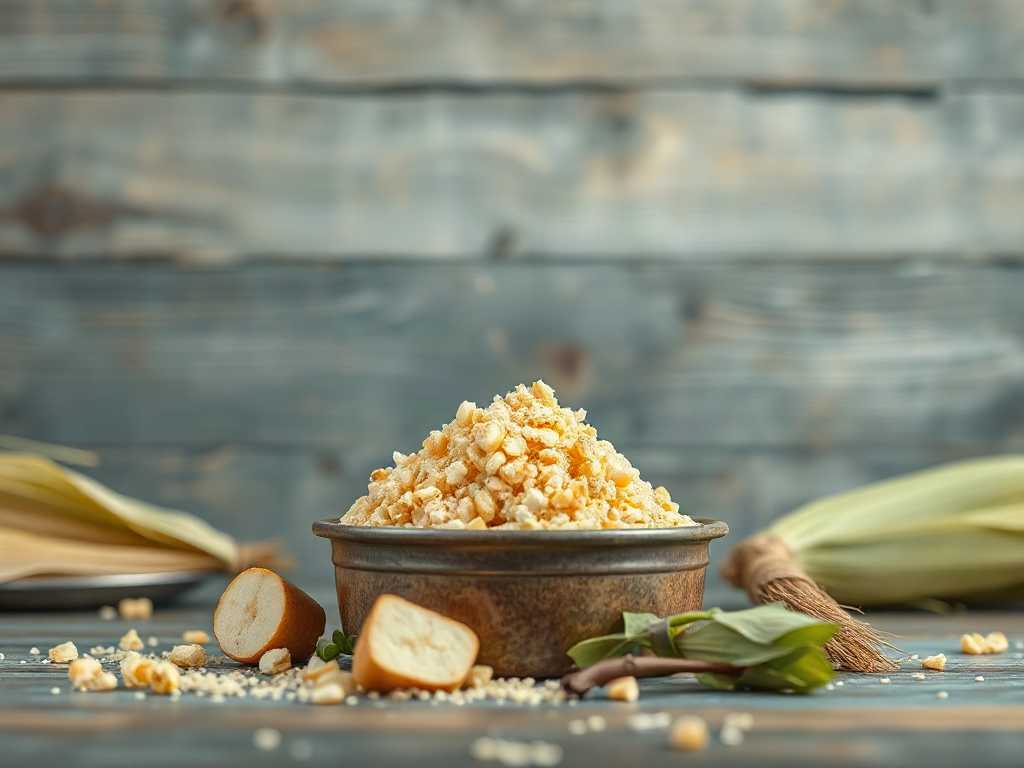
Self-rising cornmeal alternatives for homestead cooking include plain cornmeal combined with baking powder and salt, homemade cornmeal-flour blends, and freshly milled corn adjusted for grind and moisture. For each cup of self-rising cornmeal, a dependable starting substitute is 1 cup plain cornmeal plus 1½ teaspoons baking powder and ½ teaspoon fine salt. If the package or recipe says “self-rising cornmeal mix,” it may also contain wheat flour, so a flour-free replacement can produce a denser, more crumbly result. Match the substitute to the food: coarse meal suits skillet cornbread, while finer meal works better in muffins, spoonbread, and coating batters.
What Is Actually in Self-Rising Cornmeal?
Self-rising cornmeal is usually plain cornmeal with chemical leavening and salt already distributed through it. The leavening releases gas after liquid is added and again as the batter heats, helping cornbread or muffins rise instead of baking into a compact slab. Salt seasons the corn and moderates the flat, starchy taste that an unsalted batch can have.
The label wording matters because self-rising cornmeal and self-rising cornmeal mix are not necessarily the same product. A mix often contains wheat flour in addition to cornmeal, leavening, and salt. Flour supplies gluten-forming proteins and starch, giving the finished bread more structure and a softer, less crumbly crumb. Some packaged mixes may contain other ingredients, so the original label is the best reference when recreating a familiar result.
Consider a skillet-cornbread recipe calling for two cups of self-rising cornmeal mix. Replacing it with two cups of plain cornmeal plus leavening may make acceptable bread, but it will probably crumble more readily than the flour-containing version. That difference is not a failure if a coarse, corn-forward loaf is wanted. It becomes a problem when the bread must slice cleanly for sandwiches, dressing cubes, or transport to a shared meal.
Grind is another functional ingredient. Coarse meal absorbs liquid more slowly and gives the crust and crumb a pronounced texture. Fine meal hydrates faster and holds together more readily, although it can become heavy if the batter sits too long. Stone-ground meal may include more of the kernel’s germ and bran than a highly refined shelf-stable product, contributing stronger corn flavor while shortening storage life.
The common mistake is treating every bag bearing the words “cornmeal” and “self-rising” as interchangeable. Before making a substitute, check three points: whether the original contains wheat flour, whether salt is already present elsewhere in the recipe, and whether its grind resembles the meal on hand. Those details have more influence on texture and seasoning than the brand name does.
How Do You Make a Basic Self-Rising Cornmeal Substitute?
A useful household formula is 1 cup plain cornmeal, 1½ teaspoons baking powder, and ½ teaspoon fine salt. This produces slightly more than one measured cup, but the small volume difference is normally inconsequential in rustic cornbread and corn cakes. For closer volume control, remove about two teaspoons of cornmeal before adding the baking powder and salt.
Whisk the dry ingredients thoroughly before adding eggs, milk, buttermilk, water, fat, or sweetener. Baking powder left in small pockets can create bitter spots, tunnels, or uneven rising. Sifting is helpful when the baking powder has clumped, but vigorous whisking in a wide bowl is usually sufficient for a single batch.
| Recipe Calls For | Starting Substitute | Best Use |
|---|---|---|
| 1 cup self-rising cornmeal | 1 cup plain cornmeal + 1½ tsp baking powder + ½ tsp fine salt | Traditional skillet breads and corn cakes |
| 1 cup self-rising cornmeal mix | ¾ cup cornmeal + ¼ cup all-purpose flour + 1½ tsp baking powder + ½ tsp fine salt | Softer cornbread, muffins, and portable slices |
| 1 cup self-rising cornmeal, with baking soda already in recipe | Use the basic substitute, but retain the listed baking soda unless testing shows excessive rise | Buttermilk or other acidic batters |
The flour-containing formula is a practical starting point rather than an exact copy of every commercial mix. Recipes and packaged products differ in their corn-to-wheat proportions. If a family recipe consistently turns out too fragile, increase the flour modestly in the next batch. If the corn flavor seems muted or the bread becomes cake-like, shift the ratio back toward cornmeal.
Baking powder and baking soda should not be substituted measure for measure. Baking powder contains components designed to produce leavening without relying entirely on an acidic ingredient. Baking soda needs enough acid from ingredients such as cultured buttermilk to react properly; too much can leave an alkaline or soapy taste. When reproducing self-rising meal, baking powder is therefore the simpler default.
Salt requires similar judgment. Salted butter, cheese, cured meat, or a separately listed teaspoon of salt can make the standard substitute overly salty. In those recipes, reduce or omit the salt in the homemade blend rather than automatically following the base formula. The priority is preserving the recipe’s total seasoning, not making the substitute conform rigidly to one ratio.
Which Alternative Works Best for Each Recipe?
The best alternative is the one that supplies the texture, structure, and rise required by the specific food. A sturdy skillet bread tolerates coarse meal and modest crumbling. A muffin expected to release neatly from its cup usually benefits from finer meal or some wheat flour. A fish or vegetable coating may need no leavening at all unless a puffed crust is intentional.
For cast-iron cornbread, plain medium- or coarse-ground cornmeal with baking powder and salt gives a distinct grain and crisp edge. Preheating the greased skillet develops the bottom crust quickly. The batter should be moist enough to spread without being watery. If it stands while the oven heats, the corn absorbs liquid and the leavening begins reacting; mix it only when the pan and oven are ready.
Muffins, corn sticks, and sliced loaves need more cohesion. A blend of roughly three parts cornmeal to one part all-purpose flour is a sensible first trial when replacing a self-rising cornmeal mix. Wheat flour is inappropriate for someone avoiding gluten, but a labeled gluten-free all-purpose blend may provide more binding than cornmeal alone. Results vary because such blends use different starches and gums, so test a small batch before scaling up for preservation-day meals or community events.
Fresh masa harina is not a neutral one-for-one replacement. It is made from treated corn and develops a characteristic aroma, flavor, and dough behavior. It also absorbs water differently from ordinary cornmeal. Masa harina can make appealing griddle cakes or a distinctly flavored cornbread, but liquid should be added gradually and the result should be treated as a variation rather than an exact reproduction.
Dry grits present the opposite problem: their particles may be too large to hydrate during a short bake. Grinding them in a grain mill or sturdy blender can make them more useful, though the resulting particle size may remain irregular. Whole kernels, cracked corn, and corn flour also behave differently. Very fine corn flour can yield a smoother crumb but may require a little more liquid and careful mixing to avoid a pasty center.
A failed batch gives useful evidence. A loaf that rises and then collapses may have excessive leavening, too much liquid, or an underbaked center. A dry, sandy loaf needs more moisture, fat, egg, or structural flour rather than additional baking powder. A dense loaf with little lift points toward old leavener, inadequate mixing, or an oven that was not fully heated.
How Should Homegrown or Freshly Milled Corn Be Adjusted?
Homegrown corn should be fully dried and suitable for grinding before it becomes meal for shelf-stable baking blends. Sweet corn harvested for eating is not the usual choice for dry meal; mature field, flour, flint, or dent corn varieties offer different hardness, flavor, and grinding characteristics. Sound kernels should be free from visible mold, insect damage, and off odors before milling.
Freshly milled meal often behaves less uniformly than commercial cornmeal. Bran and germ particles can interrupt a smooth crumb, while variable particle size changes the rate at which water reaches the starch. A batch containing both floury dust and coarse fragments may seem wet immediately after mixing but stiffen after several minutes. Record the liquid used and the resting time so the next bake can be adjusted deliberately.
Sifting provides control without requiring an industrially uniform grind. Fine material can go into muffins or spoonbread, while coarser material suits skillet bread, porridge, or a crunchy coating. Regrinding the largest particles reduces waste. Removing every coarse piece, however, also removes some of the character that makes home-milled meal worth producing, so the desired food should determine how aggressively it is sifted.
Moisture adjustment is best made in small increments. Mix the dry substitute, add most of the recipe’s liquid, then assess the batter after a brief hydration period if the recipe permits one. Add remaining liquid by the spoonful. For a skillet bread, look for batter that pours or spreads readily but does not separate into liquid and grain. A batter that forms a stiff mound is likely to bake dry; one that sloshes can struggle to set in the center.
Fresh meal containing natural oils does not have the same storage margin as heavily refined meal. Mill what can be used promptly, and keep extra meal in an airtight container away from heat, light, moisture, and pests. Refrigeration or freezing can extend practical storage, but the meal should be protected from condensation and strong odors. Discard meal that smells rancid, musty, or otherwise abnormal rather than trying to hide the flavor with salt or sweetener.
The weak assumption is that homegrown automatically means consistent. Kernel dryness, variety, mill setting, and storage all change the result. A written bake log with weights or level measures, grind setting, liquid quantity, and finished texture is more valuable than trying to force every harvest into the same inherited recipe.
Mixing, Testing, and Storing a Homestead Batch
Small trial batches are the safest way to standardize a homemade self-rising blend. Baking powder loses effectiveness after prolonged exposure to humidity, and bulk mixing magnifies any error in salt or leavening. Begin with enough for one recipe, evaluate the crumb and flavor, and only then prepare a larger jar for routine cooking.
Use dry utensils and a clean container with a tight lid. Stir or whisk the complete batch several times, reaching the bottom and sides where fine salt and baking powder can settle. Label the container with the contents, mixing date, corn grind, and formula. A jar marked only “cornmeal” can easily be mistaken for plain meal, leading to doubled salt or leavening when someone follows a recipe later.
A compact testing routine keeps adjustments focused:
- Check the leavener. Replace baking powder that is damp, clumped, or known to perform poorly.
- Bake the smallest practical recipe. A half batch reveals texture and seasoning without consuming much meal.
- Observe rise and structure. Note whether the center sets, the slice holds together, and the crumb feels dry or gummy.
- Change one variable. Adjust liquid, flour proportion, salt, or leavening separately so the cause remains identifiable.
- Record the accepted formula. Include the pan size and oven conditions along with ingredient amounts.
Signs of a sound blend include even lift, no bitter pockets, balanced seasoning, and a crumb appropriate to its use. Failure signs are sharp chemical flavor, large internal tunnels, a sunken center, or pronounced dryness. Pan choice can complicate diagnosis: batter spread thinly in a broad skillet bakes differently from the same amount placed in a deep pan. Compare trials in the same pan whenever possible.
For occasional baking, storing plain cornmeal, baking powder, and salt separately is usually more flexible than maintaining a large premix. Separate storage lets the cook alter salt for savory additions, include flour only when structure is needed, and replace aging leavener without discarding good meal. A premix earns its shelf space when the same proven recipe is prepared frequently and the household can use the blend while its flavor and leavening remain dependable.
Frequently Asked Questions
Can I use plain cornmeal instead of self-rising cornmeal?
Yes, but plain cornmeal needs leavening and usually salt. Start with 1½ teaspoons baking powder and ½ teaspoon fine salt per cup of plain cornmeal, adjusting salt for the rest of the recipe.
Is self-rising cornmeal the same as self-rising cornmeal mix?
Not necessarily. Self-rising cornmeal generally contains cornmeal, leavening, and salt, while a product labeled as a mix may also contain wheat flour or other ingredients. Check the package label when matching a familiar recipe.
Can baking soda replace baking powder in the substitute?
Not in an equal swap. Baking soda requires enough acid, such as cultured buttermilk, and excess soda can taste soapy. Baking powder is the more reliable starting leavener for recreating self-rising cornmeal.
Can masa harina be used instead of self-rising cornmeal?
It can be used for a variation, but it has a different flavor and absorbs liquid differently. Add liquid gradually and expect a result closer to nixtamalized corn cakes than conventional cornmeal bread.
Should homemade self-rising cornmeal be stored in the freezer?
Freezing is useful for freshly milled or whole-grain meal that will not be used promptly. Seal it well against moisture and odors; for the longest flexibility, store the meal separately and add fresh baking powder when mixing the batter.
Conclusion
A dependable substitute begins with identifying whether the recipe expects seasoned, leavened cornmeal or a flour-containing cornmeal mix. Use plain meal, baking powder, and salt for a strongly textured skillet bread; add some flour when clean slices and a softer crumb matter. Match the grind to the food, and treat masa harina, grits, and very fine corn flour as recipe variations rather than invisible replacements.
For home-milled corn, prioritize sound dry kernels, controlled grinding, careful hydration, and protected storage. Test one modest batch before filling a pantry jar, then record the formula, pan, and liquid amount that worked. Keeping the components separate remains the most adaptable choice for an occasional baker, while a labeled premix is convenient when one established recipe appears regularly on the homestead table.