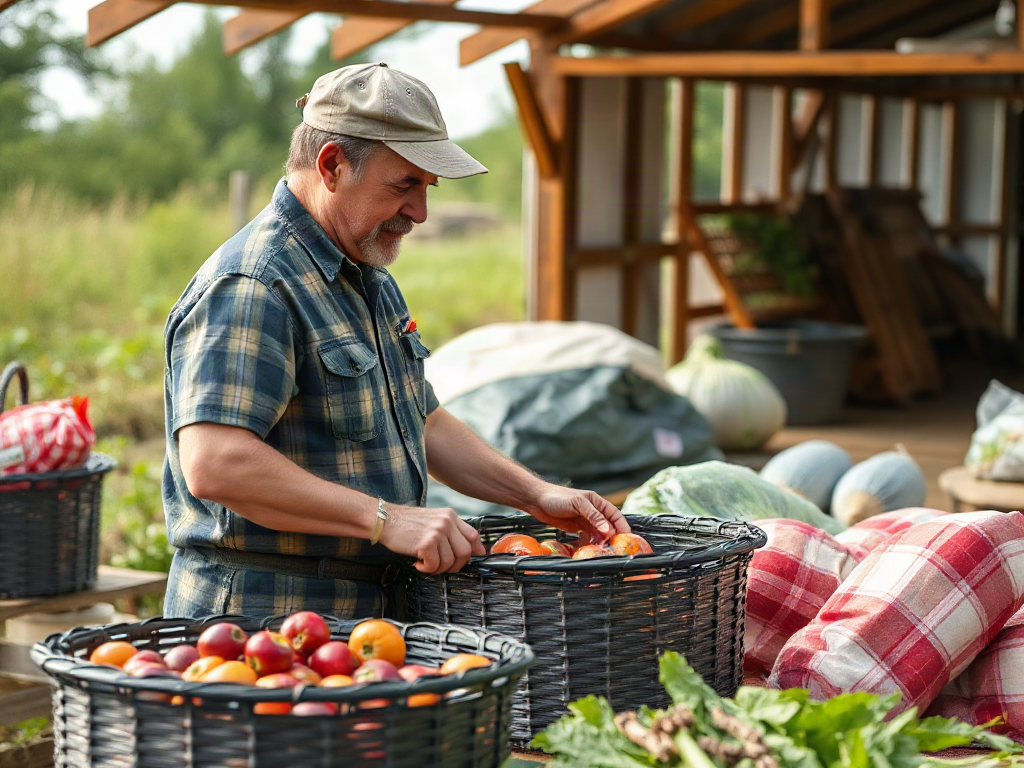
Self-sufficient producer decisions using limited resources should favor essential outputs that match available land, labor, water, energy, skills, and storage rather than trying to produce everything at home. Rank needs by consequence, calculate each activity’s full resource demand, and compare home production with trading or buying from a reliable source. Produce items that use existing capacity, trade for goods another producer can supply more efficiently, and defer projects that would strain critical reserves. A sound decision leaves enough time and material for maintenance, seasonal disruptions, and failed harvests instead of committing every resource to maximum output.
Define the Minimum Output the Household Actually Needs
A self-sufficient producer needs a defined level of essential output before choosing projects. Without that baseline, visible activities such as adding livestock, planting more acreage, or installing another energy system can displace less exciting necessities. The first calculation should cover staple food, potable and production water, cooking fuel or electricity, shelter maintenance, sanitation, and any feed needed to keep existing animals healthy.
Separate survival requirements from preferred variety. A household may need a dependable source of calories and protein, but it does not need to produce every vegetable, spice, grain, dairy product, and household material. Likewise, keeping laying hens may supply eggs while still requiring purchased minerals, replacement equipment, or feed during a poor growing season. Calling the operation self-sufficient does not make those external dependencies disappear.
Measure requirements in units that expose the work involved. Annual seed counts are less informative than expected bed space, watering frequency, preservation capacity, and weeks of usable harvest. The number of animals is less useful than winter feed volume, daily water demand, housing space, fencing maintenance, manure handling, and processing arrangements. For energy, list the loads that must run, the hours they operate, and which ones cannot tolerate an interruption.
Consider a household deciding between more potatoes and a larger flock. Potatoes can provide storable calories from a defined area, but they need suitable soil, planting stock, water at critical stages, digging labor, and dry storage. Additional hens offer eggs and manure, yet they create daily feed and care obligations throughout winter. If calories and storage are the immediate gaps, expanding the flock because eggs have higher market value may solve the wrong problem.
A practical priority order is:
- Prevent irreversible harm: secure drinking water, animal welfare, sanitation, weather protection, and safe food handling.
- Maintain existing productive assets: preserve soil, tools, fencing, breeding stock, orchards, and water infrastructure.
- Cover recurring essentials: produce dependable foods, fuel, or materials that the household uses consistently.
- Add optional output: expand variety or surplus only after essential capacity is protected.
The common failure is treating every desired product as equally urgent. A useful baseline instead identifies what must be available, how long it must last, and what shortage would cause the greatest disruption. That baseline gives all later self-sufficient producer decisions using limited resources a concrete purpose.
Measure the Resources Behind Every Product
Production should be evaluated by its limiting resource, not merely by land area or purchase price. A project that appears inexpensive may consume the household’s scarcest input: summer water, winter labor, covered storage, reliable electricity, fertile soil, mechanical skill, or attention during an already crowded season. The bottleneck determines whether an activity remains useful when conditions become difficult.
Calculate direct inputs first. For a crop, include seed or planting stock, bed space, fertility, irrigation, pest protection, harvest time, containers, and preservation energy. For livestock, include animals, housing, fencing, feed, water, bedding, health care, handling equipment, and daily labor. Then add supporting work: repairing tools, hauling materials, cleaning facilities, monitoring systems, and replacing failed components.
Timing matters as much as total quantity. Two enterprises may each require manageable annual labor but compete for the same week. Haymaking, preserving fruit, irrigating vegetables, repairing storm damage, and preparing winter housing can converge in late summer. A producer who has enough yearly hours but not enough hours during that peak period still has a capacity shortage.
Use a resource ledger with four columns: required amount, available amount, seasonal timing, and fallback source. Suppose a garden expansion needs 20 additional watering sessions during the driest part of summer. The producer may technically have sufficient annual rainfall, yet lack stored water when the crop needs it. A smaller planting supported by dependable storage can deliver more usable food than a large planting exposed to drought stress and abandoned maintenance.
Opportunity cost belongs in the ledger as well. Lumber used for a new shed cannot repair a failing barn wall. Grain fed to an inefficient animal cannot be eaten, sold, or reserved as seed. An hour spent hand-weeding a low-value crop cannot also be used to fix a leaking tank. These comparisons do not require every choice to maximize money; they require recognizing what each commitment prevents.
Watch for warning signs that the operation has crossed its practical limit: delayed repairs, repeated emergency purchases, neglected soil cover, missed harvest windows, declining animal condition, exhausted water storage, or preservation backlogs. Those outcomes often indicate that nominal output has grown while dependable output has fallen. Before adding another enterprise, test its demands against the busiest week, driest month, and leanest storage period rather than an average day.
Decide What to Produce, Trade, or Defer
Producing an item at home is most defensible when it uses local advantages, satisfies a recurring need, and remains manageable under adverse conditions. Trading is usually stronger when another producer has better soil, equipment, scale, or skill. Deferral is appropriate when a useful project would consume reserves needed for higher-priority work or introduce a dependency the household cannot yet support.
Produce when the activity fits existing assets and closes a meaningful supply gap. A household with established fruit trees, a cool storage area, preserving equipment, and seasonal labor may reasonably emphasize fruit, preserves, or vinegar. The same household might avoid grain production if it lacks harvesting, threshing, drying, and milling capacity. The distinction is not whether grain is essential; it is whether growing it locally is the best use of constrained resources.
Trade when specialization improves reliability for both parties. One producer may exchange eggs or repair labor for flour from a nearby grower with suitable acreage and machinery. That arrangement can be more resilient than each household maintaining undersized versions of every production system. A trade dependency still carries risk, so examine distance, seasonal availability, storage life, relationship stability, and whether an alternate supplier exists.
Defer when a project is attractive but premature. Dairy animals, for example, can provide milk, manure, and offspring, but they also impose scheduled milking, breeding decisions, substantial feed storage, sanitation work, and plans for surplus milk. A producer without secure winter forage or dependable relief labor should resolve those constraints before acquisition. Deferral protects both household capacity and animal welfare.
Apply a six-question decision test to each proposed output:
- Does it meet an essential or frequently recurring need?
- Which scarce input will it consume at peak demand?
- Can existing tools, buildings, and skills support it safely?
- How will the output be stored, processed, or used?
- Is a dependable trade or purchase option less resource-intensive?
- Can the activity be stopped without wasting major assets or harming livestock?
A common misconception equates self-sufficiency with zero trade. Total isolation can force a producer to operate inefficient systems, stock specialized equipment that is rarely used, and divide attention among too many skills. Selective exchange often preserves autonomy because it allows scarce labor and capital to remain focused on outputs the producer can sustain.
Document the decision rather than relying on enthusiasm. Record why the activity was selected, its expected resource ceiling, the conditions that would trigger reduction, and the alternative source if it fails. This makes self-sufficient producer decisions using limited resources reversible and testable instead of turning every new project into a permanent obligation.
Protect Capacity With Reserves and Review Points
Reserves are productive capacity held back for disruption, not idle resources waiting to be consumed. Seed, stored food, emergency water, spare fencing supplies, cash, fuel, soil fertility, uncommitted labor, and empty storage space all provide room to respond when weather, illness, breakage, or poor yields upset normal operations. A system committed to full capacity has no practical margin for recovery.
Keep operating reserves distinct from seasonal consumption. Seed intended for the next planting should not be counted as ordinary food inventory. Winter feed should include a clearly marked portion that is not allocated to routine use before the risk period ends. Water held for firefighting or livestock emergencies should not quietly become irrigation supply. Labels, separate containers, and written thresholds make those boundaries visible.
Build redundancy around critical functions rather than duplicating everything. Drinking water may justify stored supply, treatment capability, and access to an alternate source. A specialty crop may not justify three irrigation systems. Food resilience can come from several storage forms—dry staples, root-cellar produce, frozen goods, and shelf-stable preserves—so one equipment failure does not affect the entire reserve.
Review performance at natural decision points: after harvest, before ordering seed, before breeding animals, at the end of winter, and before major construction. Compare planned output with usable output, not gross production. Fifty crates of produce are not a success if much of the harvest spoiled because washing, cooling, storage, or distribution capacity was missing. Likewise, a large fuelwood harvest may conceal excessive equipment repair or unsafe fatigue.
Signs that an activity deserves expansion include consistent completion of routine work, low spoilage, stable reserves, manageable peak labor, maintained infrastructure, and a clear use or market for additional output. Signs to reduce or redesign it include recurring feed shortages, emergency water hauling, postponed repairs, repeated crop losses from the same cause, or dependence on one person who cannot step away.
Run small trials before making irreversible commitments. One irrigated bed can reveal water demand and pest pressure before a field is planted. A season of buying milk from a neighboring producer can clarify actual household use before dairy animals are acquired. Renting, borrowing, or trading for machine work can test whether owning equipment would provide enough benefit to justify maintenance and storage.
The weakest approach is expanding because resources appear available at one moment. A cash surplus after harvest, an empty building, or a wet spring does not prove that long-term capacity exists. Review the full production cycle, preserve a deliberate buffer, and assign a stop condition in advance. That discipline keeps self-sufficient producer decisions using limited resources aligned with durable autonomy rather than short-lived output.
Frequently Asked Questions
What should a self-sufficient producer prioritize first?
Prioritize safe water, dependable staple food, shelter, sanitation, existing animal needs, and maintenance of productive assets. Optional variety and surplus should follow only when those functions have adequate reserves.
How can a producer identify the main limiting resource?
Compare each activity’s land, water, labor, energy, storage, skill, and cash demands by season. The input that becomes unavailable first during peak demand is usually the binding constraint.
Does trading reduce self-sufficiency?
Not necessarily. Trading can strengthen autonomy when it avoids inefficient production and preserves scarce resources, provided the supplier is dependable and the household has storage or alternate sources.
When should a new production project be deferred?
Defer it when essential reserves are thin, peak labor is already committed, supporting infrastructure is missing, or failure would harm animals, soil, finances, or household food security.
How often should production choices be reviewed?
Review them at least at major seasonal transitions and before planting, breeding, construction, or equipment purchases. Compare usable output, losses, labor peaks, and reserve levels with the original expectations.
Further Reading
Authoritative Sources
- USDA Natural Resources Conservation Service State Offices
nrcs.usda.govState-level conservation resources can help producers evaluate soil, water, grazing, and land-management constraints
- USDA National Agricultural Statistics Service
nass.usda.govAgricultural data from NASS can provide regional context for production, yields, inputs, and farm conditions
- USDA Climate Hubs
climatehubs.usda.govRegional tools and assessments can inform decisions affected by drought, heat, water availability, and seasonal risk
- State Cooperative Extension Services
usa.govExtension offices offer location-specific production information on crops, livestock, soils, pests, and food preservation
Conclusion
Durable self-reliance comes from matching obligations to capacity, not accumulating the largest possible set of enterprises. Define the essential output first, expose each option’s hidden demands, and pay particular attention to the resource that becomes scarce during peak season. Produce where existing land, skills, and infrastructure create a clear advantage; trade where another supplier can deliver greater reliability; and defer commitments that would consume emergency margins.
The next step is to audit one full production cycle. List usable output, losses, external inputs, peak labor, storage limits, and delayed maintenance. Select one activity to retain, redesign, trade out, or pause based on that record. A smaller operation with protected reserves and maintained assets is generally more autonomous than a larger one that depends on emergency purchases and constant recovery.