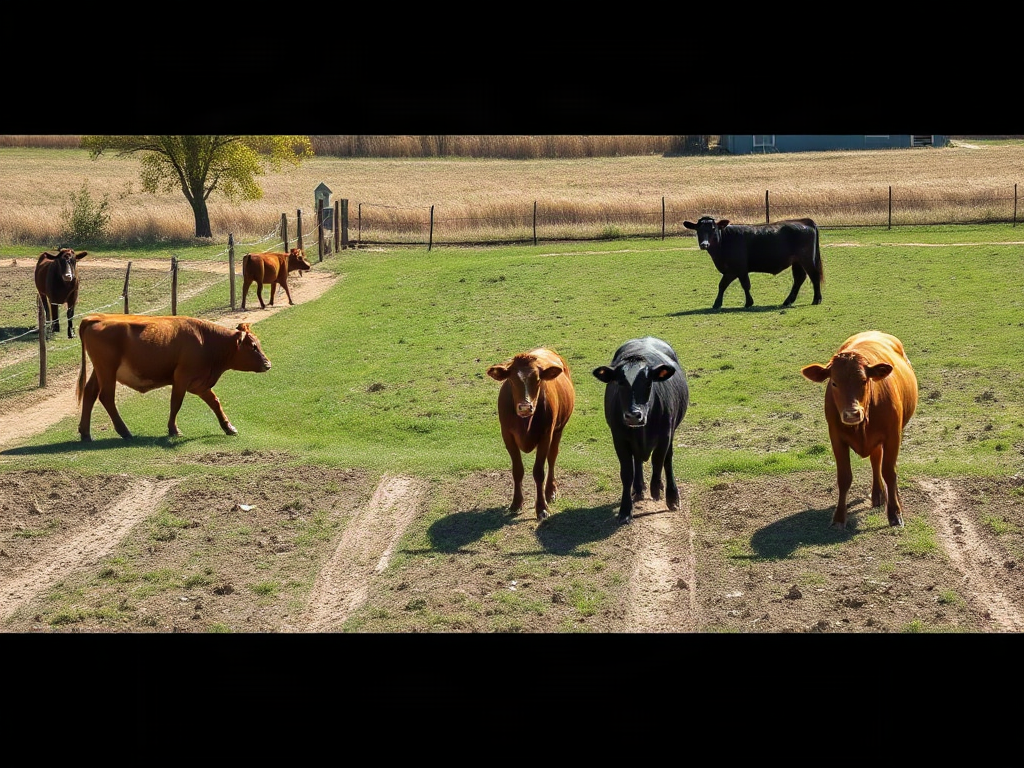
Match Animal Demand to Usable Forage
Limited acreage makes forage budgeting more consequential because a small error is repeated across the entire property. The useful starting point is not the number of acres on a deed but the portion that actually produces grazeable plants. Shaded corners, wet ground, lanes, buildings, brush, steep banks, and areas around gates may contribute little or no dependable feed. Walk the pasture and separate productive ground from land that animals merely occupy.
Animal demand must then be compared with available forage. Species, body size, age, lactation, season, and forage quality all change intake. A dairy cow with a calf places a different load on a paddock than a few mature sheep; goats may use browse that cattle largely ignore, but they still cannot live indefinitely on sparse weeds. Rather than relying on a generic animals-per-acre figure, observe how quickly the herd or flock removes the usable leaf and how much remains after a grazing period.
A practical first rotation can be conservative. Turn animals into a measured area for a short period, then inspect it immediately after removal. Desirable plants should retain enough green leaf to continue photosynthesis, while trampled material should form only a light protective layer rather than a dense mat. If nearly every green blade is clipped close to the crown, the allocation was too small, occupation was too long, or the pasture entered the rotation before producing enough feed.
Do not count tall stems as though they were all edible forage. Mature seed stalks, rejected plants near manure, and coarse weeds can make a field look abundant while providing little usable nutrition. Likewise, rotation should not be treated as a way to increase stocking indefinitely. It changes where and when grazing occurs; it does not remove the biological limit set by soil, rainfall, sunlight, and growing season.
Keep a simple record of entry condition, exit condition, days occupied, and animals present. Photos taken from the same marked locations are often more revealing than memory. This baseline turns Using rotational grazing on limited homestead pasture into an observable management process rather than a rigid diagram copied from a larger farm.
Lay Out Paddocks for Short, Controlled Grazing
A workable paddock system gives animals reliable water, contains them safely, and allows easy changes as forage supply shifts. Permanent perimeter fencing should provide the main security. Interior divisions can often use portable electric netting or polywire where the animals are trained to respect it and local conditions permit. Portable equipment is especially useful on a small property because paddock size can be enlarged during slow growth and narrowed when forage is plentiful.
Begin with fewer divisions than the theoretical ideal if daily fence moves would be difficult to sustain. Four usable paddocks managed consistently are more valuable than twelve awkward strips that block access to water or require animals to cross recently grazed ground. Long, narrow paddocks can encourage animals to graze the near end heavily while underusing the far end. More compact shapes generally spread grazing pressure better, although property boundaries and terrain may dictate compromises.
Water placement often controls the entire design. A central water point can serve several adjoining paddocks, but repeated traffic may create mud and concentrate manure. A portable trough supplied by a suitable line distributes use more evenly, provided the system delivers enough flow for the animals and the connections are checked for leaks. Avoid forcing stock down a permanent lane for every drink if that lane becomes bare, eroded, or slippery.
For example, a two-acre grazeable area might be divided with a secure perimeter and a movable cross-fence. The animals graze one compact section while the owner adjusts the next boundary according to the forage remaining. This flexible allocation is preferable to four equal quarters when one side is shaded and grows more slowly. Equal acreage does not mean equal feed.
Before each turnout, use a compact paddock check:
- Fence: Confirm voltage or net tension, clear vegetation from conductors, and inspect corners.
- Water: Test flow, trough stability, and access for the smallest animal.
- Forage: Check that desirable plants are ready and poisonous or problematic plants are not becoming the only green option.
- Ground: Look for saturated soil, holes, debris, and areas likely to be churned by traffic.
The common layout mistake is maximizing the number of cells while ignoring labor. Gates, reels, posts, hoses, and energizers must still work during rain, darkness, or a rushed morning. Design for the routine that can be maintained, then add subdivisions after the animals are fence-trained and the daily process is dependable.
Set Moves by Plant Recovery, Not the Calendar
Plant condition should determine when animals return to a paddock. After grazing, grasses use remaining leaf and stored energy to rebuild. A second bite taken too soon removes new growth before the plant has restored much of that reserve. Repeated early returns gradually favor short, grazing-tolerant plants and weeds while weakening desirable forage and exposing more soil.
Recovery speed changes throughout the year. A paddock may rebound quickly during cool, moist weather but need far longer during summer heat or a dry spell. Fixed seven-day or thirty-day schedules are therefore unreliable. The rotation should expand, contract, or pause according to growth. Compare the grazed paddock with an ungrazed reference area, and examine whether plants have produced a substantial new leaf canopy rather than a thin flush that merely makes the field look green from a distance.
Occupation length matters as much as the return date. If animals stay in one cell long enough to bite fresh regrowth from plants grazed at the beginning of their stay, the system is no longer providing an effective rest period. Shorter occupation reduces that risk and limits selective grazing, but moving animals several times a day may be unrealistic for a small homestead. A daily or every-few-days move can be a reasonable operational choice when paddock allocation prevents severe grazing and animals are not circling back to new shoots.
Residual height cannot be reduced to one universal number because forage species and growth habits differ. Low-growing sod grasses tolerate a different grazing pattern than tall bunchgrasses, and mixed pasture complicates visual assessment. Focus on protecting growing points, retaining green leaf, and avoiding repeated removal to bare stems. Local extension guidance can help identify the dominant plants and suitable entry and exit conditions for the region.
Signs that the rotation is working include even use across the paddock, vigorous regrowth, stable ground cover, and enough flexibility to delay a return. Warning signs include animals being moved into visibly immature forage, favorite plants becoming smaller each cycle, bare trails widening, and weeds gaining space where desirable plants have thinned. A record of recovery days is useful, but it should describe what happened rather than dictate the next move. That distinction is central to Using rotational grazing on limited homestead pasture under variable weather.
Protect the Pasture When Growth Falls Behind
A sacrifice area is the pressure-release valve for a small grazing system. It is a deliberately chosen lot, pen, or durable surface where animals can be fed when pasture is too wet, dormant, drought-stressed, or depleted. Concentrating damage in a manageable location is usually less harmful than allowing animals to graze every paddock down to the soil. The area still requires drainage, manure management, shade where needed, sound fencing, and clean water; it is not a neglected holding space.
Use the sacrifice area before the pasture reaches visible collapse. Waiting until bare ground appears means root reserves and ground cover may already be compromised. During a summer slowdown, animals might spend part or all of the day off pasture while receiving hay, allowing the next paddock to develop adequate leaf. During saturated weather, removing stock can prevent hoof traffic from shearing plants and compacting muddy gathering points.
Purchased feed changes the economics but may protect the more expensive resource: living pasture. Hay provided on grass can also create a heavily trampled feeding zone and add nutrients unevenly. Feed it in a location selected for traffic and runoff control, rotate feeder placement where conditions allow, and clean up wasted material that forms a wet mat. Feed needs should be matched to the animals rather than assumed from pasture appearance; growing, pregnant, or lactating animals may require closer nutritional attention than nonproductive adults.
Mowing is sometimes used to reset rejected patches, but it cannot repair chronic overstocking. Clipping seed heads may keep some plants vegetative and reduce unevenness, while mowing too short removes valuable leaf and slows recovery. Harrowing manure can spread nutrients under suitable dry conditions, yet it may also spread parasite larvae across a larger area. Parasite control cannot rely on rotation alone because survival and transmission vary by species, weather, host, and grazing interval. Work with a veterinarian on an animal-health plan suited to the livestock and locality.
The most damaging assumption is that every paddock must be used in sequence. Skip a section that is not ready, harvest surplus if it becomes too mature, or stop grazing entirely when growth no longer covers demand. If hay use repeatedly begins early or the pasture never regains vigor, reduce animal numbers, lengthen the off-pasture season, improve soil and forage based on local testing, or secure additional grazing. Management flexibility protects the land better than loyalty to a preset rotation.
Frequently Asked Questions
How many paddocks are needed for rotational grazing on a small homestead?
Start with enough divisions to provide a meaningful recovery interval without creating an unmanageable chore. Four to eight flexible paddocks may be more practical than numerous fixed cells, but forage growth, animal demand, and occupation length should determine the final layout.
How often should animals move to a new paddock?
Move them before they graze fresh regrowth or leave too little residual leaf. That may mean daily moves during rapid growth or larger allocations lasting several days when labor is limited; the pasture condition matters more than a fixed schedule.
Can rotational grazing support more animals on limited acreage?
It may improve forage use and reduce repeated grazing of favored plants, but it does not guarantee higher carrying capacity. Stocking must remain within the feed produced across the full season, including dry periods and dormancy.
Should animals graze pasture that is wet after heavy rain?
Keep them off saturated ground when hooves are likely to uproot plants, create deep impressions, or turn gateways into mud. A sacrifice area and stored forage allow the rotation to pause until the soil can bear traffic.
Does rotational grazing control livestock parasites?
Rotation may alter exposure, but it should not be assumed to control parasites by itself. Risk depends on the parasite, host species, weather, stocking pressure, and rest interval, so use veterinary guidance and appropriate monitoring.
Conclusion
Small-pasture rotation succeeds when the grazing plan remains subordinate to plant growth. Measure productive ground honestly, use secure and adjustable subdivisions, and place water where access will not destroy the soil around it. Watch the residual leaf after every move and return only after the paddock has rebuilt a useful canopy.
Set up a sacrifice area before drought, dormancy, or prolonged rain forces an improvised response. Then record occupation dates, recovery conditions, hay use, and repeat damage around gates or troughs. If forage consistently falls behind despite longer rests, the next step is not faster rotation; it is lower demand, more off-pasture feeding, additional land, or locally appropriate pasture improvement. Protecting persistent ground cover should remain the first priority.