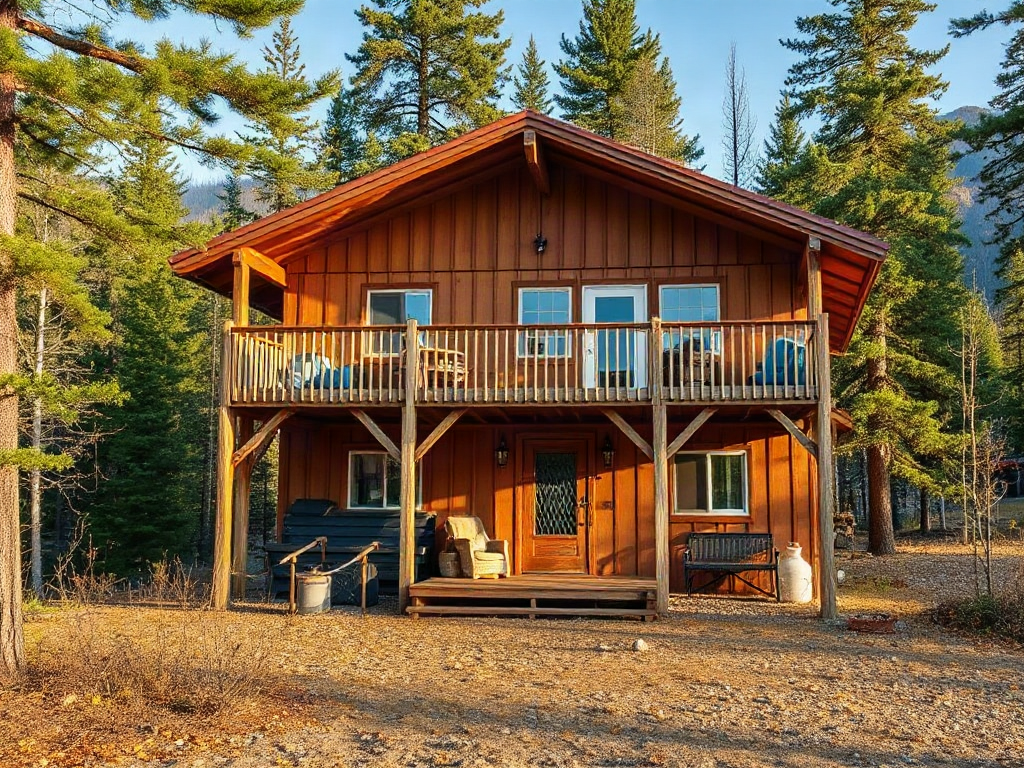
Wildfire defensible space around off-grid buildings should reduce ignitable material from the structure outward, with priority given to the immediate zone, roof, decks, vents, fuel storage, and access routes. Keep the first several feet around walls free of firewood, dry vegetation, stored equipment, and combustible debris, then thin and separate vegetation farther out rather than creating a continuous brush corridor. Off-grid sites need extra attention because generators, propane tanks, solar equipment, batteries, wells, and narrow driveways can add ignition or evacuation hazards. A defensible-space check should be repeated before fire season and after storms, drought, construction, or vegetation growth.
How Defensible Space Works Around Remote Structures
Defensible space is the managed area between a wildfire and a building where combustible materials have been reduced, separated, or maintained so flames and embers have fewer opportunities to reach the structure. Around an off-grid cabin, workshop, pump house, or storage building, the objective is not to create a bare ring of soil. The more useful approach is to interrupt continuous fuel, remove the most vulnerable materials nearest the walls, and make the site easier to inspect and defend.
Wildfire can threaten a remote building through direct flame contact, radiant heat, and wind-driven embers. Embers may land well beyond the active flame front, lodge under roofing edges, collect in gutters, or enter through unscreened vents. A property that looks clear from the driveway can still have a connected path of dry grass beneath shrubs, stacked lumber beside a wall, or pine needles under a deck.
Distance matters, but distance alone is not a reliable measure of protection. A sparse, widely spaced stand of mature trees may present less immediate risk than dense brush pressed against a building. Conversely, steep terrain can carry flames uphill rapidly and may require more aggressive treatment on the downhill side. Local fire agencies, building officials, and vegetation specialists can provide site-specific requirements because climate, slope, wind, and plant communities vary substantially.
A useful assessment begins with the building and moves outward. Photograph each side of the structure, mark fuel accumulations on a simple map, and note slope direction, prevailing wind exposure, vehicle access, water points, and neighboring vegetation. Include the linked wildfire defensible space around off-grid buildings checklist when reviewing secondary structures; a small shed can still transmit fire to the main residence if it is close enough.
Do not assume that green vegetation is automatically safe. Some plants retain moisture better than others, while drought, disease, seasonal dieback, and accumulated litter can change their behavior. The practical test is continuity: can a surface fire move from grass to shrub, from shrub to lower branches, and from branches to the roof? Removing those links generally has more value than simply trimming everything to the same height.
The Immediate Zone: Roofs, Walls, Decks, and Vents
The first area around a building deserves the most detailed attention because small fuel deposits can ignite the structure even when nearby vegetation has been treated. Clear combustible clutter from the area next to exterior walls, including firewood, cardboard, plastic containers, dry leaves, spare lumber, machinery, and seasonal furniture. The exact clearance required by local rules may differ, but the reasoning is consistent: heat and embers are most dangerous when fuel is concentrated against the building.
Roofing condition is often more consequential than decorative landscaping. Replace or repair damaged roofing, close gaps at ridge caps and eaves, and keep gutters free of needles and leaves. Screen vents with appropriately sized corrosion-resistant mesh where permitted by the building design, while preserving required airflow and avoiding modifications that violate manufacturer instructions. An off-grid building may have unusual attic, battery-room, or equipment ventilation, so do not block vents simply to make the exterior appear tighter.
Decks and porches require an underside inspection, not just surface sweeping. Dry vegetation, stored tools, and accumulated needles beneath a deck can expose the framing to flame and radiant heat. Enclose vulnerable areas only with materials and designs approved for the structure; improvised panels can trap moisture, interfere with drainage, or create maintenance problems. Sweep regularly during the dry season and inspect gaps where embers could settle.
Windows, doors, and siding also influence exposure. Keep branches from touching walls or overhanging the roof, and check whether weather seals remain intact. Large panes can crack under heat, while combustible screens, curtains, or stored goods immediately behind a window may increase interior vulnerability. A metal-sided workshop may resist exterior flame better than a wood-sided cabin, but its roof edges, vents, doors, and stored contents still need attention.
A common mistake is concentrating on lawn appearance while ignoring ember traps. A neat gravel path does little if needles fill a roof valley or dry leaves collect behind a propane enclosure. Walk the perimeter at ground level and look upward from below roof edges. The practical standard is not visual tidiness; it is the reduction of places where embers can remain hot long enough to ignite fuel.
Managing Vegetation, Fuel Storage, and Utility Equipment
Vegetation treatment should create separation rather than a continuous ladder of fuels. Mow or trim cured grasses before they become tall and dense, prune lower branches where appropriate, thin crowded shrubs, and remove dead limbs and fallen material. Keep mature trees that provide shade or wind benefits only when their condition, spacing, and distance from structures do not create an unacceptable pathway. Removing every tree is not automatically safer and may increase wind exposure, erosion, or heat stress on remaining vegetation.
Spacing decisions depend on slope, plant form, canopy density, and local fire guidance. On level ground, isolated plants with open gaps may interrupt surface fire spread. On a steep slope, flame length and convective heat can make the downhill side more demanding. A landscape that appears separated from above may still connect through continuous brush below. Treat the slope as a three-dimensional fuel arrangement, not as a flat garden bed.
Fuel storage deserves its own inventory. Firewood, lumber, hay, fuel cans, propane cylinders, and combustible trash should be kept as far from buildings as practical, on stable surfaces and in locations that do not obstruct evacuation. Store fuels according to container and equipment instructions, away from ignition sources and heat-producing equipment. A generator shed, battery enclosure, inverter cabinet, or propane installation should have required clearances, ventilation, and service access; moving equipment into a vegetation screen without checking those requirements can create a new hazard.
Solar arrays can complicate inspection because panels, wiring, and batteries may be distributed across roofs, outbuildings, and ground mounts. Keep dry grass and brush from contacting ground-mounted equipment, maintain access around disconnects, and inspect for damaged conduit or loose components. Do not improvise electrical repairs after a storm. A qualified electrician or the equipment manufacturer may be needed when wiring, battery damage, or ventilation is involved.
Some owners favor a completely cleared property, while others retain dense screening for privacy and wildlife. Both extremes can fail: total clearing may expose soil and structures to windborne embers and erosion, while dense planting can carry fire directly toward walls. A better compromise is a maintained, discontinuous landscape with low-fuel surfaces near structures and carefully selected vegetation beyond them. Use the off-grid building fire-risk review again after adding a shed, greenhouse, wood pile, solar rack, or livestock shelter.
Access, Maintenance, and a Seasonal Inspection Routine
Remote buildings need defensible access as well as defensible landscaping. A narrow or overgrown driveway can delay emergency response and make evacuation difficult. Keep routes clear of fallen limbs and encroaching branches, identify turnarounds for the largest vehicle likely to use the property, and ensure address markings remain visible from the approach road. Gates should be operable by household members and emergency personnel under applicable local arrangements.
Water availability should be treated realistically. A well, pond, tank, or swimming pool may not provide usable firefighting water without the right pump, fittings, power, hose, and trained operator. During a power outage, an electric well pump may be unavailable, and a small generator may not support every load simultaneously. Confirm what can actually be connected and operated rather than counting every water source as emergency capacity.
Maintenance is where many defensible-space projects lose value. Treatment is not permanent: grasses cure, shrubs resprout, trees drop limbs, rodents damage wiring, and wind moves needles into corners. Schedule inspections before the dry season, after major wind events, and whenever construction changes the site. A compact inspection sequence is more dependable than trying to remember everything during a crisis:
- Clear roof valleys, gutters, decks, steps, and wall edges of needles and debris.
- Check vegetation contact with roofs, chimneys, vents, siding, utility lines, and equipment.
- Inspect fuel piles, propane areas, generators, batteries, and sheds for clearance and damage.
- Walk the driveway and evacuation route, including gates, signage, bridges, and turnarounds.
- Record unresolved hazards and assign a date, tool, or contractor for each correction.
Prioritize hazards that combine proximity, continuity, and ignition potential. Removing a dry wood stack beside a cabin may be more valuable than spending a day selectively pruning distant trees. Likewise, clearing a blocked route may matter more than expanding an already adequate gravel strip. If time or funds are limited, protect the structure first, then improve access, then extend fuel treatment outward.
Watch for signs that an approach is failing: debris returns quickly, cut vegetation remains piled near the building, branches still touch the roof after growth, or stored equipment has migrated into the immediate zone. Chipping, hauling, grazing, mowing, and hand removal each have different costs and seasonal limits. Burning piles can introduce ignition risk and may be restricted by weather or local rules, so disposal should follow local requirements.
Frequently Asked Questions
How far should defensible space extend around an off-grid building?
The appropriate distance depends on slope, vegetation, local rules, and building construction. Treat the immediate area first, then extend fuel separation outward where terrain or dense vegetation increases exposure.
Should all trees near a cabin be removed?
No. Remove dead, diseased, unstable, or clearly connected fuels, and thin crowded growth when appropriate. Retained trees should not create continuous branches or canopy contact with the structure.
Where should firewood be stored?
Keep firewood away from buildings and vegetation where practical, on a stable surface, and in a location that does not block evacuation or emergency access. Follow local rules and safe storage guidance.
Are gravel and bare soil enough to protect an off-grid home?
They reduce surface fuels but do not address embers entering vents, landing on roofs, or igniting deck debris. Roof maintenance, gutter cleaning, vent protection, and fuel separation remain necessary.
How often should defensible space be inspected?
Inspect before the dry season and repeat checks after strong winds, drought, construction, or heavy vegetation growth. Remote properties may need more frequent visits if no one lives there continuously.
Further Reading
Authoritative Sources
- Defensible Space
readyforwildfire.orgCalifornia fire authorities explain vegetation zones and structure protection concepts that can inform site assessments
- Wildfire Safety and Preparedness
nfpa.orgNFPA provides practical information about ember exposure, home ignition risks, and wildfire preparation
- Wildfire Management
fs.usda.govU.S. Forest Service material offers broader context on wildfire behavior, fuels, and landscape conditions
Conclusion
Effective defensible space around a remote building comes from reducing ignition opportunities in a deliberate order. Inspect the roof, gutters, vents, decks, wall edges, and nearby stored materials before tackling distant vegetation. Then interrupt fuel continuity across the property, protect access routes, and verify that generators, propane, batteries, solar equipment, and water systems remain safe and usable. A cleared area that is never maintained will quickly lose its value, especially after wind, drought, or seasonal growth. Walk the site from the structure outward, document hazards, and correct the closest and most connected fuels first. Local fire officials should resolve questions about required distances, burning, access, and equipment clearances because those details vary by jurisdiction and terrain.