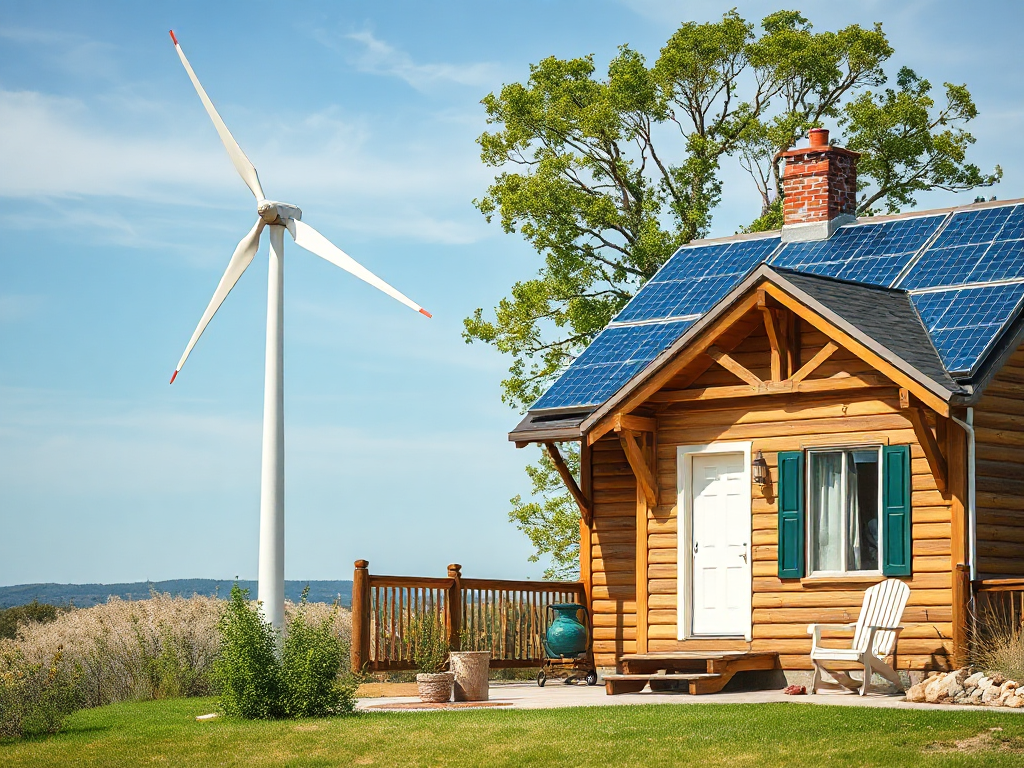
Wind versus solar power for self-sustainable homes depends mainly on local resource quality, seasonal demand, and storage needs rather than equipment preference. Solar usually offers simpler installation and predictable daytime production, while wind can add valuable winter or overnight generation when the property has steady, unobstructed air flow. A sound comparison uses a year of solar exposure, measured wind conditions at turbine height, household load profiles, battery capacity, maintenance access, and backup requirements. The common mistake is installing a small turbine in turbulent air near trees or buildings and expecting its rated output; a modest solar array may produce more useful energy with less maintenance in that setting.
What Each Energy Source Can Deliver at Home
Solar panels convert sunlight directly into electricity, with production usually peaking around midday and changing with season, weather, roof orientation, shading, and panel temperature. Wind turbines convert moving air into electricity, so their output depends on wind speed, rotor size, tower height, and turbulence. These different operating patterns matter more than the labels “solar” and “wind” when a home must remain functional without dependable grid service.
A well-sited solar array is often the easier starting point for a household because panels have no moving parts, can be installed in modular increments, and make their output relatively easy to estimate from local solar data. A roof with broad southern exposure in the northern hemisphere, limited shade, and room for several panels may provide useful daytime energy for refrigeration, water pumping, communications, and battery charging. Solar production still falls during storms, winter cloud cover, and long nights, so the array must be paired with storage or another source if uninterrupted power is required.
Wind has a different advantage: a turbine may produce after sunset and during periods when winter winds are stronger than summer sunlight. That benefit is real only when the rotor reaches a suitable, relatively smooth wind resource. A turbine mounted low on a pole beside a house may spin frequently without producing much energy because turbulent air reduces performance and increases mechanical stress. Rated wattage is not a prediction of household output; it describes a particular wind speed that may rarely occur at the site.
For example, a wooded rural property with excellent sun exposure but weak, irregular wind generally favors solar. An exposed ridge or open coastal site with persistent wind and limited winter sun may justify a turbine, provided noise, access, tower safety, and local requirements are acceptable. A wind and solar system comparison should therefore begin with resource measurements, not with the nameplate capacity of a product.
Site Conditions That Decide the Outcome
Site quality is the strongest predictor of whether renewable equipment will earn its space, cost, and maintenance burden. Solar assessment should examine shade throughout the year rather than relying on a single sunny visit. Trees that shade panels in winter, nearby chimneys, roof obstructions, snow accumulation, and the available mounting area can reduce useful production. A ground-mounted array may improve orientation and service access, but it consumes land and may need protection from animals or equipment.
Wind assessment requires more caution. Wind speed changes sharply with height and is disturbed by trees, buildings, ridgelines, and uneven terrain. A turbine needs adequate clearance from obstacles and a tower that places the rotor in cleaner air; the exact requirement depends on the turbine design and site. Short-term observations from a handheld device can identify obvious problems, but they may not represent seasonal conditions. Local wind maps are useful screening tools, not substitutes for site-specific judgment.
Consider two homes with the same electrical demand. Home A sits among mature trees with a clear south-facing roof. Solar loses some production to seasonal shade, but the problem can be assessed panel by panel and addressed through layout or trimming. Home B occupies an exposed pasture, yet the proposed turbine would stand near a barn and a line of trees. The second property may look more “windy” in general but still provide poor turbine performance at the chosen tower location.
Before purchasing equipment, document the conditions that will affect output and service:
- Solar: shade by season, roof structure, orientation, snow exposure, and space for future panels.
- Wind: unobstructed height, seasonal wind patterns, turbulence, tower foundation access, and safe maintenance clearance.
- Both: distance to batteries and loads, cable runs, weather exposure, lightning risk, and room for expansion.
The common failure is treating a property-wide resource estimate as proof that a particular mounting point works. Place the equipment where the resource is strongest and where it can be inspected safely. If that location is impractical, a smaller, simpler system may outperform an ambitious design that cannot be maintained.
Storage, Loads, and Seasonal Reliability
Renewable generation becomes useful household power only after it is matched to demand, storage, and backup capacity. Solar often produces most strongly while residents are away at work or school, making batteries valuable for evening lighting, cooking, water systems, and communications. Wind can contribute at night, but its output may fluctuate over minutes or days. Batteries smooth those changes, while an alternate generator or grid connection may cover extended low-resource periods.
Start with an honest load inventory rather than adding generation to an assumed average. Separate essential circuits—refrigeration, well pumps, heating controls, medical equipment, lighting, and communications—from flexible loads such as laundry, workshop tools, and electric vehicle charging. A home heated primarily by resistance electricity may need a much larger system than a home using efficient heating equipment and another fuel source. Reducing demand can be cheaper and more reliable than adding panels or tower capacity.
Seasonal mismatch is often the deciding issue. Solar may meet summer loads comfortably while producing much less during short winter days. Wind may help during those months, but only if the site has dependable winter winds. A hybrid design can reduce the amount of battery storage needed because one source may operate when the other is weak. It does not remove the need for an energy budget: several calm, cloudy days can still require backup.
Battery sizing should reflect the critical load, acceptable outage duration, charging limits, and the battery chemistry’s operating requirements. Oversizing storage without enough generation leaves the batteries chronically undercharged; oversizing generation without sufficient storage wastes midday or windy-period production. A practical self-sustainable home energy plan models ordinary use, seasonal peaks, and an emergency operating mode separately.
A useful sign that a system is balanced is that batteries regularly reach an appropriate charge level during resource-rich periods while essential loads remain covered during normal low-production intervals. Frequent deep discharge, persistent generator use, or curtailed production indicates that the load profile, storage, or generation mix needs review.
Costs, Maintenance, and System Choices
Solar and wind have different ownership costs beyond the initial equipment price. Solar maintenance is generally centered on inspection, electrical connections, inverter condition, mounting hardware, and occasional cleaning where dust, pollen, or snow materially affects production. Panels are quiet and modular, so a failed component may not disable the entire array.
Wind systems include moving parts, bearings, blades, brakes or furling mechanisms, tower hardware, and controls. Inspection may require lowering the turbine or climbing the tower, depending on the design. Severe weather can impose additional stress, and access for repairs must be planned before installation. A turbine that is inexpensive to buy but difficult to service can become a poor fit for a remote home.
Noise, visual impact, wildlife concerns, and permitting may also influence the decision. These issues vary by location and equipment, so the property owner should check local rules and manufacturer documentation rather than assuming that a small turbine is exempt from review. Solar may face roof-structure or fire-access constraints, while ground arrays require space and can be vulnerable to livestock, snow, or vegetation.
Comparing technologies by dollars per rated watt is misleading. Compare estimated annual energy, usable energy during the months that matter, battery requirements, replacement parts, installation labor, and the cost of a backup source. A modest solar system may be the sensible base for a cabin with daytime loads. A solar array plus wind turbine may make more sense for a year-round residence on an exposed site where winter wind production is documented. A larger turbine is not automatically a better investment if the tower cannot reach smooth air.
Reliability should receive its own budget. Keep spare fuses or manufacturer-approved components where appropriate, maintain clear service records, and ensure that anyone responsible for the property knows how to isolate generation and batteries safely. Equipment warranties do not replace a maintenance plan or solve poor siting.
A Practical Selection Process
The best choice emerges from a staged comparison rather than a technology-first purchase. First, define the essential electrical loads and the longest outage the household must tolerate. Next, improve efficiency where the change reduces peak demand or daily consumption. Efficient refrigeration, water pumping schedules, lighting, and heating controls can materially change the required system size.
Then evaluate each resource at the actual property. Use reliable solar data and inspect shade across seasons. For wind, consider a professional assessment or appropriately long measurement period, with the proposed tower height and obstacle pattern in mind. Ask whether the strongest resource occurs during the season of greatest demand. A resource that looks impressive on an annual chart may be poorly timed for the home’s critical needs.
Use this priority sequence:
- Protect essential loads and reduce avoidable consumption.
- Confirm solar and wind conditions at the intended installation points.
- Estimate usable production, not just rated capacity.
- Size batteries for the chosen critical-load window and charging sources.
- Plan backup power, inspections, replacement parts, and safe shutdown procedures.
Solar is usually the lower-complexity option when the roof or ground site is unshaded and the household can manage nighttime and seasonal gaps with batteries or backup. Wind deserves serious consideration when the site is genuinely exposed, tower installation is feasible, and winter or overnight production has clear value. Hybrid systems are most defensible when both resources are strong enough to contribute meaningfully; combining weak solar and weak wind does not create reliability.
The mistake to avoid is buying equipment before calculating the energy pathway from resource to appliance. Check the site, load, storage, controls, and service plan as one system. That method provides a more realistic foundation for planning independent household power than choosing whichever technology has the larger advertised output.
For project-specific decisions, consult renewable-energy information from national energy agencies, local permitting offices, university engineering programs, and equipment manufacturers’ installation manuals. These sources can provide solar resource tools, turbine siting guidance, electrical safety requirements, and maintenance limits that generic product listings often omit.
Frequently Asked Questions
Is solar or wind usually better for a self-sustainable home?
Solar is often simpler where the property has good sun exposure. Wind may be more useful on an exposed site with documented, steady air flow, especially when nighttime or winter generation matters.
Can a small wind turbine power a house?
It can contribute power if it is mounted high enough and located in a strong, low-turbulence wind resource. Turbines placed near buildings or trees often produce much less energy than their rated capacity suggests.
Does solar work during winter?
Solar panels still produce electricity in winter, but shorter days, snow, shading, and cloud cover can reduce output. Winter load planning should include battery storage and a backup source.
Is a hybrid wind-and-solar system worth installing?
A hybrid system may improve coverage when solar and wind resources complement each other seasonally or by time of day. It is less worthwhile when one resource is weak or the added maintenance cannot be supported.
What should be measured before buying renewable equipment?
Measure essential and flexible loads, seasonal solar exposure, wind conditions at the intended turbine height, battery needs, installation access, and backup requirements before comparing equipment.
Further Reading
Authoritative Sources
- Ready.gov
ready.govOfficial household preparedness guidance, emergency plans, and supply checklist resources.
- FEMA
fema.govFederal emergency management information, disaster planning resources, and recovery guidance.
- American Red Cross Emergency Preparedness
redcross.orgPractical emergency preparation, safety, and response guidance for households.
- CDC Emergency Preparedness and Response
cdc.govPublic health guidance for disasters, emergency response, and recovery conditions.
Conclusion
Choosing between wind and solar for a self-sustainable home is a site-and-load decision, not a contest between technologies. Solar usually rewards a clear mounting area with straightforward expansion and modest mechanical maintenance. Wind can add valuable overnight or winter energy, but only when a properly elevated turbine reaches a dependable, relatively smooth resource. Begin with essential loads, then assess seasonal production, battery behavior, backup needs, service access, and local installation constraints. If both resources are strong, a hybrid system may reduce reliance on any single weather pattern. If one resource is weak, adding it for appearance or rated capacity can increase cost without improving resilience. A measured site assessment and realistic energy budget should come before equipment selection.