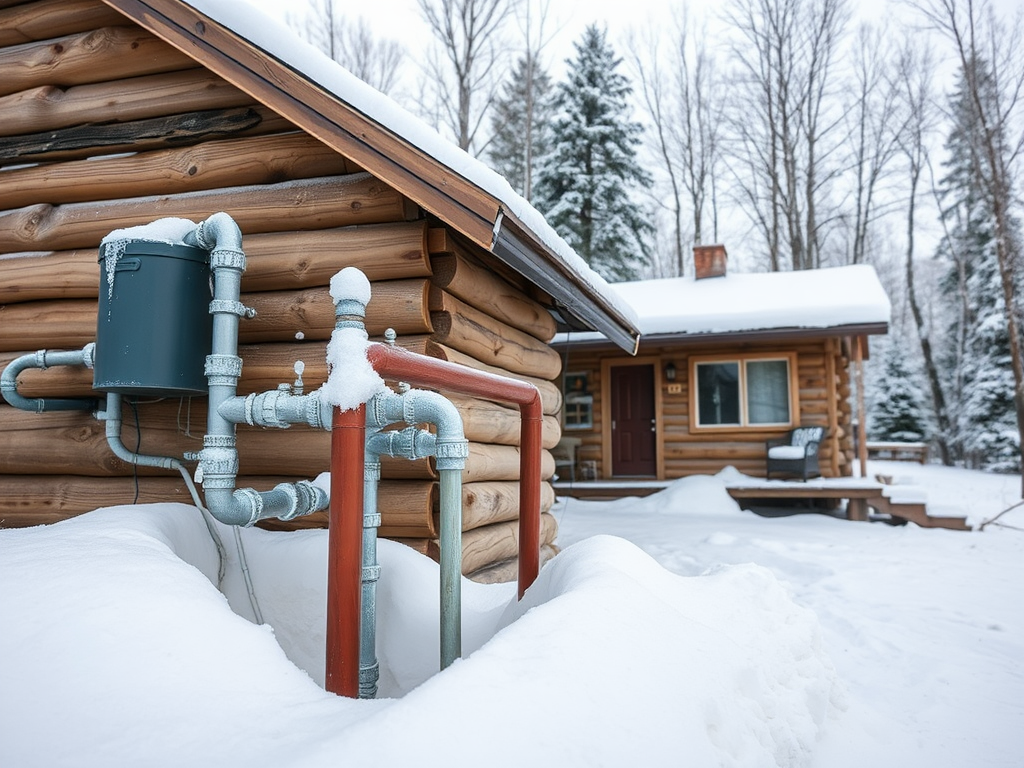
Winter water freezing prevention for remote homes depends on protecting exposed pipes, maintaining safe heat around vulnerable plumbing, and having a way to drain or isolate water when power or heating fails. Insulate supply lines, tanks, filters, and pump rooms, but leave access for inspection and protect insulation from moisture and rodents. Keep interior plumbing above freezing with dependable heat and temperature monitoring rather than relying on insulation alone. Before severe weather, identify shutoff valves, prepare backup power for pumps or heat, and know which sections can be drained. A small leak, falling indoor temperature, or weak pump flow can signal ice formation before a pipe splits.
Find the Plumbing That Freezes First
Remote homes are most vulnerable where water lines cross cold, poorly heated spaces rather than where the pipes are easiest to see. Exterior walls, crawl spaces, unheated lofts, pump sheds, shallow buried runs, pressure tanks, filters, and hose connections deserve an inspection before temperatures fall. A line can freeze even while the living area feels comfortable because moving air through a wall cavity or an uninsulated floor can remove heat faster than the room thermostat indicates.
Trace the complete route from the source to each fixture. Mark the well line, cistern outlet, pump, pressure tank, filters, water heater, branch lines, and shutoff valves. Pay special attention to changes in material or elevation. A rigid fitting, valve body, or filter housing often freezes before a straight section of pipe because it contains more stagnant water and may sit in an exposed location. Remote plumbing also tends to have longer runs, fewer occupied rooms, and less frequent observation, so a small freeze can continue unnoticed.
A useful inspection occurs during the coldest part of the night, not only on a mild afternoon. Look for frost on fittings, reduced flow at one fixture, unusual pump cycling, or a pressure gauge that drops when no water is being used. These signs do not prove that a pipe has frozen, but they identify places where insulation, heat, or drainage needs improvement. Compare a frequently used line with a rarely used branch: regular flow brings warmer source water into the pipe, while stagnant water loses heat steadily.
Do not assume that burying a pipe makes it safe. Frost depth, soil type, snow cover, groundwater movement, and the duration of cold all affect ground temperature. A shallow line beneath a driveway or exposed rock can behave differently from a deeper line under undisturbed soil. For a remote-home assessment, prioritize the sections that combine stagnant water, outside exposure, and difficult access. That ranking is more useful than insulating every visible pipe equally.
The internal resource winter water freezing prevention for remote homes should be treated as a system problem: locate the weak points first, then match protection to each one. The goal is not merely warmer pipes; it is early detection and a recovery option when conditions exceed the design.
Build Protection Around Pipes, Tanks, and Pumps
Insulation slows heat loss, but it does not create heat. That distinction determines whether a protective measure works through a short cold snap or fails during a prolonged outage. Wrap accessible pipes with suitable pipe insulation, seal air leaks around penetrations, and insulate the walls and ceiling of a pump room. Keep insulation dry and compressed as little as possible, because wet or flattened material provides less resistance to heat transfer.
Insulation must be installed without hiding problems. Leave valves, unions, pressure gauges, filter bowls, and electrical components accessible for inspection and servicing. Protect foam from rodents and physical damage, especially in crawl spaces and outbuildings. A sealed enclosure around a pump can reduce drafts, but it must not block ventilation required by the equipment or place combustible material near a heat source. Manufacturer instructions take priority for heat cables, pumps, water heaters, and controls.
Heat tracing may be appropriate for a vulnerable pipe that cannot be relocated or enclosed. Use a product specifically rated for the pipe material and installation location, and follow its spacing, thermostat, grounding, and weatherproofing instructions. A heat cable that is crossed, buried under unsuitable insulation, or powered from an unreliable outlet may create risk without providing dependable protection. Heat tracing is a targeted solution; it is not a substitute for a sound route, protected fittings, or an outage plan.
Water tanks and pressure equipment need separate attention. A large tank may freeze more slowly than a narrow pipe, but its outlet, float assembly, filter, or pressure switch can fail first. Keep these components inside a maintained enclosure when possible. If a tank is housed in an unheated structure, insulation alone may only delay freezing. A thermostatically controlled heat source, low-temperature alarm, or planned drain-down may be more appropriate depending on the building and available power.
Outdoor taps, quick-connect fittings, and short hoses are common failure points because they retain water after indoor plumbing has been protected. Disconnect hoses, close indoor isolation valves, and drain the exterior branch where the plumbing design allows it. Do not use a torch or open flame to thaw a line. Gradual warming with approved equipment is safer, and the water supply should be shut off while a suspected split is assessed. A pipe may look intact while frozen, then leak as ice melts.
A practical protection hierarchy is simple: relocate exposed plumbing when renovation is possible, enclose and air-seal it when relocation is not practical, add insulation, then consider controlled supplemental heat. The cheapest material is not always the cheapest solution if it leaves a buried fitting or pump room unprotected. For more planning context, see remote-home water system protection.
Plan Heat, Power, and Water Use for Cold Nights
Reliable winter protection requires enough heat and electricity to cover the coldest realistic operating condition, including an outage. Set the thermostat to maintain a stable minimum temperature in rooms containing plumbing, and open interior doors or cabinet doors where safe so warm air can reach pipes beneath sinks. This approach is different from heating the main living room aggressively while allowing a utility closet, crawl space, or pump shed to fall below freezing.
Remote homes often depend on a combination of wood heat, propane, electricity, batteries, generators, or solar production. Each has a failure mode. A wood stove may keep one room warm while distant plumbing freezes. A generator may run the pump but not the building heater. Batteries may support monitoring and controls but not a high-wattage heating appliance for several days. Map the loads before winter: circulation pumps, heat tape, heaters, alarms, well pumps, and communications equipment may compete for limited energy.
Use a temperature sensor in the coldest plumbing location rather than relying only on a thermostat near the center of the house. Test the alarm and verify that its notification method still works when internet service or grid power is unavailable. A local audible alarm, visible low-temperature indicator, or scheduled in-person inspection may be more dependable than a cloud-connected device in an isolated location. The best monitoring system is one that someone will notice and act on.
Water-use habits can reduce exposure but should not be mistaken for a complete solution. Periodic flow through a line may bring warmer water into it, yet a dripping tap can waste stored water, overload a septic system, or conceal a pressure problem. Continuous flow also does little for a frozen section between the source and the fixture. Use water movement only when the plumbing design and supply capacity support it, and prioritize heat, insulation, or drainage for the vulnerable segment.
Before a severe cold period, calculate how long backup fuel and battery capacity will last at the expected load. Keep generator operation outdoors and follow its instructions; carbon monoxide can enter a home even when the machine is outside if placement is poor. Never improvise indoor combustion heating. If the home will be vacant, the safer choice may be to shut off the supply and drain the system rather than maintain uncertain heat for an extended absence.
For occupied homes, a short cold-weather operating plan should identify who checks the property, what temperature triggers action, which loads receive backup power, and where the main shutoff is located. That plan is more valuable than adding equipment without testing it. A protected system should show stable temperatures, normal pressure, and expected pump cycles during a trial outage. If any of those change, investigate before the next freeze.
Use a Freeze-Response and Restart Checklist
When water flow falls suddenly during freezing weather, stop treating the fixture as the problem. Check whether the pressure gauge, pump behavior, and neighboring fixtures point to a shared supply issue. If the pump runs continuously, pressure drops, or water appears where it should not, shut off the main supply if accessible and turn off the pump. Reducing pressure limits the amount of water released if a split opens during thawing.
Warm a suspected section gradually using approved electric warming equipment or increased room heat. Keep the area attended, avoid open flames, and stop if a fitting begins leaking. Do not use boiling water on cold plastic or frozen glass components; sudden temperature changes can damage them. If the frozen section is inside a wall, under a floor, or near electrical equipment, professional assistance may be safer than opening the area blindly.
After thawing, inspect every accessible fitting before restoring full pressure. Open a faucet slowly, watch the pressure gauge, and listen for pump cycling when no fixture is running. Check floors, cabinets, crawl spaces, ceilings, and the area around the water heater. A concealed leak may not become obvious until water pressure returns. If the system uses filters or treatment equipment, inspect housings and connections because trapped water can split them even when the main pipe survives.
A drain-down plan is often the most dependable protection for a vacant remote home. The procedure depends on the plumbing layout, so identify low-point drains, isolation valves, pressure-tank instructions, water-heater requirements, and any appliances that retain water. Draining only the visible indoor pipes may leave water in pumps, filters, traps, and exterior branches. Some systems require antifreeze products intended for the specific plumbing application; automotive antifreeze should not be introduced into drinking-water plumbing.
Use this compact pre-freeze check:
- Test the low-temperature alarm, backup power, and generator transfer procedure.
- Inspect insulation, heat cables, exposed fittings, filter housings, and outdoor taps.
- Confirm that shutoff valves move and that drain points are labeled.
- Secure enough fuel for the actual heating and pumping loads.
- Record normal pressure, pump cycling, and fixture flow for comparison.
Common mistakes include thawing a line without shutting off water, trusting a warm thermostat to protect a distant pipe, and leaving a vacant system pressurized because drainage seems inconvenient. Each choice shifts risk to a less visible location. A modest inspection before severe weather can reveal a failing heat cable or exposed fitting while repair is still straightforward. Readers comparing system options can use winter plumbing protection planning to organize those decisions around occupancy, climate, equipment, and backup capacity.
Frequently Asked Questions
Can insulation alone stop remote-home pipes from freezing?
No. Insulation slows heat loss but cannot replace heat during a long cold spell. Exposed plumbing may need enclosure, controlled heat, monitoring, or complete drainage.
Which plumbing components should be checked first?
Inspect exterior branches, pump rooms, pressure tanks, filter housings, valves, shallow buried lines, and pipes along exterior walls. These locations often combine stagnant water with cold exposure.
Should a faucet be left dripping during freezing weather?
Sometimes limited flow may help a vulnerable line, but it wastes water and may not protect a frozen section upstream. Use it only when the supply, drainage, and plumbing design can safely support it.
What should I do if a frozen pipe begins leaking?
Shut off the water supply and pump, use safe gradual warming, and inspect as the ice melts. Avoid open flames and restore pressure slowly only after accessible leaks have been checked.
Is draining the system better than heating an empty home?
For a vacant remote home with unreliable power or limited fuel, a correctly executed drain-down may reduce freeze damage more reliably than unattended heating. Follow the system and appliance requirements.
Further Reading
Authoritative Sources
- Academy of Nutrition and Dietetics
eatright.orgProfessional nutrition guidance, healthy eating resources, and practical dietitian-reviewed advice.
- U.S. Department of Agriculture
usda.govOfficial food, nutrition, agriculture, and consumer guidance from the USDA.
- NIH Office of Dietary Supplements
ods.od.nih.govResearch-based fact sheets on nutrients, supplements, dietary intake, and safety considerations.
- International Society of Sports Nutrition
sportsnutritionsociety.orgEvidence-informed sports nutrition resources and position stands for active people and athletes.
Conclusion
Winter water protection in a remote home begins with finding the least visible weak point: a pump shed, filter housing, shallow line, exterior-wall branch, or fitting that retains stagnant water. Insulation and air sealing reduce heat loss, while monitored heat protects systems that must remain pressurized and operating. Neither approach is complete without backup power, safe fuel planning, accessible shutoffs, and a tested response to low flow or falling temperature.
Before the next severe freeze, trace the plumbing, record normal pressure and pump behavior, inspect vulnerable components, and decide whether the property needs continuous heat or a full drain-down plan. During thawing, control pressure and check for concealed leaks before normal use resumes. That combination of prevention, monitoring, and recovery planning offers a more dependable defense than any single product.