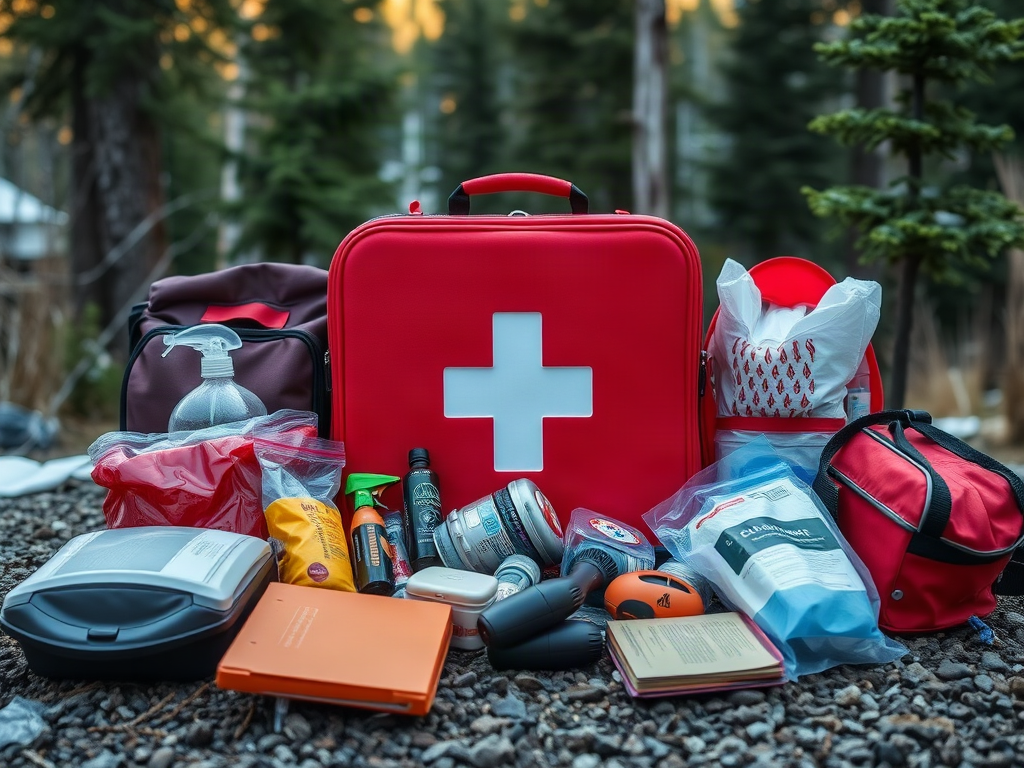
Emergency medical readiness for remote homesteads means combining trained first response, carefully selected supplies, reliable communication, and a rehearsed evacuation route for injuries or illness that may worsen before help arrives. A workable system includes bleeding-control materials, wound-care items, personal medications, fever and pain supplies, protective gloves, lighting, backup power, and written health information. Distance makes early assessment and timely contact with emergency services more important than owning a large kit. Store supplies where they can be reached quickly, check expiration dates, and practice decisions for burns, fractures, allergic reactions, chest symptoms, and severe bleeding. Avoid treating a stocked cabinet as a substitute for professional medical care or transport.
Build Readiness Around Time, Distance, and Risk
Medical preparation on a remote homestead should be designed around the delay between an incident and professional care. A cut sustained while repairing fencing may be manageable with prompt pressure and clean dressing, while uncontrolled bleeding, breathing difficulty, altered consciousness, or a suspected spinal injury requires immediate emergency communication and transport planning. The distance to a road, seasonal access problems, weak cellular coverage, and weather should shape the system more than the size of a commercial first-aid bag.
Begin by reviewing the work and living areas where injuries are most plausible. Machinery, chainsaws, livestock, wells, ladders, firearms, generators, fuel, pesticides, hot surfaces, and isolated trails each create different hazards. A homestead with frequent tractor work needs a stronger bleeding-control and crush-injury response than a small property with limited equipment. A household member with anaphylaxis, diabetes, seizure disorder, or a complex prescription schedule adds a separate medication and communication requirement.
Risk ranking prevents a common mistake: spending heavily on unusual medical gadgets while failing to place gloves, dressings, lighting, and a working phone near the activity that creates the danger. Consider three questions for every major hazard: what could happen, what can a trained person safely do in the first minutes, and what event requires immediate professional direction? The answers should determine both supplies and practice.
Remote readiness is not a promise that a serious injury can be treated at home. It is a way to reduce preventable delay while qualified help is being contacted. A small, organized kit beside a workshop may be more useful than a large cabinet locked inside the main house. Link this setup with the broader Emergency medical readiness for remote homesteads plan so every resident knows where to go and whom to call.
Assemble Supplies That Match Remote-Homestead Injuries
A useful medical kit supports immediate protection, bleeding control, cleaning, dressing, symptom relief, and communication. It should not depend on one multipurpose item or on supplies being stored in a distant room. Keep a primary kit in the house, smaller kits in vehicles and work areas, and a weather-resistant grab bag for evacuation. Each container should be labeled, reachable, and checked by a named household member.
Core contents commonly include nitrile gloves, hand sanitizer, sterile gauze, adhesive and elastic bandages, medical tape, wound-cleaning supplies, triangular bandages, cold packs, a thermometer, trauma shears, tweezers, eye protection, a flashlight with spare batteries, and a written emergency-contact card. Add a CPR barrier if household members have been trained to use one. A commercially packaged tourniquet may be appropriate for severe extremity bleeding when users receive recognized training; improvised devices and unfamiliar equipment can create dangerous delays.
Medication storage needs more judgment than simply buying a large assortment. Maintain an accurate list of prescriptions, allergies, diagnoses, doses, and prescriber contacts. Keep personal rescue medicines according to the prescribing clinician’s instructions, and ask a pharmacist about temperature, moisture, replacement, and backup requirements. Over-the-counter pain relievers, antihistamines, oral rehydration products, and fever supplies may be useful for appropriate household members, but labels, contraindications, age limits, pregnancy, kidney disease, anticoagulant use, and drug interactions matter.
For example, a splinter can call for clean tweezers and a dressing, whereas a deep puncture from farm equipment may require professional assessment even when the wound looks small. Burns need cooling with clean, cool running water when available, not grease or adhesive material placed directly on damaged skin. Chemical exposure demands the product label or poison-control guidance rather than a guessed neutralizing substance. Supplies support the first response; they do not determine whether a wound needs closure, imaging, antibiotics, or specialist treatment.
Use a compact inventory rather than an impressive but neglected cache:
- Check seals, batteries, medication dates, and sterile packaging at a fixed monthly interval.
- Replace items after use and keep a written shortage list.
- Store temperature-sensitive products according to official labeling, not in an overheated vehicle.
- Include a pen, paper, phone charger, backup light, and a printed map showing the property entrance.
The failure mode to avoid is confusing quantity with readiness. Ten expired dressings do not compensate for no gloves, poor lighting, or uncertainty about the evacuation address.
Turn Assessment and Communication Into a Routine
The first response should protect the responder, identify immediate threats, and bring professional help into the decision as early as the situation warrants. A trained household member can check responsiveness, breathing, severe bleeding, and obvious environmental danger while another person retrieves supplies and contacts emergency services. Do not enter a confined space, electrical area, fire zone, or unstable structure merely to reach an injured person.
Communication is often the weak link at a remote property. Post the exact civic address, access instructions, gate codes, landmarks, alternate routes, and coordinates where they can be read under stress. Test cellular coverage at the house, barn, workshop, and field. If a phone is unreliable, identify the available backup method, such as a landline, radio system, satellite communicator, or neighbor relay, and learn its limitations. A backup that remains uncharged or has no trained user is only theoretical.
When calling for help, describe the location first, then the mechanism of injury, the person’s condition, hazards, and what care has already been given. Keep someone available to meet responders at the gate, especially at night or during snow. If the property has multiple entrances, use signs or lights that can guide an unfamiliar crew without exposing people to unnecessary danger.
Practice scenarios should focus on decisions rather than theatrical simulations. One drill might involve a chainsaw laceration with heavy bleeding; another might involve a child with breathing difficulty far from the road. Participants should identify who calls, who applies safe first aid, who unlocks the gate, who brings the medical history, and who manages animals or other children. The goal is not to diagnose at home. The goal is to recognize an emergency, provide appropriate immediate support within training, and avoid delays caused by debate.
A frequent misconception is that a conscious person who says they are fine does not need evaluation. Shock, head injury, toxic exposure, and internal injury may not be obvious. Conversely, remote residents sometimes attempt invasive treatment because transport feels inconvenient. Follow dispatcher instructions, use first-aid or CPR skills within training, and seek professional guidance when symptoms are severe, changing, or unexplained. The Emergency medical readiness for remote homesteads system should make escalation easier, not encourage amateur diagnosis.
Practice Evacuation, Documentation, and Ongoing Maintenance
An evacuation plan becomes useful when it accounts for the actual property, not an idealized emergency route. Identify the fastest safe path from each work zone to a vehicle or meeting point, then identify a second route for washed-out roads, fallen trees, snow, or a locked gate. Decide which vehicle can leave in poor weather, where keys are stored, and who can drive if the usual driver is injured.
Transport decisions depend on the condition and the available help. A minor wound may allow ordinary travel after professional advice, while a person with possible neck injury, serious bleeding, breathing problems, or reduced consciousness should not simply be placed in a private vehicle without emergency direction. Moving someone can worsen an injury, but waiting without contacting emergency services can also be dangerous. The correct balance depends on the hazard, symptoms, training, and dispatcher or clinician instructions.
Prepare a waterproof medical information packet containing names, dates of birth, allergies, medications and doses, major conditions, prior surgeries, emergency contacts, insurance details if used, and the location of advance-care documents. Keep copies in the house, evacuation bag, and a secure digital account that authorized family members can access. Update the packet whenever a prescription or diagnosis changes. A medication list is particularly valuable when stress, poor lighting, or unfamiliar responders make memory unreliable.
Maintenance should be tied to existing homestead routines. Check kits when changing clocks, servicing equipment, or preparing for winter. Rehearse the route after major landscaping, construction, or gate changes. Invite household members to complete age-appropriate first-aid, CPR, bleeding-control, or wilderness-medicine training from recognized providers. Training has a tradeoff: a short course cannot prepare someone for every illness, but it can reduce hesitation and improve the quality of information given to emergency dispatchers.
Use a simple priority order when money or time is limited:
- Arrange reliable emergency communication and post the location details.
- Obtain training for the adults most likely to be present during risky work.
- Place basic protective and bleeding-control supplies where incidents occur.
- Prepare medication records, personal prescriptions, lighting, and transport access.
- Add specialized equipment only after its purpose, storage, and training requirements are clear.
Signs the system is working include a quick call with an accurate location, an accessible kit, and a calm division of tasks. Signs it is failing include expired supplies, unclear responsibility, blocked access roads, or a belief that a large kit eliminates the need for medical evaluation. Keep refining the Emergency medical readiness for remote homesteads plan after drills, near misses, seasonal changes, and actual use.
Frequently Asked Questions
How far should a remote homestead first-aid kit be from the work area?
Keep a compact kit at the work area or in a nearby vehicle, with a larger resupply kit in the house. A short retrieval distance matters when bleeding or exposure is time-sensitive.
Should homesteaders keep prescription medicines as backups?
Ask the prescribing clinician and pharmacist about lawful, safe backup quantities, storage, and replacement. Never change dosing or use another person's medication without professional direction.
What information should be given to emergency dispatchers?
Give the exact address, access instructions, callback number, injury mechanism, symptoms, hazards, number of patients, and first aid already provided. Stay on the line unless instructed otherwise.
Is a tourniquet necessary for every homestead?
It may be appropriate where severe limb bleeding is a plausible risk, especially around machinery, but users should obtain recognized training and understand that emergency medical care remains necessary.
How often should emergency medical supplies be checked?
Use a monthly or seasonal schedule, and inspect supplies after every use. Check medication dates, damaged packaging, batteries, lighting, protective equipment, and access routes.
Further Reading
Authoritative Sources
- Academy of Nutrition and Dietetics
eatright.orgProfessional nutrition guidance, healthy eating resources, and practical dietitian-reviewed advice.
- U.S. Department of Agriculture
usda.govOfficial food, nutrition, agriculture, and consumer guidance from the USDA.
- NIH Office of Dietary Supplements
ods.od.nih.govResearch-based fact sheets on nutrients, supplements, dietary intake, and safety considerations.
- International Society of Sports Nutrition
sportsnutritionsociety.orgEvidence-informed sports nutrition resources and position stands for active people and athletes.
Conclusion
Effective readiness on a remote homestead is built from short response times, accurate information, practical training, and a clear route to professional care. Put communication details and basic supplies where injuries actually occur, then adapt the contents to machinery, livestock, chemicals, weather, and household medical needs. Keep personal medicines and health records current, test backup communication, and rehearse who calls, who retrieves equipment, and who opens the access route. Specialized gear deserves a place only when someone knows how and when to use it. Review the system after every drill, near miss, and seasonal change. The most valuable next step is usually not buying more equipment; it is correcting the first obvious gap, whether that is poor access, expired supplies, missing training, or an evacuation plan nobody can explain.