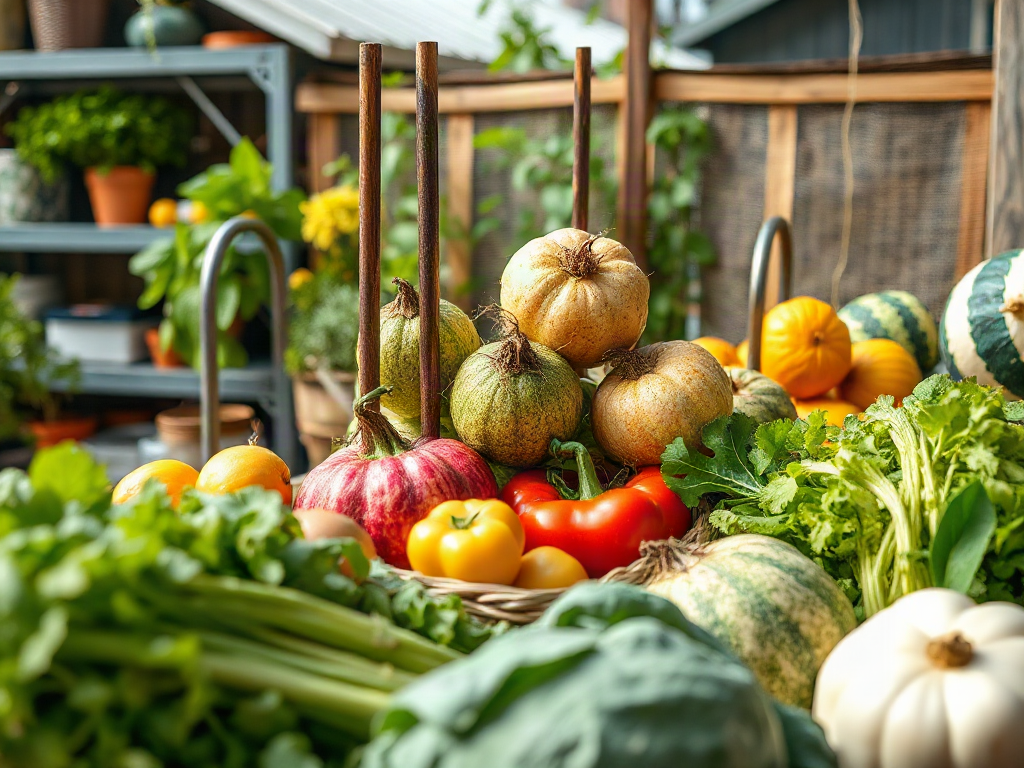
Match Crops to the Homestead You Actually Have
The strongest crop list begins with site limits rather than seed catalogs. Record the garden’s hours of direct sun, observe where water collects after rain, and identify how far the beds are from a hose or tank. Fruiting crops such as tomatoes, peppers, cucumbers, and squash usually need substantial sun, while leafy greens can tolerate somewhat less light but may struggle in hot weather. A garden that receives only four hours of direct sun should not be planned like an open field with all-day exposure.
Climate also changes the meaning of “easy.” A cool, short season may favor peas, kale, turnips, potatoes, and compact carrots, while a long, warm season may make okra, southern peas, sweet potatoes, and heat-tolerant beans more realistic. Use local frost dates as a starting point, but treat them as planning estimates rather than guarantees. Soil that stays wet after a storm can rot onions and root crops; raised beds or ridges may make those crops more reliable than simply adding more seed.
Make a short site inventory before selecting varieties:
- Measure usable bed length and width, not just the total yard.
- Note sun exposure in spring, summer, and after nearby trees leaf out.
- Check whether irrigation reaches every bed without carrying heavy containers.
- Identify deer, rabbits, chickens, slugs, or other likely crop losses.
A common mistake is choosing crops because they are associated with self-sufficient living rather than because the site can support them. Corn, for example, occupies considerable space and usually needs a block for dependable pollination, while bush beans can produce useful amounts in a narrower row. Potatoes may be a sensible storage crop, but they still require loose soil, hilling, and room for harvest. The practical choice is the crop that fits the site’s light, water, season, and protection—not the crop with the strongest homestead image.
Build a First-Year Crop List Around Meals and Timing
A first garden should supply foods the household will actually eat. Write down five to seven common meals and identify vegetables that appear repeatedly. If the household uses onions, beans, greens, tomatoes, and potatoes every week, those crops deserve priority over an unfamiliar vegetable that may be interesting but rarely used. This approach reduces wasted space and makes harvest decisions easier.
Divide the list by harvest speed and attention. Radishes and baby greens can provide early results, while tomatoes and winter squash occupy the garden for months before producing. Bush beans offer a useful middle ground: they mature relatively quickly, can be planted more than once in suitable weather, and do not require the trellis management of pole beans. Zucchini can be productive, but a small household may need only one or two plants because a few healthy plants can create more fruit than expected.
Timing matters as much as crop identity. A garden planted all at once often produces a glut followed by an empty bed. Succession planting means sowing a small amount of a short-lived crop at intervals suited to the season. Lettuce, radishes, beets, cilantro, and bush beans are candidates for repeated sowings, while tomatoes and winter squash are generally planted once for the main season. Keep a simple calendar showing sowing dates, expected harvest windows, and the next crop that can occupy the space.
Seed packets are useful, but their days-to-maturity figures are not promises. Transplant shock, cool nights, drought, disease, and poor fertility can delay harvest. Choose at least one crop with a short expected harvest window and one with a longer season so a setback does not leave the entire garden unproductive. Readers comparing Selecting crops for a first homestead garden with a larger food-production plan should remember that reliability in year one is more valuable than theoretical yield.
The weak assumption to avoid is that every crop needs equal space. Give more room to foods used often and less room to experiments. One bed of dependable beans may teach more than six small rows that each require different trellises, harvest intervals, or pest responses.
Balance Fresh Eating, Calories, and Storage
A garden can look abundant while contributing little to year-round food security if it produces mainly delicate greens and a brief tomato harvest. Fresh crops are valuable, but they are not interchangeable with storage crops. Leaf lettuce, cucumbers, and fresh herbs improve meals during the growing season; potatoes, onions, winter squash, dry beans, and properly stored root vegetables can extend the usefulness of the harvest beyond the first frost.
Choose the balance according to your real objective. A household seeking fresh summer meals may prioritize tomatoes, peppers, cucumbers, basil, salad greens, and beans. A household trying to reduce purchased staples may allocate more area to potatoes, dry beans, winter squash, or sweet potatoes where climate permits. Preservation capacity should influence the choice. Tomatoes are more useful in quantity if the household has time and equipment for sauce, freezing, or drying. A large planting can become a burden when harvest arrives faster than it can be processed.
Calories also require realistic expectations. Vegetables such as lettuce and radishes mature quickly but contribute little stored energy. Potatoes and dry beans offer a different nutritional and storage role, though they need more space, appropriate harvest conditions, and protection from pests. Sweet corn can be satisfying but is space-hungry and loses eating quality quickly after harvest unless used or preserved promptly. Comparing crops by pounds alone can therefore mislead; compare them by meals supplied, storage life, labor, and household preference.
A practical first-year allocation might include a few fresh-eating crops, two dependable harvest crops, one storage experiment, and a small herb area. For instance, tomatoes and cucumbers can cover summer meals, bush beans can provide repeated harvests, potatoes can test storage potential, and parsley or chives can add frequent kitchen value from little space. The exact mix should follow local conditions and appetite rather than a fixed formula.
Do not plant a storage crop without deciding where it will go after harvest. Warm, damp conditions can cause rot, and light can damage some stored produce. Before expanding potatoes or winter squash, identify a cool, dry, ventilated location and learn the curing needs of the crop. The Selecting crops for a first homestead garden decision is partly a harvest-management decision: food left unharvested or poorly stored is not a successful yield.
Plan Space, Succession, and Daily Work
Crop selection should reflect the time available for watering, weeding, harvesting, and checking pests. A garden near the house is easier to monitor than one across a large property, and that difference affects outcomes. Beans become tough when left too long, cucumbers hide under leaves, and ripe tomatoes attract animals and disease. Crops that require frequent picking should be close and visible; less time-sensitive crops can occupy more distant beds.
Space efficiency is not the same as packing every bed tightly. Crowded plants compete for light and airflow, which can increase disease pressure and make harvesting difficult. Follow spacing guidance as a starting point, then account for access. A narrow path between beds may save growing area on paper but cost time every time a watering can, basket, or wheelbarrow must pass through.
Use a simple priority plan:
- Reserve the sunniest, best-drained space for crops that need heat or produce valuable fruit.
- Place quick greens and root crops where they can be replanted after harvest.
- Give climbing crops a trellis only where its construction and maintenance are realistic.
- Leave some open capacity for a second sowing, failed plants, or a cover crop.
Compare bush and climbing forms before ordering seed. Pole beans can use vertical space and produce over a longer period, but they need a sturdy support and repeated picking. Bush beans are simpler for a first attempt and often suit a short bed or succession schedule. Indeterminate tomatoes may produce over a long season but need tying and pruning decisions; determinate varieties can be easier to contain and harvest in a concentrated period. Neither type is universally better—the useful choice depends on labor, preservation plans, and support materials.
Overambitious variety counts are a frequent failure mode. Each new crop adds another set of germination needs, pest problems, harvest signals, and preservation questions. If watering becomes inconsistent, look first for dry soil at root depth, wilt during cool mornings, cracked fruit, or stalled growth. Those signs may indicate a system problem rather than a poor seed choice. Reduce the number of crops before enlarging irrigation or buying more amendments.
Review Results Before Expanding the Garden
The first season should produce both food and usable information. Keep notes on sowing date, variety, harvest period, pest damage, watering difficulty, and how much the household actually consumed. A crop that yielded modestly but was harvested often and eaten fresh may deserve more space than a heavier crop that required constant attention or went to waste.
Evaluate crops by several measures rather than visual size. Record whether germination was even, whether plants recovered from heat or cold, how long harvesting took, and whether the crop fit your preservation routine. For example, a tomato variety may taste excellent but split easily in irregular rain; another may be less flavorful fresh but better suited to sauce. A carrot bed may grow well yet be difficult to harvest in compact soil. These details guide better choices than a catalog description alone.
At season’s end, place each crop in one of four groups: expand, repeat at the same scale, test again with a changed method, or drop. “Test again” is appropriate when the crop was promising but suffered from an identifiable issue such as late sowing, inadequate trellising, or poor protection from rabbits. “Drop” is reasonable when the crop repeatedly conflicts with climate, available labor, or household taste. A failed crop is not necessarily a failed season if it prevents a larger investment next year.
Use the notes to improve the next rotation and avoid repeating disease or nutrient problems in the same bed. Rotating plant families can reduce the chance of carrying some pests and diseases forward, though rotation does not replace sanitation, resistant varieties, or good watering practices. Add a modest experiment—perhaps a new bean, storage onion, or compact winter squash—only after reliable crops have been assigned space.
For a broader planning reference, Selecting crops for a first homestead garden should remain a living record rather than a one-time shopping list. The most useful garden plan changes after real observations about weather, soil, wildlife, kitchen use, and available time.
Frequently Asked Questions
How many crops should a first homestead garden include?
Choose roughly six to ten crops, including a few reliable vegetables, one or two quick crops, and perhaps one storage crop. Fewer varieties make watering, pest checks, and harvest timing easier to manage.
Which vegetables are usually forgiving for beginners?
Bush beans, radishes, lettuce, kale, zucchini, potatoes, and certain herbs are often approachable, but local climate and pest pressure still determine success.
Should a first garden focus on calories or fresh vegetables?
Use a blend. Fresh crops provide frequent meals, while potatoes, dry beans, winter squash, and onions may contribute more to storage. Choose quantities based on what the household eats and can preserve.
How can gardeners prevent too much produce at one time?
Sow quick crops in small batches, use succession planting, and limit high-output plants such as zucchini. Match tomato and bean quantities to actual fresh use and preservation capacity.
What should be recorded during the first growing season?
Note planting dates, germination, harvest amounts, pest damage, watering effort, weather problems, and whether the household enjoyed the crop. Those observations are more useful than yield alone when planning next year.
Further Reading
Authoritative Sources
- Vegetable Gardening
extension.umn.eduUniversity Extension guidance on crop selection, planting timing, soil preparation, and seasonal vegetable management
- Gardening Resources
almanac.comPractical crop references covering planting dates, vegetable characteristics, and garden scheduling
- Soil Health
nrcs.usda.govUSDA information that helps gardeners connect soil structure, drainage, organic matter, and crop performance
Conclusion
A productive first homestead garden is built around fit, use, and manageable work. Select crops that match sunlight, drainage, season length, irrigation access, wildlife pressure, and the meals your household already prepares. Combine quick harvests with dependable summer producers and a modest storage experiment rather than filling every bed with unfamiliar varieties. Give high-maintenance crops a convenient location, stagger short-lived plantings, and decide how surplus will be preserved before planting large quantities. Keep records throughout the season, then expand crops that were eaten, harvested reliably, and maintained without exhausting your schedule. That evidence-based adjustment will produce a more useful garden next year than copying a standard crop list or chasing maximum planting diversity.