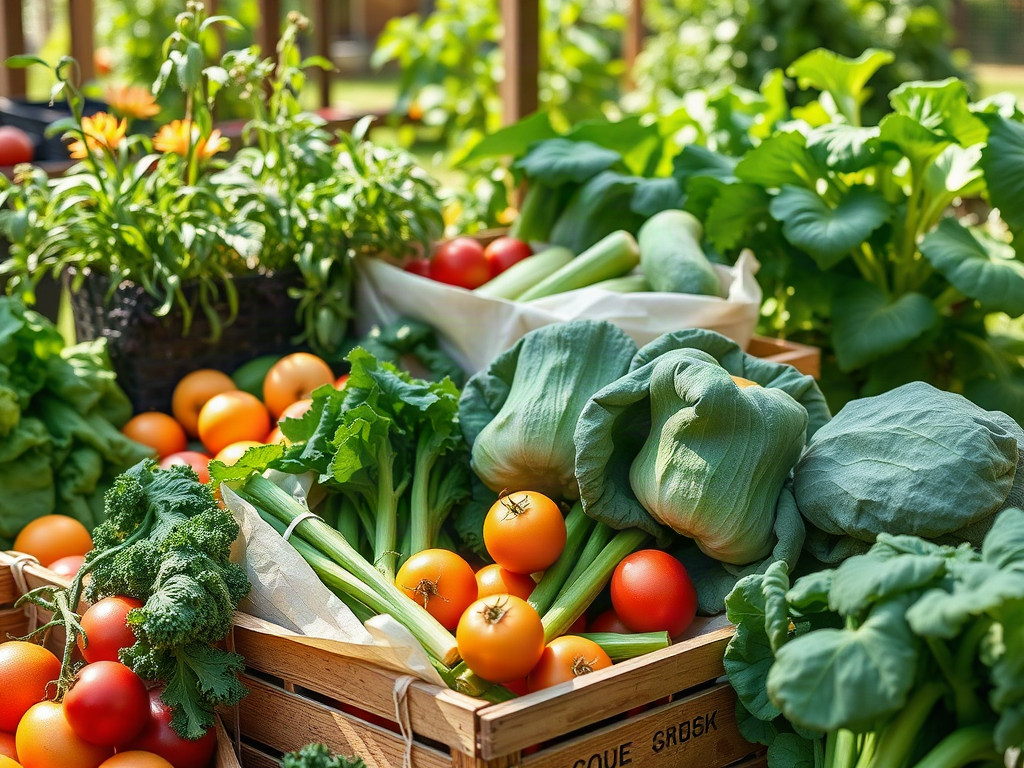
Selling extra garden produce legally as a beginner means confirming local sales rules, identifying which crops qualify for direct sale, using safe handling practices, and keeping simple records. Fresh, uncut fruits and vegetables often face fewer requirements than canned goods, baked items, cut produce, or products containing animal ingredients, but exemptions differ by state, county, and municipality. Check your agriculture department, health department, zoning office, and market organizer before advertising. A beginner-friendly launch is a small batch of clearly labeled, unprocessed produce sold directly to local customers, with harvest dates, prices, payment records, and any required permit information documented.
Identify Which Rules Apply To Your Produce
The legal path depends first on what you are selling, not simply on the fact that it came from your property. A basket of intact tomatoes, peppers, beans, or apples is generally treated differently from salsa, pickles, dried herbs, jam, cut fruit, or a prepared meal. Processing changes the food-safety risks and may move the sale into a cottage-food, commercial-kitchen, inspection, or food-establishment category.
Write down every product you might offer and describe it precisely. “Vegetables” is too broad for a useful compliance check; “unwashed carrots with tops,” “washed salad greens,” and “refrigerated cut cucumbers” may trigger different handling expectations. The same distinction applies to eggs, honey, meat, dairy, seedlings, and herbal products. Those items can involve separate agricultural, labeling, licensing, or animal-health rules and should not be assumed to follow fresh-produce exemptions.
A practical first sale usually uses whole, unprocessed crops. That choice reduces equipment needs and avoids making an untested recipe part of your legal and safety obligations. It does not remove every requirement. Local authorities may still regulate weights and measures, vending locations, signage, business registration, sales tax, or sanitation. A farmers market may impose standards that are stricter than the minimum law, including proof of insurance or a vendor application.
Use the phrase Selling extra garden produce legally as a beginner as a planning question, not as a substitute for checking your jurisdiction. Rules can vary between neighboring counties, and “homegrown” does not automatically mean “exempt.” Keep a written note of the agency contacted, the date, the official page reviewed, and the answer received. That record is useful when requirements change or a market manager asks why you believe a permit is unnecessary.
Confirm Permits, Sales Locations, And Tax Duties
Before taking an order, check four separate areas: food regulation, business registration, location rules, and tax treatment. These systems overlap but are not interchangeable. A health department may address handling, while a city zoning office controls roadside signage or customer access. A market organizer may require a license even when a direct sale from your home would not.
Start with official state and local sources. Search your state department of agriculture for direct farm sales or produce-vendor requirements, then contact the county or municipal health department for questions about washing, packing, refrigeration, and processed foods. Ask the local clerk or zoning office whether home-based sales, driveway signs, parking, and customer visits are allowed. If you sell at a market, obtain the vendor packet before paying the booth fee; it often lists insurance, labeling, sampling, and inspection expectations.
Tax duties deserve their own check. Some jurisdictions treat certain food sales differently from taxable prepared foods, while others require registration or reporting even for a small operation. A casual sale may still create income that should be tracked for tax purposes. Keep receipts for seed, soil amendments, packaging, market fees, mileage, and equipment, but do not assume every expense is deductible without checking current tax guidance or asking a qualified tax professional.
Location also affects customer risk and workload. A farm stand may offer steady visibility but require signage, change, weather protection, and local permission. Preorders with porch pickup can reduce unsold inventory and shorten selling time, but they require clear pickup windows and a plan for no-shows. A market provides foot traffic and rules that create structure, yet the fee and travel can make low-value crops unprofitable. Compare the likely sales value with time, transport, cooling, packaging, and spoilage before committing.
For a first launch, make a short compliance checklist:
- Confirm whether each product is whole and unprocessed or falls under a different food category.
- Ask the relevant local agencies about permits, home sales, signage, and taxes.
- Review the exact rules of any farmers market, community event, or online selling platform.
- Record the answer and save copies of applications, approvals, and required training.
Handle, Label, And Display Produce Safely
Legal permission does not replace safe handling. Fresh produce can become contaminated through dirty harvest containers, irrigation water, soil on hands, animals, transport surfaces, or poor temperature control. A clean, repeatable process protects customers and gives you evidence that the operation is being managed responsibly.
Harvest into containers that are cleanable and dedicated to produce rather than chemical storage or household waste. Keep pets, fuel, pesticides, and cleaning products away from packing surfaces. Wash hands before handling crops and after using the bathroom, handling animals, or taking a break. Remove visibly damaged or decaying items instead of discounting them into a mixed basket; rot can spread moisture and spoilage to otherwise sound produce.
Washing requires judgment. A rinse may remove soil, but it is not a guarantee that harmful organisms have been eliminated. Produce that is washed should be handled with clean water and allowed to drain or dry appropriately before packing, because trapped moisture can accelerate decay. Some crops keep better dry, while leafy greens require prompt cooling and careful storage. Follow local instructions rather than inventing a sanitizer concentration or treatment that you cannot verify.
Labels should make the transaction understandable. Include the product name, price or unit, your business or contact name when required, and any statements mandated by local rules. Do not claim “pesticide-free,” “organic,” “chemical-free,” or similar terms casually. “Organic” has a specific regulatory meaning in the United States, and a home garden’s growing method does not automatically authorize that label. A simple sign such as “Rainbow chard, harvested Tuesday” is clearer than a health claim.
Display affects both safety and perceived quality. Keep crates off the ground, shade delicate crops, separate bruised items, and prevent customers from repeatedly handling everything. For a preorder, pack each order after sorting and tell the buyer how soon refrigerated items should be cooled. A common failure is treating all crops alike: warm, dry onions may tolerate a different setup than tender greens. Match the container, temperature, and selling window to the crop’s condition.
Readers comparing options can find related planning considerations in Selling extra garden produce legally as a beginner, especially when deciding whether a roadside stand or preorder system creates fewer handling points.
Set Up A Small, Defensible Selling Process
A beginner operation works best when the sale is easy to explain from harvest to customer. Choose a narrow product list, a defined selling channel, and a modest weekly volume. Selling three dependable crops is easier to label, price, cool, and document than offering every surplus item at once.
Use a basic harvest-and-sale record. For each batch, note the crop, harvest date, approximate quantity, destination, price, and any customer complaint or discarded portion. This is not a replacement for a formal traceability system where one is required, but it helps you identify recurring problems. If greens wilt before pickup, the issue may be delayed cooling or unsuitable packaging rather than weak demand. If beans remain unsold, the better answer may be smaller harvests or preorders, not a lower price every time.
Pricing should include more than seed cost. Count containers, labels, ice or refrigeration, market fees, travel, payment-processing charges, and your time. A $2 basket can become a loss when it requires a long drive and individual messages. Direct pickup may produce a better return for small quantities, while a market may make sense once volume is high enough to justify the trip. Be transparent about units: sell by weight, bunch, bag, or count according to local requirements and use a reliable scale if selling by weight.
Set customer terms before advertising. State the pickup location, available quantity, payment methods, storage advice, and what happens if weather damages the crop. Avoid promising a harvest that has not yet been inspected. A message such as “available Saturday if quality meets packing standard” is more honest than guaranteeing every preorder after a heat wave or pest problem.
Test the process with a small circle of buyers, but do not treat informal feedback as a legal exemption. Ask whether the label was understandable, whether the quantity matched the description, and whether the produce arrived in good condition. Then adjust one variable at a time. A common mistake is scaling sales before measuring waste; unsold produce, rushed packing, and missed pickup times can create more risk than the original surplus.
Avoid Beginner Mistakes And Scale Carefully
The most expensive errors usually come from assumptions: that a small sale is automatically exempt, that homegrown means safe without controls, or that a market organizer handles every permit. Verify each assumption with the authority responsible for that issue. Written requirements are more useful than advice copied from a neighboring state, an old social-media post, or another vendor’s experience.
Do not begin with processed products merely because they appear more profitable. Canned salsa, pickles, infused oils, baked goods, and cut fruit may involve approved recipes, kitchen requirements, labeling rules, temperature control, or inspections. Fresh whole produce lets you learn demand and customer service while keeping the product category simpler. Move into processing only after confirming the applicable rules and understanding the added food-safety controls.
Insurance and liability deserve attention as sales become regular. A market may require coverage, and a homeowners policy may not cover business activity in the way you expect. Ask an insurance professional what applies to your operation rather than relying on another seller’s policy. Keep customer contact information and payment records secure, particularly if orders are collected through an online form.
Scale according to evidence. More customers are worthwhile when your crops remain in good condition, records stay current, and pickup or market routines do not cause missed obligations. Signs the system is working include accurate quantities, low spoilage, clear labels, prompt responses, and no confusion about where the food came from or how it was handled. Signs to pause include repeated temperature problems, unclear agency answers, complaints about units or labeling, or sales volume that exceeds your ability to inspect every batch.
Recheck requirements each season, especially when changing location, adding processed foods, hiring help, or selling across local boundaries. A small annual review protects the trust that makes direct sales viable. The goal is not to imitate a large farm; it is to build a sale that you can describe, repeat, and correct when conditions change.
For current requirements, consult your state department of agriculture, county or municipal health department, local zoning office, and the official rules of the market where you intend to sell. Those sources are more reliable than generalized lists because exemptions, permits, labeling requirements, and tax treatment vary by location and product.
Frequently Asked Questions
Can I sell vegetables from my home garden without a business license?
Maybe. Requirements vary by state, county, and city, and may depend on the crop, sales channel, signage, and whether the produce is processed. Check local business, zoning, agriculture, and health offices before selling.
Are fresh tomatoes and peppers treated differently from homemade salsa?
Often, yes. Whole fresh produce may fall under simpler direct-sale rules, while salsa is a processed food that can require an approved kitchen, specific processing controls, inspection, or additional labeling.
Do I need to wash produce before selling it?
Follow local guidance and the needs of the crop. Washing can remove soil but can also spread contamination or increase spoilage if done poorly. Use clean equipment and water, and keep washed produce protected during packing.
Can I call my produce organic if I do not use synthetic chemicals?
Do not assume so. “Organic” can be a regulated claim, and eligibility depends on applicable standards and sales circumstances. Use accurate descriptions that do not imply certification unless you meet the relevant requirements.
What is the simplest way to sell a small surplus?
A preorder list with a defined pickup time can limit waste and reduce display costs. Confirm that home-based sales are allowed, describe quantities accurately, keep records, and verify any permit or tax duties before accepting payment.
Conclusion
A legal first sale begins with classification: whole produce, processed food, eggs, honey, and prepared items may follow different rules. Confirm requirements with the agencies that control food safety, business registration, zoning, and taxes, then check the specific policy of any market or event. Keep the first offering narrow, use clean crop-specific handling, label products honestly, and record harvests, sales, expenses, and customer issues. Preorders can reduce waste, while markets may justify their cost only when volume supports the travel and setup. Revisit the rules whenever you add processing, change locations, or expand beyond local pickup. A small operation built around verified requirements and repeatable records is easier to manage than a larger launch based on assumptions.