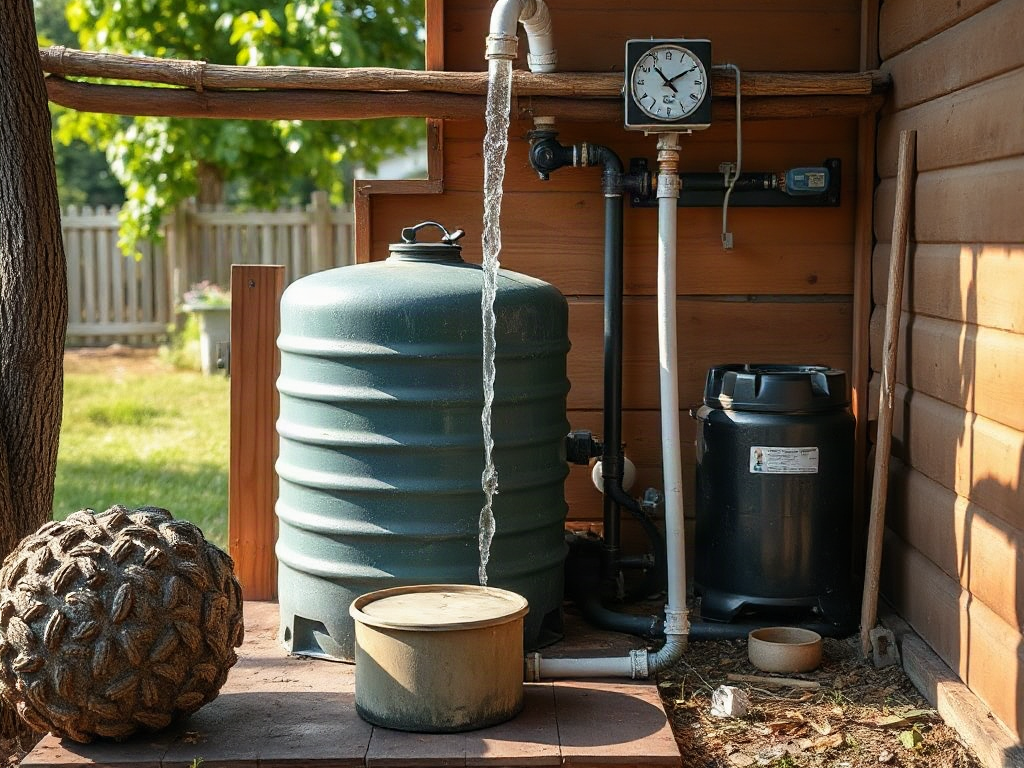
Estimating household water demand before installing infrastructure means measuring daily use by person, fixture, appliance, livestock, and seasonal task, then sizing storage, pumps, pipes, and treatment for both average demand and short peak periods. Record actual meter readings when available, separate indoor potable use from irrigation and other nonpotable loads, and account for guests, leaks, laundry frequency, and dry-season needs. A household using modest daily volume may still require a larger pump if several fixtures operate together. Build a base estimate, add a clearly stated contingency, and verify well yield, catchment supply, source quality, and recovery time before buying equipment.
Define the Water Loads That Infrastructure Must Serve
Water planning becomes more reliable when every use is listed before any tank, pump, pipe, or treatment unit is selected. A household demand estimate is not a single universal number because drinking water, toilet flushing, bathing, laundry, cooking, cleaning, animals, gardens, and fire or emergency reserves place different demands on a system. Some loads occur every day, while others appear only during a dry spell, harvest period, or house full of visitors.
Begin by separating potable demand from water that may not need the same treatment standard. Kitchen use and drinking generally belong in the potable category. Toilet flushing, clothes washing, outdoor washing, and irrigation may be candidates for a separate nonpotable supply, subject to local rules and safe system design. Combining every use into one treated-water figure can make treatment equipment unnecessarily large; excluding outdoor demand can leave a storage system empty when crops need water most.
Consider a two-person dwelling with a small vegetable plot. Its indoor demand may be relatively stable, but the garden can dominate total summer volume. A household that sizes a cistern only from winter kitchen and bathroom use may have an apparently adequate design that fails during the first extended dry period. Conversely, sizing the entire system around occasional irrigation can increase cost and stagnation risk if the stored water is rarely turned over.
Write down the users and uses in separate rows, including animals and any planned expansion. Record whether each load is daily, weekly, seasonal, or exceptional. That simple classification exposes a common mistake: treating a future possibility as current demand while overlooking a recurring task such as laundry, greenhouse watering, or water used to rinse equipment.
Build a Household Demand Estimate From Real Use
The strongest estimate uses observed consumption whenever possible. If a utility meter is available, record readings at the same time each day for at least several representative weeks, and keep notes about laundry, guests, outdoor watering, and unusual cleaning. A monthly bill can establish a broad baseline, but it usually hides the difference between a quiet month and a period of frequent irrigation. For a new property without records, calculate each activity from frequency and volume rather than relying on a generic per-person allowance.
A practical worksheet can use this structure: number of uses, estimated volume per use, and days per week or month. For example, toilet flushing is driven by occupants and behavior; laundry is driven by loads and machine settings; showers depend on duration and flow; and irrigation depends on area, weather, soil, and the watering method. Multiply the activity rate by its frequency, then add the categories. Keep a separate line for losses, because a slowly running toilet or buried pipe leak can distort the apparent household requirement.
Fixture information improves the estimate. A faucet or shower flow test using a measured container gives a better local value than a label that may no longer match the installed fixture. Appliance manuals can provide cycle volumes, but actual use varies with load selection. A front-loading washer used several times per week should not be modeled like an older high-volume machine. The same caution applies to dishwashers, water softeners, filtration backwash, and reverse-osmosis reject water.
Use a low, expected, and high case instead of one deceptively precise total. The low case may represent normal occupancy and no outdoor use; the expected case reflects ordinary routines; the high case includes guests, extra laundry, livestock watering, and a dry-weather task. The point is not to predict behavior perfectly. It is to show which assumption controls the design and where better measurements would have the greatest value. The worksheet in Estimating household water demand before installing infrastructure should be updated after occupancy rather than treated as permanent.
Separate Daily Volume From Peak Flow
Daily demand determines how much water must be produced, stored, or treated over time; peak flow determines whether the system can deliver water comfortably when several outlets run together. Confusing these two measures is a frequent infrastructure error. A storage tank may hold enough volume for a day, yet a narrow pipe or weak pump can cause poor pressure when a shower, toilet refill, and washing machine overlap.
List the fixtures likely to operate simultaneously and estimate their combined flow. A morning scenario might include a shower, a kitchen faucet, and a toilet refill. An outdoor scenario might involve a hose, livestock trough filling, and a household tap. These combinations do not all need to run at maximum flow indefinitely, but they reveal whether the pump, pressure tank, pipe diameter, and source connection are sized for realistic use.
Source recovery creates a second distinction. A well or spring may produce water slowly but steadily, while household demand arrives in short bursts. A storage tank can bridge that mismatch, allowing a low-yield source to recover between demand periods. A high-yield source may reduce storage needs, but it does not remove the need to consider power outages, pump cycling, treatment capacity, or contamination controls.
Peak demand also matters for treatment. A filter sized for a slow refill may restrict flow during a shower, while a unit chosen for the highest imaginable flow may have excessive purchase and replacement costs. Ask whether a brief pressure drop is acceptable, whether nonessential loads can be scheduled, and whether a separate irrigation line would protect indoor service. The best design often controls peak demand through zoning or scheduling rather than buying the largest component available.
Stress-Test the Estimate for Seasons and Failures
A useful water estimate survives more than an average day. Recalculate demand for the periods most likely to strain supply: hot weather, freezing conditions, guests, home repairs, animal births, planting, harvest, or a temporary change in occupancy. Irrigation may be negligible in a wet month and substantial during a dry one. Livestock demand can rise with herd size, heat, and cleaning requirements, so it should not be hidden inside a household average.
Model supply interruptions separately from consumption. If a pump depends on electricity, decide how much water is needed while power is unavailable and which uses receive priority. If rainwater is collected, compare roof catchment and storage with the timing of rainfall rather than assuming annual precipitation guarantees supply. If water comes from a well, the estimate should be checked against measured yield and recovery observations by a qualified local professional where appropriate; a demand spreadsheet cannot prove that a source is dependable.
Use a written priority order for limited water. Drinking, cooking, hygiene, and essential animals usually rank ahead of ornamental planting, vehicle washing, and other deferrable uses. This priority affects tank size and plumbing layout. A reserve that is physically mixed with irrigation water may be difficult to protect for potable use, whereas separate storage or a shutoff arrangement can preserve critical supply.
Do not add an unexplained “safety factor” and assume the problem is solved. A large arbitrary margin can conceal poor data, while too little allowance leaves no room for guests or leaks. State what the contingency covers, test the system for unexpected drawdown, and inspect meters, toilets, valves, and exposed connections if actual use exceeds the estimate. A sudden increase is often a leak or equipment issue, not evidence that the household simply needs a much larger system.
Turn the Estimate Into Infrastructure Decisions
Translate the worksheet into separate design outputs: average daily volume, maximum expected daily volume, peak flow, storage duration, source recovery, treatment flow, and reserve volume. Each output answers a different purchasing question. Storage responds to supply gaps and outage duration; pumps respond to flow and pressure; pipes respond to simultaneous delivery; treatment responds to water quality and throughput; and collection or production capacity responds to long-term source availability.
Build the design in stages when the budget is limited. Accurate demand records may justify installing basic metering and isolation valves before expanding storage. A modest first system with accessible service points can be more useful than a large, complex installation that cannot be monitored. Leave room for future pipe runs or a second tank only if expansion is plausible and the initial layout will not create stagnant branches or cross-connection hazards.
Compare centralized and separated approaches. One treated-water system is simpler to operate and may suit a compact home with limited nonpotable use. A split system can reduce treatment volume when irrigation or toilet flushing is substantial, but it adds labeling, backflow protection, maintenance, and user-error concerns. The cheaper option at purchase is not automatically cheaper to own if filters, pumps, or replacement parts are difficult to access.
Before installation, verify local requirements for wells, rainwater, wastewater, plumbing, backflow protection, and potable treatment. A demand estimate supports professional design; it does not replace source testing, structural review, or code compliance. After commissioning, compare actual meter readings with the forecast for several weeks, test high-demand combinations, and inspect whether tank levels recover as expected. That feedback turns a planning assumption into evidence for the next upgrade.
Frequently Asked Questions
Should irrigation be included in household water demand?
Yes, but keep it separate from indoor potable demand. Irrigation is often seasonal and may justify a separate source, schedule, or storage calculation.
How can I estimate demand without a water meter?
List each fixture and appliance, estimate volume per use, record frequency, and calculate low, expected, and high cases. Replace assumptions with measured flow tests where possible.
What is the difference between daily volume and peak flow?
Daily volume is the total water used over a period. Peak flow is the rate required when multiple fixtures operate together, which affects pumps, pipes, and pressure.
How much extra capacity should be added?
Add a stated allowance for identifiable uncertainties such as guests, leaks, or seasonal tasks rather than choosing an arbitrary oversized margin. Validate it against actual readings.
Can a storage tank compensate for a low-yield well?
A tank may buffer a slow source by filling between demand periods, but it cannot correct poor water quality or an unreliable source. Confirm yield, recovery, and treatment needs separately.
Further Reading
Authoritative Sources
- WaterSense
epa.govProvides official information on household fixtures, water efficiency, and reducing indoor demand before sizing infrastructure
- USGS Water Science School
usgs.govExplains groundwater, wells, water use, and hydrologic concepts relevant to evaluating household supply
- About Drinking Water
cdc.govOffers public-health information for distinguishing source quality and treatment concerns from simple volume calculations
- Water Heating
energy.govHelps readers assess hot-water fixtures and household routines that contribute to demand and system sizing
Conclusion
A dependable water system begins with a demand record, not a tank catalog. Separate indoor potable use from irrigation, animal care, and other nonpotable loads; calculate frequency and volume from observed routines; then test the result against peak flow, seasonal stress, source recovery, and outage priorities. The most useful design may combine storage with a modest source, or it may favor separate lines for high-volume outdoor work. Either way, unexplained assumptions should not control expensive equipment choices. Install measurement and isolation points where practical, compare actual use with the forecast after commissioning, and investigate unexpected drawdown before enlarging the system. That process produces infrastructure matched to real household behavior while leaving a defensible path for future changes.