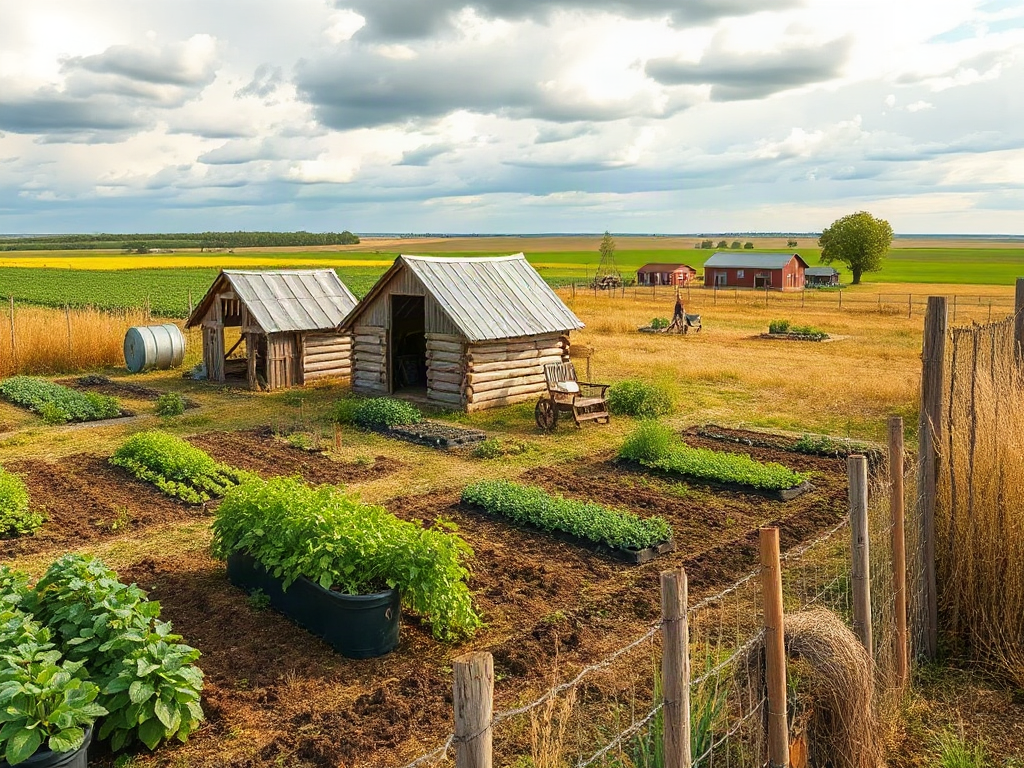
Successful homesteading in South Dakota means matching crop timing and infrastructure to short frost-free periods, abrupt temperature swings, persistent wind, and uneven moisture. Gardeners should choose cold-tolerant or fast-maturing varieties, protect seedlings from late spring freezes, and reserve warm-season crops for the most sheltered ground. Windbreaks, drip irrigation, mulch, and season-extension structures reduce moisture loss and temperature stress, but each must withstand severe weather. Livestock housing needs dry bedding, reliable winter water, summer shade, and ventilation that does not expose animals to direct drafts.
How South Dakota’s Regional Climate Shapes a Homestead
South Dakota does not present one uniform set of growing conditions. Elevation, exposure, soil type, and position within the state can change planting dates, available moisture, and winter severity. The Black Hills and nearby higher ground tend to behave differently from open prairie, while the generally wetter eastern portion of the state differs from the drier west. Even neighboring properties can have distinct frost pockets, wind exposure, and drainage patterns.
A statewide hardiness-zone map or average frost date is useful for screening possibilities, but it cannot identify the cold air that settles beside a creek or the drying effect of an exposed ridge. Before committing to an orchard, permanent greenhouse, or large garden, observe where snow accumulates, where it blows away, and how quickly low areas drain after rain. Snow that remains in place can insulate perennial roots and replenish soil moisture. Ground stripped bare by wind is more exposed to deep freezing and winter desiccation.
Temperature variability matters as much as average cold. A warm spring interval may encourage fruit buds to open or seedlings to grow rapidly, only for a later freeze to damage tender tissue. Summer heat can arrive quickly, especially on bare, dark soil. A homestead site that receives full sun but has no wind protection may warm early while losing moisture faster than expected.
Use a full season of observations when possible. Record the last damaging spring frost, first autumn frost, standing-water locations, prevailing winds, hail damage, and the dates when soil becomes workable. Compare those notes with nearby weather stations and local extension information rather than treating either source as exact for the property.
A practical site assessment should prioritize:
- Cold-air movement: Avoid placing frost-sensitive orchards at the bottom of enclosed slopes.
- Wind exposure: Identify existing shelter from trees, terrain, or buildings without creating heavily shaded plots.
- Drainage: Distinguish drought-prone high ground from low soil that remains saturated in spring.
- Water access: Confirm how gardens and animals will be supplied during dry, hot, or frozen conditions.
A common mistake is buying land based on acreage alone. Ten sheltered acres with dependable water and workable soil may offer more usable production than a much larger exposed tract. Readers comparing properties for Homesteading in South Dakota: weather and growing constraints should evaluate microclimate and infrastructure before calculating theoretical yields.
Frost Dates and a Compressed Growing Season
Frost risk divides South Dakota food production into two broad groups: plants that tolerate cool conditions and plants that need sustained warmth. Peas, spinach, radishes, kale, cabbage, and many root crops can use the cool shoulders of the season. Tomatoes, peppers, melons, cucumbers, squash, and dry beans need warmer soil and greater protection from late or early freezes.
The calendar date printed on a seed packet does not account for a cold South Dakota spring. Soil temperature, field moisture, and the local frost forecast should govern planting. Seeds placed in cold, saturated soil may rot or emerge unevenly. Transplants set out after several warm afternoons can be injured by cold nights, even when temperatures remain slightly above freezing. Harden seedlings gradually and keep frost cloth ready rather than assuming the transplanting window has permanently opened.
Variety selection is a form of risk control. Compare days to maturity, but remember that catalog figures are generally estimates under favorable conditions. For warm-season vegetables, select cultivars that mature with time left before the likely first autumn frost. A 70-day tomato does not necessarily deliver ripe fruit exactly 70 calendar days after transplanting when wind, cool nights, or drought slow growth. Multiple cultivars with different maturity dates reduce the chance that one poorly timed weather event will affect the entire harvest.
Low tunnels and cold frames can warm soil and protect plants, while a greenhouse provides greater control. The tradeoff is operational responsibility. Covered spaces can overheat rapidly on clear days, and lightweight structures can fail in strong wind. Anchor frames for local exposure, provide adjustable ventilation, and use a minimum-maximum thermometer. Season extension works when temperature is monitored; it fails when plastic covering is treated as automatic protection.
For a resilient crop calendar, move through four decisions:
- Find local spring and autumn frost records, then allow a safety margin for the property’s elevation and exposure.
- Assign early beds to cold-tolerant vegetables and delay heat-loving plants until soil and nights have warmed.
- Use transplants for crops that would struggle to mature from direct seeding.
- Keep covers accessible in late spring and early fall instead of storing them far from the garden.
Perennial fruit requires similar caution. Winter hardiness does not guarantee a crop if flower buds open early and freeze. Plant locally suitable cultivars, avoid frost pockets, and protect trunks from animal damage and winter sun injury. A small trial planting reveals more than installing a large orchard based only on hardiness-zone labels.
Wind, Water, and Soil Management
Wind changes how water, temperature, and physical structures behave on a South Dakota homestead. It accelerates evaporation, dries young transplants, strips snow from exposed soil, and places heavy loads on fences, tunnels, and greenhouse panels. A garden may receive adequate rainfall on paper yet experience moisture stress because wind removes water from foliage and soil faster than roots can replace it.
Windbreaks work best as planned systems rather than solid walls. A dense fence can force air upward and create turbulence on the downwind side. Rows of appropriately placed shrubs and trees can slow airflow over a larger area, although they take years to mature and compete for moisture near their roots. Temporary porous fencing may protect a new garden while permanent plantings develop. Avoid placing tall vegetation where it will shade the main production area or trap snow across a driveway and livestock route.
Water delivery should focus on the root zone. Drip lines or soaker hoses generally lose less water to wind than overhead sprinklers, and morning irrigation gives foliage time to dry. Organic mulch can moderate soil temperature and suppress evaporation, but thick mulch applied over cold spring soil may delay warming. Pull it back early, allow the bed to warm, and restore it after seedlings are established. In exposed locations, use materials that will not blow into neighboring fields.
Soil texture determines how these measures perform. Sandy ground drains quickly and benefits from repeated additions of stable organic matter. Heavy soil stores more water but can remain cold, compacted, or waterlogged if worked too early. Raised beds improve drainage and warm sooner, yet they also dry more quickly in persistent wind. An in-ground bed may require less irrigation where drainage is already adequate.
Test soil before applying fertilizer or attempting to change pH. Compost improves soil structure, but excessive manure can add more nutrients and salts than crops need. Fresh manure should not be treated as an all-purpose amendment for beds producing food. Follow soil-test guidance and use properly managed compost, especially around crops eaten raw.
Signs that the system is working include uniform soil moisture below the surface, steady new growth, mulch that remains in place, and irrigation water that soaks in rather than running off. Repeated afternoon wilting, crusted soil, exposed roots, and uneven germination point to insufficient water distribution or wind protection. The soil and water portion of Homesteading in South Dakota: weather and growing constraints should be tested at garden scale before production expands.
Livestock, Buildings, and Winter Reliability
Livestock systems in South Dakota must function during blowing snow, subzero cold, summer heat, and muddy transition periods. The central design question is not whether a barn can be kept warm; it is whether animals can remain dry, sheltered from direct wind, adequately ventilated, and supplied with unfrozen water when travel and power are disrupted.
Closed buildings can create their own hazards. Animal respiration and manure add moisture, and a tightly sealed shelter can accumulate condensation and poor air quality. Ventilation should remove humid air above animal level without directing a cold draft across resting areas. Bedding must remain dry enough to insulate. Frost on interior surfaces, persistent ammonia odor, coughing, or damp coats indicate that ventilation, stocking density, or bedding management needs correction.
Water is often the limiting winter chore. Heated waterers reduce ice but depend on electricity and safe installation. Passive or insulated systems may lower energy use but still require inspection during prolonged cold. Keep a backup method for carrying or storing water, and protect hoses and hydrants from freezing. Locate supplies so that a snowdrift, failed vehicle, or power outage does not immediately cut animals off from drinking water.
Feed storage also has to resist moisture, rodents, and wind. Hay stored directly on wet ground loses quality, while poorly secured roofing or tarps may fail during a storm. Position frequently used winter feed near an all-weather access route, but not where drifting snow routinely blocks the entrance. Maintain more than one gate or route between shelter, water, and feed when the site layout permits.
Summer planning belongs in the same design. A shed placed solely to block winter wind may become dangerously hot if it lacks shade and cross-ventilation. Animals need clean water, shade, and airflow during heat, while poultry and smaller stock require protection from predators without being confined in an overheated enclosure. Mobile shelters offer flexibility but demand stronger anchoring than their weight may suggest.
Before adding animals, run a weather-failure check: How will water be delivered without power? Can feed be reached after heavy snow? Where will manure go when the ground is frozen? Can a sick animal be isolated in a dry space? Beginning with fewer animals exposes weak points without overwhelming labor or storage. Expanding only after one full winter is usually more informative than sizing the operation from summer conditions.
Frequently Asked Questions
How long is South Dakota’s growing season?
It varies substantially by location, elevation, and microclimate. Use nearby frost records as a starting point, then track damaging frosts on the property and select varieties with a realistic maturity margin.
Which vegetables handle South Dakota’s short season well?
Peas, radishes, spinach, kale, cabbage, carrots, beets, and potatoes fit cool conditions well. Fast-maturing tomatoes, squash, beans, and cucumbers can succeed when planted after the soil warms.
Is a greenhouse necessary for a South Dakota homestead?
No. Cold frames, low tunnels, transplants, and well-chosen varieties may provide enough extension for a household garden. A greenhouse adds control but requires wind-resistant anchoring and active ventilation.
What is the best way to reduce wind damage in a garden?
Combine porous temporary barriers with a long-term planted windbreak, while protecting sunlight and water access. Anchor covers securely and use drip irrigation plus mulch to limit wind-driven moisture loss.
What should be prepared before keeping livestock through winter?
Secure dry shelter, draft-free ventilation, dependable water with a backup method, protected feed storage, spare bedding, snow-access routes, and a safe place to isolate an injured or sick animal.
Conclusion
A dependable South Dakota homestead is built around the property’s specific frost behavior, wind exposure, drainage, and water supply—not an idealized statewide calendar. Observe the site before installing permanent systems, then test crops, shelters, and irrigation at a manageable scale. Give cold-tolerant vegetables the cool parts of the season, reserve protected space for warmth-demanding crops, and select varieties with time to mature before autumn frost.
Infrastructure should be judged by its worst operating day. Covers need secure anchors and ventilation, livestock need water when electricity fails, and feed must remain reachable after drifting snow. Record results through at least one full growing season and winter. Those notes will show whether the next investment belongs in a windbreak, water system, soil improvement, season extension, or more resilient animal housing.