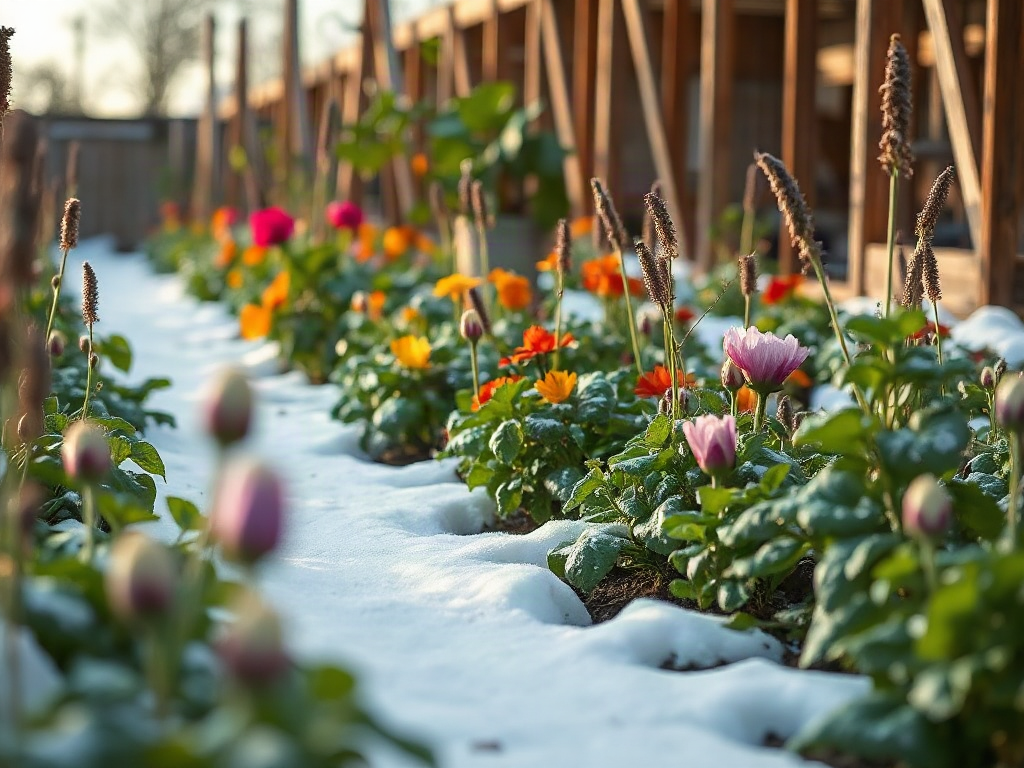
Select perennial crops for local winters by matching each plant’s cold-hardiness rating to your site’s expected minimum temperature, then accounting for freeze-thaw cycles, soil drainage, snow cover, and exposed microclimates. Favor varieties with documented performance in nearby growing conditions rather than relying only on a species name or nursery label. Leave a safety margin between the plant’s stated limit and your usual winter low, especially for long-lived fruit and nut crops. Strong spring regrowth and intact buds indicate a suitable choice; repeated cane dieback, split bark, or crown loss signals that the crop or planting site is too vulnerable.
Translate Winter Conditions Into Plant Requirements
A hardiness zone is a useful screening tool, but it describes only the average annual extreme minimum temperature assigned to a geographic area. It does not show how long a cold spell lasts, whether temperatures fluctuate sharply, how wet the soil remains, or when damaging warmth and frost arrive. Those details often determine whether a perennial merely stays alive or produces reliably for years.
Begin with the current USDA Plant Hardiness Zone Map for a broad temperature range, then compare it with observations from the actual planting site. A rural hollow may collect cold air and run colder than a nearby map grid suggests. A south-facing wall may warm buds prematurely during a sunny February interval, exposing them to injury when cold returns. Elevated ground with good air drainage can be safer for flowering fruit than a visually sheltered low spot.
Cold injury also takes several forms. Dormant roots and crowns can die where bare soil freezes deeply, while trunks may develop splitting or sunscald after rapid temperature changes. Buds can survive midwinter cold yet be lost to a late spring freeze after they begin opening. Tender shoots may fail to harden if excessive nitrogen, irrigation, or late pruning encourages growth near the end of the season. A plant described as root-hardy may therefore return each spring without retaining the older wood required for dependable fruiting.
Soil moisture changes the calculation. Waterlogged ground restricts oxygen around roots and may leave crowns vulnerable during alternating freezes and thaws. Raised rows or a better-drained location can matter more than choosing a variety rated for a few additional degrees of cold. Snow can insulate low crowns and roots, but its protection is inconsistent on windy sites and cannot be assumed when selecting woody plants with exposed buds.
Write down four site facts before comparing crops: the coldest temperature you reasonably expect, where snow accumulates or blows away, which areas hold winter water, and where cold air settles. Keep records from an on-site minimum-maximum thermometer if possible. This site profile gives Selecting perennial crops that survive local winters a stronger basis than a ZIP-code lookup alone.
Judge Varieties by More Than a Hardiness Zone
Variety-level adaptation is usually more informative than the general hardiness of a crop species. Two apples, grapes, raspberries, or asparagus cultivars can respond differently to the same winter because dormancy timing, bud hardiness, crown tolerance, and spring development are inherited traits. A label that identifies only “grape” or “blueberry” leaves too much uncertainty for a permanent planting.
Give the most weight to performance records from university extension trials, regional nurseries that propagate locally tested stock, and growers in climates with similar winter patterns. Similarity should include moisture and temperature fluctuation, not simply latitude. A cultivar that succeeds under consistently cold, snow-covered conditions may perform poorly where repeated thaws remove dormancy or leave crowns standing in saturated soil.
Hardiness claims also need careful interpretation. If a plant is listed to the exact lower limit of the site’s zone, one unusually cold night may injure it. Labels can reflect the survival of established plants in favorable conditions rather than the reliable performance of young plants on exposed ground. Choosing a crop rated for colder conditions than the mapped zone creates a practical buffer for local variation, uncertain records, and winters without insulating snow.
Production traits must be considered alongside survival. Early-blooming stone fruit may live through winter but lose flowers regularly to spring frost. Some blackberries preserve their roots while above-ground canes die, which prevents a floricane-bearing variety from fruiting the following summer. Primocane-bearing types offer a different tradeoff because they can fruit on current-season growth, although the crop still needs enough warm weather to ripen.
Nursery provenance deserves scrutiny as well. Named cultivars with known rootstocks provide more useful information than anonymous seedlings, particularly for grafted fruit trees. Rootstock affects tree size, anchorage, soil tolerance, and sometimes cold response. Confirm that the rootstock is suitable for the region and that the graft union will remain above settled soil.
A common mistake is treating a single successful specimen nearby as proof. That plant may occupy a protected courtyard, have unusually deep snow, or be a hardier cultivar than it appears. Seek repeated local performance across several winters and ask whether the plant bears usable crops, not merely whether it survives.
Match Crop Type to the Site and Winter Failure Risk
Different perennial crops place their vulnerable tissues in different parts of the winter environment. Herbaceous crops such as rhubarb, asparagus, and many culinary herbs retreat to crowns or roots near the soil surface. Brambles carry fruiting canes above ground, while trees and shrubs must preserve trunks, branches, and flower buds. Identifying the tissue needed for next season’s harvest makes winter risk easier to compare.
For a cold, open site with reliable drainage, deep-dormant fruit cultivars, cold-adapted currants, gooseberries, hardy raspberries, rhubarb, and asparagus may be reasonable candidates where local guidance supports them. A warmer but frost-prone pocket presents a different problem: winter lows may be moderate, yet early blossom can be lost. Later-blooming selections or crops harvested for stems and leaves may provide steadier results than early-flowering fruit.
Nut trees require especially conservative decisions because they occupy substantial space and may take years to bear. Survival ratings are not enough; pollen compatibility, growing-season length, flower hardiness, and the time needed to mature nuts all matter. A tree may tolerate the lowest winter temperature but fail to ripen a crop before autumn frost. The same growing-season constraint applies to late-ripening grapes and primocane brambles.
Woody vines and fruit trees also impose a larger replacement cost than divided crowns or small berry plants. Use the greatest cold-safety margin for crops that are expensive, slow to establish, or difficult to move. Marginal plants can be reserved for a warm wall, sheltered courtyard, or small trial row rather than becoming the backbone of the planting. A protected location may extend the range of a crop, but it can also trigger early growth; warmth without protection from later frost is not automatically beneficial.
Site preparation should correct fixable risks without disguising an unsuitable choice. Mulch can reduce soil-temperature swings and protect shallow crowns, but it should not be piled against trunks or used to cover chronically wet ground. Tree guards can limit bark exposure and animal injury, yet they cannot make tender flower buds cold-hardy. Windbreaks may reduce desiccation, although dense barriers can create turbulence or shade.
Compare candidates by expected reliability rather than novelty. A dependable regional cultivar that fits the soil and growing season is usually a sounder primary crop than a borderline specimen requiring annual rescue measures. Marginal experiments still have value when their cost, space, and possible failure are deliberately limited.
Use a Local Selection and Trial Checklist
A staged selection process prevents expensive mistakes because it separates climate screening from variety research and site placement. Perform the screening before ordering plants; nursery availability can otherwise push the decision toward attractive stock that lacks local evidence.
- Define the planting site. Record minimum temperatures, slope position, winter wind, snow behavior, drainage, soil texture, and sun exposure.
- Screen the crop species. Exclude crops that cannot tolerate the expected low, finish their crop within the frost-free season, or grow in the available soil conditions.
- Compare named varieties. Look for regional trial results, bloom timing, ripening season, disease concerns, rootstock identity, and whether fruit forms on old or new wood.
- Add a cold margin. Prefer ratings that extend below the site’s ordinary minimum rather than matching the boundary exactly.
- Trial before scaling. Plant a few specimens in representative locations and observe them through more than one winter before committing a large area.
Mark plants and retain invoices or nursery tags so performance can be connected to a cultivar and source. Each spring, inspect the crown, cambium, buds, canes, and graft union. Healthy bud break distributed along branches suggests that exposed wood survived. Regrowth only from below a graft can mean the desired cultivar died while the rootstock lived. Blackened cane centers, peeling bark, delayed leaf-out, dead shoot tips, and crowns heaved from the soil deserve notes even if the plant eventually recovers.
Separate weather injury from other causes. Rodent girdling, deer browsing, drought entering winter, poor planting depth, and waterlogged roots can resemble cold failure. Scratch-testing a small patch of bark for green tissue may help locate live wood, but avoid repeatedly wounding the plant. Wait for normal spring development before removing questionable branches, since some hardy crops break dormancy later than nearby plants.
A trial is working when plants retain the wood they need, resume balanced growth, flower at an appropriate time, and produce without extraordinary winter protection. Repeated dieback to the crown, failure to ripen wood, chronic bark splitting, or blossom loss in the same pocket indicates a mismatch. The next move may be a hardier cultivar, a later-blooming crop, better drainage, or relocation to higher ground—not simply thicker mulch.
Keep the record concise: cultivar, rootstock if applicable, planting location, winter minimum, visible injury, bloom date, harvest date, and yield quality. These observations turn Selecting perennial crops that survive local winters into a site-specific process and make future purchases more reliable.
Frequently Asked Questions
Should I choose plants for my USDA zone or one zone colder?
A colder rating provides useful insurance on exposed, low, wet, or poorly documented sites. The appropriate margin varies with local microclimates, snow reliability, and the cost of replacing the crop.
Can mulch make a borderline perennial winter-hardy?
Mulch can moderate soil-temperature swings around roots and crowns, but it cannot protect exposed flower buds or compensate for severe cold, poor drainage, or an unsuitable growing season.
Why does a hardy fruit tree survive but fail to produce?
The tree may retain its trunk and branches while flower buds are injured, blossoms encounter a late freeze, pollination fails, or fruit lacks enough warm weather to ripen.
How long should I test a perennial crop before planting more?
Observe it across multiple winters if space and time allow, including at least one winter that challenges the site. Record injury, regrowth, flowering, ripening, and harvest quality.
What is the best local evidence for a hardy variety?
Regional extension trials and repeated performance in comparable nearby sites are stronger evidence than a broad nursery label. Confirm the named cultivar, rootstock, soil conditions, and winter exposure.
Further Reading
Authoritative Sources
- USDA Plant Hardiness Zone Map
planthardiness.ars.usda.govUse the official map to identify the average annual extreme minimum temperature range for a planting location
- U.S. Climate Normals
ncei.noaa.govNOAA climate records provide regional temperature and precipitation context that complements plant hardiness zones
- Extension Foundation
extension.orgThis resource helps readers locate research-based extension information relevant to regional crop selection and growing conditions
Conclusion
Perennial crop selection should narrow from regional climate to the precise planting location, then to a named variety with credible local performance. Use hardiness zones as an initial temperature filter, but inspect drainage, cold-air movement, snow reliability, bloom timing, ripening requirements, and the plant tissue that must survive to produce next season’s crop.
Prioritize a generous cold margin for slow-growing trees, expensive plants, and crops that depend on overwintered buds or canes. Place uncertain candidates in small trial plantings instead of giving them critical space. Record spring injury and harvest performance by cultivar, and change the variety or site when dieback, bark damage, or blossom loss repeats. A short site record and conservative first order are more valuable than elaborate protection for a crop fundamentally mismatched to winter.