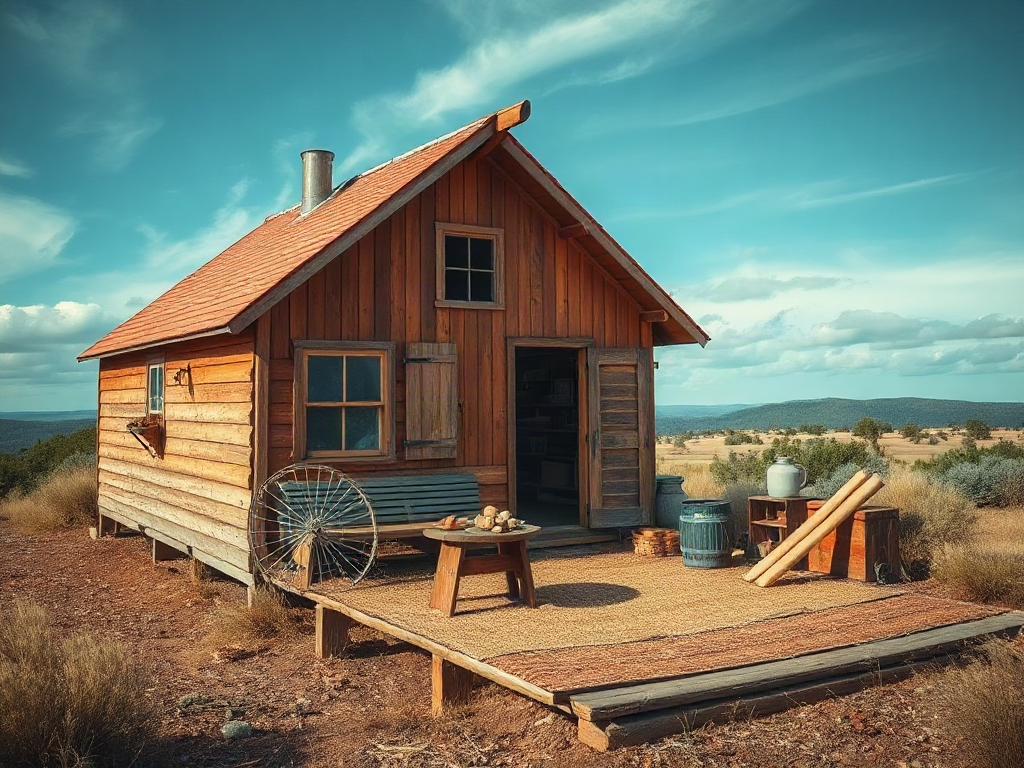
Small-scale homesteading with limited land and labor works best when the homestead is designed around a few high-value functions rather than maximum production. Concentrate garden beds, water access, storage, compost, and daily chores near the house; choose enterprises that fit the household’s available hours; and avoid livestock or crops that create rigid care schedules. Perennial foods, compact annual beds, drip irrigation, mulch, and nearby tool storage reduce repeated work. The strongest approach is to add one system at a time, measure its weekly labor demand, and remove or simplify anything that consumes more time, space, water, or feed than its yield justifies.
How Much Can a Small Homestead Support?
A small property can supply meaningful amounts of produce, herbs, eggs, compost materials, and household resilience without supplying every calorie its residents consume. Its useful capacity is governed less by acreage alone than by sunlight, water, soil condition, storage, local climate, and the hours available for recurring chores. A sunny quarter-acre may outperform a larger shaded parcel for vegetables, while even productive ground becomes burdensome if irrigation requires moving hoses every evening.
Define success in household terms before assigning space. One household may value salad greens and herbs that are expensive or poor-quality at local stores. Another may prioritize storage onions, winter squash, potatoes, berries, or eggs. These goals create different layouts and workloads. Frequent harvest crops belong near the kitchen, whereas squash or potatoes can occupy a less convenient bed because they need fewer visits.
Space calculations should include paths, compost handling, access to water, tool storage, crop rotation, and staging areas—not merely planted square footage. Beds packed against fences can look efficient on paper but become difficult to weed or harvest. Likewise, adding animals without reserving room for feed, bedding, manure, secure housing, and veterinary access can turn a compact system into a cluttered one.
A useful first-season priority order is:
- Secure basic infrastructure: reliable water, accessible paths, fencing where needed, and weatherproof storage.
- Establish a manageable growing area: plant fewer beds thoroughly rather than opening more ground than can be maintained.
- Add long-lived plants: place berries, culinary herbs, or suitable dwarf fruit trees only after observing sun and drainage.
- Consider animals last: confirm that daily care, legal requirements, housing, and waste management fit the site.
The common mistake is treating self-sufficiency as an acreage contest. A compact homestead is more durable when it produces selected foods reliably and purchases commodities that demand extensive land or machinery. Buying flour, cooking oil, or animal feed may leave scarce ground available for crops that deliver more value per bed and are pleasant to manage.
Designing the Property Around Daily Work
Good placement prevents small chores from becoming a large cumulative burden. Activities performed every day should sit closest to the normal route between the house, driveway, and outdoor workspace. Less frequent tasks can occupy the edges. This principle is practical rather than decorative: collecting eggs twice daily from a distant corner, carrying water to containers, or walking back for tools creates avoidable labor in every season.
Map the property before building permanent features. Record where morning and afternoon sun fall, where rainwater collects, which routes remain usable in wet weather, and where utilities already exist. Observe the site through at least several kinds of weather when possible. A low spot that appears convenient in summer may hold cold air or standing water during another season. A greenhouse placed solely for appearance may be shaded when winter light is most limited.
Cluster connected functions. A vegetable bed near the compost area makes it easier to return crop residues and apply finished compost. A wash station near both the garden and kitchen keeps soil out of the house. Feed stored beside an animal enclosure reduces lifting and travel, provided the container remains dry and inaccessible to pests. A hose connection at the garden is usually more valuable than an elaborate bed shape that requires awkward watering.
Permanent paths should be wide enough for the equipment actually used, whether that is a bucket, cart, mower, or wheelbarrow. Narrow passages may maximize planted area but restrict maintenance once plants spill over their edges. Use durable surfaces where traffic is constant and simpler mulched paths where routes may change. Avoid creating isolated corners that cannot be reached without stepping into beds.
Compare two layouts for six raised beds. In the first, the beds are scattered wherever open ground exists, and each has a separate hose route. In the second, the beds form one sunny block beside a water point, with compost and tools nearby. The second arrangement may surrender a little theoretical planting area to paths, yet it reduces setup time for watering, weeding, covering crops, and harvesting.
Signs of a workable layout include tools returning to storage, harvests reaching the kitchen promptly, and routine watering requiring little setup. Repeatedly abandoned equipment, muddy shortcuts, tangled hoses, and neglected distant beds indicate friction. Correct those travel and access problems before expanding production.
Which Food Systems Fit Limited Space?
The best enterprises for limited land produce something the household uses while matching its climate and available attention. Compact annual vegetables offer flexibility because beds can be replanted or reduced from year to year. Perennials reduce annual soil preparation but still require pruning, mulching, harvesting, and protection from wildlife. Small livestock can provide regular outputs, yet they impose daily obligations that plants generally do not.
Choose annual crops by eating habits and harvest pattern rather than yield claims alone. Leaf lettuce, radishes, bush beans, cucumbers on a trellis, tomatoes, and culinary herbs can provide repeated kitchen use from modest areas when conditions suit them. Storage crops such as garlic, onions, potatoes, and winter squash occupy ground longer but concentrate harvesting and processing into fewer periods. Mixing both types spreads the workload.
Vertical supports can make cucumbers, pole beans, and indeterminate tomatoes easier to inspect and harvest, but they do not create sunlight. Tall structures may shade neighboring beds, and trellised plants still need adequate root space and water. Containers are useful on patios or where soil is unsuitable, although their small soil volume dries faster than in-ground beds. Someone unable to water consistently may find a mulched in-ground bed less demanding than a large collection of pots.
Perennial herbs, berries, asparagus, rhubarb, or appropriately sized fruit trees can reduce replanting, depending on climate and local pest pressure. They are not maintenance-free. Poor placement is expensive to correct, fruit harvests may be seasonal and brief, and mature plants can exceed the space originally assigned to them. Check mature width, pollination needs, drainage, and access for pruning before planting.
Animals deserve a stricter test. Hens, rabbits, quail, bees, or other small-scale options are sometimes presented as automatic fits for tight properties, but suitability depends on local rules, neighbors, predators, climate, feed storage, waste handling, and backup care. Animals also create fixed tasks during illness, travel, and bad weather. A household with unpredictable work hours may gain more dependable value from vegetables and perennials than from an enclosure requiring morning and evening attention.
A system is working when most harvests are used, maintenance remains timely, and inputs stay proportionate to the output. Repeated gluts, wasted produce, purchased feed accumulating, pest outbreaks, or overdue cleaning suggest that the enterprise is too large or poorly matched. Reduce scale before buying equipment intended to make an oversized system tolerable.
How Do You Keep the Labor Load Under Control?
Labor stays manageable when routine work is reduced at the design stage instead of postponed until the household is overwhelmed. Focus first on watering, weed suppression, material handling, and seasonal peaks. These tasks consume time repeatedly, so modest improvements produce more benefit than tools used only once or twice a year.
Drip lines or soaker hoses can place water near plant roots with less setup than hand watering, provided connections are checked for leaks and clogged outlets. Mulch can moderate soil moisture and suppress many weeds, but it should not be piled against plant stems or used to conceal existing perennial weeds. Organic mulch also settles and needs renewal. Automation reduces attendance; it does not remove the need to inspect soil moisture and plant condition.
Standardizing beds, row spacing, covers, and connectors simplifies maintenance. One size of row cover that fits several beds is easier to deploy than a collection of incompatible pieces. Keeping frequently used hand tools at the garden avoids repeated trips, while duplicate watering fittings can prevent a small breakage from stopping irrigation. The goal is not to own more equipment but to remove predictable interruptions.
Seasonal calendars should include workload as well as planting dates. Starting every transplant at once can create a spring bottleneck involving potting, hardening off, bed preparation, planting, and frost protection. Staggering sowing or purchasing a limited number of transplants may cost more per plant but save space and attention indoors. Preserving plans also need restraint: a large tomato harvest is not an advantage if there is no time, equipment, or storage capacity to process it safely.
Review each activity by recording the approximate minutes spent and the output used by the household. Precision is unnecessary; a simple weekly note can reveal that one distant bed absorbs most watering time or that an animal system prevents travel. Assess four questions: Does the output replace something the household actually buys? Is the recurring work acceptable during the busiest month? Can someone else perform the essential tasks? Would simplifying or purchasing the product be cheaper in time and stress?
Expansion should follow a full maintenance cycle, not a strong first harvest. Add another bed, perennial area, or animal enterprise only after the current systems have passed through peak weeds, extreme weather, harvest pressure, and off-season cleanup. Warning signs include deferred repairs, crops left unharvested, irrigation failures, persistent odor, or dependence on one exhausted caretaker. Contracting the operation is sound management when it restores reliable care.
Frequently Asked Questions
How much land is needed for a small homestead?
No single acreage applies. Sunlight, water, soil, local rules, household goals, and available labor determine capacity. Even a yard or leased garden plot can support herbs, vegetables, composting, or perennial foods without supporting livestock or complete food independence.
What should a small homesteader establish first?
Begin with dependable water access, convenient paths, basic storage, and one manageable growing area. These foundations reduce repeated work and reveal site limitations before money is committed to permanent plantings, structures, or animals.
Are raised beds necessary on limited land?
No. Raised beds can improve access or address poor soil, but they cost more and may dry quickly. In-ground beds may conserve moisture and require fewer materials where drainage and soil conditions are already suitable.
Which homestead activities require the least daily labor?
Established perennial herbs, mulched berries, storage crops, and well-designed annual beds generally allow more scheduling flexibility than livestock. Actual effort varies with climate, pests, irrigation, harvest demands, and the condition of the site.
How can a homestead be managed during travel or illness?
Use simple irrigation, labeled controls, accessible supplies, written care instructions, and a trusted backup person. Keep animal routines straightforward, and test the backup arrangement before an absence rather than assuming another person can infer the system.
Conclusion
A durable small homestead is built by matching production to the household’s actual ground, schedule, and appetite. Observe sun, drainage, and travel routes before placing permanent features. Establish water, paths, storage, and a modest cultivated area before adding more beds or animals. Favor crops that are eaten consistently, locate frequent chores close together, and use mulch, compatible equipment, and simple irrigation to reduce recurring effort.
Track where time goes through an entire season. Unused harvests, delayed cleaning, failing irrigation, and an inability to leave the property are signals to simplify rather than expand. The next practical step is to sketch the site, list the foods and outputs the household values most, and select one system that can be maintained during the busiest week—not merely under ideal conditions.
For location-specific decisions, consult the local cooperative extension service, municipal planning or animal-control office, and regional soil and water conservation resources. These organizations can provide locally relevant guidance on planting conditions, soil testing, water management, zoning, livestock restrictions, and pest pressures that broad homesteading advice cannot resolve.