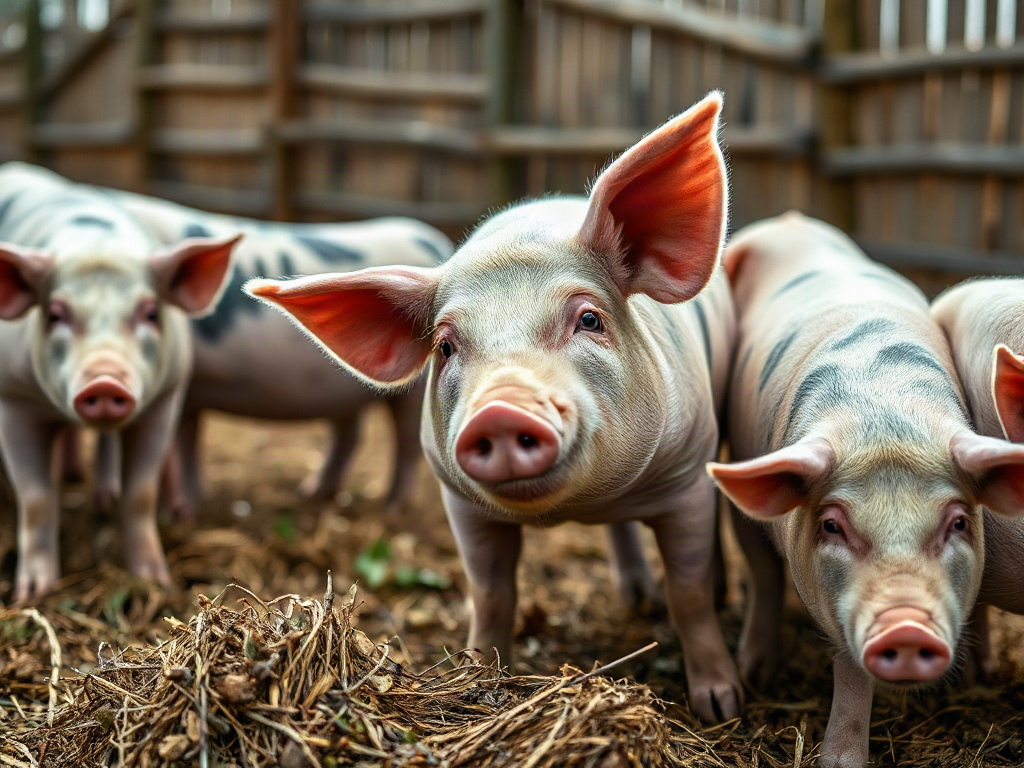
Successful pig homesteading combines twice-daily care, a balanced age-appropriate feed ration, constant clean water, and fencing designed to resist rooting pressure. Check appetite, movement, manure, skin, water flow, shade, bedding, and fence voltage each day so small problems are caught before pigs escape or become ill. Use complete swine feed as the nutritional foundation rather than relying on scraps, and adjust the amount for growth stage, body condition, pasture quality, and weather. A secure perimeter fence backed by a trained electric offset usually provides better control than lightweight panels or untested electric wire alone.
Build a Daily Pig-Care Routine Around Observation
A useful chore routine reveals changes in the pigs before it becomes a sequence of feeding and gate-opening tasks. Approach the enclosure quietly and watch the animals before disturbing them. Healthy pigs normally show interest in their surroundings, rise readily, move without obvious stiffness, and compete predictably for food. A pig standing apart, breathing unusually, refusing feed, limping, or remaining buried in bedding deserves closer attention.
Check every pig at least morning and evening. Count them, look at their eyes and skin, and compare their body shape with the previous week rather than judging weight by appetite alone. Pigs can eat aggressively while gaining too much fat, and a timid animal can fall behind even when enough feed is placed in the pen. If one pig consistently loses access to the feeder, add feeding space or temporarily separate animals by size. Merely increasing the total ration may allow dominant pigs to become overconditioned without solving the smaller pig’s shortage.
Manure and bedding provide early clues. Sudden loose manure across the group can follow an abrupt ration change, spoiled feed, excessive treats, stress, or illness. Very dry manure may accompany inadequate water intake. Remove wet bedding around drinkers and sleeping areas, then locate the cause rather than repeatedly covering moisture with fresh straw. A leaking nipple drinker can saturate a pen, increase odor, chill young pigs, and turn a manageable surface into deep mud.
A compact daily sequence keeps observations consistent:
- Count the pigs and observe posture, breathing, gait, and social behavior.
- Confirm that water flows freely and has not flooded the pen.
- Measure feed, inspect it for moisture or mold, and watch every pig begin eating.
- Check bedding, shade, gates, latches, fence tension, and electric-fence voltage.
- Record appetite changes, injuries, treatments, feed use, and unusual manure.
Records need not be elaborate. A notebook near the feed bin can show whether consumption rose because pigs are growing or because rodents, wild birds, or a damaged feeder are wasting grain. Keep the phone number of a livestock veterinarian available before an urgent problem occurs. Persistent appetite loss, labored breathing, severe diarrhea, inability to stand, major wounds, or sudden neurological signs warrant prompt professional advice rather than trial-and-error treatment.
Choose Feed by Growth Stage and Body Condition
Complete swine feed is the most dependable nutritional base because pigs require more than calories. Their ration must supply suitable protein and amino acids, energy, minerals, and vitamins in proportions matched to their stage of life. Growing pigs, mature breeding animals, lactating sows, and finishing hogs do not have identical needs. The feed label should identify the intended class of pig and provide feeding directions; a ration meant for another livestock species is not an interchangeable substitute.
Amount matters, but visual condition and growth trend matter too. Weighing pigs or measuring them consistently gives better information than guessing by eye. Feed directions offer a starting point, after which intake may need adjustment for pig size, weather, pasture contribution, pregnancy or lactation, and waste around the feeder. A pig that is becoming excessively fat needs a ration review, not simply more exercise. A thin pig may be losing feeder access, carrying a health problem, or receiving a ration too diluted by low-nutrient extras.
Kitchen surplus should remain limited and lawful for the location. Produce from the garden can add variety, but pumpkins, windfall fruit, or leafy trimmings do not replace a formulated ration. Large amounts can unbalance nutrient intake or cause digestive upset, especially when introduced suddenly. Food containing meat or exposed to meat products may be regulated because of animal-disease concerns; local and federal requirements should be checked before feeding household food waste. Moldy grain, spoiled food, toxic plants, and unidentified yard clippings should never enter the trough.
Change feed gradually when possible. Mixing increasing proportions of the new ration over several days gives the digestive system time to adapt and makes it easier to identify a problem. Store feed off the floor in a dry, pest-resistant container, while avoiding conditions that trap condensation. Buying a large quantity may lower the unit price, but savings disappear if humidity, insects, or rodents damage it before use.
Feeder choice changes both labor and waste. A properly adjusted self-feeder can serve a group efficiently, but an opening set too wide lets pigs sweep feed onto the ground. Hand-feeding measured meals makes individual appetite easier to observe, although competition can intensify if trough space is short. The feeding approach described in Homesteading pigs: daily care, feed, and fencing should therefore match group size, monitoring time, and the ability to separate pigs that grow at different rates.
Provide Reliable Water, Shade, Bedding, and Ground
Water failure can become urgent faster than an imperfect feed ration. Pigs need unrestricted access to clean drinking water, and demand rises with heat, dry feed, growth, and lactation. A container that was adequate for two small feeder pigs may become too shallow or easy to overturn as they gain weight. Automatic drinkers reduce carrying labor, but only if flow is checked by hand every day; a plugged nipple, frozen pipe, empty tank, or disconnected hose may look functional from a distance.
Place water where drainage can be controlled. Pigs often turn the area around a drinker into mud, which is different from providing a managed wallow. A wallow can help pigs cool themselves because they do not dissipate heat as effectively as animals that sweat freely, but stagnant, manure-filled water creates poor footing and sanitation problems. Put a wallow away from feed, sleeping space, gates, and the lowest section of fence. Refresh or relocate it when it becomes foul.
Shade must cover the whole group without forcing pigs into a tight pile. Trees can work, but roots may be damaged and shade shifts through the day. A roofed shelter or securely anchored shade cloth is more predictable, provided it allows air movement. Watch for panting, reluctance to move, crowding around water, or unusual lethargy during hot conditions. Cooling should be introduced without driving pigs into panic or suddenly soaking a hot, enclosed sleeping area. Concerning heat-stress signs call for rapid cooling measures and veterinary guidance.
Cold-weather housing requires dryness more than a sealed, humid shed. Deep, clean straw can provide insulation, while a draft-free sleeping zone protects young or small pigs. Ventilation still matters because trapped moisture and ammonia degrade air quality. Feel bedding at ground level rather than judging the dry surface. Replace saturated material and correct roof leaks or drinker overflow.
Site design determines how much daily labor these needs create. A gently sloped, well-drained sacrifice area near the shelter usually performs better than a low spot that stays wet. It also gives pigs a secure place when pasture is vulnerable. Before animals arrive, walk the route used for feed and water during rain, freezing weather, and darkness. If hoses cross gateways, feed storage is distant, or access requires entering a crowded pen, routine chores become slower and riskier than expected.
Construct Fencing for Rooting Pressure and Escape Attempts
Pig fencing must control an animal that investigates boundaries at ground level and can learn quickly from a weak spot. Woven wire or livestock panels create a visible physical barrier, while electric wire teaches pigs not to push or root at that barrier. Combining the two often gives a new keeper more margin for error than depending immediately on a minimal electric system.
The lowest portion deserves the closest attention. Gaps beneath gates, eroded corners, soft soil beside posts, and places where fencing crosses a ditch invite rooting. Panels should be secured firmly enough that repeated pressure cannot lift or bow them. Gates need latches pigs cannot nose open, and feed should not be stored directly outside the fence where its smell encourages testing. Corners and handling areas benefit from stronger construction because pigs collect there during movement.
Electric fencing works through training, not visibility alone. Introduce pigs inside a secure physical pen with a clearly visible electrified wire positioned at nose height. The solid barrier behind it prevents an animal from charging forward after first contact. Once pigs consistently respect the wire, temporary electric subdivisions may be used for rotation. Releasing untrained pigs into a broad area enclosed only by thin wire is a common failure: a startled pig may run through before recognizing the boundary.
Voltage should be tested at the distant end of the fence, not assumed from the energizer light. Vegetation touching the wire, weak grounding, damaged insulators, dry soil, and poor connections can reduce the shock. Mow or trim under the line and inspect after storms, fallen branches, or soil disturbance. Solar energizers can suit remote paddocks, but output, battery condition, shade on the panel, and fence load still require monitoring.
Permanent perimeter fencing costs more upfront but is easier to trust around roads, neighboring crops, and property boundaries. Portable electric netting or wire offers flexible rotations, yet it demands regular movement and maintenance. The sensible choice depends on escape consequences, terrain, predator pressure, power availability, and the keeper’s ability to test the system daily. A detailed fence inspection should remain part of Homesteading pigs: daily care, feed, and fencing, because yesterday’s secure enclosure can be compromised overnight.
Manage Pasture Damage, Manure, and Seasonal Change
Pigs should be treated as active soil disturbers rather than automatic pasture improvers. Their rooting can remove unwanted vegetation and incorporate organic matter, but too much pressure strips cover, compacts wet ground, exposes soil to erosion, and concentrates nutrients near feeders and shelters. Rotation controls where disturbance occurs; it does not make excessive stocking pressure disappear.
Move pigs before a paddock is reduced to bare mud if grass recovery is the goal. The correct timing varies with soil moisture, plant growth, pig size, group number, and the amount of rooting encouraged by feed placement. Sandy ground may drain rapidly but lose vegetation easily, while clay can remain churned and compacted after rain. During wet periods, a surfaced sacrifice lot may protect the rest of the property even though that lot requires more manure and bedding management.
Feeders, waterers, shade, and wallows concentrate traffic. Moving portable equipment spreads impact, but it can also spread manure across areas that are too close to wells, drainage channels, or property lines. Keep runoff away from surface water and follow local requirements for manure storage, setbacks, animal identification, slaughter, and food-waste feeding. Rules vary, so assumptions based on another county or state are unreliable.
Signs that rotation is working include intact plant crowns, limited standing water, manageable odor, firm travel lanes, and regrowth after pigs leave. Failure shows up as exposed subsoil, manure accumulation, persistent flies, deep mud at gates, damaged trees, or repeated escape attempts as forage disappears. Corrective action may mean reducing time in the paddock, lowering pig numbers, adding bedding, relocating equipment, improving drainage, or resting the ground longer.
Plan winter feed storage, freeze protection, summer shade, and trailer access before the season changes. The broader system described in Homesteading pigs: daily care, feed, and fencing succeeds when labor, land recovery, and containment capacity all match the number and size of animals—not when pasture is expected to compensate for inadequate feed or infrastructure.
Frequently Asked Questions
How often should homestead pigs be checked?
Check pigs at least morning and evening, with additional checks during heat, freezing weather, illness, farrowing, or infrastructure problems. Each visit should verify every animal, water flow, feed access, fencing, shade or bedding, and manure condition.
Can pigs live mainly on pasture and kitchen scraps?
Pasture and suitable produce can supplement a ration, but they rarely provide balanced nutrition by themselves. Use complete feed formulated for the pigs' life stage, limit extras, avoid spoiled material, and verify rules governing household food waste.
What type of fence works best for homestead pigs?
A strong physical perimeter, such as woven wire or livestock panels, paired with an electric offset offers dependable control. Train pigs to electric wire inside a secure pen before relying on portable electric subdivisions.
Do pigs need a wallow if they have shade?
Shade and abundant drinking water are fundamental, while a managed wallow can provide added cooling in hot weather. Position it away from feed and sleeping areas, and prevent it from becoming stagnant or contaminated with excessive manure.
How can I tell whether pigs are damaging pasture too heavily?
Exposed soil, destroyed plant crowns, deep mud, runoff, manure buildup, and slow regrowth indicate excessive pressure. Move the pigs sooner, rest the paddock longer, protect wet ground, or reduce the number of animals using the area.
Further Reading
Authoritative Sources
- USDA APHIS Swine Health
aphis.usda.govFederal information on swine diseases, biosecurity concerns, and animal-health programs helps keep small-herd decisions grounded in current official guidance
- Pork Information Gateway
porkgateway.orgThis university-supported resource covers practical swine nutrition, housing, health, and production management topics
- Merck Veterinary Manual: Management of Pigs
merckvetmanual.comThe veterinary reference provides useful context for pig housing, environmental management, feeding, and health observation
- FDA Animal Food and Feeds
fda.govOfficial feed-safety information clarifies responsibilities involving animal food, ingredients, storage, and contamination
Conclusion
Reliable pig keeping is built around repeatable observation and infrastructure that still works during bad weather, rapid growth, and busy days. Establish measured feeding, verify water flow by hand, and watch each pig eat and move. Give the group dry shelter, enough shade, controlled cooling, and ground that can recover rather than assuming pasture will absorb unlimited pressure.
Before bringing pigs home, finish the perimeter, create a secure electric-training pen, arrange dry feed storage, and identify a livestock veterinarian. Then record feed use, body condition, fence readings, and paddock changes. Those notes expose waste, competition, weak fencing, and seasonal bottlenecks early. Expanding the herd should come only after the existing system contains pigs reliably and the land, labor, and budget can support the additional daily load.