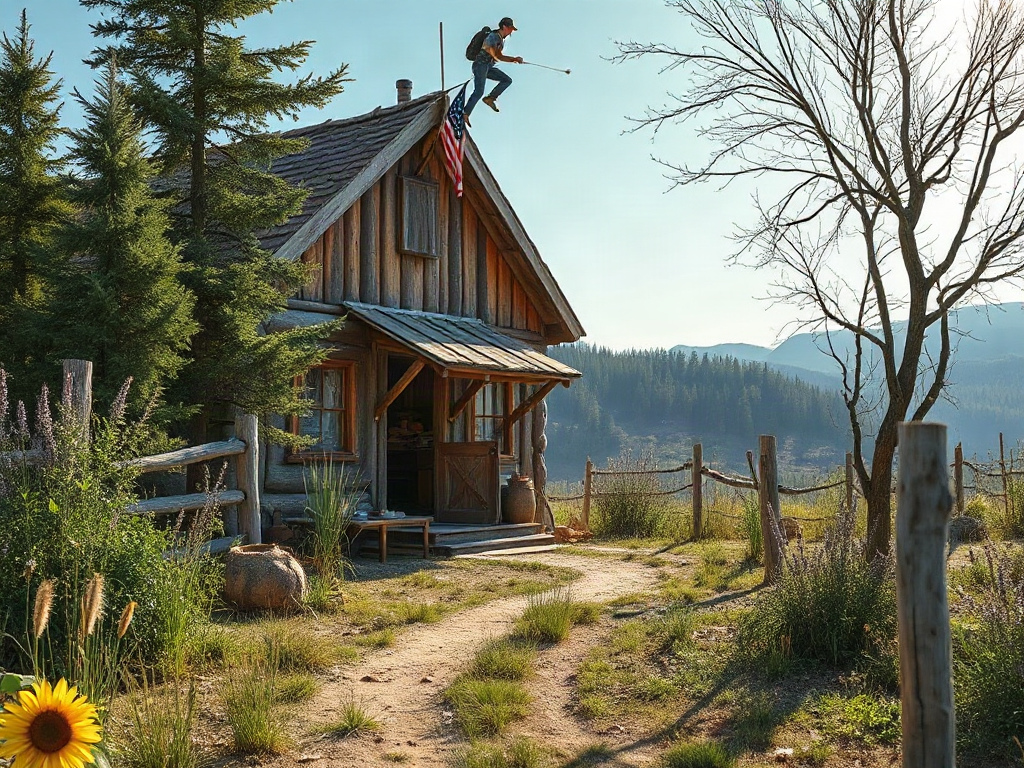
Living off the land without unrealistic self-sufficiency claims means producing selected necessities while deliberately relying on markets, neighbors, and skilled services for the rest. A workable approach matches food production to soil, water, climate, available labor, storage capacity, and household finances rather than treating independence as an all-or-nothing goal. Prioritize reliable outputs such as seasonal vegetables, eggs, firewood, or preserved foods, then measure their true costs and labor demands. Keep outside income, emergency supplies, medical access, replacement parts, and community relationships in the plan.
What Does Living Off the Land Really Mean?
Living off the land is best treated as partial household provisioning rather than complete economic isolation. Land can supply food, fuel, building materials, recreation, and sometimes income, but every property has limits imposed by climate, acreage, soil, water, regulations, equipment, and human energy. A household that grows half its annual vegetables and buys grain, cooking oil, medicine, tools, and vehicle parts is still meaningfully using the land. The purchased items do not invalidate the home production.
The distinction matters because self-sufficiency is often measured with the wrong yardstick. A productive garden may depend on purchased seeds, irrigation fittings, compost, fencing, jars, freezer electricity, and a vehicle that moves supplies. Livestock can turn pasture and kitchen scraps into food, yet animals also require secure housing, health care, minerals, winter feed, and daily attention. Calling either system independent hides the inputs that keep it functional.
A more accurate goal is selective self-provisioning: choosing a limited set of needs that the property can meet predictably. A wooded parcel might supply much of a household’s heating fuel but offer poor vegetable ground. A sunny suburban lot may produce herbs, berries, salad crops, and eggs while remaining unsuitable for staple grains or large animals. The sensible plan follows the property’s strengths instead of forcing it to imitate an idealized farm.
Start by distinguishing necessities from attractive projects. Reliable drinking water, safe sanitation, weatherproof shelter, adequate food storage, and access during bad weather outrank a greenhouse, orchard, dairy animal, or handmade cabin. These less glamorous systems determine whether the household remains safe when a crop fails, someone becomes ill, or equipment breaks.
A common mistake is counting visible harvests while ignoring imported inputs. The better test is to trace each output backward. If eggs are a priority, identify where feed, bedding, replacement birds, predator protection, and winter water will come from. If firewood is central, account for sustainable cutting, seasoning space, chimney maintenance, saw fuel, and physical lifting. This input map does not discredit the project; it reveals where backup arrangements are needed.
Which Land-Based Outputs Are Realistic?
Realistic outputs are those that fit local conditions, replace something the household actually uses, and remain manageable during its busiest or weakest season. High-value vegetables, culinary herbs, berries, eggs, mushrooms, firewood, and tree fruit can be practical in the right setting. Staple grain, dairy, meat, and year-round fresh produce generally demand more land, infrastructure, processing, or daily labor than their simple descriptions suggest.
Begin with an honest site inventory covering sunlight, drainage, soil depth, frost exposure, dependable water, wildlife pressure, usable storage, and access for materials. Observe the property through wet and dry periods before making irreversible changes. A summer inspection can miss spring flooding, winter shade, frozen water lines, or a road that becomes impassable during prolonged rain.
Then compare possible projects by usefulness and burden rather than novelty. A modest garden near the kitchen may outperform a large distant plot because watering, harvesting, and pest checks fit into ordinary routines. Perennial herbs and berries can provide recurring harvests with less annual soil preparation, although they still need pruning, mulching, and protection. Chickens may suit someone who is home every day; they are a poor fit for frequent travel unless dependable care is available.
A staged priority list keeps early ambitions within the property’s carrying capacity:
- Secure essentials: confirm water quality and availability, sanitation, shelter, access, and safe food storage.
- Test one annual system: grow crops the household already eats in a plot small enough to weed consistently.
- Add durable production: establish suitable fruit, nut, herb, coppice, or woodland resources gradually.
- Consider animals last: add them only after fencing, feed, housing, waste handling, and backup care are settled.
For example, planting a large orchard immediately can produce years of mowing, pruning, and pest management before meaningful harvests arrive. Planting a few locally suitable trees first provides a test of drainage, disease pressure, wildlife damage, and household interest. Expansion can follow demonstrated success rather than hope.
Signs of a good fit include consistent use of the harvest, manageable maintenance during difficult weather, improving soil condition, and few emergency purchases. Warning signs include neglected crops, recurring water shortages, animals consuming more purchased feed than expected, or preserved food accumulating because nobody enjoys eating it. Reducing scale is often a correction, not a failure.
How Should You Measure Labor, Costs, and Reliability?
Measure a land-based system by net usefulness, not by the retail price of its harvest alone. Seeds may be inexpensive, but beds, fencing, irrigation, soil amendments, tools, storage, and lost produce all affect the result. Labor also arrives unevenly: planting, weeding, harvesting, slaughter, preserving, and firewood processing can collide with paid work or family obligations.
Keep a simple record for one full production cycle. Note cash purchases, hours worked, harvest quantities, spoilage, outside services, and periods when the system required urgent attention. Precision to the minute is unnecessary. The purpose is to expose bottlenecks. A tomato crop may look abundant, yet become burdensome if dozens of kilograms ripen during a week when nobody has time to can, freeze, dry, share, or sell them.
Reliability deserves more weight than maximum yield. A smaller irrigated garden protected from deer may supply more usable food than a larger exposed plot. Two heating options may be safer than dependence on wood alone, particularly when illness or injury interrupts cutting. Stored staples can bridge the gap between seasonal harvests and provide insurance against pests, drought, freezer failure, or a poor preservation season.
| Measure | What to Record | Warning Sign |
|---|---|---|
| Inputs | Feed, seed, fuel, amendments, repairs, and hired services | Recurring purchases exceed the household’s planned budget |
| Labor | Routine hours plus seasonal peaks and emergency work | Essential tasks are repeatedly postponed |
| Usable output | Food eaten, fuel burned, materials used, or products sold | Harvest is wasted or produced mainly to maintain appearances |
| Resilience | Backups for water, storage, care, heat, and access | One failure disables the entire system |
Financial savings are not the only valid return. Freshness, control over production methods, useful exercise, household skills, and enjoyment may justify a system that does not beat supermarket prices. Those benefits should still be named honestly. A hobby orchard that supplies excellent fruit and satisfaction need not be presented as economic independence.
The common failure mode is expanding after one good season. Favorable weather can conceal weak irrigation, inadequate storage, or unsustainable labor. Run a project through poor weather, peak harvest, winter maintenance, and at least one period of reduced availability before doubling its scale. An approach is working when routine tasks fit normal life, reserves are maintained, and setbacks can be absorbed without panic spending or unsafe improvisation.
Why Community Matters More Than Total Independence
Durable land-based living depends on exchange because no single household can efficiently maintain every skill, tool, seed line, animal, and replacement part it might need. Neighbors, local tradespeople, farmers, equipment owners, veterinarians, extension educators, markets, and emergency services enlarge what a property can support. Interdependence is not the opposite of autonomy; it prevents small failures from becoming household crises.
Consider a household that heats partly with wood. Owning a saw and managing a woodlot builds capability, but a chimney professional, a nearby equipment dealer, and a neighbor who can help move a fallen tree add crucial depth. Likewise, a garden becomes more reliable when growers exchange local knowledge, surplus plants, pollination observations, and pest warnings. These relationships provide information and labor that cannot be stored on a shelf.
Trade also allows specialization. One household may have suitable pasture and experience with sheep, while another has an orchard, cider press, or mechanical workshop. Each can become competent in a narrow area instead of producing mediocre versions of everything. Barter may play a role, but ordinary purchasing is often clearer and more dependable. Cash income remains a useful resilience tool because taxes, health care, insurance, utilities, repairs, and specialized supplies are rarely payable with produce.
Build local connections before they are urgently needed. Identify feed and seed suppliers, repair services, food processors, tool-rental options, medical access, and people who could care for animals during an absence. Check whether local rules affect wells, wastewater, structures, roadside sales, burning, livestock, or food processing before investing. Requirements vary by location, so assumptions borrowed from another region can create expensive mistakes.
Reciprocity must be practical rather than romantic. Borrowed machinery needs clear agreements about fuel, transport, breakage, and timing. Shared animal care requires written feeding instructions and emergency contacts. Informal food exchanges should not encourage unsafe preservation or storage. Good relationships become stronger when expectations are explicit and each participant contributes something useful.
A warning sign is designing a system that works only when one healthy adult performs every task. Injury, caregiving, travel, or aging can expose that fragility quickly. Favor beds, gates, storage layouts, watering systems, and animal routines that another person can understand. The strongest plan is not the one with the fewest outside connections; it is the one with several credible ways to obtain necessities when the preferred method fails.
Frequently Asked Questions
How much land is needed to live partly off the land?
No universal acreage applies. A small sunny lot can supply herbs, vegetables, berries, or eggs, while heating fuel, grazing animals, and staple crops require more suitable ground. Water, soil, climate, household diet, and available labor matter as much as property size.
Can a household live entirely from what it produces?
Complete household production is uncommon and highly demanding. Medicine, tools, salt, fuel, clothing materials, taxes, replacement parts, and specialist services usually remain external. Producing a dependable share of food or heat is a more useful and resilient target.
Which project should come first?
Secure water, sanitation, shelter, access, and storage before adding production projects. After that, start with one modest activity matched to the site and household habits, such as a kitchen garden containing foods already eaten regularly.
Is home-produced food always cheaper?
No. Infrastructure, feed, irrigation, tools, preservation, losses, and labor can make home production more expensive. It may still be worthwhile for freshness, preferred production methods, skill development, or enjoyment, but those benefits differ from direct savings.
How can someone tell when a project has become too large?
Repeatedly delayed chores, wasted harvests, neglected maintenance, exhausted caregivers, unplanned purchases, and inadequate backup care indicate excessive scale. Reduce the project until essential work fits ordinary weeks as well as peak season.
Conclusion
A credible land-based life is built around limits that have been observed and measured, not an image of total independence. Inventory the property’s water, soil, access, storage, and seasonal conditions before selecting projects. Secure household essentials first, test one useful form of production, and keep records long enough to reveal peak labor, hidden purchases, waste, and weak backups.
Choose outputs the household actually consumes and systems another person could operate during illness or absence. Maintain stored necessities, outside income where needed, and dependable relationships with neighbors, suppliers, tradespeople, and local services. The next practical step is to map one proposed output from inputs through harvest and storage, then run it at modest scale for a full cycle. Expand only when the work remains manageable and the result is consistently useful.