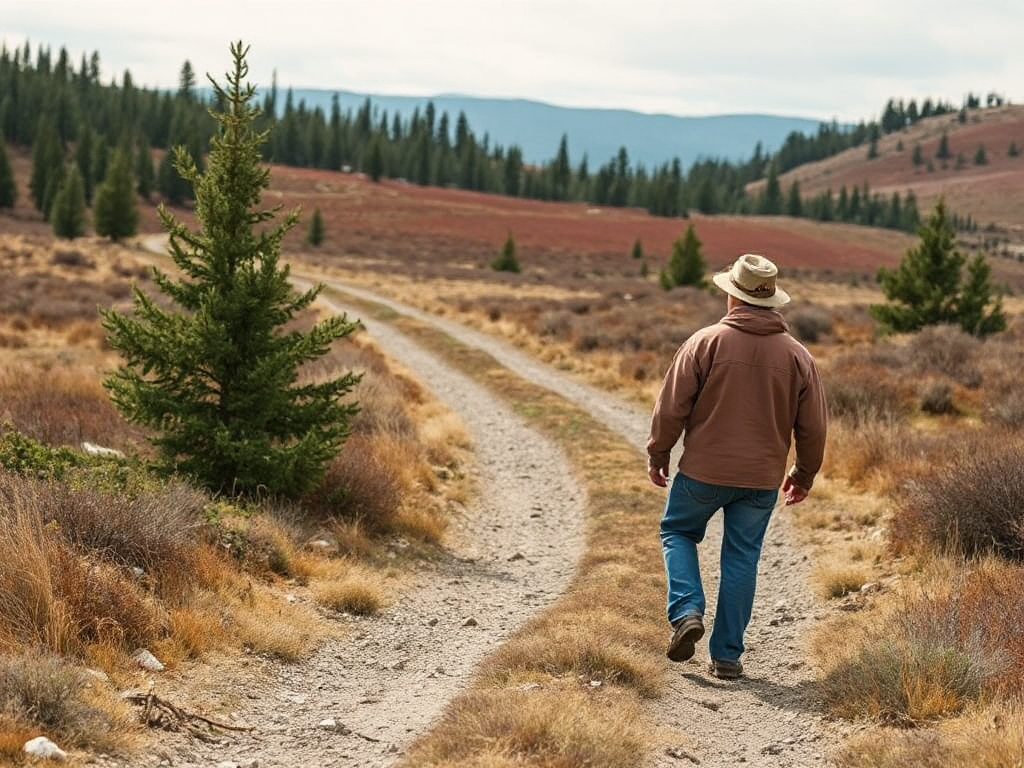
Choose land for long-term self-sustainability by testing water reliability, soil productivity, climate exposure, access, zoning, and the cost of making the site livable before you buy. Walk the property in different weather, inspect drainage and soil layers, verify wells or surface-water rights with local authorities, and map sun, wind, slope, and usable acreage. A cheap parcel with poor water, flooding, restricted building rights, or expensive access can cost more than a smaller property with dependable resources. Treat the purchase as an operating decision: confirm what the land can produce, what it legally permits, and what infrastructure your budget can support.
Rank Water, Soil, Climate, and Buildable Ground
Land for durable self-sustainability should be judged first by dependable water, workable soil, a suitable growing climate, and ground that can safely support buildings and access roads. A scenic parcel may be a poor operating site if its well yield is uncertain, its topsoil is shallow, or most of its usable area sits in a flood-prone hollow. Begin by separating resources that already exist from improvements you merely hope to make.
Water deserves the highest priority because nearly every other system depends on it. Ask whether a well is documented, whether a spring flows through dry periods, and whether storage can bridge seasonal shortages. A creek may look useful but may be unreliable, contaminated upstream, or subject to legal restrictions. Rain capture can supplement a supply, but it should not automatically be treated as the sole source for household use, animals, gardens, and fire protection.
Soil testing should include more than a basic fertility report. Examine texture, drainage, organic matter, pH, compaction, and the depth of productive soil. A parcel with moderately fertile loam may outperform richer ground that stays saturated or erodes easily. Walk cultivated areas, wooded edges, and proposed garden locations separately; conditions can change dramatically across a single property.
Buildable ground is another limiting resource. A house site, workshop, root cellar, greenhouse, orchard, and animal shelter all need practical relationships to one another. A steep parcel may offer abundant acreage on paper while providing only a small area suitable for buildings, gardens, or machinery. The common mistake is paying for total acreage instead of calculating usable acreage after slopes, wetlands, setbacks, rock, flood zones, and access corridors are excluded.
Use a preliminary ranking before becoming attached to a property:
- Non-negotiable: legal access, a viable water strategy, and a safe building location.
- High value: productive soil, useful solar exposure, manageable slope, and nearby services.
- Improvement candidates: fencing, ponds, soil amendments, outbuildings, and renewable-energy systems.
That order prevents an attractive view or low asking price from hiding a fundamental resource failure. An internal land-selection assessment is most useful when each parcel is scored against the same requirements rather than judged by emotion.
Read the Property Through Seasons and Terrain
A property visit in mild weather reveals only one operating condition. Long-term land decisions require evidence from wet periods, drought, heat, cold, wind, and snow if those conditions occur locally. Ask neighbors about roads after heavy rain, standing water during spring, smoke movement during fire season, and the month when wells or springs are weakest. Their observations can expose problems that a listing description cannot.
Terrain controls both opportunity and workload. Gentle south-facing slopes may provide useful sunlight in some climates, while shaded north-facing ground can remain cool and wet. Valley bottoms may have deeper soil but also collect cold air and floodwater. Ridges can improve drainage and solar access yet suffer from wind exposure, shallow soil, and difficult water storage. None of these features is universally good or bad; the question is whether the site’s pattern matches your intended systems.
Map the property rather than relying on a general impression. Mark high and low points, existing roads, drainage channels, mature trees, exposed rock, utility corridors, and likely building areas. Note where winter shadows fall and where summer winds travel. A simple topographic map combined with on-site observations can show why a proposed garden drains poorly or why a driveway would require extensive grading.
Consider a realistic scenario: a parcel has a broad meadow suitable for crops, but the meadow floods during the wet season and dries hard in summer. The wooded slope above it drains well but has limited vehicle access and thin soil. The best plan might place buildings on a bench, use the meadow only after confirming flood behavior, and reserve the slope for woodland management rather than forcing every area into cultivation. The mistake would be treating the most open ground as automatically the best ground.
Compare natural advantages with maintenance demands. A flat, open parcel may simplify construction and annual planting but require windbreaks, shade structures, and erosion controls. A mixed property with woodland, pasture, and slope may provide fuelwood, wildlife habitat, and varied microclimates, but it also brings more roads, fencing, and management boundaries. Choose complexity only when you have the time, tools, and labor to maintain it.
Before making an offer, revisit the land after rain and during the least favorable season you can observe. If that is impossible, treat missing seasonal information as a risk rather than assuming average conditions. The site verification process should produce specific notes about water levels, access, drainage, sunlight, and wind—not just photographs of attractive features.
Verify Legal Access, Services, and Site Costs
Physical suitability does not guarantee that you can use the land as intended. Confirm the deed, legal access, easements, zoning, building rules, septic requirements, water rights, livestock restrictions, and any conservation or development limits with the appropriate local offices and qualified professionals. A verbal assurance from a seller or neighbor is not a substitute for recorded documents or written agency information.
Access should be tested as an operating requirement. Determine who maintains the road, whether an easement permits the vehicles and utilities you need, and how emergency or delivery vehicles would reach the homesite. A narrow shared road may be adequate for occasional recreation but problematic for fuel deliveries, construction equipment, fire response, or winter travel. Confirm boundaries and access points with a survey when uncertainty could affect the purchase.
Utilities deserve a full cost comparison rather than an ideological assumption. Grid electricity may be expensive to extend, while a solar-battery system requires equipment replacement planning and careful load management. A distant well site, long driveway, septic installation, cistern, or propane tank can add substantial work before the property produces anything. Request estimates from local contractors where possible, and include permitting, excavation, transport, and maintenance—not only the headline equipment price.
For example, a remote parcel may appear affordable because it lacks utility connections. If the building site is far from the road and requires a long trench, engineered septic solution, and bridge over a drainage channel, the initial savings may disappear. A smaller parcel near an established road may leave more money for soil improvement, water storage, fencing, and productive plantings. Neither choice is automatically superior; the better choice is the one whose infrastructure burden fits your available capital and skills.
Check hazards and liabilities before purchase. Review flood maps, wildfire exposure, erosion, abandoned wells, mine openings, buried tanks, nearby industrial activity, and upstream land uses. Local planning departments, environmental agencies, conservation districts, and university extension offices may provide useful background, although their information does not replace site-specific inspection. The common failure is to investigate only what the buyer hopes to build while ignoring restrictions and hazards that determine whether construction is feasible.
Write a “before production” budget that includes the first practical milestones: secure access, establish water, create sanitation, build shelter, protect food stores, and develop a safe working area. If the budget cannot reach those milestones without optimistic assumptions, the property is not yet a sustainable choice.
Match Acreage and Layout to Your Self-Sufficiency Plan
Land size should follow the systems you can operate, not an abstract acreage target. A household focused on vegetables, fruit, poultry, and wood heat may need a different layout from one planning cattle, grain, hay, or extensive woodland management. List the outputs you actually want—drinking water, staple foods, fuel, fiber, livestock products, income, or privacy—then estimate the space, labor, storage, and infrastructure each output demands.
Layout often matters more than the boundary size. A productive garden far from the house may lose attention during busy periods. Pasture separated from the barn increases fencing and water-line costs. Woodland that cannot be reached safely is not a practical fuelwood reserve. Place frequently managed systems close to the home, moderately visited systems farther out, and low-intervention areas at the edges. This reduces wasted travel and makes it easier to notice failures early.
Use a staged plan instead of developing the whole parcel immediately. In the first phase, establish secure access, water, sanitation, shelter, and a modest growing area. The next phase can add perennial crops, poultry, fencing, storage, and soil-building work. Larger livestock, extensive orchards, ponds, or commercial production should wait until the basic systems have demonstrated that they can be maintained through a difficult season.
A five-acre property with reliable water, favorable soil, and a compact layout may be more useful to a small household than twenty acres of steep, dry ground. Conversely, livestock, hay, or substantial firewood production may justify a larger parcel even if only part of it is intensively managed. The tradeoff is not simply “more land versus less land”; it is carrying cost, labor, access, and the amount of land that can remain productive without constant outside inputs.
Build a decision sheet with columns for evidence, cost, uncertainty, and consequence. Record whether each claim is verified, estimated, or unknown. Give unknown water yield or uncertain building permission a larger penalty than an easily corrected issue such as neglected fencing. A useful self-sustainability land plan makes failure visible before closing.
Watch for two misleading assumptions. First, food independence is not created by acreage alone; seeds, tools, fertility, preservation, labor, and knowledge determine what the land can provide. Second, resilience does not mean eliminating every outside connection. A property may be more durable when it has a practical route to medical care, feed, replacement parts, markets, and skilled services. Choose the degree of independence that your household can sustain without exhausting its time or finances.
For property-specific research, consult your local planning department, water or environmental agency, county assessor, conservation district, and university extension service. Their official maps, soil information, zoning records, and water guidance can help you verify claims before relying on a seller’s description.
Frequently Asked Questions
What is the first thing to check when buying land for self-sustainability?
Check whether the parcel has a dependable, legal water strategy and a safe place for a permitted dwelling. Without those two conditions, productive soil and attractive acreage may have limited practical value.
Is flat land always the best choice?
No. Flat land may simplify construction and cultivation, but it can collect floodwater or cold air. A gently sloped site with good drainage, sunlight, and manageable access may function better.
How should soil be evaluated before purchase?
Combine a laboratory soil test with on-site inspection of texture, depth, drainage, compaction, erosion, and existing vegetation. Sample more than one area because a single result may not represent the whole parcel.
Should remote land be preferred for greater independence?
Remote land can offer privacy and fewer nearby disturbances, but distance raises access, healthcare, construction, utility, and supply costs. Compare those burdens with the resources and legal advantages the location provides.
How much land does a household need?
There is no universal acreage figure. Required space depends on climate, soil, water, crops, livestock, fuel goals, household labor, and how much food or energy you expect to produce yourself.
Further Reading
Authoritative Sources
- Academy of Nutrition and Dietetics
eatright.orgProfessional nutrition guidance, healthy eating resources, and practical dietitian-reviewed advice.
- U.S. Department of Agriculture
usda.govOfficial food, nutrition, agriculture, and consumer guidance from the USDA.
- NIH Office of Dietary Supplements
ods.od.nih.govResearch-based fact sheets on nutrients, supplements, dietary intake, and safety considerations.
- International Society of Sports Nutrition
sportsnutritionsociety.orgEvidence-informed sports nutrition resources and position stands for active people and athletes.
Conclusion
A strong property for long-term self-sustainability is not defined by acreage, isolation, or a low purchase price. It has dependable water, productive or improvable soil, a workable climate, safe buildable ground, lawful access, and an infrastructure burden your household can actually carry. Verify those conditions through documents, soil and water checks, seasonal observation, hazard review, and realistic cost estimates. Then map the property against the systems you intend to operate, keeping high-frequency work close to the home and postponing complex projects until the basics perform reliably. Compare several parcels using the same evidence-based scorecard, and treat unknowns as risks that require investigation rather than hopeful assumptions. The best purchase is the land you can maintain, improve, and use consistently for decades.