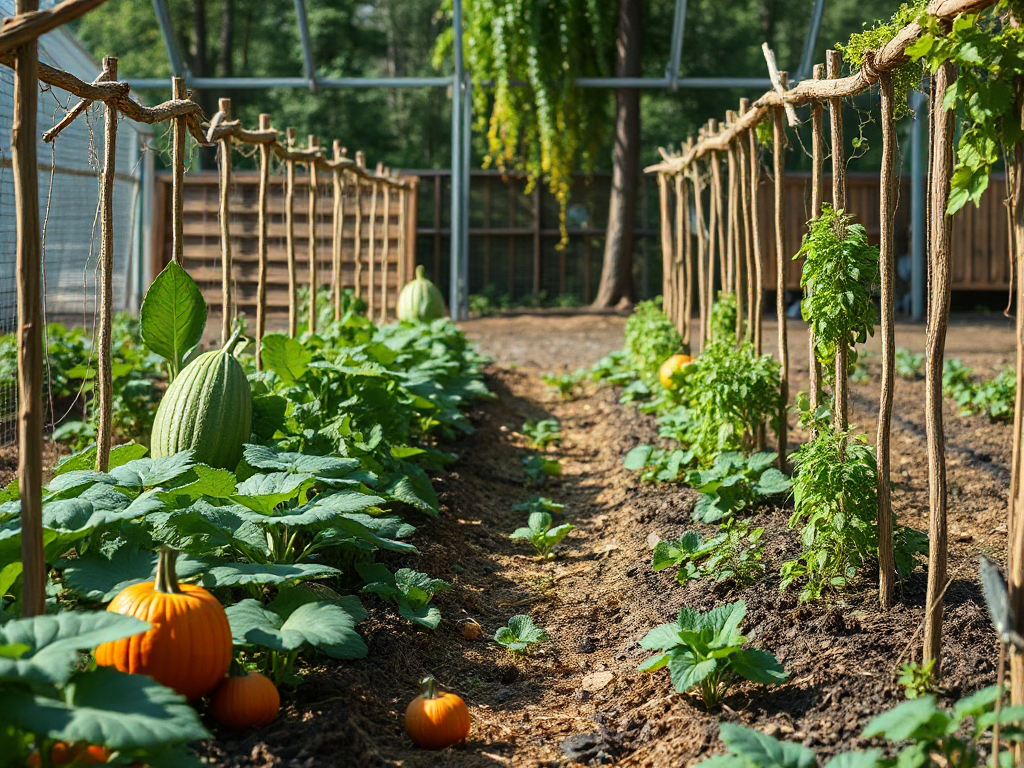
A food forest can provide a substantial share of an off-grid household’s food, but it rarely delivers complete self-sustainability by itself. Its output depends on climate, irrigation, soil fertility, crop diversity, preservation capacity, and years of establishment, while calories, protein, fats, medical supplies, tools, and reliable energy often remain limiting gaps. A productive design combines tree crops, shrubs, perennial vegetables, annual beds, legumes, and selected animals rather than relying on fruit alone. Households should measure harvests against actual calorie and nutrient needs, build water and storage systems first, and retain backup sources for staple foods and essential equipment.
What Complete Self-Sustainability Actually Requires
Complete off-grid self-sustainability means more than harvesting fresh produce from a diverse planting. A household would need dependable access to food, potable water, cooking and heating energy, shelter maintenance, sanitation, tools, seed or breeding stock, and practical ways to handle illness, crop failure, and seasonal shortages. A food forest addresses one major part of that system: biological food production. It does not automatically provide electricity, replacement parts, storage containers, fencing, clothing, or every nutrient and calorie a household consumes.
The distinction matters because perennial plantings often look abundant before their output has been measured. A mature walnut, apple, or plum tree may produce valuable food in the right season, yet one harvest does not cover year-round eating. Fruit is usually rich in water and carbohydrates but may contribute less protein and fat than people need. Nuts can help fill that gap, although they may require suitable winter conditions, pollination, processing, protection from wildlife, and several years before meaningful harvests begin.
A realistic assessment separates partial independence from complete independence. A food forest may reduce grocery purchases, improve household resilience, and supply fresh or storable foods. Complete independence would require the wider property to compensate for poor harvest years and cover non-food necessities. The useful question is therefore not whether a food forest is self-sufficient in the abstract, but which household needs it can meet, at what time of year, and with how much labor and outside input.
Use a written household inventory before planting. Record annual needs for calories, protein, cooking fuel, drinking water, animal feed, and preserved food. Then compare those needs with realistic yields rather than optimistic catalog descriptions. The same planning logic applies to Can a food forest provide complete off-grid self-sustainability as a broader property question: the planting is one subsystem, not the entire homestead.
What a Food Forest Can Supply Reliably
A well-designed food forest can produce several food categories from different vertical layers. Canopy trees may offer nuts or fruit; smaller trees and shrubs can provide berries, currants, or additional fruit; herbaceous plants can supply perennial greens, roots, and culinary herbs; groundcovers may protect soil while producing edible crops. Vines and fungi can add further diversity where the climate and site support them. This layered structure can make better use of sunlight and space than a single-crop planting, but only when each species suits the soil, moisture, temperature, and available maintenance.
The strongest contribution is usually dietary diversity and seasonal continuity. Early greens, summer berries, tree fruit, autumn nuts, perennial roots, and stored fruit can spread production across the year. Nitrogen-fixing plants, mulch-producing species, and deep-rooted perennials may reduce some fertilizer and cultivation needs, though they do not eliminate fertility management. Fallen leaves, compost, animal bedding, wood chips, and carefully managed biomass can cycle nutrients, while imported minerals or amendments may still be needed when the site is depleted.
Consider a temperate property with apples, pears, plums, hazelnuts, currants, asparagus, sorrel, perennial onions, and a separate area for potatoes and dry beans. That mix is more useful than an orchard dominated by apples because it offers different harvest periods and food characteristics. Apples can be eaten fresh, dried, fermented, or stored; hazelnuts contribute fat; beans and potatoes supply more substantial staple food. Even this diversified example still needs protection from late frosts, drought, deer, insects, disease, and irregular yields.
Food forests are also valuable for reducing exposure to a single failure. If one fruit crop suffers from a disease or spring freeze, other layers may still produce. Diversity is not the same as immunity, however. A pest that favors several related species, prolonged drought, wildfire smoke, flooding, or a pollination failure can affect multiple crops at once. Choose diversity across plant families and harvest seasons, not merely many named varieties of one fruit.
Prioritize crops according to function:
- Staples: nuts, roots, tubers, legumes, and other foods that contribute meaningful calories.
- Nutrition and freshness: greens, berries, herbs, and vegetables that are difficult to store but valuable during harvest.
- Preservation: fruit, seeds, and roots suited to drying, fermenting, canning, cellar storage, or freezing where power permits.
A planting that produces attractive fruit but little stored energy may be pleasant and productive without being a dependable food base.
The Missing Pieces: Calories, Protein, Water, and Energy
Calories are often the largest overlooked constraint. Many food forests are designed around fruit because fruit trees are visually dominant and comparatively familiar. A household living largely from its property needs denser staples, such as nuts, dry legumes, tubers, grains, seeds, or animal products, depending on local conditions and personal choices. These crops may require more open ground, annual management, processing, and protection than a perennial orchard. A mixed system is usually more practical than forcing every food into a forest pattern.
Protein and fat need separate planning. Hazelnuts, walnuts, chestnuts, seeds, beans, peas, eggs, dairy, and meat each involve different climate, labor, storage, and animal-feed demands. A nut harvest can fail because of late frost, squirrels, fungal disease, or inadequate pollination. Dry beans may be reliable in one summer but difficult in a cool or wet season. Chickens can supply eggs but require secure housing and feed, especially when the food forest is dormant. These tradeoffs make “complete” sustainability a property-wide calculation rather than a plant-list achievement.
Water can determine whether a food forest succeeds at all. Young trees and shrubs often need regular irrigation while roots establish, and mature plants still suffer when rainfall is poorly timed or soils hold little moisture. A roof-catchment system, tanks, swales, ponds, mulch, shade management, and efficient distribution can improve resilience, but each depends on local rainfall, storage capacity, legal conditions, and water quality. A site with abundant species but no dry-season water plan is not self-sustaining.
Energy and processing create another boundary. Drying, milling, cooking, refrigeration, pumping, fencing, and tool maintenance all consume energy or labor. Solar power may handle some electrical loads, while wood may provide heat or cooking fuel, but neither solution should be assumed without checking resource availability and equipment replacement needs. A hand-operated mill reduces dependence on electricity but adds physical work. A pressure canner can preserve food but depends on suitable fuel, jars, lids, and safe procedures.
Readers comparing a food forest with a conventional garden should notice the time profile. Annual beds can produce staple crops quickly and allow varieties to change each season. Perennials often need less repeated soil disturbance after establishment but commit space for years and can be harder to redesign. Combining both approaches, plus a modest animal or legume component where appropriate, usually closes more nutritional gaps than expanding fruit-tree density.
Designing and Testing a Food Forest for Real Off-Grid Use
A practical design begins with site limits, not a fashionable species list. Map sunlight, frost pockets, prevailing wind, slope, drainage, existing trees, access routes, and the location of water storage. Test soil through a credible laboratory or local extension service, then identify which areas can support permanent plantings and which should remain available for annual staples, buildings, firewood, or access. A food forest that blocks vehicle movement or occupies the best irrigation ground may create more operational problems than food value.
Begin with a small demonstration zone and measure it for several seasons. Track survival, bloom timing, pest pressure, irrigation hours, harvest weight, processing time, and the amount actually eaten or preserved. A crop that produces 20 kilograms but requires difficult harvesting and spoils before use may be less useful than a smaller crop that stores well. Record failures as carefully as successes. Missing yields often reveal poor pollination, unsuitable chill conditions, animal damage, inadequate fertility, or a harvest window that conflicts with other work.
Build the system in stages. Establish water access, paths, fencing, soil cover, and wind protection before installing a large number of trees. Plant a few dependable species first, then add less certain or higher-maintenance crops after observing the site. Use several varieties with different ripening periods where possible, but avoid planting so densely that airflow, pruning, and harvesting become difficult. Dense vegetation may conserve moisture while also increasing disease pressure and making inspection harder.
A useful planning sequence is:
- Estimate household food needs by month, including staples, preserved foods, protein, and fats.
- Assign crops to functions and harvest windows rather than planting only by layer.
- Design irrigation, mulch, fertility, wildlife control, and storage before expanding the canopy.
- Test the first planting through at least one difficult season and revise based on measured results.
For example, a dry summer may show that a supposedly low-input plum guild needs more water than expected, while a hazelnut planting may reveal that wildlife protection matters more than extra trees. Such evidence should guide expansion. Planning should also include backup seed, hand tools, repair materials, and a reserve of staple food, because establishment years and crop failures are normal rather than exceptional.
Signs of a Resilient System—and Common Failure Points
A resilient food forest does not mean a neglected one. It has clear paths, identifiable plants, manageable pruning, protected water infrastructure, and enough access to harvest food at the right stage. Productive soil shows steady plant growth without continual emergency inputs; irrigation demand is understood; stored food carries the household beyond the harvest peaks; and no single crop represents an unsafe share of expected calories. These operational signs matter more than visual density.
The most common failure is overestimating maturity. Young perennials may occupy space for years before producing enough to justify their water and protection needs. Another mistake is treating guild planting as a substitute for observation. Plants with compatible theoretical roles can compete for water, shade one another, harbor pests, or mature at inconvenient times. Keep aggressive spreaders contained, observe root competition, and remove plants that undermine the main crop rather than preserving a design for aesthetic reasons.
Wildlife and disease control also require realistic expectations. Deer, rabbits, birds, rodents, and insects may consume a large share of a harvest unless fencing, netting, habitat management, or targeted controls are planned. Organic production does not mean zero intervention; it means selecting interventions carefully and understanding their effects. Sanitation, resistant varieties, pruning for airflow, and regular scouting can reduce problems, but no method guarantees a clean harvest every year.
Use a simple annual review. Mark each crop as reliable, useful but variable, or unsuitable. Compare food value with water, labor, storage, and protection costs. Expand crops that fill a genuine gap, such as winter calories or dietary fat, rather than adding another variety that duplicates an already abundant summer harvest. A food forest becomes more self-reliant when it is edited repeatedly to match the household, climate, and available labor.
The practical conclusion is measured independence. A food forest can anchor a resilient food system and reduce dependence on external supply, especially when paired with annual staples, water storage, preservation, renewable energy, and repair skills. It should not be treated as a closed loop until the entire property has demonstrated adequate production through poor seasons as well as good ones.
Frequently Asked Questions
Can a food forest feed one person completely?
It may supply a large portion of one person’s produce, nuts, and preserved foods, but complete coverage is uncommon without annual staples, protein and fat sources, dependable water, storage, and backup supplies.
How long does a food forest take to become productive?
Small berries and herbs may produce relatively early, while many nut and fruit trees need several years. Actual timing depends on species, rootstock, climate, soil, irrigation, and management.
What crops help close the biggest food gaps?
Nuts, dry legumes, tubers, seeds, and other storable staples generally contribute more toward calories, protein, or fat than fruit alone. Choose crops that suit the local climate and available processing methods.
Does a food forest need irrigation?
Many sites need irrigation during establishment, and some require supplemental water during dry seasons. Mulch and soil improvement can reduce demand but cannot replace an adequate water source where rainfall is insufficient.
Can a food forest replace an annual garden?
Usually not. Annual beds provide faster access to potatoes, beans, grains, and seasonal vegetables, while a food forest contributes perennial harvests and long-term diversity. Combining both systems is often more resilient.
Further Reading
Authoritative Sources
- Academy of Nutrition and Dietetics
eatright.orgProfessional nutrition guidance, healthy eating resources, and practical dietitian-reviewed advice.
- U.S. Department of Agriculture
usda.govOfficial food, nutrition, agriculture, and consumer guidance from the USDA.
- NIH Office of Dietary Supplements
ods.od.nih.govResearch-based fact sheets on nutrients, supplements, dietary intake, and safety considerations.
- International Society of Sports Nutrition
sportsnutritionsociety.orgEvidence-informed sports nutrition resources and position stands for active people and athletes.
Conclusion
A food forest can become the productive center of an off-grid food system, but it should not be mistaken for a complete self-sustainability plan. Begin by identifying the household’s monthly needs for calories, protein, fats, water, energy, and preserved food. Then reserve space for annual staples and infrastructure instead of filling every area with trees and shrubs. Establish fencing, irrigation, soil fertility, access paths, and storage before scaling up. Measure real harvests, labor, losses, and storage life through difficult seasons, and remove crops that consume resources without closing a meaningful gap. The strongest design is mixed: perennial plantings for diversity and long-term production, annual crops for dependable staples, and carefully planned systems for water, energy, preservation, and repairs.